I agree with what you are saying, but unless it was actually declared a health and safety issue (which probably would have triggered a recall) I can see them (or any company) depleting stock on hand, unless the number of existing boards was really low, but maybe they can work a big tax deduction out of it, if such a thing is available in country of origin. Maybe they will just rework the old boards and replace the NTC with the jumper. Anyway, would be interesting if someone did a peak when a new one arrives to see what board is in it and let us know. The fact that they just seemed to have removed the NTC suggests to me that at least part of the issue is they were failing from use of the On/Off switch, which the inrush can cause them to fail like that from what I have read.It would also happen in some PC power supplies.
Bambu recently posted another statement. We have read something similar before and much of it is repetitive. Here is the latest version, which goes into much greater detail:
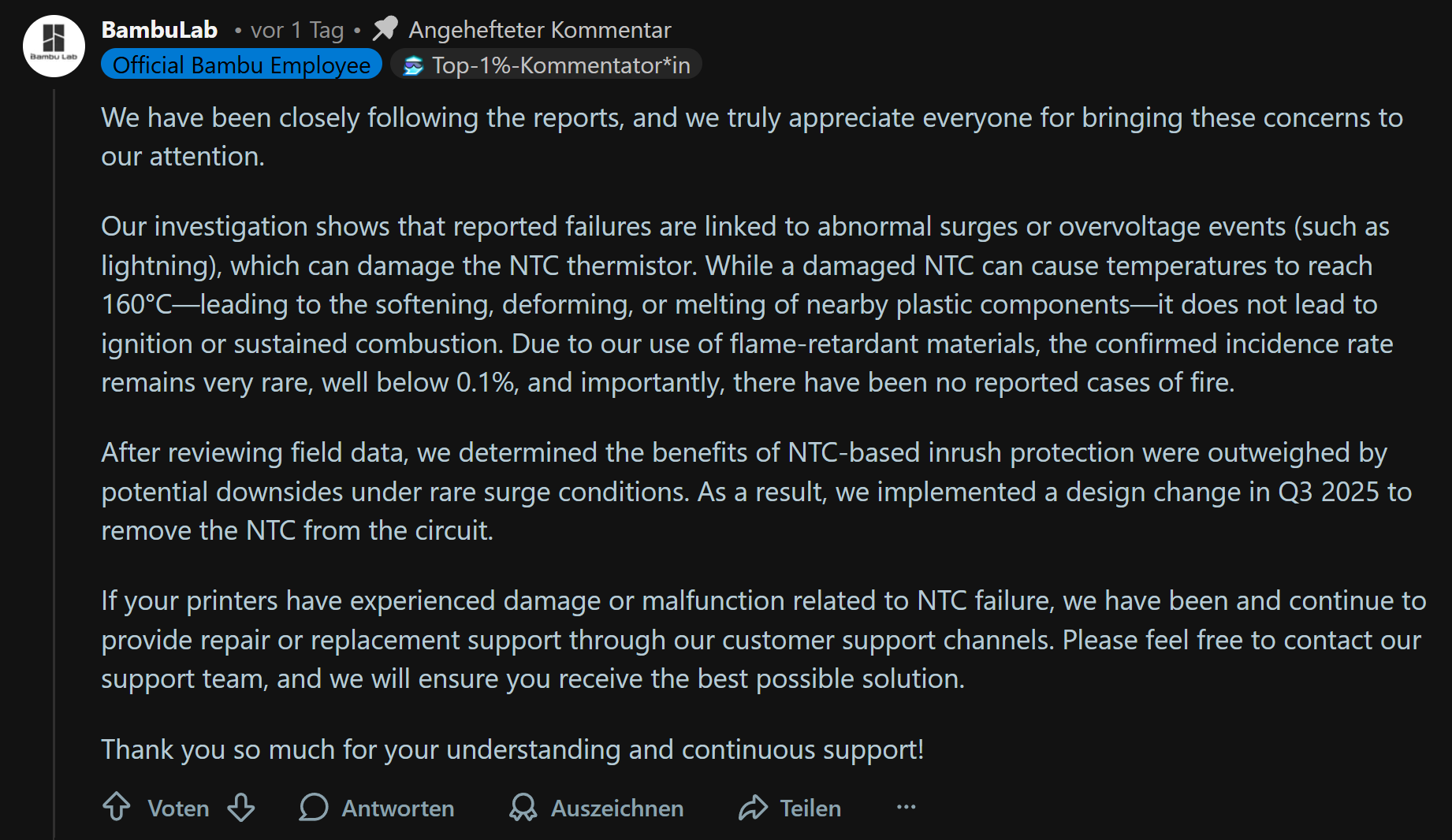
We have been closely following the reports, and we truly appreciate everyone for bringing these concerns to our attention.
Our investigation shows that reported failures are linked to abnormal surges or overvoltage events (such as lightning), which can damage the NTC thermistor. While a damaged NTC can cause temperatures to reach 160°C—leading to the softening, deforming, or melting of nearby plastic components—it does not lead to ignition or sustained combustion. Due to our use of flame-retardant materials, the confirmed incidence rate remains very rare, well below 0.1%, and importantly, there have been no reported cases of fire.
After reviewing field data, we determined the benefits of NTC-based inrush protection were outweighed by potential downsides under rare surge conditions. As a result, we implemented a design change in Q3 2025 to remove the NTC from the circuit.
If your printers have experienced damage or malfunction related to NTC failure, we have been and continue to provide repair or replacement support through our customer support channels. Please feel free to contact our support team, and we will ensure you receive the best possible solution.
Thank you so much for your understanding and continuous support!
So they are calling it an act of god?
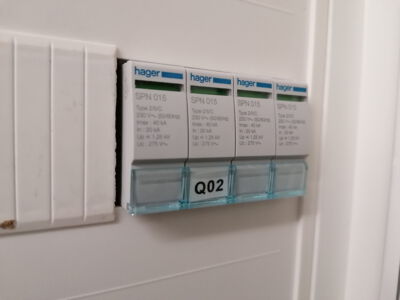
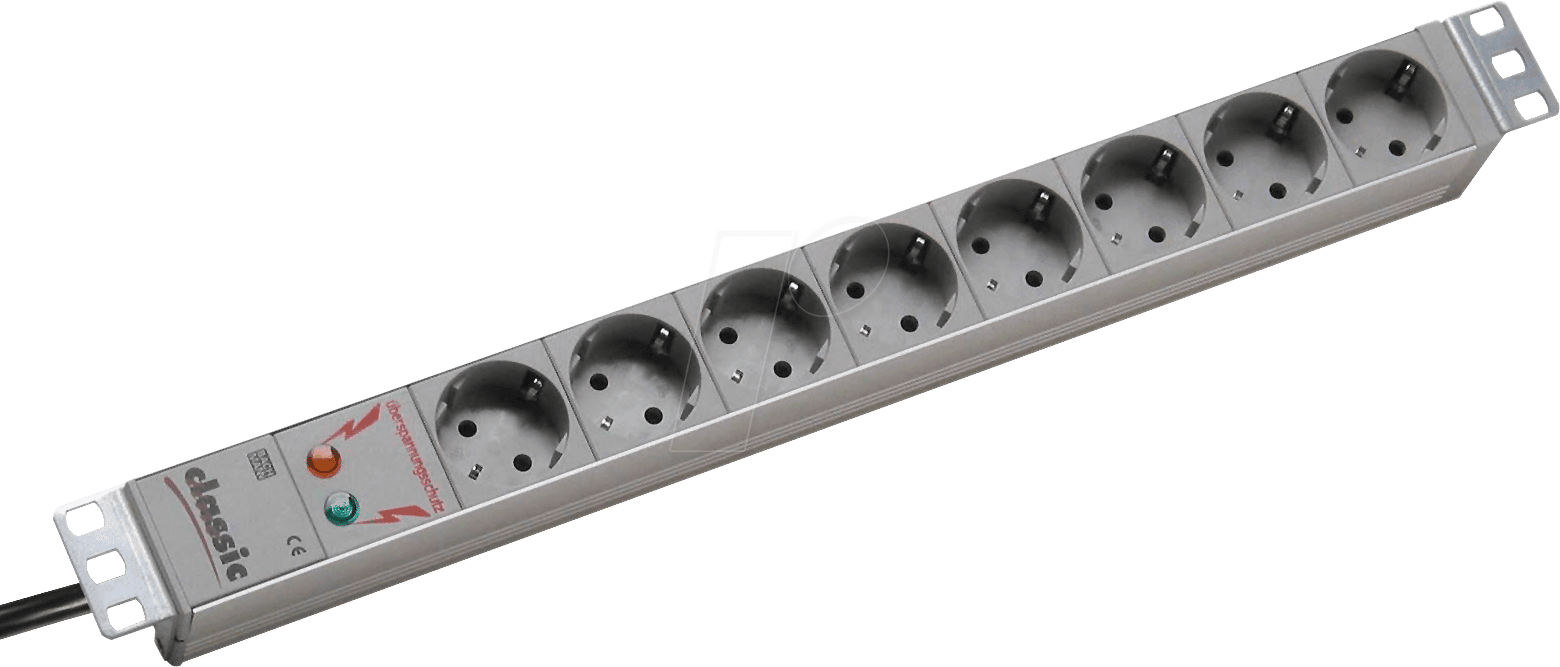
I know that was meant sarcastically, but to answer the question: That’s what Bambu recommends, as do other hardware manufacturers in general - whether Sony, Samsung, LG, or whatever - and what every household and workshop should have. Also on your PC, TV, coffee machine, whatever.
Any electronic device can start catching fire without such protection.
Lightning and overvoltage protection:
Zeus in particular.
No sarcasm intended. While it doesn’t mean it negates insurance coverage in the U.S. anyway damage by something like lightening is classified as an act of god and can potentially impact any settlement.
Just sacrifice a sheep once a year - problem solved. 
So as an NTC heats up, it drops resistance. One of the negative points of them is that if the device is powered off, then turned back on without the NTC having a chance to cool down, it will not surpress the current it is supposed to on start up. So say you have been printing for a few hours and the NTC is hot. Then there is a short power interruption due to a lightning strike in your area, if the outage is short then when it comes back on the NTC will allow a surge internal to the device, no external power strip or surge protector will stop that.
Um, no? That’s not how this thermistor works, but others and I have already written pages and pages about it - enough to fill a novel. The thermistor is primarily intended for use when the heat bed is cold and starts heating up.
The heating bed does not cool down that quickly in relation to the function of the thermistor. Your theory would only work if you sprayed ice spray on your heat bed in between.
It’s the NTC NOT haveing a chance to cool down. It’s like flipping the power switch off and on.
From
Disadvantages of NTC Thermistors
NTC thermistors in series at the input terminal can play a role in suppressing excessive current, but NTC also has inherent disadvantages.
First of all, NTC is connected in series in a circuit. Although its resistance value will decrease and maintain a lower resistance value after normal operation, it will still cause the circuit voltage to drop. This has a negative impact on the efficiency of the power supply.
The other is that NTC has thermal inertia. When the charger is working normally, the temperature rises and heats up, and it is plugged back in immediately after unplugging. The NTC is not cooled, and it is still at high temperature, so it can’t suppress the current. At this time, the current will be very large, and the charger that does not usually have sparks will also have sparks.
Edit: yes, this is oriented toward Lith battery chargers, but the principle of the component is the same.
There’s no point in copying the text now, because it doesn’t address the “smooth start” function. Other applications. Believe me, the data sheet for the thermistors and the function have now been analyzed to death. Read through the topic.
Furthermore, the report refers to lithium batteries, not 3D printers.

Edit: Here is the link that explains it.
A soft start circuit is not difficult, but every part needs to be chosen wisely to manage stress and keep it safe. Important aspects are:
Passive Soft Start (NTC-only): The simplest method uses only an NTC thermistor in series with the load. It’s ideal for compact and low-cost designs but may dissipate heat after startup.
The “smooth” start, or ramp up, provided by an NTC is because the resistance drops as it heats up, starting from a cooled state. Possibly I am just not able to fully comprehend what you are saying so I will bow out.
Happy printing.
I added link in my original comment, where everything is explained in detail. 
I did look at that, thanks, but I am seeing it saying the same thing I am, so obviously I am missing something.
NTC Thermistor: Such a thermistor is highly resistant at first and lowers its resistance as it gets heated by the current flow. It handles the sudden rise in current and changes itself to maintain the flow. The 10D-9 and 20D-11 are widely used types of electric cars.
The thermistor only gets hot when the 3D printer starts up, during the first few seconds, and only if the heating bed is cold or there are voltage fluctuations in the grid.
After that, the thermistor cooled down again and is now just warm. That is also the basic function of the thermistor - to convert excess energy that occurs in seconds into heat. That’s why it doesn’t need cooling, because we’re talking about seconds or less. In contrast to thyristor, for example, which often need constant cooling in the form of a heat sink.
Your theory was:
My answer: The component has enough time - you don’t turn the printer on and off every second, AND you would have to spray the heat bed with cold spray. In cold conditions, the heat bed draws so much power - and only at 220V - that it comes close to the limit.
Take a look at the data sheet for the thermistor. I don’t remember it off the top of my head, but it has an operating range of up to 150 - 200°C.
However, what is correct and has already been established as a partial solution is to replace the NTC 5D-15 with an NTC 5D-20 in order to create more tolerance in the event of overvoltage.
So users with 120 devices also reported this issue see @Maesprinter.
And if the NTC is kept cold then yes it will stay at a high resistance and probably burn out, but it is in a device that works by generating heat.
And I agree that it was probably underspeced for the device.
An NTC will heat up from the current running through it, they can be used to protect transformers from an initial surge on power up, then they heat up and allow full power through so they are not considered a drain on the circuit.
But pretty sure you know all that.
My initial response was to your point about power protection (which is always a good idea). If the NTC is at 150C or whatever it will not cool down instantly and if there is a power cycle it will pass more current than it would than if the device had been off all night, potentially causing problems (to itself or other components) and no outside (non-ups) protection can prevent that.
Anyway, we agree on somethings and disagree on others (based on the same information).
Thanks for your insight.
Maybe Bambulab could specify what clamping voltage is needed on the surge arrestor that would prevent the NTC from failing? There’s a wide range in the marketplace.
Yes, and we suspected that it was caused by a lightning strike for 110V printers and not by overload. Please take another look at the topic - I know it’s long.
Similar damage pattern - different cause - based on current knowledge, of course.
I have a hard time believing that this issue is caused by lightning strikes.
All they are doing is shifting the blame instead of fixing the issue.
Surge protection in modern homes is pretty good. If that was the case, you would see other electronics in the home suffering a similar fate. A power surge of that level would be stopped by circuit breakers and grounding.
Side note: I have also seen multiple people claim that their printer was plugged into a surge protector. If that is true, I don’t know but I do not see any reason to lie about that. Maybe a cheap surge protector even.
As mentioned, this is all speculation based on current knowledge: The 110V power grid does not actually have enough amps to push the thermistor over the edge.
Unfortunately, most cases are only posted on Reddit. It is rare to find people on this forum who can make informed statements and have a good reputation and post their own case. For example, owners of print farms have not yet reported incidents in this forum - to my knowledge.
To be precise, have you seen users here flooding this forum with incidents?
Wouldn’t you think that both Bambu Support and the official forum would be the first place to go?
Personally, I don’t know what to make of it, especially since Reddit is also being spammed with false and duplicate reports. As I said, I’m not sugarcoating things here, but think about the other incidents. The forum here was literally overflowing with incidents and clear evidence.