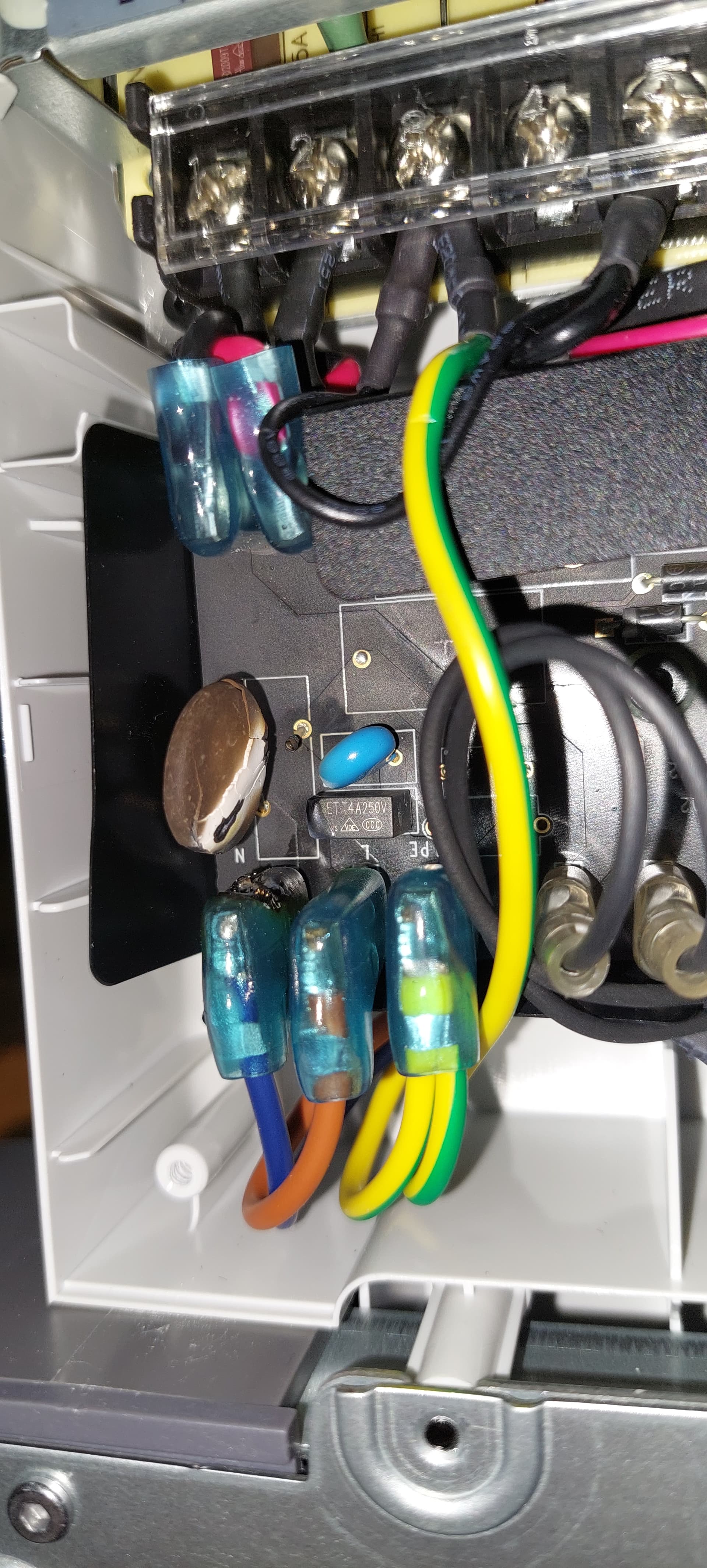
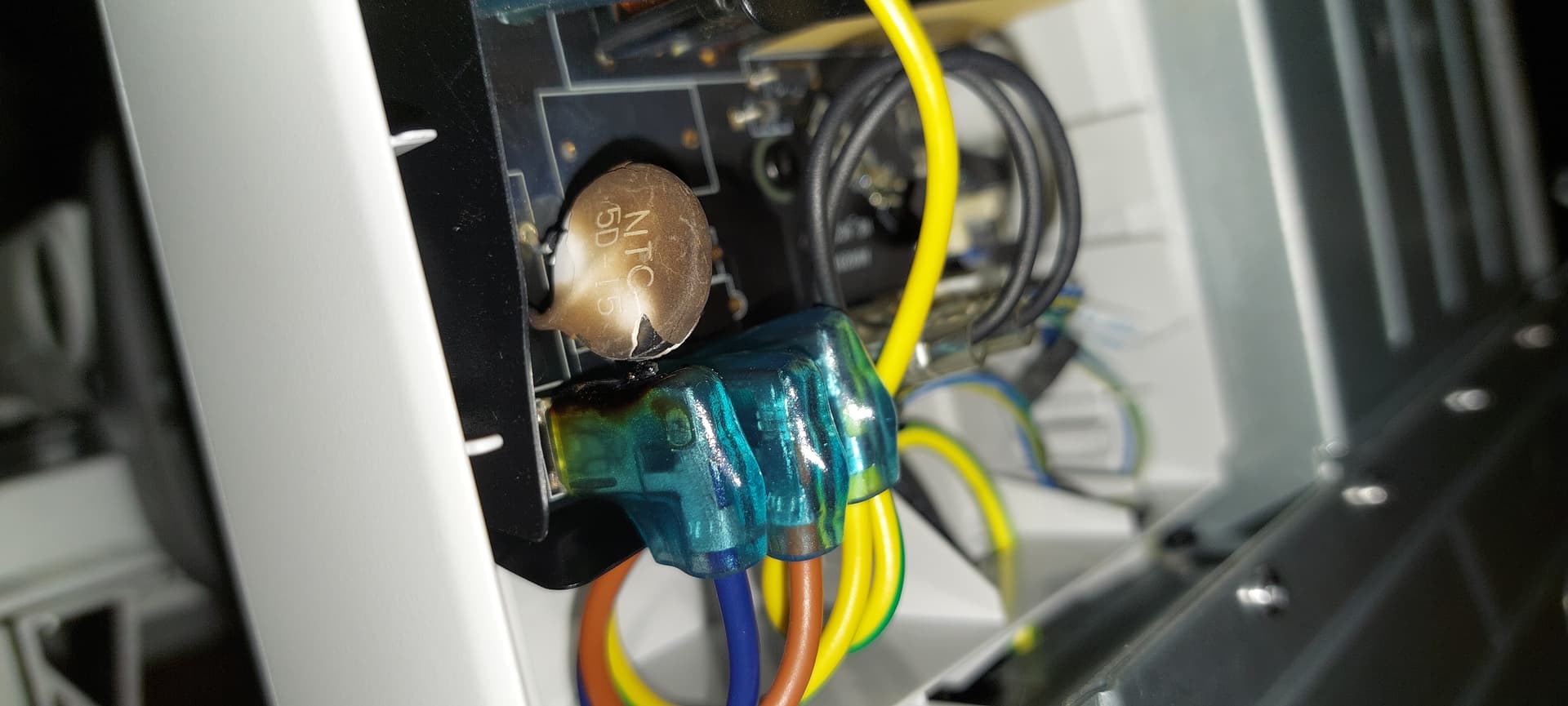
A1 Fire risk due to thermistor overheating

Remember that Bambu printers are considered by many to be turnkey 3D printing appliances. As such, I suspect many would not think to periodically open their printer and inspect the boards for signs of problems. Even off odors could be pushed to the back of mind as many filaments release all kinds of odors during printing. I also suspect that only a tiny fraction of owners regularly read this board, again as the Bambu products generally “just work”.

I am neither saying that there is or is not a problem that occurs with concerning frequency. Just that counting the responses here over less than two days, on a holiday weekend for many, isn’t a good measure of that potential frequency for me.

Is there a flame-retardant pad that I can put my printer on to reduce the risk of fire? He recommends concrete pavers, but that’s not very practical.

What part of it isn’t practical? They’re cheap. The only downside I see is that they’re heavy for some people. You may not be aware, but a lot of people use concrete pavers to improve print quality. CNC Kitchen and others have done youtubes about it.

Just a quick reminder: no sugar-coating, just a few facts. Also, this comes from someone who has worked in repairs and product development for years.

Any electronic device is capable of catching fire. The important thing is to be able to control the fire when it happens. Examples of this include fireproof housing and the controlled burning of certain components.

Also, rather than imagining that the thing suddenly catches fire, you should imagine that it smoulders in a controlled manner. Whether this is also the case with the A1 series is debatable. However, it should be noted that some people are making sweeping statements such as ‘it catches fire’. It is important to distinguish between it smouldering in a controlled manner or it being completely engulfed in flames.

Since Bambu has both the CE mark and the UKCA mark - and we’re not talking about fake labels here - at least a certain basic level of safety should be guaranteed. The devices are also sold in Germany, so they meet various German standards, which are even stricter.

Does that mean there isn’t a problem? Am I glossing over something here? No! I’m just providing some additional information for context. Every device poses a fire hazard - especially 3D printers - and that is simply a fact. The question, then, is to what extent Bambu has taken precautions to ensure that, it smoulders in a controlled manner and does not burn down.

A burnt circuit board is not a problem if it happens in a controlled manner. This may even be intentional. I cannot speak for this particular case, but often a controlled burnout is intended. Of course, it could also be that corners were cut on the components! What does that tell us?

That’s something that needs to be assessed by professionals who are real experts in their field. I doubt that random people can tell the difference between deliberate, controlled smoldering and unintentional, uncontrolled burning. How many A1s have there been so far that were on fire? As I said, I’m not sugarcoating anything here! It’s important to point this out. However, it’s even more important to focus on the facts.

Despite all the discussion, we must not forget that, in theory, all 3D printers pose a potential danger. This is often underestimated because many people see them as toys and put them in their living rooms.
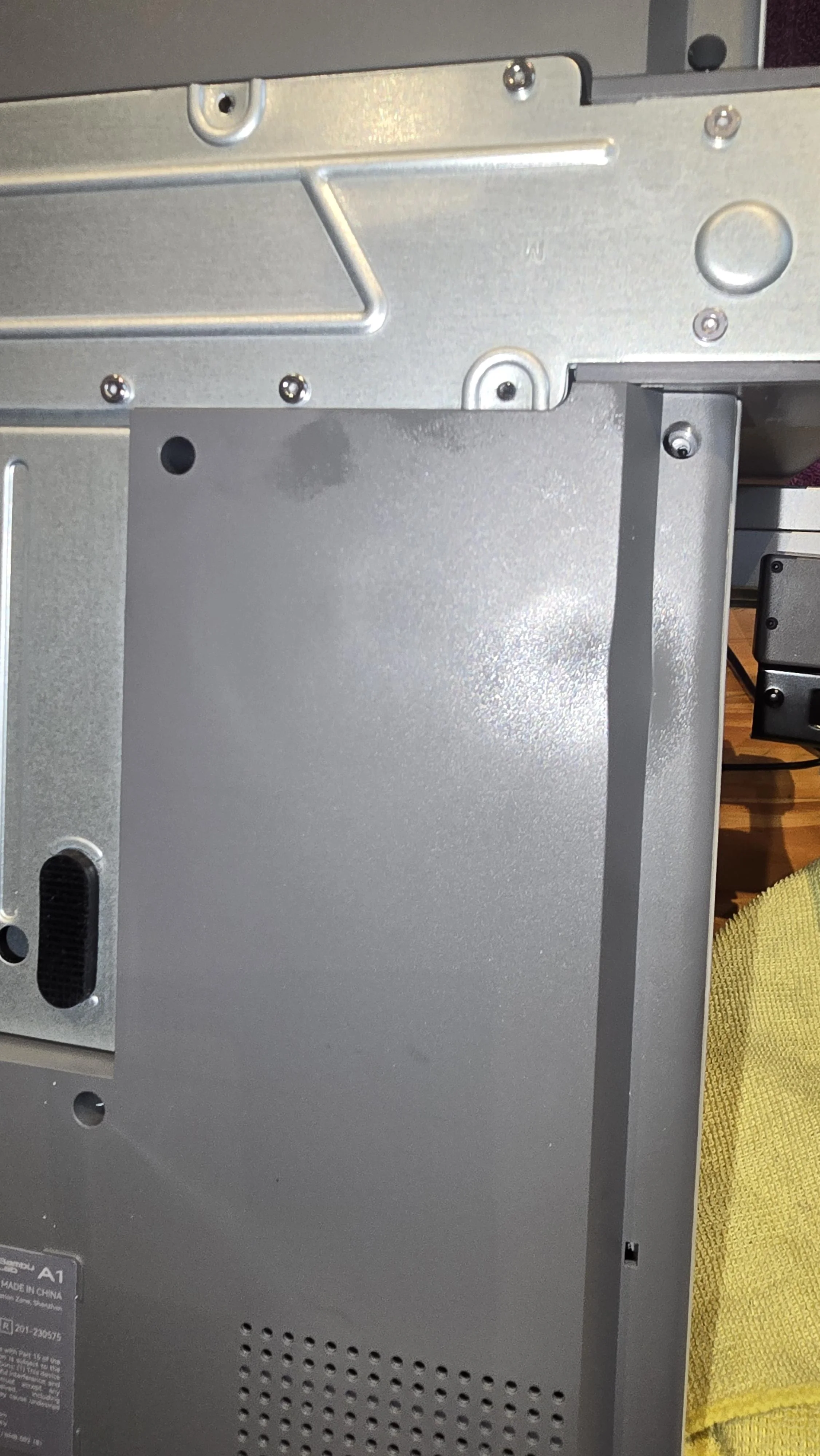
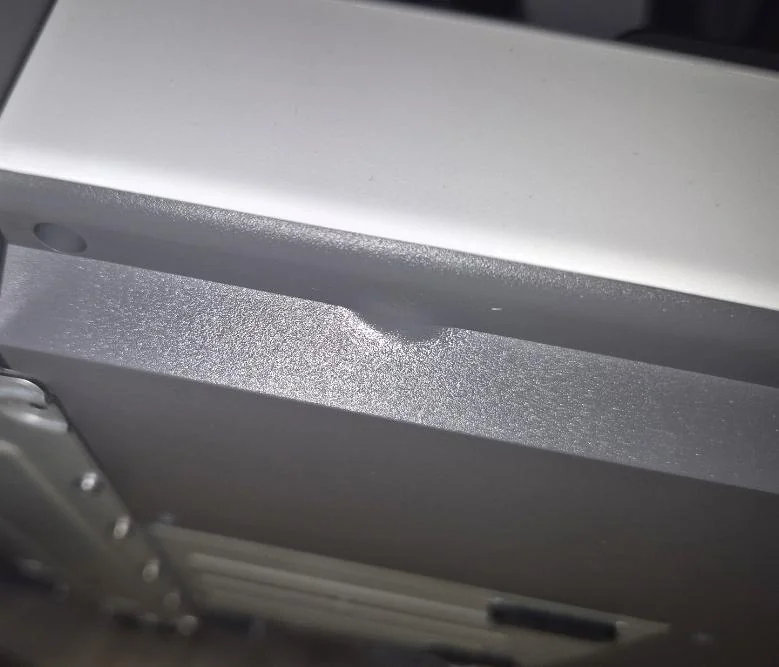
Maybe some kind of ceramic tile? That’s what I’m going to look for.

Here is an addendum to my already lengthy comment to also post Bambu’s official statement on this matter 10 days ago. I’m just passing this on, I can neither verify nor deny it.

BambuLab - Official Bambu Employee
“Please be assured that every printer is built with fireproof, safety-certified components, and both the hardware and firmware include multiple layers of protection designed to minimize risk.”

==========

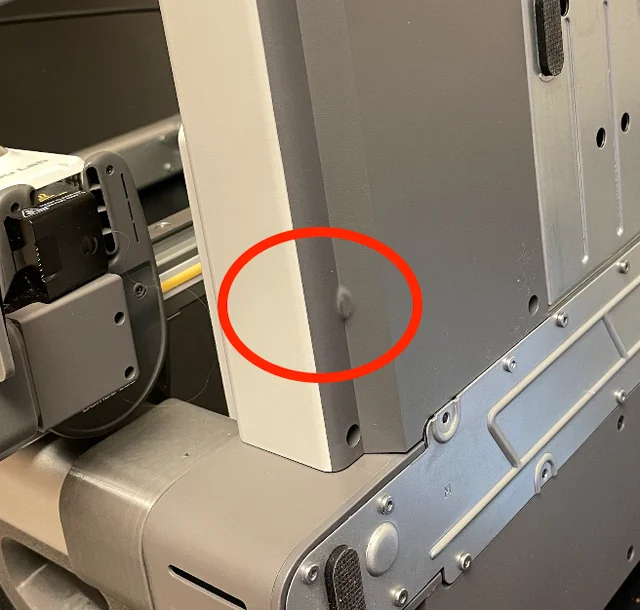
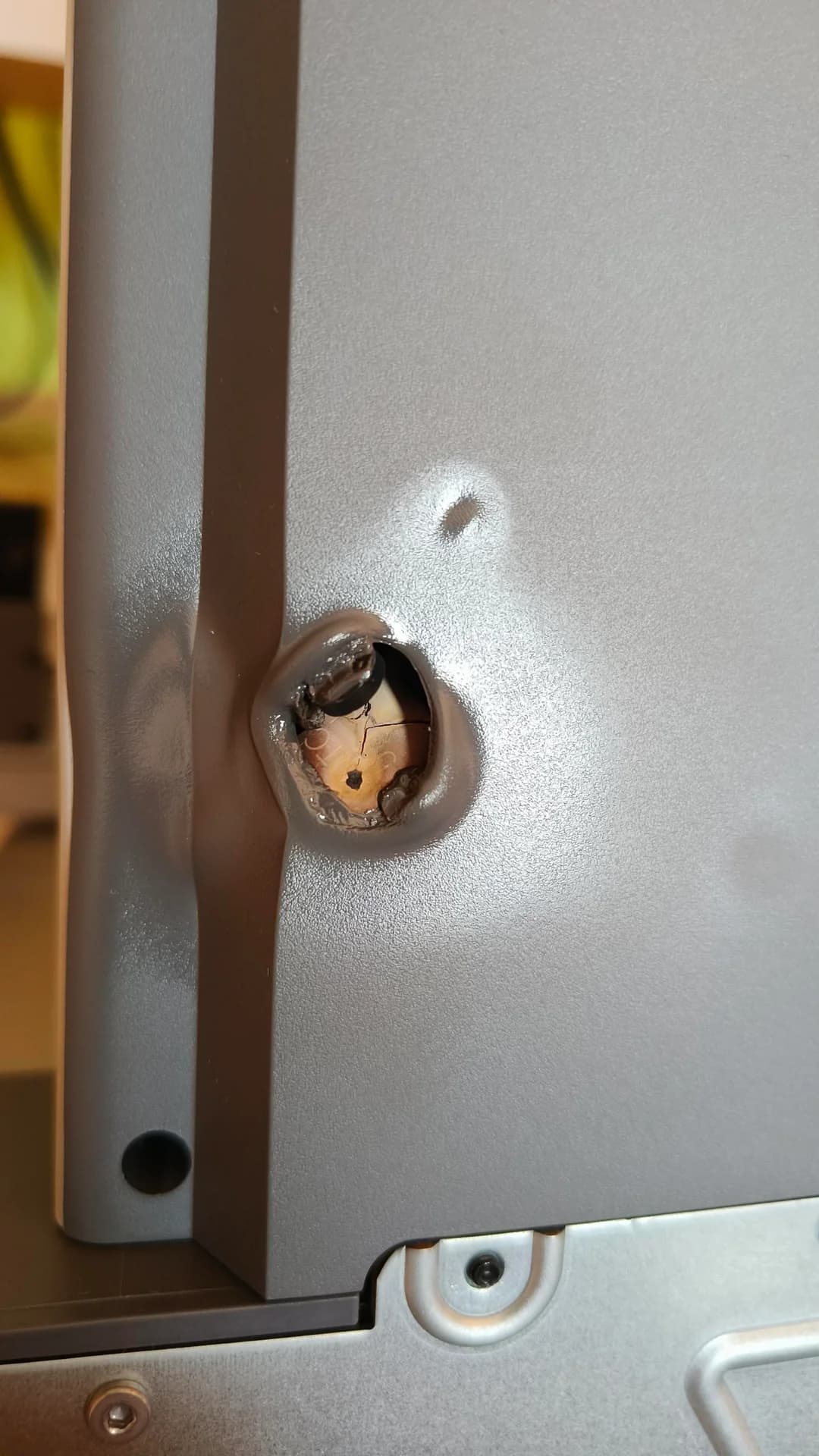
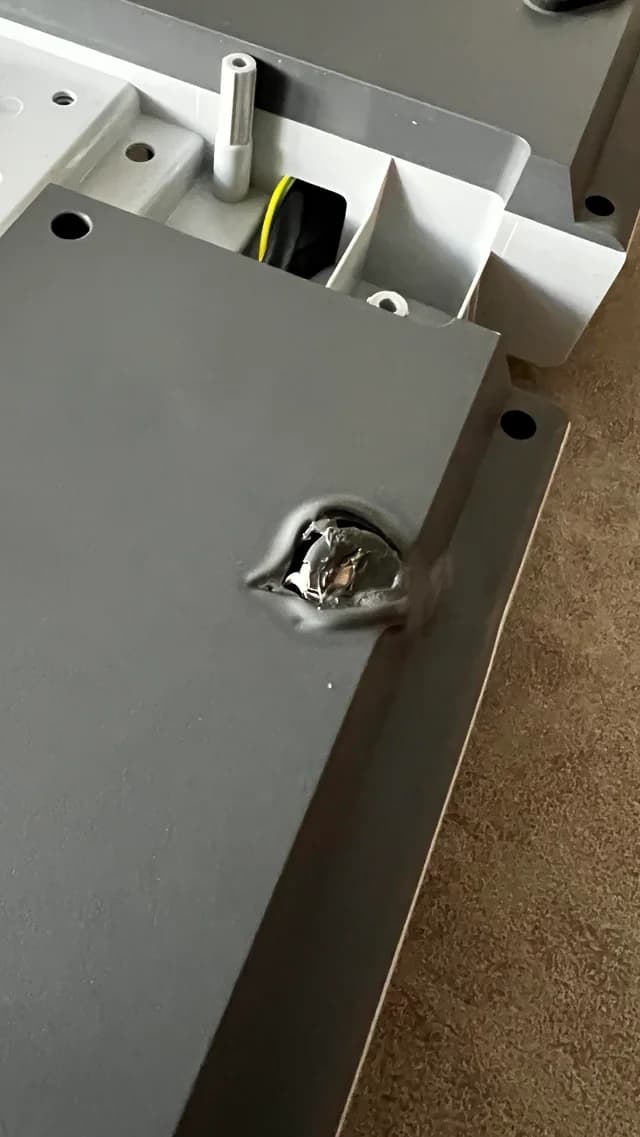
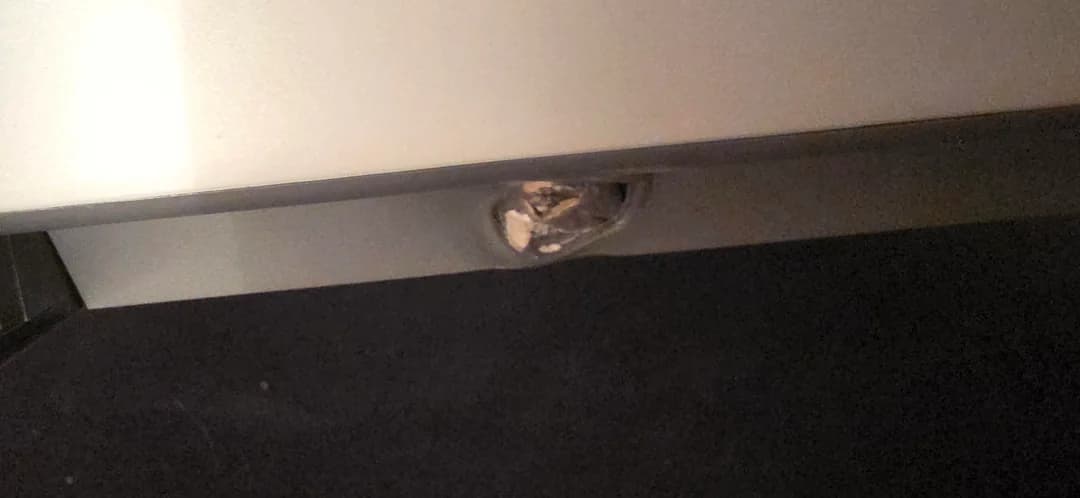
Below are some photos from various sources showing what smouldering looks like. Just to clarify what most users mean when they say “My printer caught fire.” Of course that shouldn’t happen.

It seems this forum is too fragile for me. It doesn’t like anything negative.
Anyhow, what if I showed with a board claiming that I have reports all over the country about failed H2Ds? Would you believe me?

What concerns me most is the apparent lack of understanding of how click baits work. If this were a real issue, Bambu would take action and recall the affected units. With products shipped in the millions, some failures are inevitable. That is the reality of any hardware. In addition, devices that operate at high temperatures, such as 3D printers, should never be left unattended for extended periods.

The problem is the unpredictable nature of the failure mode: depending on the instantaneous phase of the AC waveform, the amount of energy stored in the capacitors, the number of “bounces” a switch may introduce, you can get a perfect storm that will destroy not only the thermistor, but other protective components, too.

Regarding the video - I am not satisfied with the way this finding was presented. The message contains conclusions and strong statements, but no supporting evidence. There is no schematic, no measurement data, and no technical explanation that would allow the reader to verify or even understand the claim. Instead, the description relies on assumptions and informal speculation. He goes as far as mixing relay with capacitor, leading me to believe that the whole ‘thing’ was actually fabricated by an AI chatbot.

On the other hand, spreading ‘panic’ is what YT is best known for.

Just to clarify. There have been many many examples that have been more serious than that.


There have been just as many or more examples of the plastic burning all the way through.

It is also important to point out that most of these incidents are not reported on public forums. We will never know the true numbers.

Yep, it looks like the housing is fireproof; at least I don’t see any fire. Which is at least some good news. If it were cheap plastic, it would have burned completely.

This shot is too close. For what I can say, those may be even the cigarette burns :joy:

Maybe there’s an issue where plastic is too close to the heated element, but it doesn’t necessarily mean that the component is failing. I’d like to see more of the context. Finally, RMA those and get it over with. If enough people RMA their stuff, maybe Bambu will admit their mistake and recall those at scale.

If I was Bambu, I’d pay 0 attention to a naive video clip and base my decisions on real RMAs from the real customers.

The video is technically incorrect anyway: Although it is unfortunate that the thermistor burns out, this is probably intentional and even desirable.

It just burns out when it gets too hot, which was the clumsiest solution, but in fact it is the last bastion of safety in many electronic devices. What would happen if the component didn’t burn out in the event of a fault? The hot bed would heat up uncontrollably until the power supply reached its limit, which would be much worse.

By the way, other average power supplies, in other electronic devices, do the same thing. Clumsy, but effective.

The guy in the video doesn’t even realize that there’s a fuse next to it.

However, please do not misunderstand me. I appreciate him pointing this out, but he is not particularly suited to being an expert. The clickbait cover is also typical of YouTube.

Does the charring and soot not give away that there was a small thermal incident?

It is obvious that they are using flame retardant material, but it is also obvious that the material specifications are being exceeded.

I am most familiar with the UL 94 Flammability ratings.

Even the most strigenet rating is the 5VA rating. These tests are mostly sub 60 seconds. The heat in this case is being applied for a much larger time period.

All of the examples I listed are from reddit. Real customers will real machines.

It would be great if Bambu released RMA and support data for this issue. Although I do not think that will ever happen.

If I were Bambu - not that I know the truth - I would simply place a metal plate in between to spread the heat. Yes, the casing might discolour or get warm too, but the risk would be much less. Add a metal plate and call it a day. And if that makes the printer $1 more expensive, then so be it.

As I said, is this the right solution? Just an idea. Often, a pragmatic solution is simply effective.

I don’t understand looking for bandaid solutions.

Think of a fishbone diagram. You have one problem that has grown into other issues. When you put a bandaid on it, the problem will appear in other ways.

With the metal sheet idea, while this would reduce heating to the housing. It deflects heat towards other components.

Am I understanding correctly that the failure is in the power supply component?

Edit: Photos posted below show the NTC outside of the PSU, not within it.

Without intending to diminish the potential severity of the issue, this is a component that is certified to meet reasonable safety standards (the backwards “RU” is UL’s “Recognized Component” certification, with safety certifications for CE, CB, and China shown) and not a board designed or fabricated by Bambu. The PSU has a specified operating temperature of up to 50° C (122° F) with no derating and derates linearly to 60% at 70° C (158 °F).

In other words, the PSU producer certifies that their product is sufficiently safe for inclusion in a product. A design engineer is not going to question the specifics of the PSU’s internal design, as that design is reasonably assumed to meet its safety specification.

I can’t comment meaningfully on the placement of the PSU or the airflow through it. The data sheet indicates that convective cooling is sufficient. The PSU has roughly an 85% efficiency, so when running at 100 W, I would expect it to dissipate around 15 W of heat.

He has more boards, and more incoming.
It is in the comment section in his videos you see people saying they had the same issue. Here are a few more pictures.

MrDontCare’s photos strongly suggest it’s not encased in a metal power supply enclosure. Just sayin’ so we can all get on the same page.

My mistake, thanks for the photos! :+1:

So… there are actually two thermistors. One in the power supply and, as the photos show, one outside on the circuit board. So no metal housing after all. That’s… not good.

Add to that the heat build-up from the power supply, and it’s not a good combination. Okay, that’s just… silly. Of course the thermistors gets hot, that’s what it’s designed to do, react to heat, and then it’s so close to the housing without any metal protection? - and next to the power supply, which probably produces heat build-up. Ugh…

I have decided to delete the comment regarding the power supply. That was clearly my mistake, as I thought the circuit board was installed in the power supply. To avoid confusion, I deleted the old post. Anyone who wants to read it can still make it visible again. I just want to avoid confusion now. My mistake! Sorry! :heart:

Well, kill me if this is not the exact same board from the video :smile:
The scorch mark on the capacitor looks identical, but let us not jump to conclusions.

In that YouTube video, he showed the board without an NTC. The blue component is actually a MOV (varistor), and it is part of the mains protection. That was my first red flag, right next to the capacitor mix-up. I kept thinking, “Is he absolutely sure that is an NTC?” Then he pulled up the datasheet and convinced me. Still, the whole presentation made me start doubting his credibility.

Long story short, I do not know how much attention Bambu pays to this forum. I was told not much. So if you are personally affected, I would strongly suggest going directly to their support. I have owned other Bambu printers and from HW perspective, they have been pure perfection. That is why I was such a fanboy. Also, this issue could simply be a bad batch - either from Bambu or from the components supplier.

If you have had your A1 for a while with no issues, this is probably nothing to worry about. Still, do not leave it unattended, not only because of any potential hardware fault, but also because it exposes hot components, which are a hazard on their own.