One of the main filaments I was hoping to print from the AMS bypass was PPA-CF. It looks like I can and I’m pretty sure it will work…fingers crossed. If not I will be really disapointed.
Sounds to me like if its just printing its okay but if changing colours/materials it won’t work? Probably due to the movement of the head picking up and moving around filaments.
I’m wondering why they didn’t just call it “TPU bypass” right from the start, instead of the general term “AMS Direct Pass-Through,” since only TPU is supported anyway, because the filament absolutely must be flexible as it is routed.
…and if the filament is too hard, it will definitely cause some abrasion on the holders.
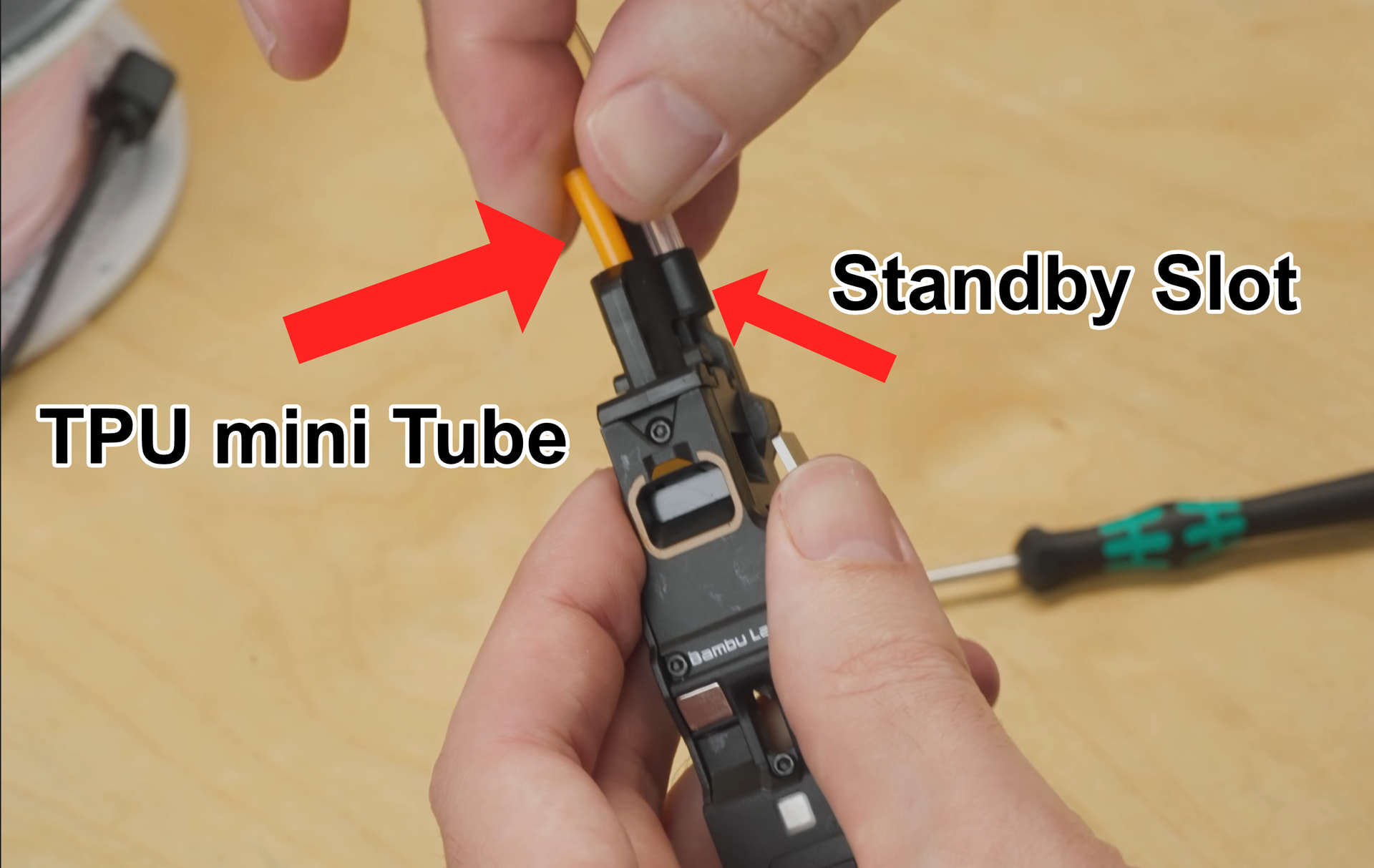
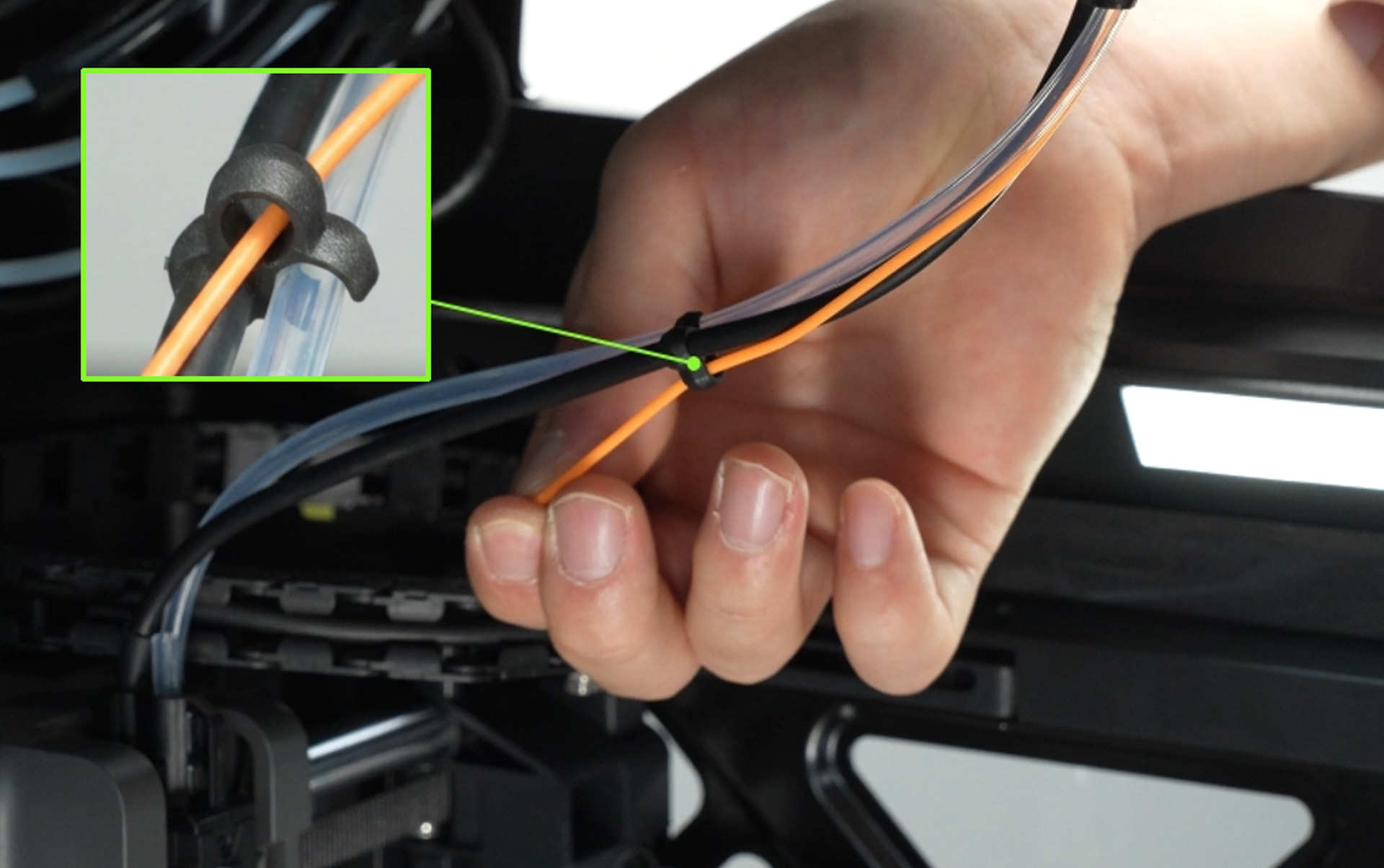
It’s quite a hassle anyway, because on side of the tubes first have to be unplugged and inserted into the “standby” slot. Then the filament must be guided through the holders without the tubes. In addition, a short piece of tubing must be inserted.
Once, I was working on a project that my boss did not understand. So he sat by me and recorded what I was doing. Months later, I was working on another project and my boss kept coming around comparing his notes to what I was doing. I had figured out better ways of doing things and wasn’t doing things as I had before. It was really hard for him to understand that things can be done in more than one way.
I can see straight away a mod that connects a PTFE tube directly from that bypass to a 2 in 1 connector to one of the nozzles, so that you don’t have it dangling down - for abrasive filaments or whatever.
Sure, you can mod it, but honestly: Why should the community have to fix this?
They could have just included the tube and the Y-adapter for a few cents more, maybe they’ll eventually add it.
I’m not a big fan of modding your printer right away either; often, those mods have significant side effects.
This makes me think of the H2 auto-opening the top vent for printing PLA while Core One had users do it manually. I thought it was a great little bit of user-friendliness where it knows what you’re about to print and takes action automatically.
This should have been the same. If it knows it has PLA loaded and it will need to heat up the chamber, it should take care of this for you.
I guess the omission of spool motors is both cost and space saving. Not sure if there is physically enough space inside ams to fit additional 8 motor assemblies
I’m hoping that if you try to print with PLA loaded in the nozzles, it’ll at least prompt you to unload before starting print.
Buying an H2D simply out of a sense of awkwardness because I don’t have enough space for an H3C just to be able to print support layers, would probably be rather pointless.
Their PPA-CF is 3X the price of others. If they want to sell it they really should make it easier to use on their printers. It wouldn’t have been been hard to make the bypass allow a replaceable PTFE tube. Who knows maybe a tube fits already. But that seems like it would have been a better solution for engineering filaments and super simple to implement. I hope a PTFE tube fits and the AMS doesn’t need to be drilled out. Fail on their part on this aspect. Just jamming a PTFE tube with no fitting will eventually pull out.
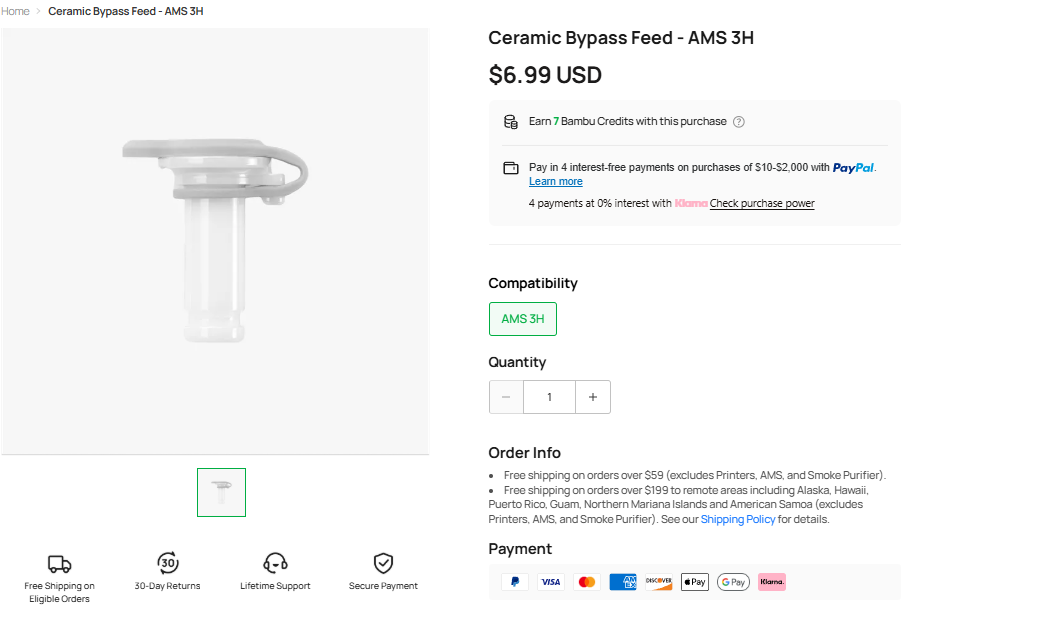
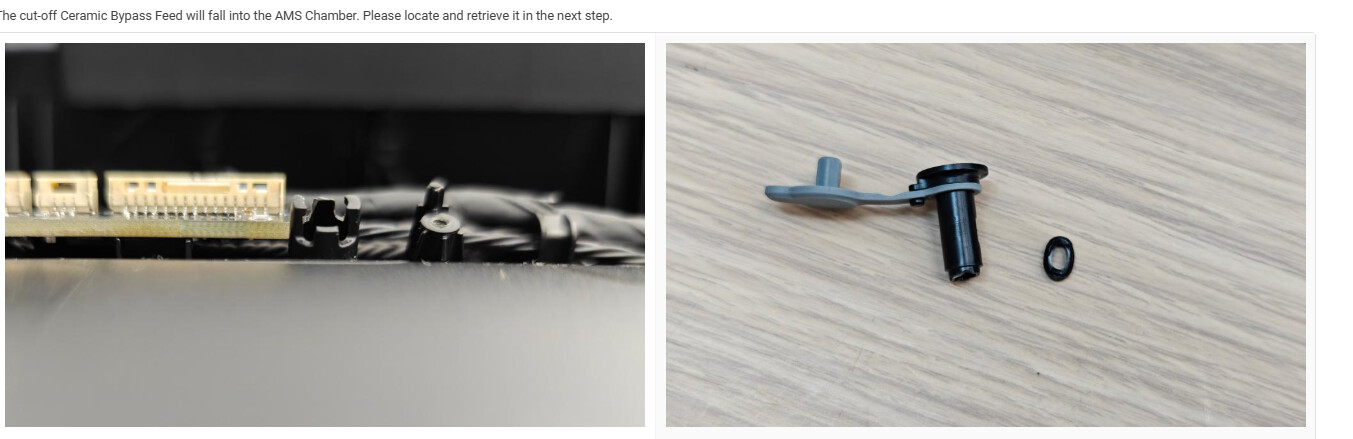
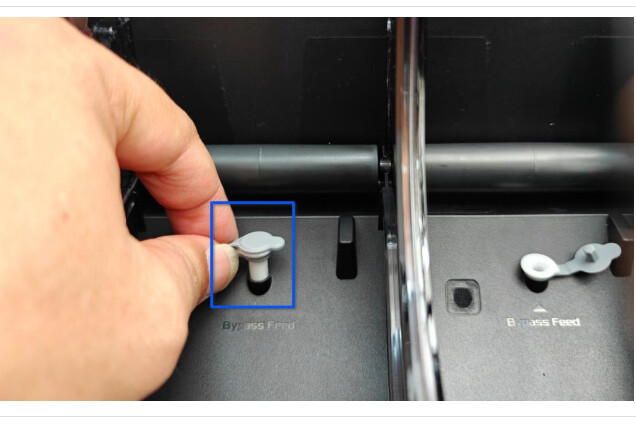
Ok well at least the bypass feed is ceramic. This is good news for PPA/PPS. Makes me more hopeful. I can’t imagine they made this ceramic just for TPU. Just ordered some of these as it looks like some of the standard bypass are not the same?

Ceramic Bypass Feed Replacement Guide | Bambu Lab Wiki
Upgrade?
Hmm…


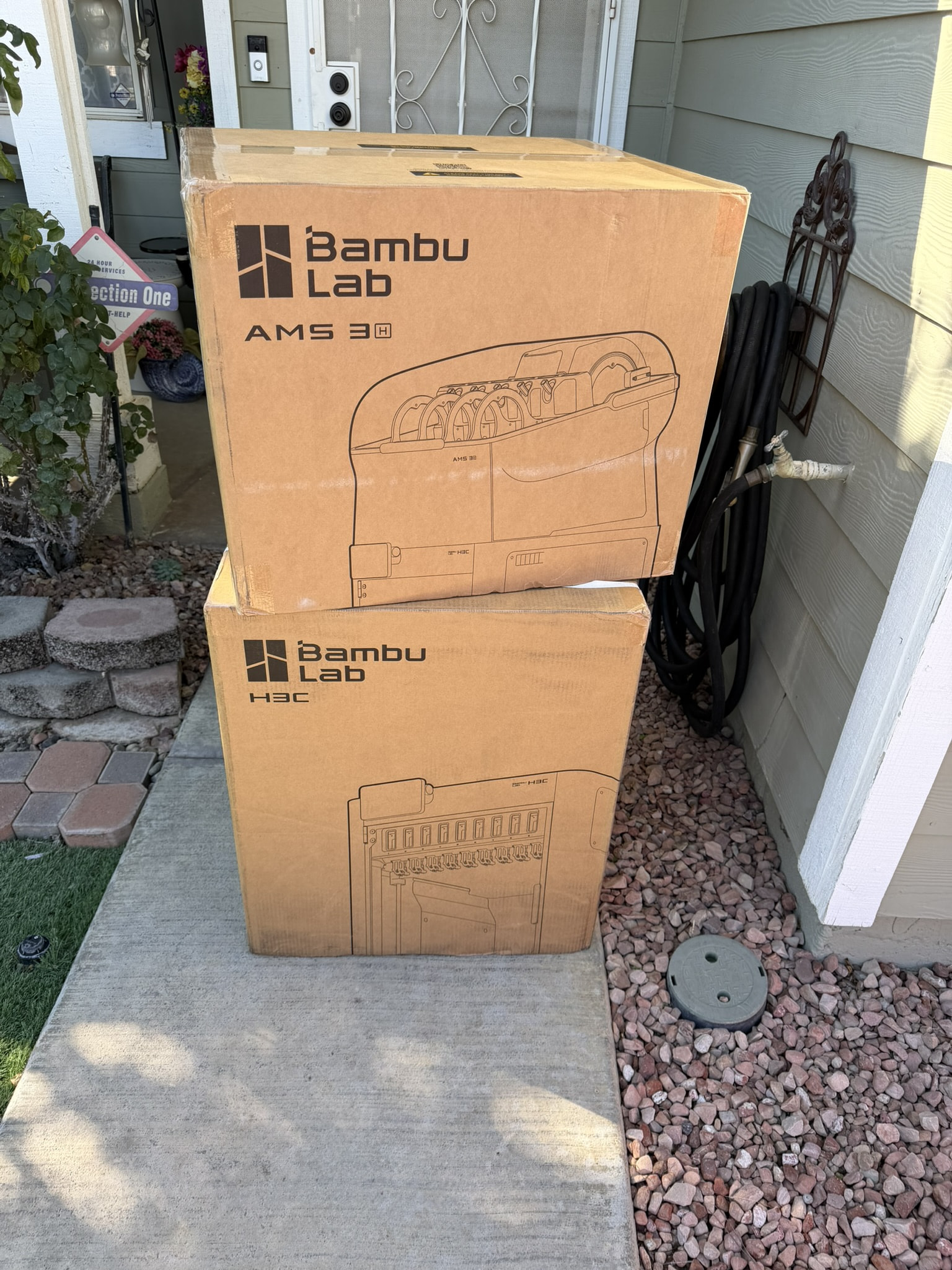
OK, H3C looks amazing. 9 tools is a big F you to Prusa. 
I feel like I need to write this so people understand who this printer is actually for. I’m talking in general here, and maybe this will help some of you make a decision.
H3C can print pretty much every filament out there, all the way up to PPS-CF. It’s a fully capable printer right out of the box, unlike many others on the market that need some upgrades or modifications to handle certain filaments. This thing does it all out of the box.
First, let’s split users into a few groups.
We have single-color PLA users, dual-color PLA users, and multicolor PLA users.
Same goes for PETG. Single, dual, and multicolor users.
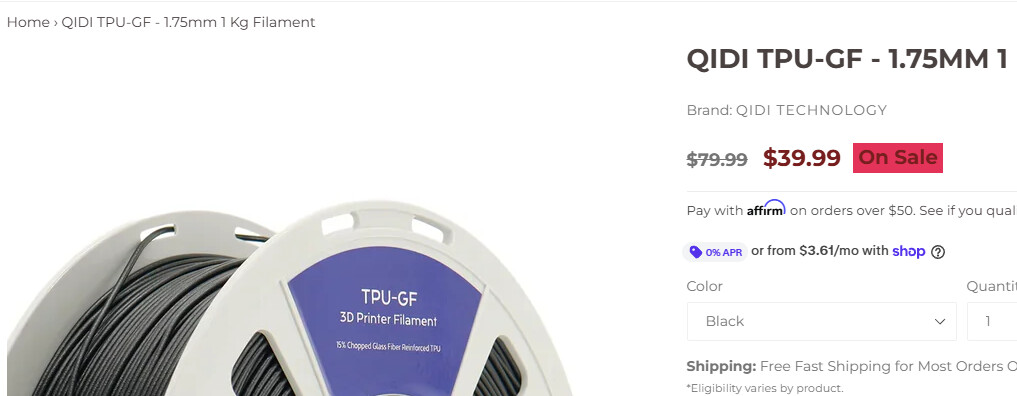
Then we have single, dual, and multicolor TPU users. (Rare, but I can definitely see them.)
For all these people, a chamber heater, extra-hardened nozzle, high temperatures, and even an enclosed printer aren’t really necessary. Although some people, like me, prefer to vent even PLA outside, so an enclosure makes sense.
Then we have the technical filament crowd.
ABS, ASA, PC, PA, PA6, PAHT, PPS, PPA, CF/GF-filled filaments, and a few others. These often need a heated chamber, higher nozzle temperatures, and some filtration and/or ventilation to the outside. In many cases, a 0.6 mm hardened nozzle also makes sense.
So, which group are you in?
Are you mainly printing multicolor PLA/PETG/TPU?
H3C is the best on the market today. There’s no argument here. Bambu killed it.
Are you mainly printing technical filaments?
H2C is a cheaper and more convenient option. H2D is even cheaper and slightly less convenient. H2S is the cheapest and least convenient option.
Are you mainly a multicolor PLA/PETG user but occasionally print engineering materials, maybe once a week?
Get H3C. Once a week you can manually remove the filament, no big deal. The time saved on multicolor models will be a huge win anyway.
Are you mainly printing technical filaments and only occasionally, maybe once a month, print multicolor PLA?
Get H2C, H2D, or H2S, in that order, depending on your wallet.
Do you mainly print multicolor TPU (more than 2 colors)?
Get H3C. No question about it.
If you’re printing single or dual-color TPU, H2C or H2D makes more sense. For single-color TPU, H2S is perfectly fine too.
The difference between H3C and H2C in multicolor print speed is quite big. So don’t complain that you need to manually remove PLA before printing ABS. It’s a no-brainer when you look at how much time you’re saving on multicolor prints.
Now, if you already own an H2C, should you upgrade?
If all you’re doing is printing multicolor models, 100% yes.
If you print literally everything, I’d say wait and watch.
Being able to choose different nozzles has real value, and I wouldn’t underestimate that.
But if you’re using a 0.4 mm nozzle for everything and never touch anything else, then moving to H3C makes perfect sense.
That’s how I see it. Not everyone needs the same printer, and the most expensive or newest one isn’t automatically the best choice for everyone. It really comes down to what you’re actually printing most of the time.
Pretty good but I’ll suggest, as somewhat discussed elsewhere, might want to add a) ppl that should wait for P3C, expect it’ll be quite the bang for buck b) considerations changes somewhat for those that a H3C won’t be their one and only printer.
I think you missed at least one point: Only users who need the larger build volume of the H series should choose the H3C. For others, they can wait for the P3C and X3C (it will come).
You also missed one group: Users who want (regardless of printing need) the newest printer. They will get the H3C (and then complain about it when a newer model comes out later ) . If 5% of BL’s customer base buy the H3C, this group will count for at least 1%.
Yup, same on my U1. Never felt like this was tedious or annoying. Just something you get used to when using this printer.
Who have enough space. Your statement is true for me, except I miss the required space.
And I like to have a big build volume (actually the H2S) , so the P3C is maybe not the right thing for me. In my opinion they should increase the build volume to 270x270x270mm for the smaller range. If they anyway change all parts.
Most of that’s pretty well thought out and applicable to quite a few. I’m just a goofy guy that has a fun hobby. Not working with NASA these days and don’t really expect that to change.
For TPU - my A1Mini does single color TPU with astounding simplicity… and amazingly well. Same for the A1.
As to the multicolor printing (mostly PLA) - my H2C is unbeatable at this juncture. I can run several (four to six) AMS units for a ridiculously wide array of colored filament choices and just let 'er rip. I’ve done 16 color models without blinking.
For PETG single and multicolor printing of structural use parts for around the house, my H2D is a beast. Left for PLA support and the Right for a selection of four different colors. I limit it to four due to purge waste. But honestly, how many colors do I need for cabinet shelves and spice racks.
And for what it’s worth, I have two of those TPU Feed units AND two of those multicolor Filament Feed units that BL sold for the H-Series printers just sitting in a drawer. They really didn’t play well with me. Not really something I found useful or well thought out.
I only print in PLA, PETG, and TPU. No CF or GF. Definitely no other engineering filaments these days. As for space - I have a large studio for my hobbies. Those are the only things I saw that were slightly different from your take. Otherwise, nicely done.
Awesome review of the lay of the land. Thank you for taking the time to post that!
For me? I was going to purchase a large format multicolor printer this fall anyways and we are going to market with a ADA project that combines TPU with PETG. The thought of TPU75A with TPU90 is a really cool concept…otherwise we could have just gone with a H2D…and we still might! But the thought of opening up some cool possibilities pushed us to the H3C.
The reality is that we don’t even know what the future holds for both practical applications as well as concepts brought to fruition. I can’t wait to see what other creators bring to life. And when they do? At least I can have the opportinuty to experience it and not sit on the sidelines saying “I wish I could do that!”…
Have a great day printing guys!..