To put it in Python terms our network software developer OP might understand…
print(“This is the way”)
To put it in Python terms our network software developer OP might understand…
print(“This is the way”)
You’ll notice that security wasn’t the only thing i brought up. reliability is a huge factor too.
Wait till real people get their hands on them, not freebie reviewers. Then we will see the floodgate of issues. There is no bad product - there is a bad price for it. H2D is overpriced for being another single use printer, like P1 and X1 came to be
Or more likely the H2D will do just fine yet you and your ilk will spend considerable amount of time trying to insult it and its users while pretending to be experts and above it all.
I did not want to waste my breath replying to him. But calling the P1 and X1 a “single use printer” shows his ignorance with the many print farms use them successfully and my personal experience of mostly flawless 7000 + hours printing ABS/ASA and PA parts that go into military vehicles. Im not sure what he is doing here except for trolling, best to ignore that kind of person.
which mitigates one issue, but none of the others.
yeah exactly, that’s why i stopped replying to him
What even is a single use printer? Does that mean I throw it away between each print? Have I been using my printer incorrectly?
In all seriousness, out of the 10 something years I’ve been 3d printing, I’ve not had a machine that worked as well and went as long without issues as my Bambu printers. I’ve printed on any one of them far more than I’ve printed on any other printer combined.
He probably meant disposable as in no upgrade path. Just a guess though
possible
if that is the case then it is just a clear case of “some people don’t understand that not everyone is like them, they don’t all want to constantly tinker with the device. they want a device that just works”
I wonder if its possible to do both. Or if it is one way or the other.
usually it’s one way or the other, occasionally you can get both in some areas
but in printing 2d or 3d? yeah i wouldn’t ever expect super reliability and accuracy out of a device that is a project. they can be very competent and fine, but just look at the print quality comparisons of an Prusa XL vs the H2D that multiple reviews have shown. The H2D beats the pants off the XL in quality.
I can appreciate a lot of those open tinker aspects of 3d printing and what it’s been for hobbyist and enthusiast like myself. I’ve tore down printers and built new ones from the guts before.
I think at some point though too I appreciate the work that goes into a more refined experience that doesn’t require me to be so hands on; it allows me to enjoy the aspect of what got me interested in 3d printing in the first place, which is bringing my 3d work to a tangible form.
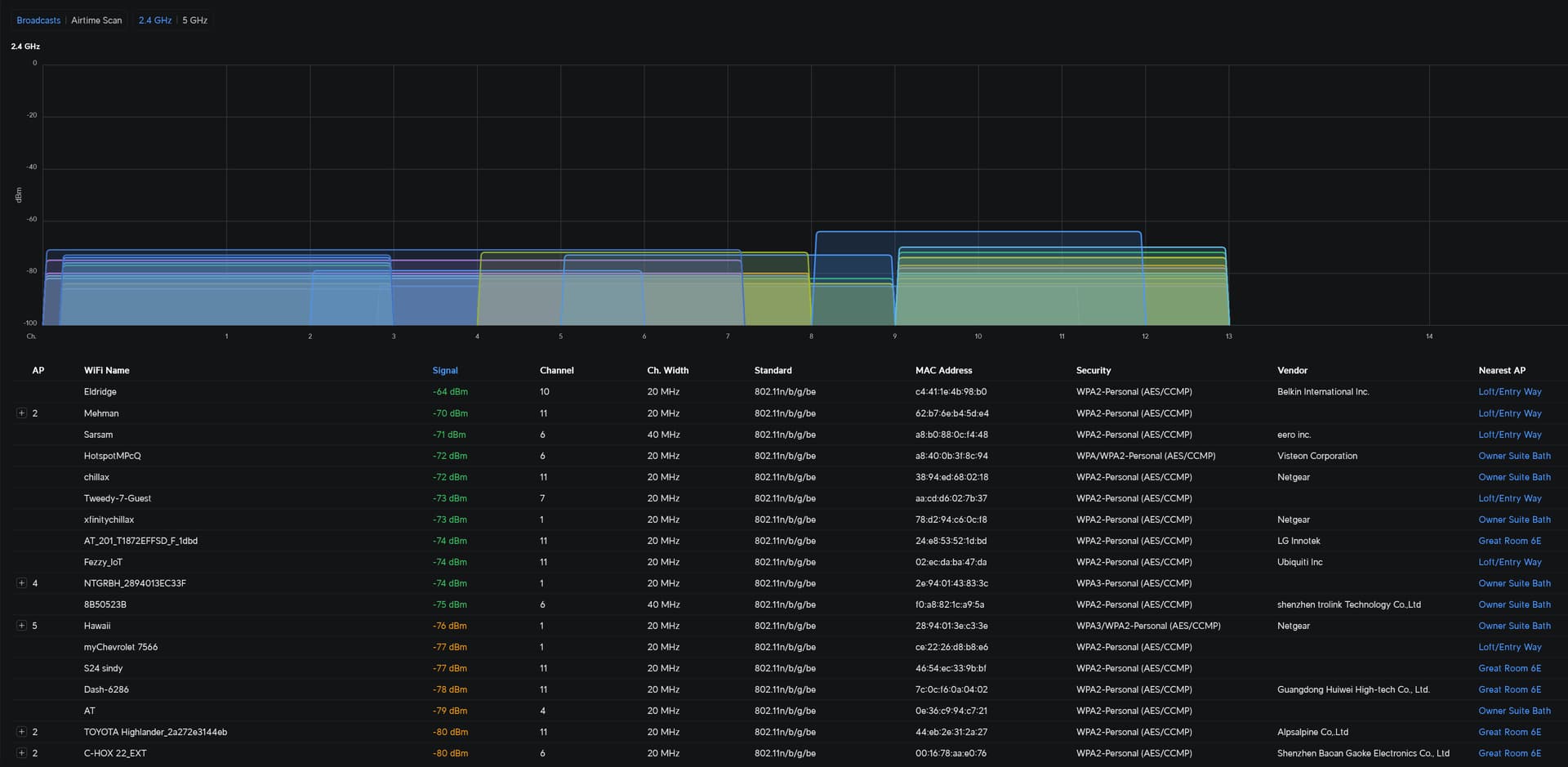
My workaround is to have a “cheap” BGN wired access point sitting under the printers on a unused 2.4ghz channel (and set to low power) with only those two printers attached to it. Now each printer shows full signal and have been (knock on wood) reliable. Crazy 
Should not be needed, the newer WiFi standards have improvements to RF quality and security not to mention less firmware bugs in old wifi stacks that cause problems, disconnects, etc. for themselves and other devices and the chip cost is absolutely negligible at this point.
@Denidil
I made a stupid joke before, I apologize (not sure if you’ve even seen it, it’s been removed).
I might be living in a bubble but isn’t it common practice to have a separate AP for iot devices? That’s what I do to avoid mixing wifi6 with older standards
The networking is still light years ahead of that component in Prusa’s new line. The best thing I ever did was build an OctoPrint module for my existing printer and I’m surprised that bambu did not add a networking hardware module they could continue to build on for years. While I don’t think their existing WiFi is a huge deal it doesn’t show any good future proofing down the road for features that become important.
Yikes, this seems to be a very opinionated topic. 
 s are running rampant
A separate SSID for IoT does not solve the full list of issues (security, perf, etc), nor does it solve issues with cochannel on 2.4ghz.
2.4Ghz is packed enough that the idea of a “dedicated channel for IoT” is insanity. there are only 3 non-overlapping 20Mhz channels on 2.4Ghz
for comparison 5Ghz has 24 non-overlapping 20Mhz channels (overlapping channels aren’t even allowed here like on 2.4Ghz) and 6Ghz has 60 (in the US, in low power indoor)
PS: yes i saw it, and i did not take it as a joke.