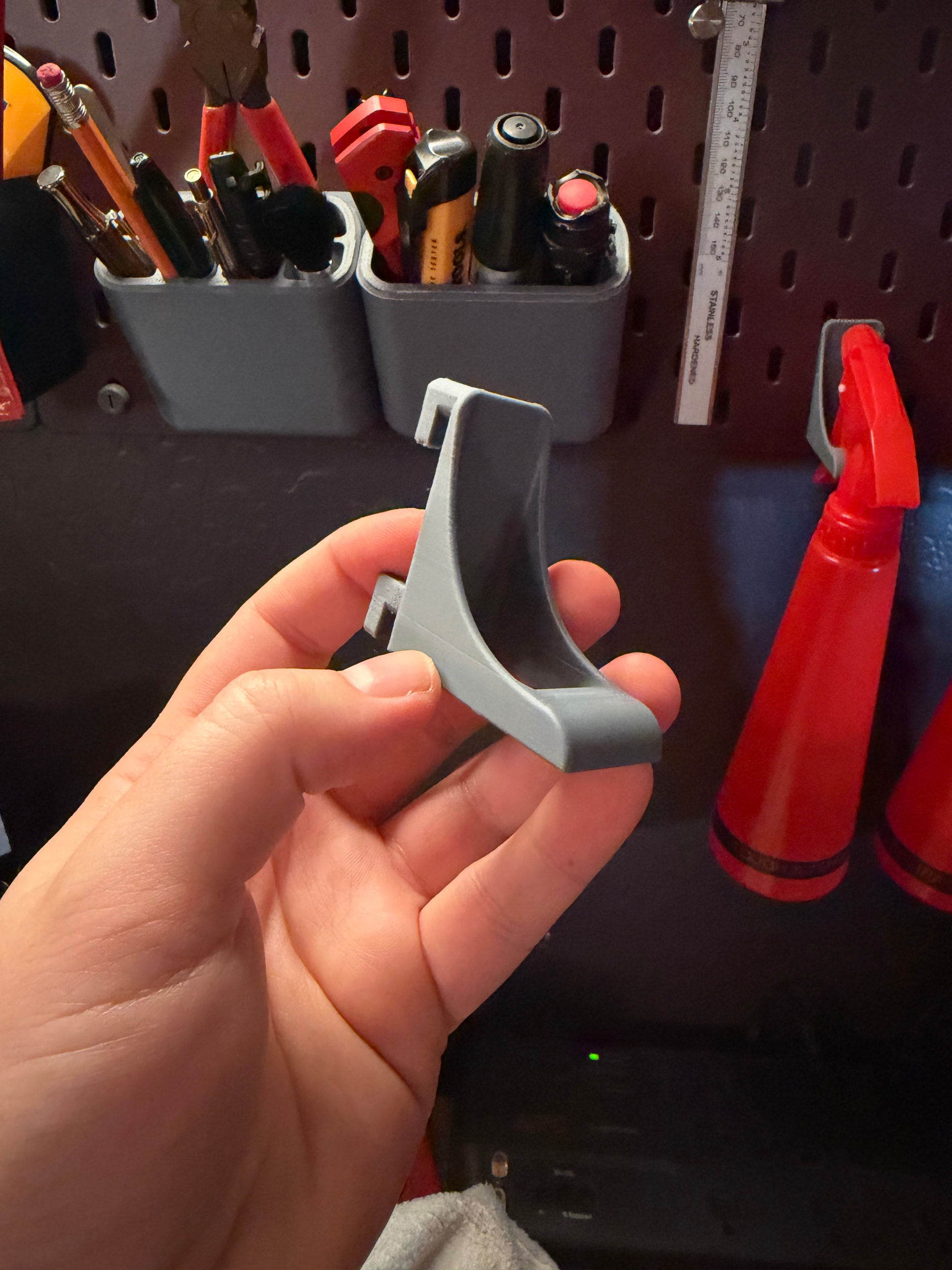
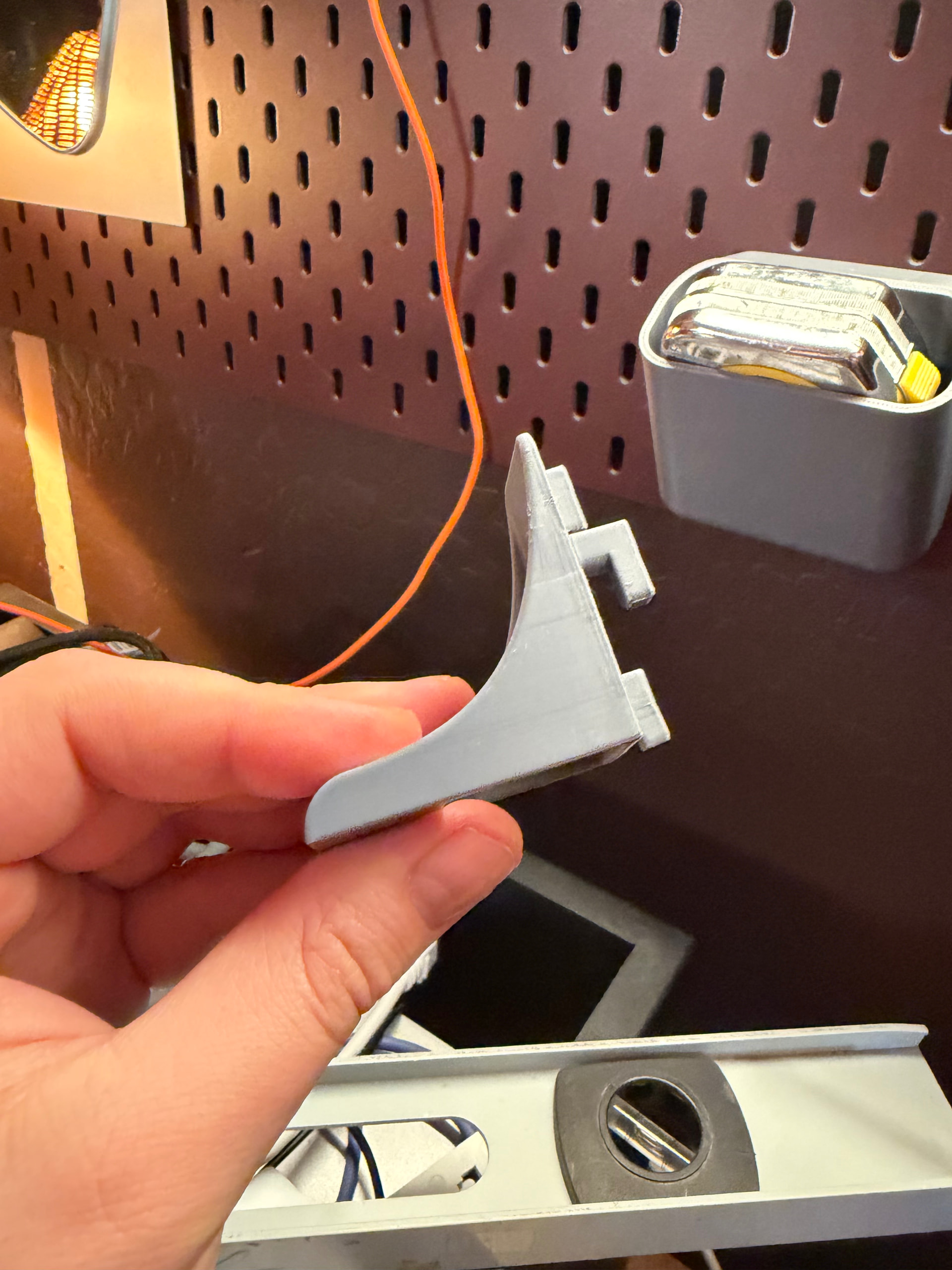
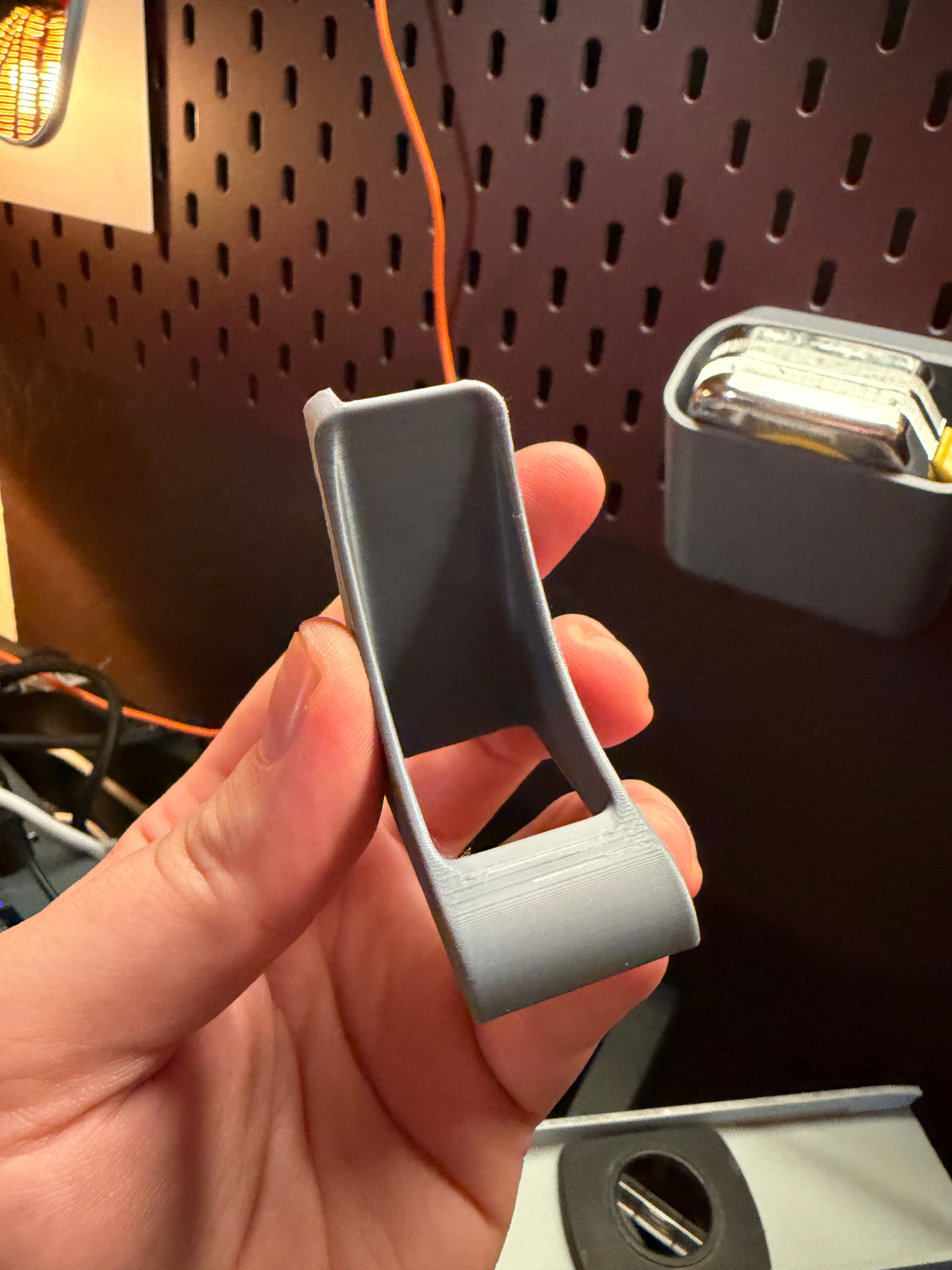
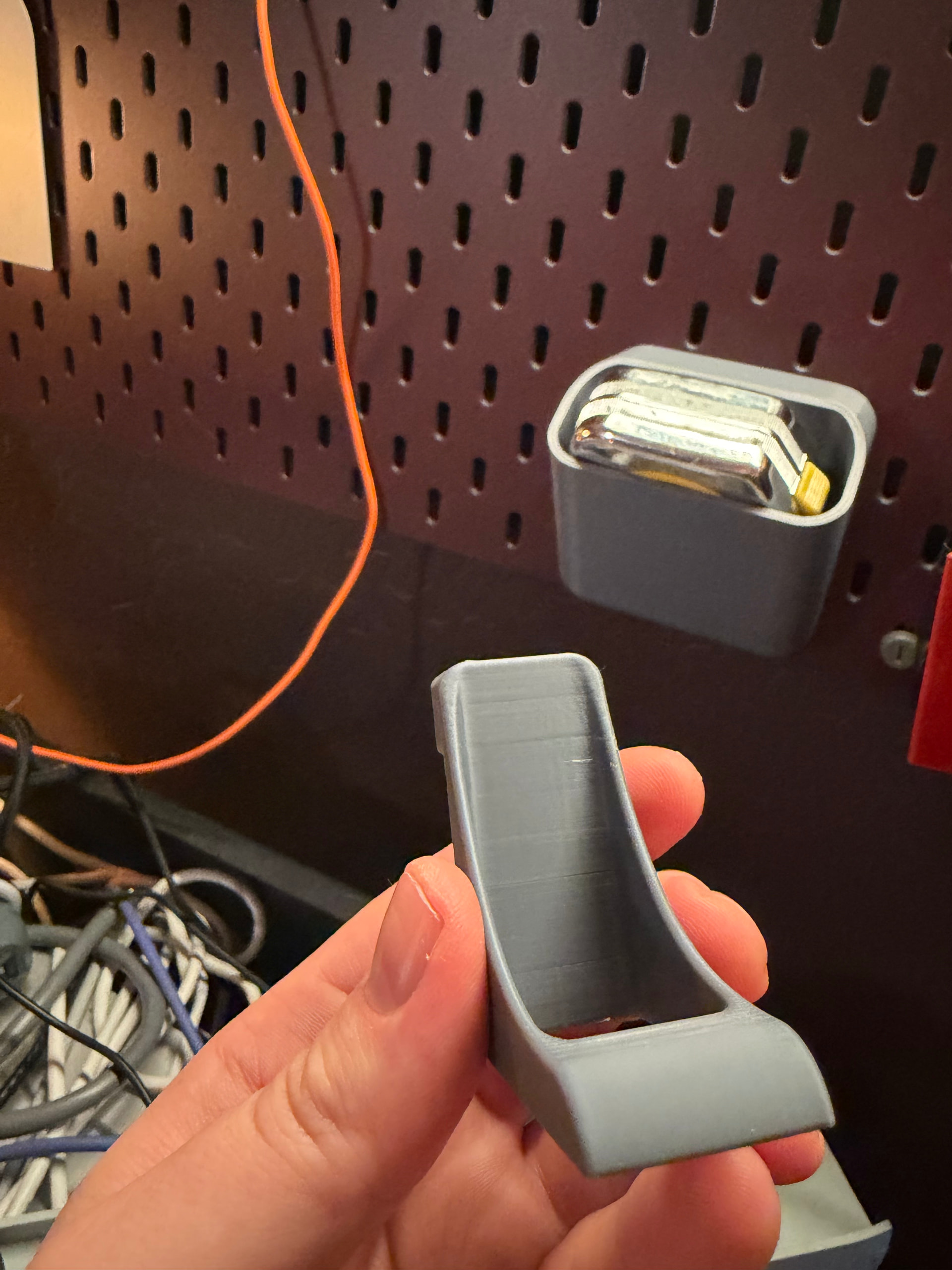
Hey guys! The x2d is my first printer that I’ve had for about a month now. I’ve watched so many tutorials and tried so many settings but feel like I can’t get this to where I want yet. I was getting some ringing and finally found out that slower speeds on the x2d can cause it too and did some tests and now have outer walls at 120mm/s rather than like 40 and seems to be better. Happy to add any other settings you need but how do I make this print better? Used 0.08 layer height. It’s pretty smooth but still can see those different lines in direct light. Build plate is cryogrip glacier. Only tried inland pla so far. Thanks!

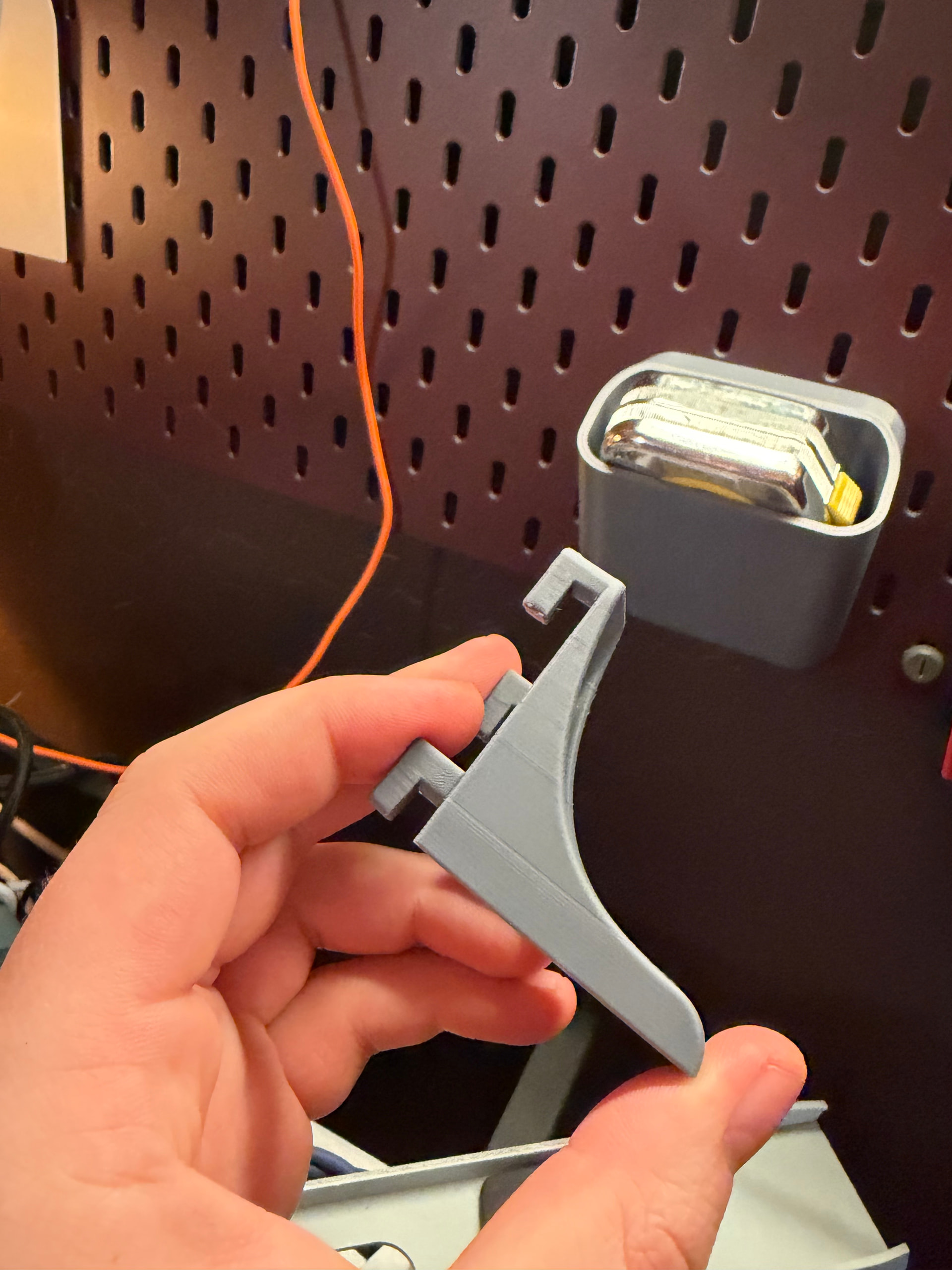
Does anyone have any thoughts on this?
There’s always going to be situations where certain lighting conditions will make the part look worse than it actually is (unlike my ex, she’s just always the worst regardless of lighting). I wouldn’t over think it. I think the print overall looks pretty decent, especially for something that is functional? I’m surprised you’d print it at .08.
I guess I’m not sure either though how much of the defects shown in the pictures are from you rotating the model to get the light to hit it right, vs it being a very obvious defect in any lighting.
I guess it makes me wonder too, where do your expectations come from on this?
I have a X2D, and it does fine. I like my H2D a little better, I’d say. Again, I’m not sure if you’re trying to play up defects with the lighting, but I can get models looking pretty ugly under the wrong lighting, but drop dead gorgeous under the right lighting. There will always be some level of defects from the FDM process that you’ll never be able to fully get rid of.
Maybe you should consider a different type of filament? Like PETG-CF, or one of those types (carbine fiber, glass fiber, etc) of filaments. They tend to have a surface finish that will cause layer lines to disappear.
What is it that you like better about the H2D?
The prints have been a tad better quality, and I think the H2D overall is a more solid design vs the X2D. I appreciate what they were going for with the X2D, but I think it’s mechanically complex in a way that makes it more prone to issues. The H2D’s design is a little more straight forward, even in it’s complexities.
I like that I can open the door all the way on the H2D. I like on the H2D that both nozzles are direct drive. I appreciate what they were going for with the dual nozzle setup on the X2D. Head weight, size, are all things to deal with, but I think having mismatched extrusion methods is kind of a pill. If you’re just running support material through the aux nozzle, it feels a little more ideal to me. Can’t run TPU through it though, bummer. I wanted to set mine up to have a dedicated TPU line going into the second nozzle, but not with the bowden setup. I am considering that with my H2D still, but my space/setup makes it harder to do vs the X2D which isn’t taking up ALL of the space.
I still like my X2D. I haven’t had any issues with it. I’ve contemplated if I would have been fine with just a P2S. I do like it as a dual nozzle setup where that aux nozzle is handling support material. I print a bunch of single nozzle stuff on it too, mostly overflow when my H2Ds are printing already.
I run the TPU thru the AMS+main nozzle and the PETG thru the aux. Feels wrong but it actually goes ok. Can’t use the more common curly-hair TPU, gotta be straight-walled.
You might try printing that model on its side. That will smooth the front curves, eliminate the horizontal lines on the sides caused by differing layer times, and strengthen the hooks. But you may then need more support and have a couple of new layer lines on the front.
haha! I’m with you on the ex thing for sure…
So this is my first printer so I don’t really have any previous experience with what older printers could produce, but I just am trying to get the quality of the prints as good as possible. Even though it is just a functional print I would still like it to look like a decent product and look good on the skadis board or at least as good as it can. It looks decent without being in direct light like that or from afar, but I am mostly trying to figure this out for other prints as well especially if they would be in the sun or just in brighter light in general. I feel like the layer line differences on the side could be better? I am just not sure what even the problem is because looking at the slicer all the lines seem to be the same height and same speed.
I am going to try some of those other filaments. I have read though that CF can be risky? Do you know what type of filament has the best surface finish?
ah ok ill give it a try! Would it at 45 degrees work at all? Also, if I print it on its side wont each side have a different finish than?
See that’s the thing…looking at the slicer there shouldn’t be any different layer times on the sides so what is causing that?
Is the H2C equal to the quality of the h2d or more like the x2d?
Thanks. I just started a print on the X2D using a .2mm nozzle, two colors, but only the left nozzle. That is taking 12 hours and 50 minutes. Same job on the H2D with both nozzles at .2mm would be 7 hours 50 minutes.
I, too, like the X2D, but not having two identical nozzles without a Bowden extruder is a handicap. I just wonder how I might sell the X2D and how long the anniversary sale is going to last.
Well, I think those kinds of defects are probably most noticeable on vertical walls like that. Sloped surfaces, things with more shape, tend to look better. To get a nice smooth vertical wall requires a very consistent print from layer to layer. Things like abrupt surface features (Like the hooks on the back) can affect that consistency in different ways, causing banding in sections.
You’re pushing out molten plastic, and there’s only so much control you can have over it.
There are some things you can do to help. I use 3 walls instead of the default 2, as it tends to help produce a nicer exterior surface quality. Your seam position can also matter, as having the seam change spots can cause some banding. It’s part of that molten plastic thing. You can’t just print a consistent line from start to finish. Starting and stopping the flow needs to be accounted for.
As for risk, meh. If you’re worried, you can further filter the air through the exhaust out the back.
I think a lot of them print the same, of those filaments that have additives like carbon fiber. I mean, as far as surface finish/quality. So, it comes down more to what you need from the filament, the strength properties and all of that.
I wouldn’t use PLA-CF personally. PLA isn’t that super strong, but from everything I’ve heard, CF makes it weaker. With PETG it’s a little different, as it’s said to make PETG a little easier to print, but mostly retains it’s strength. I’ve printed a bunch with PETG-CF and ASA-CF. I don’t like like printing with ASA-CF that much, haha. PETG-CF is really nice though. Prints about the same as regular PETG to me. Looks very nice.
With filaments like that, the surface finish is a little more mate/rough. It tends to blend those FDM defects a lot more, to the point where they can nearly disappear completely. It’s worth looking into if you’re looking for the best looking surface. I’d suggest starting with PETG-CF.
While I generally find PETG-CF easy to print, the one thing to note is that you need to properly handle it. That includes drying it, storing it correctly. This would be true of any CF/GF type filament. Give it a good proper dry. Store it properly with lots of desiccants! Don’t skimp on the drying.
H2C is more H2D for sure. They get fancy with the nozzles, but that’s just changing the nozzle, the other bits are all the same and are very nice! In my opinion at least, haha.
Have you tried the aux nozzle for this yet? I haven’t even tried mine yet, but I have heard that it can be good or its better than people say?
Well, it can’t be as good or better than the main nozzle or there would be two Bowden feeds.
I’m sure it’s somewhere between the worst people have said and the best.