I think we can agree that we are basically on the same track, just saying it differently. A really wet spool in a closed container with a meter will show that eventually the air will become saturated to the level of moisture in the spool, at a given temperature. The warmer the air, the more moisture it can hold.
I also never claimed this will tell you exactly how much moisture a spool holds, but a close Idea of content. The spools are packed too tightly to fully release all moisture. Over time, the moisture will migrate to the rest of the spool from the middle. Heating it, and having a means to remove the moisture from the surrounding air is the only true way to draw out the inner moisture as it will migrate from the cooler middle to the warmer exterior of the filament roll, where it evaporates, leaving the filament. This is what a filament Dryer does, heats the air surrounding the spool so it can absorb more moisture, circulating it with fresh cooler air, while slowly warming the filament from the outside to draw inner moisture out.
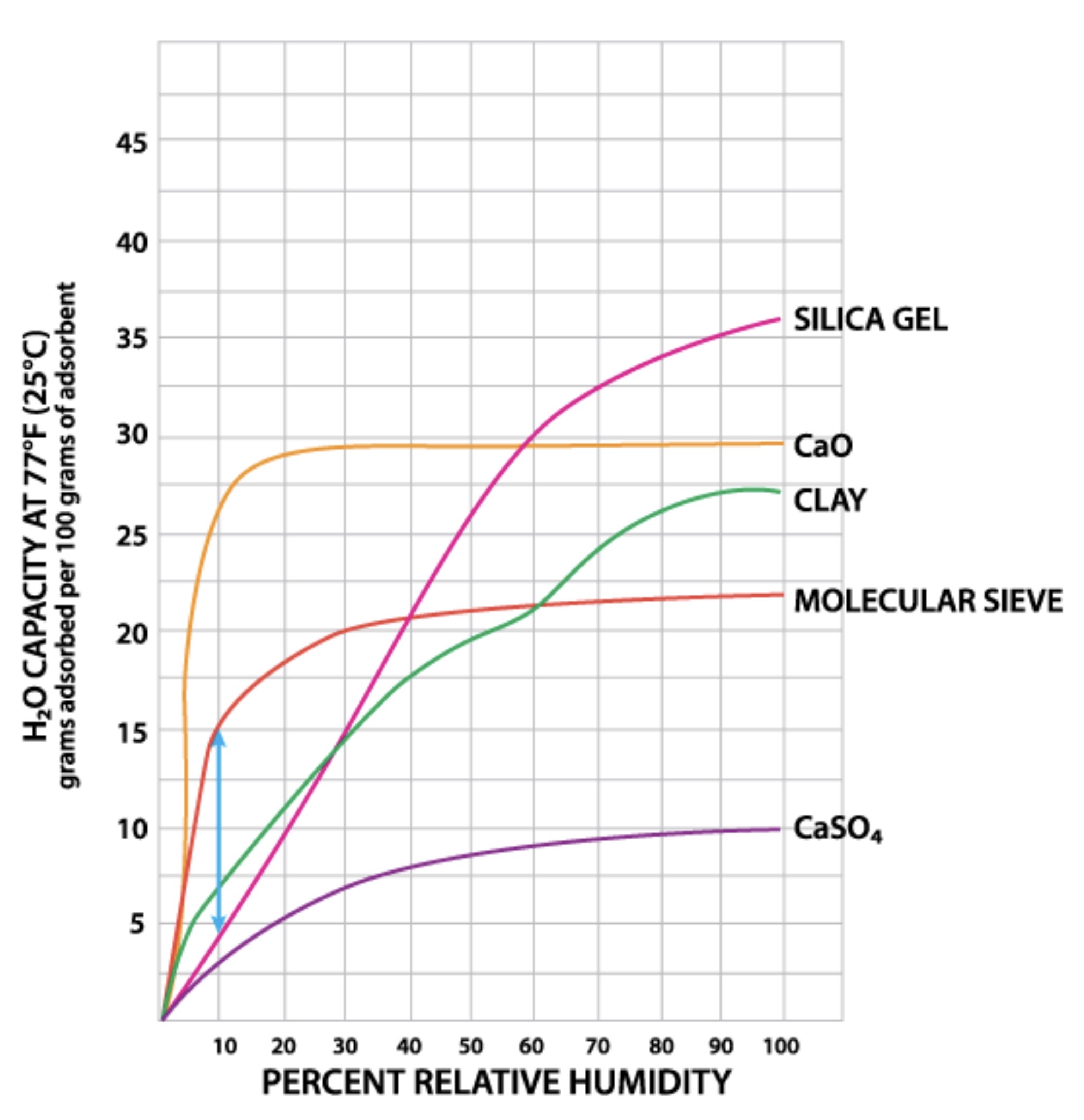
Desiccant in a sealed box does the exact same thing, but without heat, just takes longer, it absorbs the moisture in the air inside the sealed container, the dry air now absorbs moisture from the spool, which in turn gets absorbed by the desiccant until it reaches its capacity, at which point the air in the container will absorb an equal amount of moisture from the filament that it contains. It usually takes several days depending on the temperature. Keeping in mind that moisture seeks equilibrium, when the outer strands exposed to the air reach a lower level than the inner strands, those inner strands will release moisture to seek the same level as the outer strands, until equilibrium is reached.
One other factor involved is that moisture flows from cold to hot, a cold spool inserted into a warm container will release it’s moisture quickly into the warm air, on the flip side, if you pull a warm spool out of a dryer into cold damp air, it will act as a sponge and start soaking up that moisture for as long as it sits out in the open. ← Reason I bag as soon as it is removed from an AMS, 66* basement with RH of 60% or more.
Study ERV’s that are used in HVAC, then you will get a better understanding of the way this works. These are systems designed to transfer fresh air with stale air while blocking the moisture from mixing.