Free open source modeling program Fusion360 replacement

Have you tried Crossover Linux from CodeWeavers? It’s not a VM but the software provides all the hooks and services Windows does so Windows software doesn’t realize it isn’t running in Windows. As far as it knows, it is running under Windows.

Not everything works depending on if it is well-behaved or not, but many applications do work and work very well. Also a bit snappier than a VM.

Brother P-Touch editor (label printer software). Installs, does not run,

https://www.codeweavers.com/compatibility/crossover/p-touch-editor-51

Im really only speaking from my experience, compared to windows and mac os, Linux is a pain to work with, and even more to set up correctly. It gives you a lot of freedom, but thats more freedom than 99 percent of people need.

Its a know your audience thing.

That’s qualified horse hockey. It’s just a little different is all. The installers that I’ve used are really pretty similar to windows and it just installs. Plus it comes with applications Microsoft wants to sell you. Windows has turned into a surveillance paradise too. Much of what you do gets reported back to Redmond “to improve your experience”.

Instead of getting nickel and dimed to death with Microsoft’s store to buy their apps, if I need an app I just go to the software manager, pick what I want and install it.

The desktop is more flexible and multiple desktops are built in. No weird toggling between desktops and having to assign apps. You can just drag and drop.

Linux generally has better security and just being in the minority it isn’t targeted as much as Windows. And correct configuration is kind of baked in.

Linux is also free. Anyone can download an image you can burn to a USB stick and then boot from it to try it out without installing or stomping on a windows install. And anyone who hasn’t installed an OS yet can always just install it and see for themselves what it’s like. A regular install works way snappier than a USB image.

Linux is my main OS. Windows is only installed on a separate system so I can run some applications that don’t run under Linux. I use two separate machines so no windows app can go exploring in the Linux partition. Anything important or financial gets done in Linux.

Linux is my go-to. It’s actually way easier to use for me than Windows now. I trust it more. Plus, anyone using Raspberry Pi or other Linux-based systems will have a lot of things in common.

Linux used to be more clunky and hard to use but that was a decade or longer ago. If you haven’t tried it recently you might give it a try. It is free. It won’t touch your windows install - unlike windows with an existing Linux install.

Things like this are standard for all forms of CAD, its just different variations of it. With parametric modeling design intent, sequence of operations, and many other things are much more complicated than just building a clean model in the first place. It only takes moments to pop a face off, look inside, and delete the extra stuff. For what I do, it’s a perfectly fine tool. I often use it to make ‘prototype’ models before moving to Fusion for a proper final design.

That hardly makes it a no-go, it’s just a different workflow. The reasons why those errors happen are also one of the things that makes SU such a powerful tool for some applications, mostly all related to the learning curve. That’s the tradeoff you get using something that isn’t based on solid models.

And for the record, it’s equally possible to make the same bad geometry in Blender or other mesh tools.

Yeah… your not normal.

Different audience buddy.

I’ll not a huge fan of Linux. I used Ubuntu for my VMs when I had my home server though. Mostly worked well, haha. Each VM ran standard and well supported software though, like the plex server.

Linux doesn’t appeal as much to me as desktop OS.

I got sick of dealing with all the technical stuff… probably why I moved to Mac

My friend that was trying to switch to Linux, he messaged me saying he’s going back to windows :joy:

LINUX does work, and does install easily, but only on mainstream hardware with common setups, or niche older machines that have had time for drivers to be fixed. For users I would recommend trying a liveCD (which won’t install anything, and just runs from a memory disk) and start from there.

When my workstation was still dual booting - in early 2026 - I had a problem with Windows Bitlocker, UEFI fast boot, and Ubuntu Resolute. This is a known problem and is well documented with workarounds, that may or may not work depending on your machine’s motherboard and TPM chip. Bitlocker being an uncommon component in home PCs I can see how it they did not invest the time to fix the problem. Eventually it broke in a way that forced me to enter the 48 digit bitlocker key on every boot. I resolved the problem by removing Windows.

At the core of professional CAD software is a powerful geometric kernel. Lacking that, is why free alternatives to professional CAD programs tend to fall short. Solid Craft has at its core a geometric kernel that has been being developed by NIVIDIA in conjunction with the folks behind Solid Craft and the other similar AI software efforts. It used to be a daunting and tedious process to disassemble code. Nowadays there are programs that can do it with ease, even recreate the source code. It would be straight up piracy to then release that code as a new product. However, if one also creates a program that converts the source C++ code into rust and uses an alternate geometric kernel it becomes something else. Change the icons and whatnot and suddenly one has a whole new program. In this case, as is common, AI didn’t create anything new, it just rehashed what was already done. Something that some see as stealing.

I am of two minds on this subject. On one hand, I have been using CAD professionally since the late 1980s. During that time, I have seen a great deal of improvement. I worked mostly in product development, and I can sympathize with companies like Autodesk and Adobe - to an extent. It seems to me that Autodesk has spent a lot of effort at creating their products, at great expense. Now it seems as if someone can just come in with an AI and steal away the work and the livelihood of others. But then, is that not the modus operandi of the so-called Tech Bros, the owners of AI, to profit from the work of others?

From the time of the invention of the transistor, there have been many thousands of engineers and technicians who did the work that is seen as a technological explosion. With all the wealth that has been created from that technological explosion, those who did the least amount of work tend to have profited the most. Especially considering that many of the originators are long gone and many more laid off. There is a reason that homelessness has risen and the infrastructure has degraded in proportion to the increase in the wealth of the wealthiest Americans over the past 40 years. Studies have shown that many of the CEOs and billionaires tend to have been C students. They are not the geniuses they pretend to be which goes a long way to explain the scandals and other depravities that many often engage in and occasionally get caught. If they lose a few dollars from not collecting subscriptions or maintaining outrageous pricing, I would be okay with that.

I have never paid for CAD software. It was always paid for by employers, even my personal licenses. When I retired, I switched from AutoCAD to the free version of Fusion. As far as a drawing program goes, Fusion comes up short by quite a bit. However, its modeling is on par with what is possible with AutoCAD, which is understandable considering that both use the same underlying 3D modeling kernel. However, all my Fusion files are locked away in the cloud. It is no big deal on its own as it allows me to use more than one computer. But if Autodesk suddenly stopped offering the free version, I would lose access to all my files. All I would have left would be the 3mf files that I create for everything I model.

Currently I am in the middle of a rather large project using Fusion. I have looked at Solid Craft and see that it still has holes to fill. Nonetheless, for my next project I am going to use Solid Craft. One could argue that it is stealing from Autodesk, but then I, and the many other users of the free version of Fusion, aren’t paying for it anyways – except for whatever data gets extracted. I might even try PhotoCraft or VectorCraft to spiffy up my assembly instructions.

Being as the developers of the craft software haven’t invested nearly as much as companies like Autodesk and Adobe, I wonder how long they will stay around.

In my opinion, that is one of the best uses for it.

But for a main operating system, its a no go for me. I dont see a point to putting yourself through the extra work to set up VMs when all the software I need is native to Windows.

Its a good secondary operating system for people that want to mess around with it.

I really enjoyed exploring the aspects of VMs. My server isn’t running anymore though. If I did it again, I’m not sure I’d go down that route so fully.

If Mac mini prices didn’t explode like my waste line after buying a cheesecake, I’d be interesting in that route fora little compact server. With prices so high though, I’m just gonna go back to the 2000s before everything was so connected, as driven by tech and the web.

I am hoping to get back into it some more when RAM and Storage prices go back down. I have an Dell Precision tower with dual Xeons and dual P4000s that I bought off of my work last year, I always planned to do something with it, but considering the extra cost of all that storage and ram that I would need, a few thousand dollar investment into it is not really worth it.

Putting together a MAC cluster always sounds fun as well. I am surprised how power efficient yet powerful they can make those things.

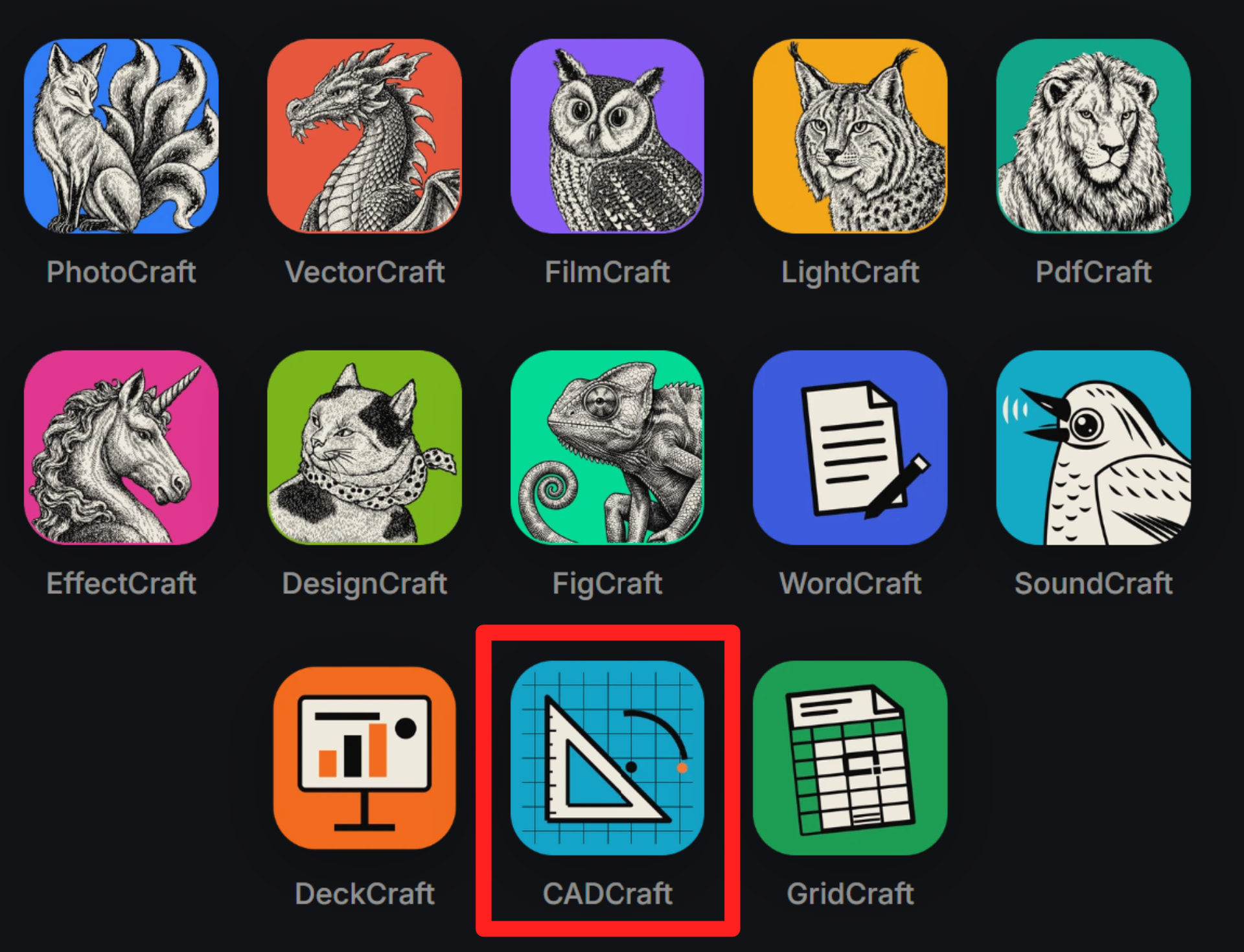
The other project to follow is CADCraft… which before the whiners start complaining “it isn’t as good as xyz, stuff is broken /not working”… has a roadmap doc outlining the current state of the feature set (as do all the artcraft apps) admitting as much… so it is not unexpected. what is more important is that is not a bloated package, open source so you can do as you please with the code, and cross-platform.

I have a dual Xeon dell something with 192 gigs of ram ! The cpus are a bit too out of date though, and can’t afford to load it up with storage. All that ram though. It’s an older type, but it’s still good :disguised_face:

Yeah. Its hard to get something newer at a reasonable price. Mines a 2017 model. Crazy to think thats almost a decade old.

I only gave 128gb, which honestly should be enough for what I want to do. The 256 SSD is painful though, since everything went back to a server room it just didnt need much.

Mine was a power edge t420. Little older. It has a bunch of hot swap bays. I meant to load it up, but never got that far. I only managed to get 4-6tb into it

I hope we can get an iPad port of this! My most powerful computer is an m4 iPad, so it is my only way to run cad. I use an old iMac running Linux for slicing

Mac mini
Funny that topped out Mac minis instead have barely any premiums on eBay. It’s very easy to see why. (ofc if you buy new the hikes are just as silly).
Beyond the fact that I got mine before the stupid bubble kicked in (and it’s such a beast for the price), honestly I barely care. It’s a fad.
AI
AI is not a fad, that’d be quite inaccurate, but having right discernments here seems to be a very common challenge and many just go straight to the extremes. AI is not another Crypto, they don’t have a lot in common, but it’s amusing that TwitterCryptoBroVibes of yesteryear are so-so everywhere. Everyone and their grandma and their dog can’t stop chiming in. (the management class belongs to the grandma category imo)
Fusion
Honestly imo fusion (or anything Autodesk) should not be the recommended tool for CAD newcomers in 3D printing / hobbyist space. There’re good reasons it’s the most recommended, but fundamentally it’s by circumstances just a lack of comprehensively easier to recommend alternative that checks all boxes. “More intuitive? Too expensive.” etc. Purely for the kind of folks that most want a free vibe-coded clone, fusion seems to be the wrong target. But that’s if we assume the people behind it actually cares about that lol.

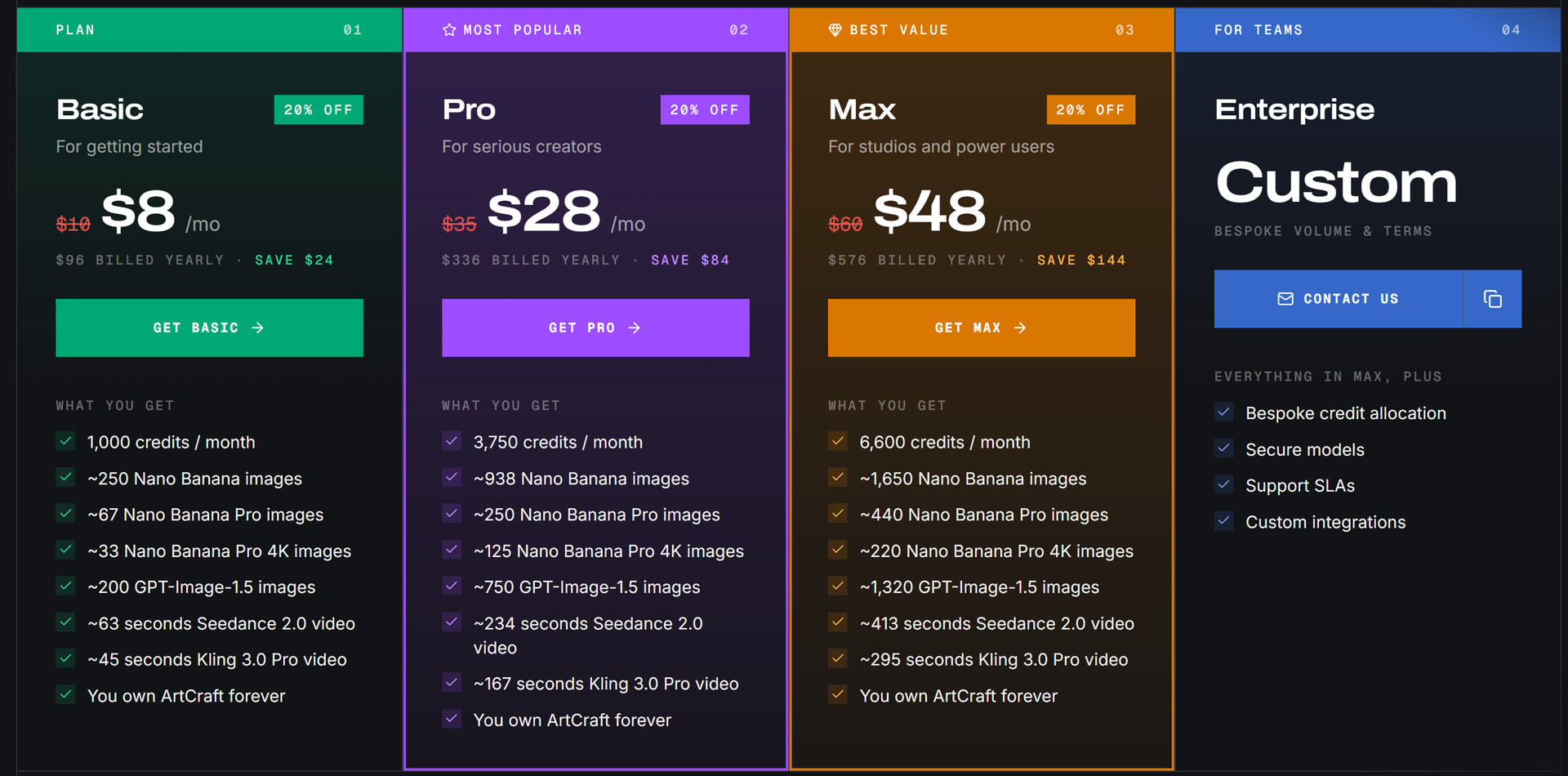
These are the same people I mentioned before. Right now, they’re burning through their tokens so quickly that they’ve started offering subscriptions to help cross-finance it.

At the moment, they’re only able to keep the project running because of their subscription model. Yet they still seem determined to clone more and more commercial software.


If you take a closer look at the fine print, it gets even more interesting. The project is open source during development and available for everyone to use, but they’ve already made it clear that guaranteed access to the final releases is reserved for paying subscribers. If you don’t pay, there’s simply no guarantee that you’ll have access to those releases.


Honestly, I don’t even blame them. Their token consumption is like throwing a lighter into a haystack. The costs must be enormous, so it’s no surprise they’re looking for ways to monetize the project. Still, we have to look at the facts: If people are no longer willing to pay, the project will fail immediately,


Despite all the criticism, the project mentioned in the original post still has a good chance of not making the same mistake, because it isn’t trying to clone 13 commercial programs - such as Adobe Photoshop, Fusion, Excel, etc. - all at once. Artcraft multiplied the token costs by 13 on its own.

Except the subscriptions are all for… shock horror… online services that actively cost money to host, as opposed to a static download.

I think you miss the fact that there is more than one person actively contributing, and some of the projects are pushing over 1000 commits per week… so even it it were to close down tomorrow, or the “releases” which you can self-build be put behind a paywall (so why bother?), there is nothing whatsoever stopping someone else from simply carrying on with it, since you have access to the entire source code and repo history.