PA612-PC
what is the best glue for the filament?
I didn’t know if super glue would on this.
I’m sure you’ve already tried cyanoacrylates(crazy glue) which really don’t bond well to dissimilar plastics.
Here’s something you can try.
https://www.amazon.com/dp/B0CCYMBRC9/
Although this example is for different material than yours, this one adhesive is specifically designed to “weld” not glue two dissimilar plastics together. In the example that I tested, I bonded silicone which is designed specifically to be non-stick, to PLA and the bond itself was stronger than the surrounding material. When I did a strength test, the bond was intact, the surrounding material tore which is the distinction between a glue and a weld.
If this doesn’t work, the keywords you want to Google search are “adhesive”, “dissimilar materials”.
Here’s an example Google search string that I used when seeking such an adhesive. You’ll see that there are a number of two-part epoxies that claim to be able to do this. I’ve not tried them but they show promise.
thanks, I probably didn’t word my question right.
I am glueing PA612-PC to PA612-PC
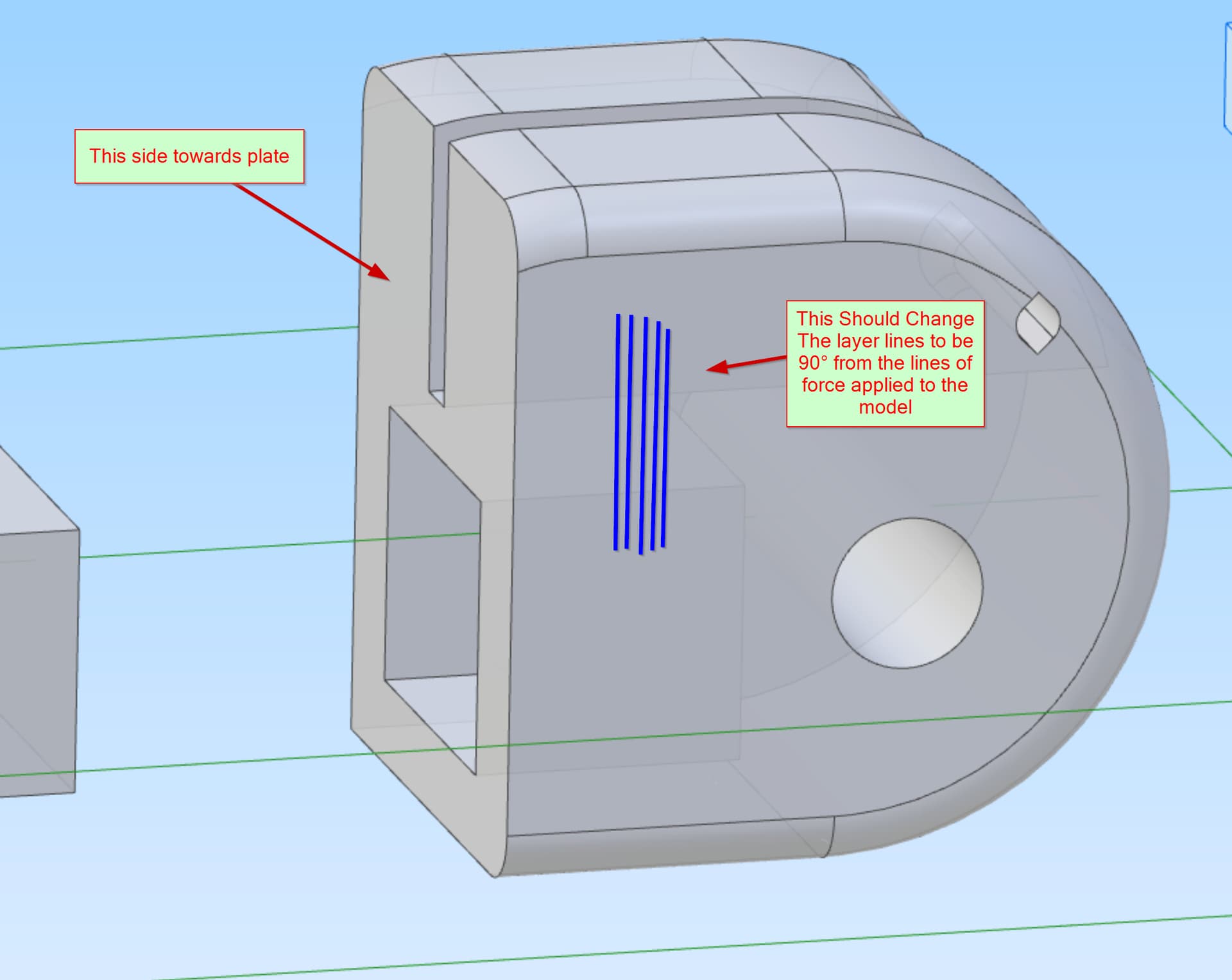
I have a part that delaminated on me so I am splittiing this part in half so I can change the print direction on 1 of the parts to stop the delamation
the little hole is where it delaminated, it has a linkage in this hole
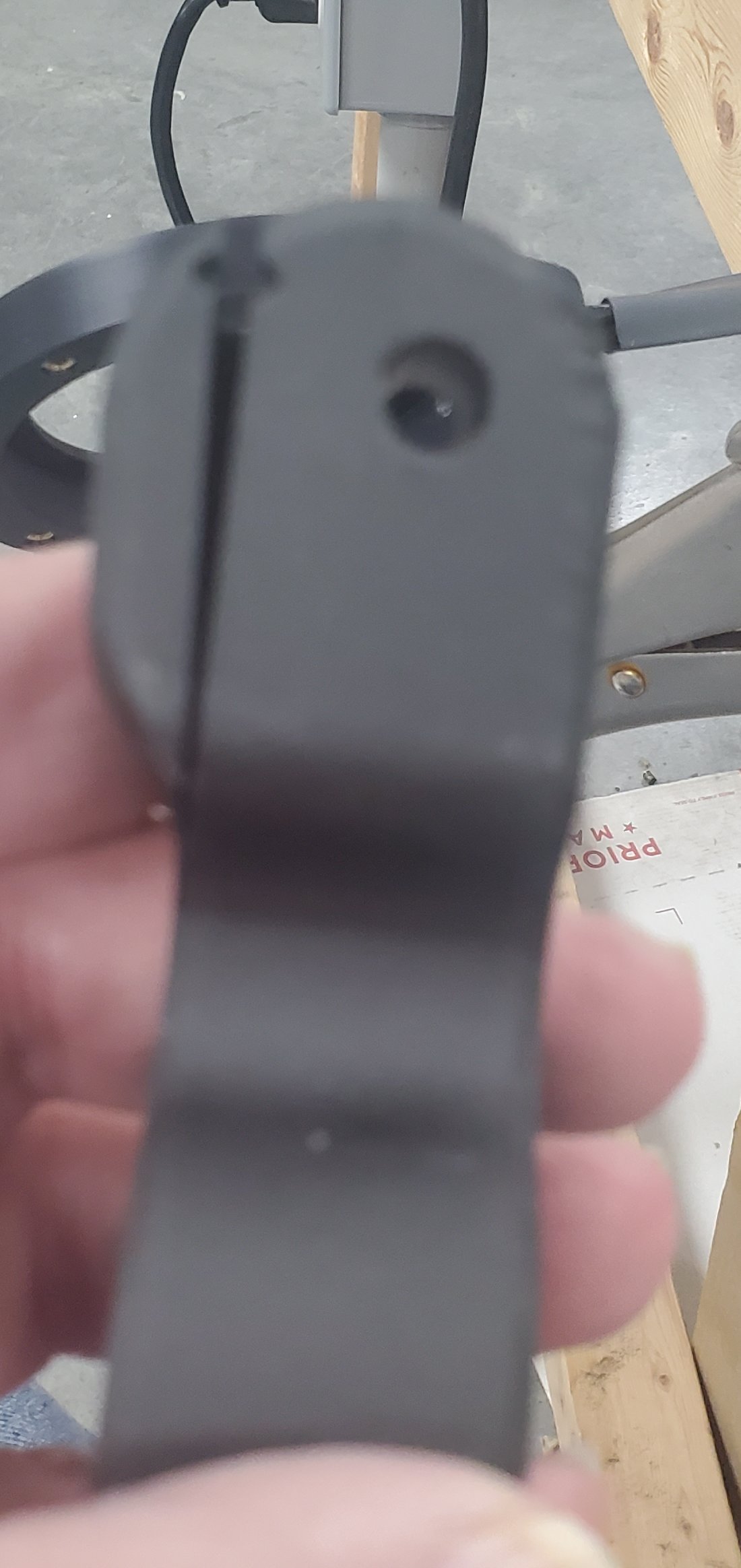
Can you take a clearer picture? That one is out of focus and I can’t see what you’re referring to. Also, if you can post a screen shot of the sliced model showing what the expected outcome was supposed to be, that would help us diagnose what might be going on.
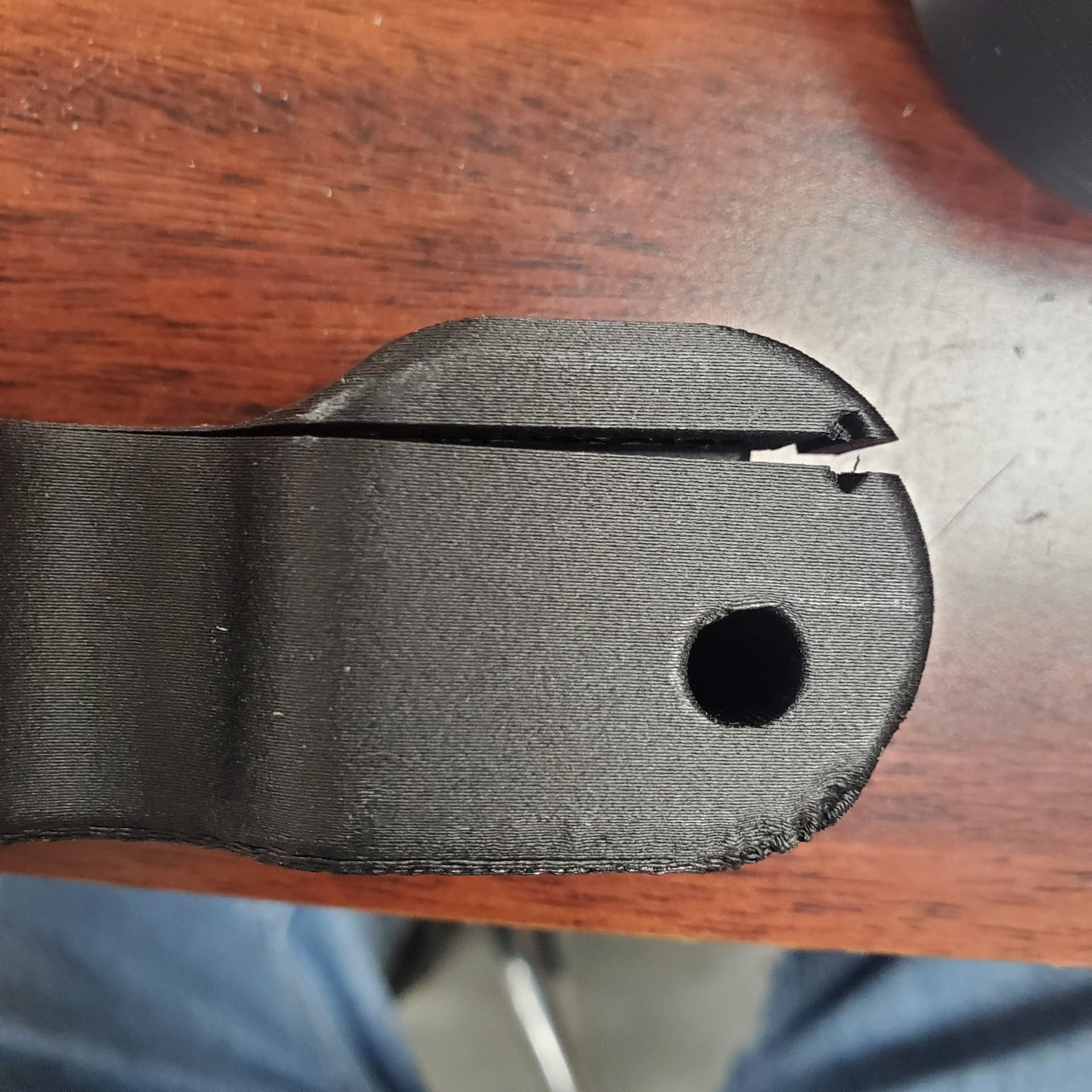
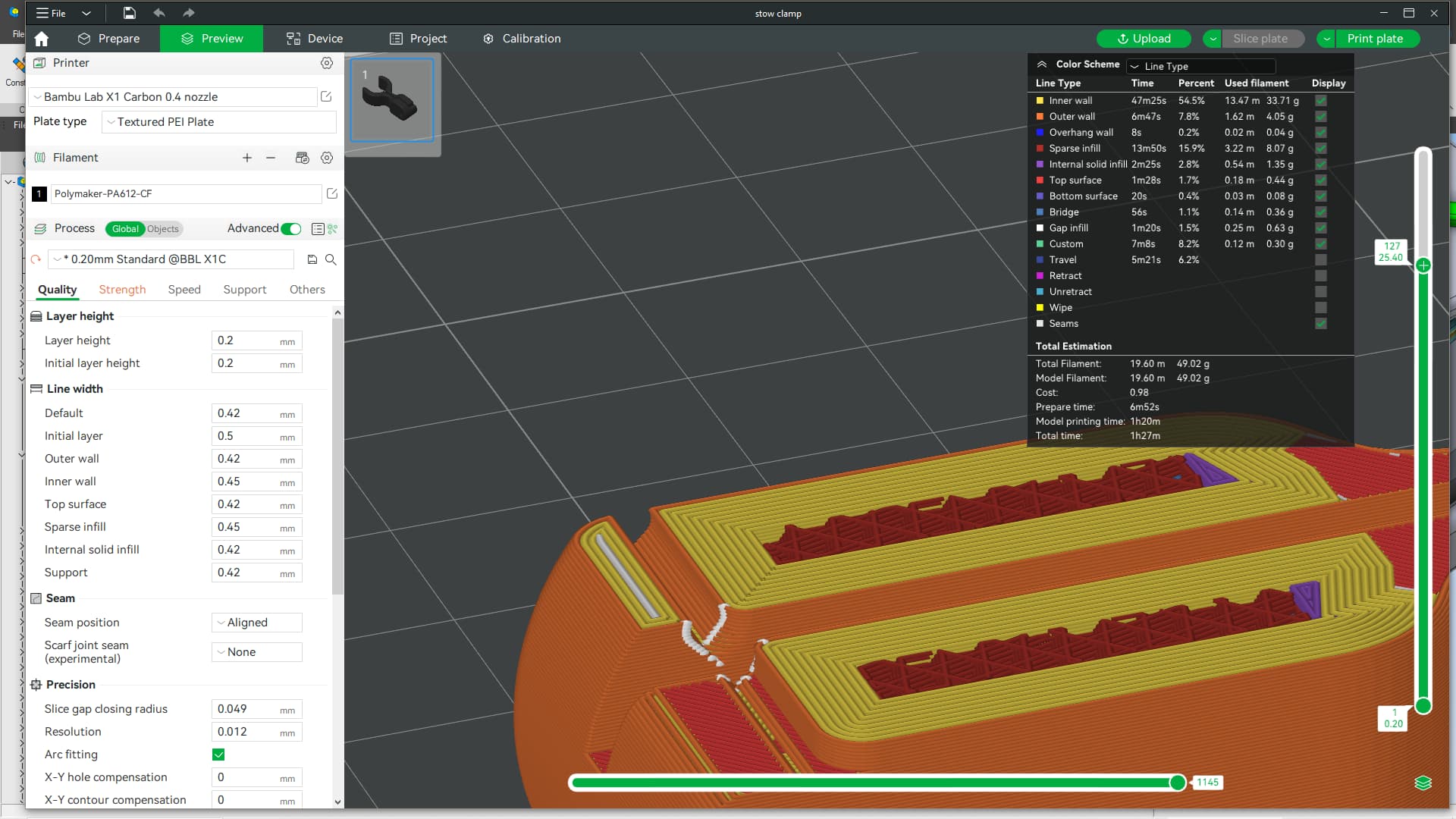
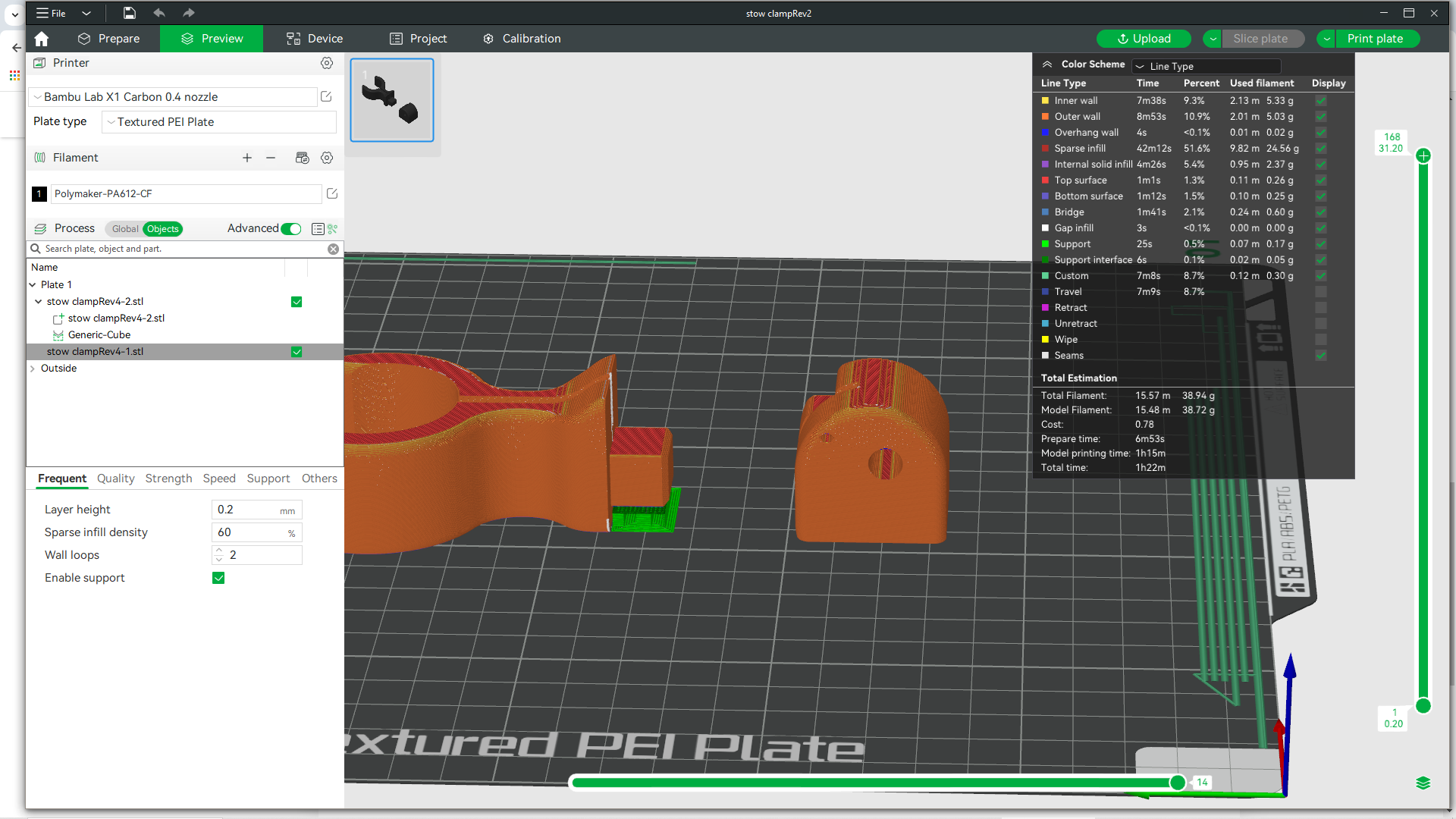
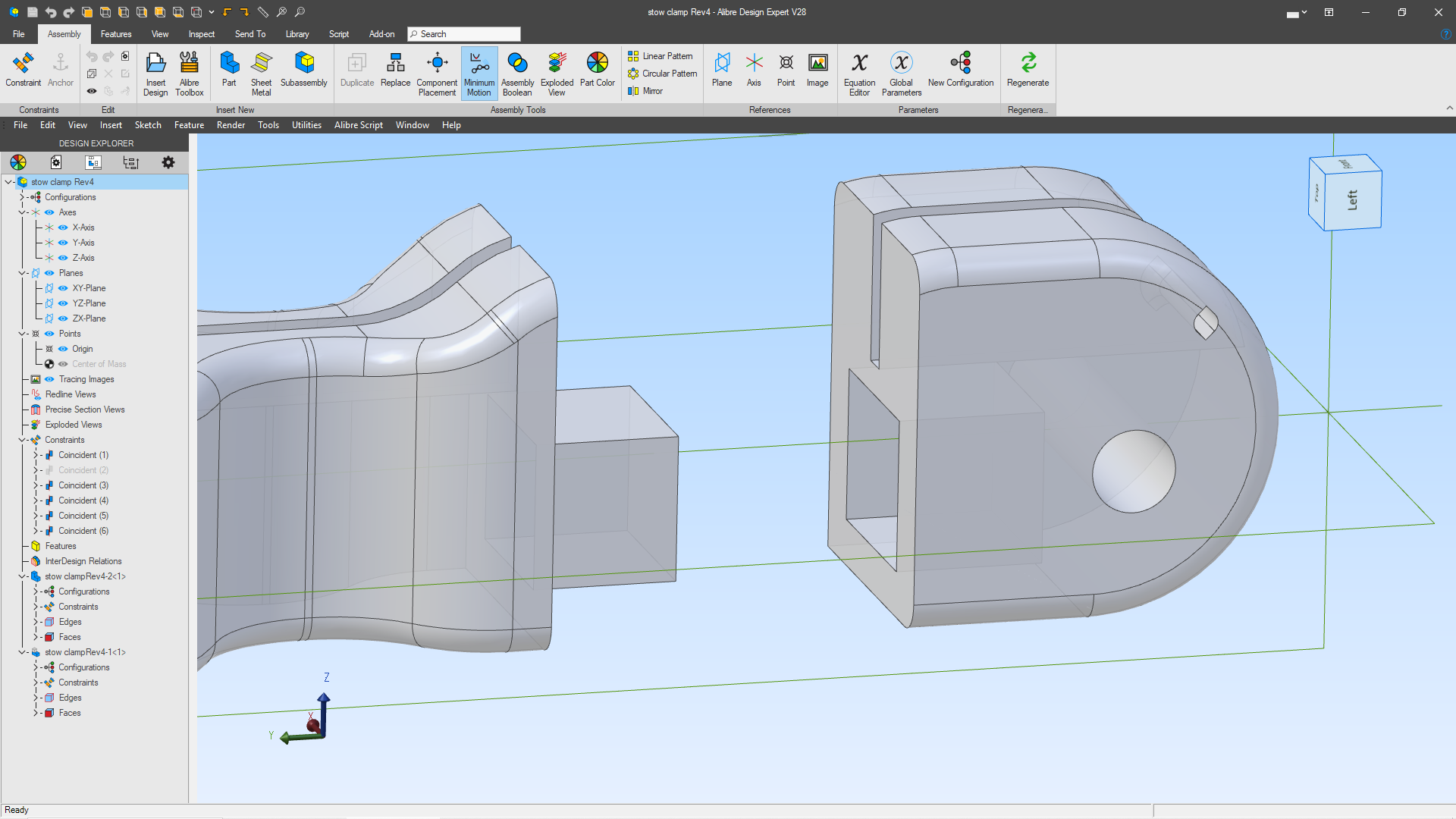
Ahhh… that much better and thank you for the CAD screenshot too. I wish more folks would post this kind of detail. It allows for better answers.
My first reaction is that you may have the temperature of the filament set too low or the cooling fan set too high. Either way, the example show above are consistent with delamination resulting from poor layer adhesion.
There are two methods you can use that might work. The first is a combination of hotter filament(raise the nozzle temp in increments of 5° and turn off part cooling. The second option is to change the orientation of the model on the bed which you were already chasing as a solution when you split the model. By changing the orientation of the layer lines, the lines of force should be less on the layers.
You can cheat with those impossible to glue plastics.
The first option is a flame treatment.
Going over the joint with a soft flame will break the molecular bonds that prevent the glue from bonding.
A fine sanding, then the flame until you see the surface changing - don’t overcook!
After that most glues will work here, including superglue.
If the part has to be strong you can cheat with staples.
Preferably with legs not too long to go through the part.
Heat with a flame and press into the model about half way.
Then use a 3D printing to melt some filament over the crack.
Use some cheap soldering iron (wood burner or such) to heat the staple from the top until it starts to go down.
Stop when flush.
Place some baking paper over the joint and smooth the added filament with the soldering iron.
Nylon is a pin to glue…
3M Scotch-Weld 4475
For such applications, ready-to-use solvent adhesives such as 3M Scotch-Weld 4475 are recommended. This is an oil-, grease- and plasticiser-resistant multipurpose adhesive based on copolymers, which can be used to bond polycarbonate to each other and to other transparent plastics such as acrylic glass (PMMA), but also to polyacetate, rigid and soft PVC.
Source:Vier Tipps zum Kleben von Polycarbonat | Der 3M™ Klebeprofi
thanks guys for the good info.
I have increased my temp from 260 to 275 and that has made a world of difference in the quality of the print and hopefully will help cure the delamanting probelm and elimante the need for glue.