I ran across this system called Switchbot temperature and humidity sensors. It looked like it could be used for several things to me. So I bought the 3-pack of sensors, only to find out that it also needed a central receiving unit as well. Well, Gotcha!
So I ordered in a control unit and got my 3 sensor doots working and reporting to my phone. My big want was for one to work inside my dry box cabinet so I could monitor the Temp and RH without opening the door. Happily I found the sensor does work fine for me at my close range (about 10 feet).
So, encouraged, I activated the other two sensors, one I put out at my Telescope out back to monitor its Temp and Humidity, and the last (3rd) I named Roaming so I can put it in my AMS2 A/B, or my Sunlu S4 dryer.
I’m very happy to say my experiment with this Switchbot system is a total success. So much so I have 3 more T/H moduals arriving today to distribute around. Thinking my AMS2 units for a system wide easy watch.
It is nice being able to open the app on my phone and see what is going on without wondering around checking things. No connection to this line, just a happy owner. There are ways to keep track and be assured sensitive stuff is healthy at the tips of your fingers. (OH, BTW, the sensors come with Batteries. that’s a nice start!)
The bottom line is the convenience of having the information at your fingertips. Can you check your tempurature and humidity of your critical areas from the throne room? I can.
Why do you need to split a percentage? Is 9.3% going to work, where 9.5% isn’t?
I like the ability to see what each AMS2 is doing, as well as my dry box, and my S4. Early detection leads to early cures.
“Your filament is probably wet.” Isn’t going to apply to me. I think some folks spent more time in the debate club than the actual lab. I’ll know without asking.
Depending on just how much you like to tinker there are many ways you can monitor the environment in your AMS’s, printer (if enclosed) and even things like filament dryers.
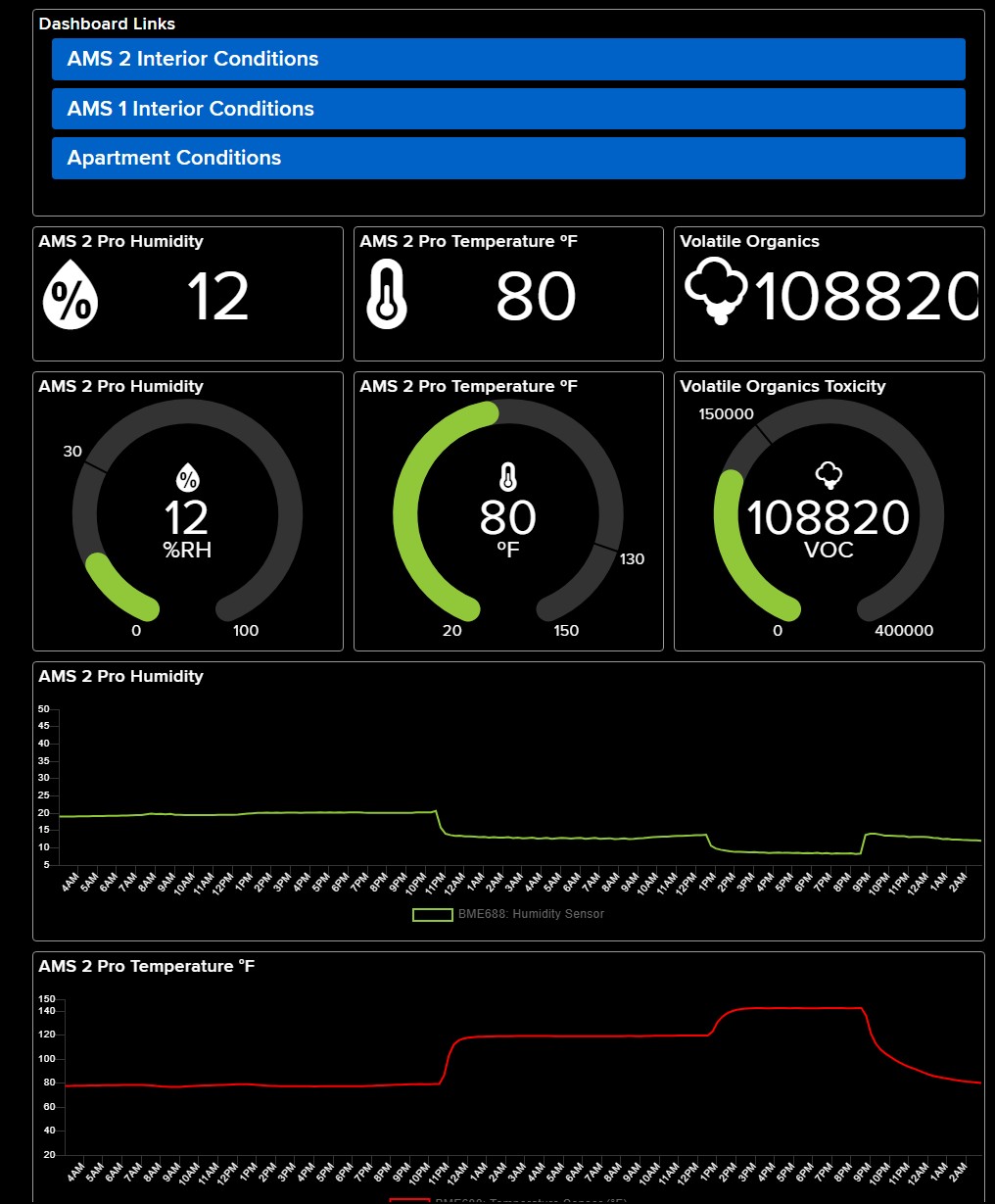
I first did this with Raspberry Pi’s but now use microcontrollers. I bought Adafruit sensors but each of my AMS have a microcontroler ( Adafruit Metro ESP32-S2 $25.00, a BME688 Sensor $20 and output %RH, Temp in either C or F, and volatile organics (VOC). Built some nice grahs and Im dubious of the cheap humidity sensors readily available on Amazon.
VOC is a real eye-opener when printing ABS and PETG and is a motivator for ventilation of ones printers.
I can see interior conditions swing around every time I turn on drying in my AMS 2 Pro and AMS HT. I put Sunlu hoods on my 1st gen AMS and you can see those values change every time I turn on those hoods also.
Pretty interesting to see data over time as I have %RH configured to display 2 days of data
Sure would be great if one could put AMS 2 Pro’s and AMS HT on an auto cycle
Since I’m retired I’ve kind of withdrawn from my tinkering. Especially since I’m the one paying for it. LOL But I used to. Now, with this 3D hobby, I’m just trying to follow advice spiced with my own blend of seasonings. I think I’m doing OK so far. This Switchbot equipment originally was a hope to give me internal monitoring of my Drybox. I didn’t know if it could escape the metal enclosure. As soon as I could see it did, I got more of the little monitoring units to deploy around my concerns. Basically, I’m good with my manual control. But finding things like my Drybox is self controlled.
I intended for it to give me a deep storage area for my spools in a controlled environment and it has. While not ideal to some’s liking, it has maintained a 25% RH which to me is much better than unknown in bags under my desk. And much handier. I haven’t had to touch the controls on it since my initial setup. That’s been nice. Instead of relying on my inexpensive round Hygrometers and observing them to guess when the time is to run a cycle, I have 5 areas of concern on my Smarter-than-me-phone to look at most anytime. (7 counting my telescope area) Only 3 need hands on to maintain them, AMS-A,B, and the Sunlu S4. The Sunlu S4 has proven to be the best unit yet. I ran the two AMS’s and the S4 overnight last night and the AMS-A 11%, AMS-B 10%, and the S4 7% this morning. Which has been good enough for the things I’m making to date.
I agree, I do wish Bambu Labs would take that one last step and make their dryers automatically maintain a settable range of dryness in the units. For those of us they’re targeting, the home users. I bought the optional-extra power supplies for my AMS’s, so just need the software update to automate them. But I’m not complaining, just wishing out loud.
I guess I’m more of a calculated tinkerer anymore. Finding solutions to my delusions.
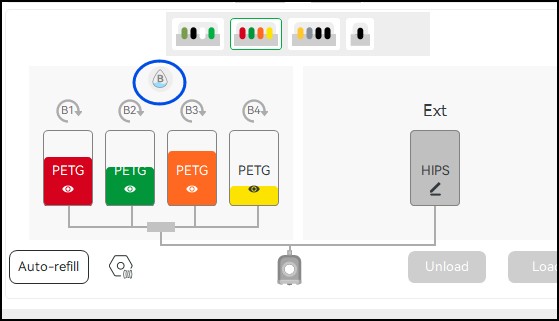
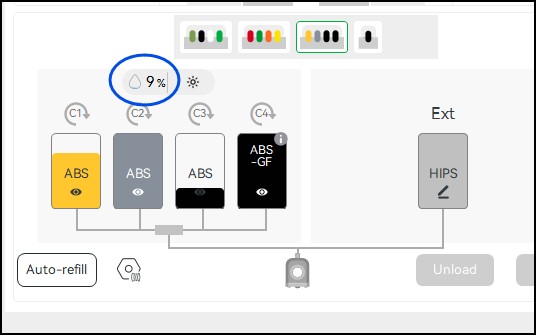
Gen 1 AMS have a letter code A, B, C, D for dryness/humidity inside the box while the AMS 2 Pro and HT have a value. I wanted a uniform value across all 4 of my AMS’s so I went with the solution I described. I have no idea what A equals and what the break is from A to B and so on.
FWIW, whenever I walk by my printer and AMS, if the are not in drying mode, I start them drying
I’m too new to this stuff for the AMS1 versions, I only have 2 AMS2 Pro units. But love having them. I tend to run my drying cycles a lot in my AMS2 units, simply because I can. I also have made some desiccant holders for them I use also. My though was for the desiccant to help hold down any RH% creeping up when the active drying isn’t on. I pull and rejuvenate my desiccants on about a weekly basis, but generally if the RH% is nudging up.
I do a 3 step filament drying routine now. I have a drybox for general storage that maintains 24-25% RH, and a Sunlu S4 for filaments like TPU, or other sensitive types, Then the AMS2 Pro drying for when in use. Although I’m a little disappointed in my AMS2 units drying abilities. The S4 goes down in the single digits and holds better than the AMS2 units.
I’m hoping to use the S4 to directly feed the TPU when I next use it.
I have been tracking the conditions inside the AMS units with my own sensors for almost as l long as I have owned the units and watching how the data tracks has been interesting.
I wish BL would come up with a configurable On/Off cycle timer for the dryer function so it wasn’t dependent on user to start a drying cycle. You could set it to run X number of hours per day day in and day out.
I go by the printer and AMS unitis multiple times per day and I am in the habit of firing up a drying session most days but it is in my face so I think about it. Someone who has printer in an “Out of sight, out of mind” location like a shop, garage, spare bedroom will not think about it.
The other thing is that it doesn’t matter whether if the user relies on the BL indication or their own. That reading is not reflective of the condition of the filament. It is a measure of the atmosphere inside the AMS hood.


 But I used to. Now, with this 3D hobby, I’m just trying to follow advice spiced with my own blend of seasonings. I think I’m doing OK so far. This Switchbot equipment originally was a hope to give me internal monitoring of my Drybox. I didn’t know if it could escape the metal enclosure. As soon as I could see it did, I got more of the little monitoring units to deploy around my concerns. Basically, I’m good with my manual control. But finding things like my Drybox is self controlled.


 Finding solutions to my delusions.