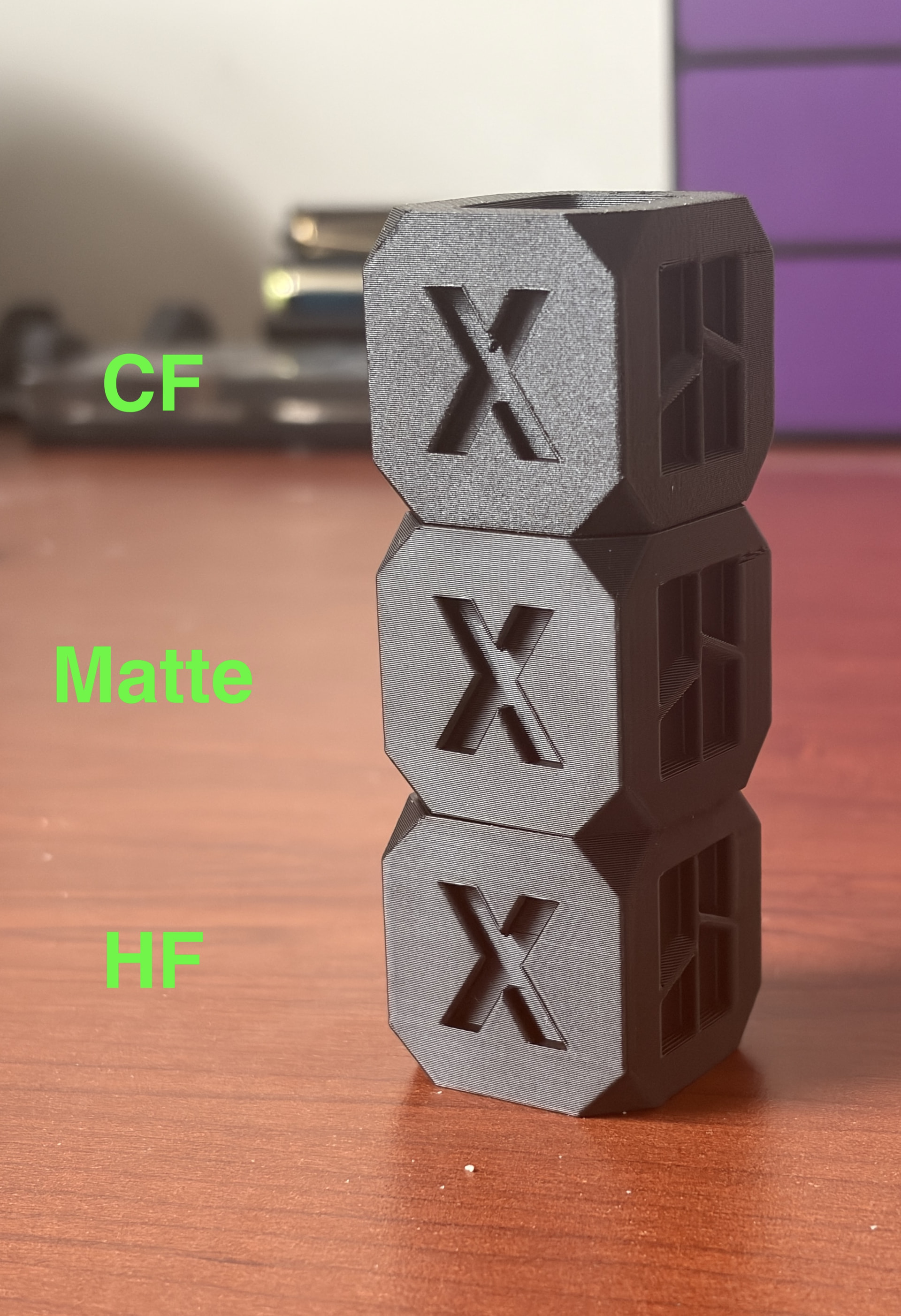
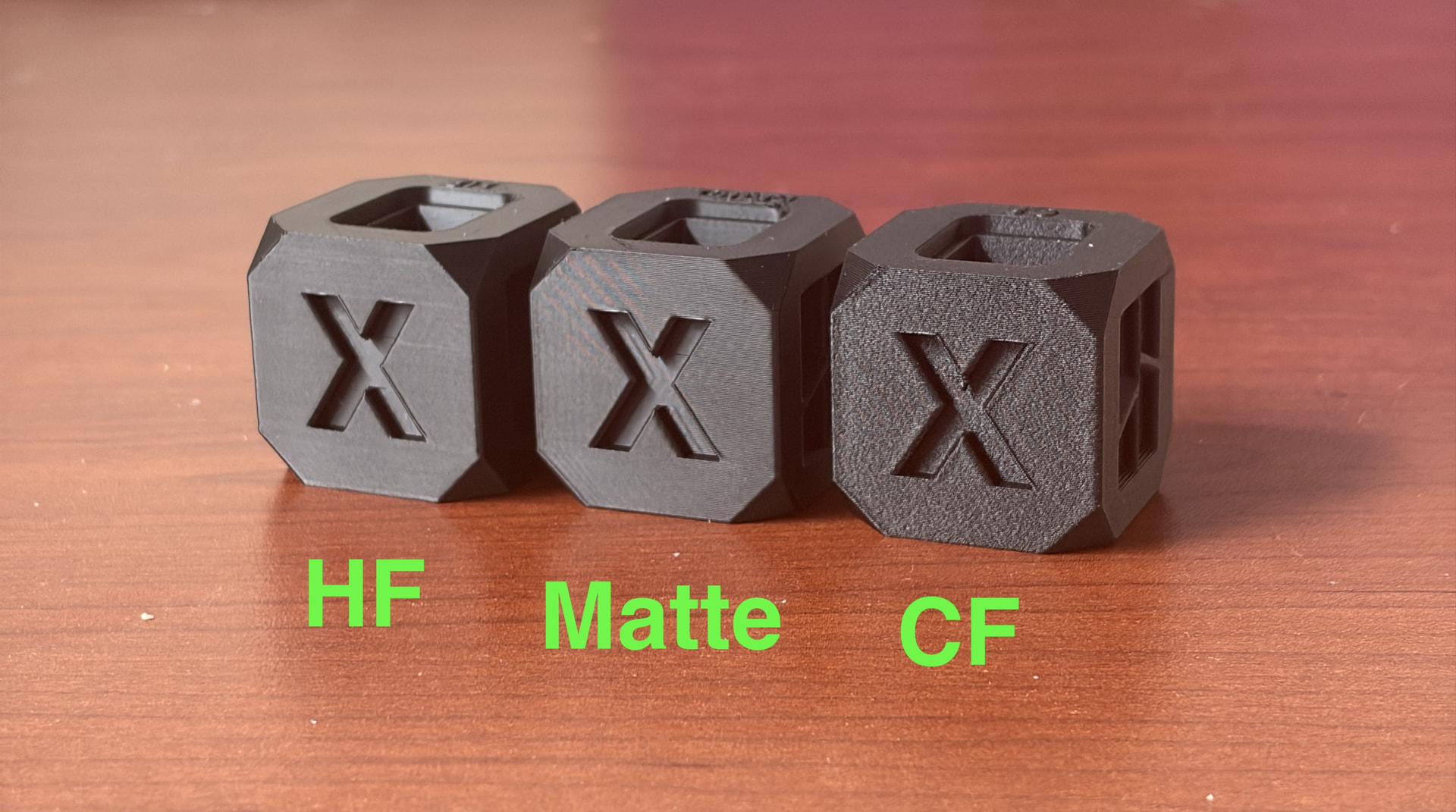
My matte PETG just arrived. I printed some black calibration cubes in HF and the new matte, standard 0.20mm settings … side by side I cannot tell a difference between them in natural or artificial light, they look identical to me from any angle. Unfortunately I dont have any PETG Basic to compare.
Here are some photos, together with PETG-CF since I had a cube laying around.
My 0.85 FR for PETG CF came from a Flow Rate test. So please don’t take this as the standard for your material. A good Flow Rate test would be worthwhile though.
Did the part look correct, or was there clearly under-extrusion?
I had initially much larger blobs that didn’t fall but started scratching the top surface and slowly ruin the part. It required some pauses to remove them with tweezers. The blob was tougher due to the fiber’s I guess.
Not sure if you meant the ‘calibration tab’ FR test, or a series of test models to see at what FR the blobs become manageable? I assumed it was the latter as some model mass would be needed to check for blobs slowly accumulating.
It might not be what you meant to convey, but what I did was a quick proof of concept test, splitting the model into 3 parts: bottom surface FR as long as it ‘looked right’; main model FR at 0.85 (or other intentionally reduced value) as the main section blobs seemed to be forming; top surface FR boosted back to normal values for a good looking finish.
I’ve yet to check if this affects dimensional accuracy, but aside from wall corners looking a bit ‘malnourished’, the top/bottom surfaces looked fine. (boosted using top/bottom flow modifier)
I did run a calibration tab FR test (with manual PA tested first) and it returned Matte 0.9984 for optimal top surface which would obviously leads to more blobbing. I was surprised by such high value compared to other PETGs but after double checking it didn’t seem like a mistake .
I meant indeed the FR calibration process with the tiny tabs.
As PETG in general likes to stick to almost everything, the nozzle itself has a lot of influence also. A diamondback or other nozzle with anti-stick coating might help reduce blobs also.
Regarding flow rate tests: I always found it very difficult to determine the tile with the best surface. In Orca slicer they have abandoned the tiles test completely and switched to a test based on “archimedean chords”. I have tried a few and I can understand the switch, it’s just so much better and the correct value becomes very obvious. I would even feel comfortable to choose the correct FR in 0,05 increments.
Since I have switched, I feel like my FR is to the point, while it always was soso with the tiles.
Bambu’s rectilinear top tiles can be pretty hard to check. It’s often not terribly clear visually. Harsh lightings, fingernails, sometimes spray painting them with paint/primers are needed
I do trust my results as adding an ironing on top do produce smooth (sometimes mirror like) finishes.
I haven’t seen the tiles with ironing, but I would guess that the archimedean chords fill pattern is even better to read.
the archimedean chord basically does a spiral movement from the center. That has the great advantage, that any over extrusion accumulates and gets pushed further out each turn of the spiral until it butts up against the outer lines that have been printed before. So even if a flow is too high by only 0.5% (e.g. FR 0,98 instead of 0,975), that over extrusion will be amplified by the spiral and build up a serious bulge that is very easy to see. That makes choosing the correct flow rate really precise.
What hop, wipe, and retraction params have you settled on with regular PETG Basic and others? Can you share the details, please?
I’m struggling with that (P1S with hardened nozzle), especially at higher temperatures (for better layer adhesion in structural parts). Default hop - risk of dragging, spiral - risk of micro blob at start of next extrusion. Similarly with default wipe distance vs shorter. Greater retraction length - random artifacts, lower - common, but nothing spectacular.
I finally settled on retraction length 0.4mm, 25 speed, with 1mm min travel, 1mm wipe, no hop changes. It’s okayish, but kinda meh. The only thing that really helps me is avoiding dense Grid sparse infill, but even then I struggle. Be it Bambu PETG, eSUN, SUNLU, Rosa3D. Transparent SUNLUs were pretty ok, eSUN PETG-CF great. That’s it.
I don’t want to underextrude too much, and I can’t print steeper overhangs with IOI wall order (early fan start helps, but it kills the layer adhesion). I started considering adding a custom “wipe tower” or extra wipe G-Code between layers…
I have found PETG to have much more of a temper than PLA. And a pretty high variabilty across brands and sub-types.
So I usually start off with either manufacturers recommendations (which can be sparse) or my lessons learned from the release of the initial PETG Basic.
Self-dryed PETG (Always if new!!!)
“Generic PETG” pre-set (due to fan/cooling settings)
No z-hop (I found this to be more of a band aid as it just changes the type of stringing: fewer thicker or many fine wisps)
Retract length between 0.4 and 1.2mm (rarely needs to be increased if dry though)
Retract speed 40mm/s
Wipe on retract enabled (both check marks)
All printing speeds lowered to a max of 80mm/s
This leads to slower, cautious prints, but I prefer a slow good print to two fast bad prints
Of course, HF can be printed much faster though. But there, I found the profiles pretty good. Sad Bambu couldn’t continue with it.
There was one case where my approach failed though: When I got my H2C, I needed to up the nozzle temp to 260°C when using PETG as a support interface.
&
Edit: Addendum: Forgot one thing: On occasion, I also reduce accelerations down to 25% of their default value. Usually only if a print is not to my liking though.
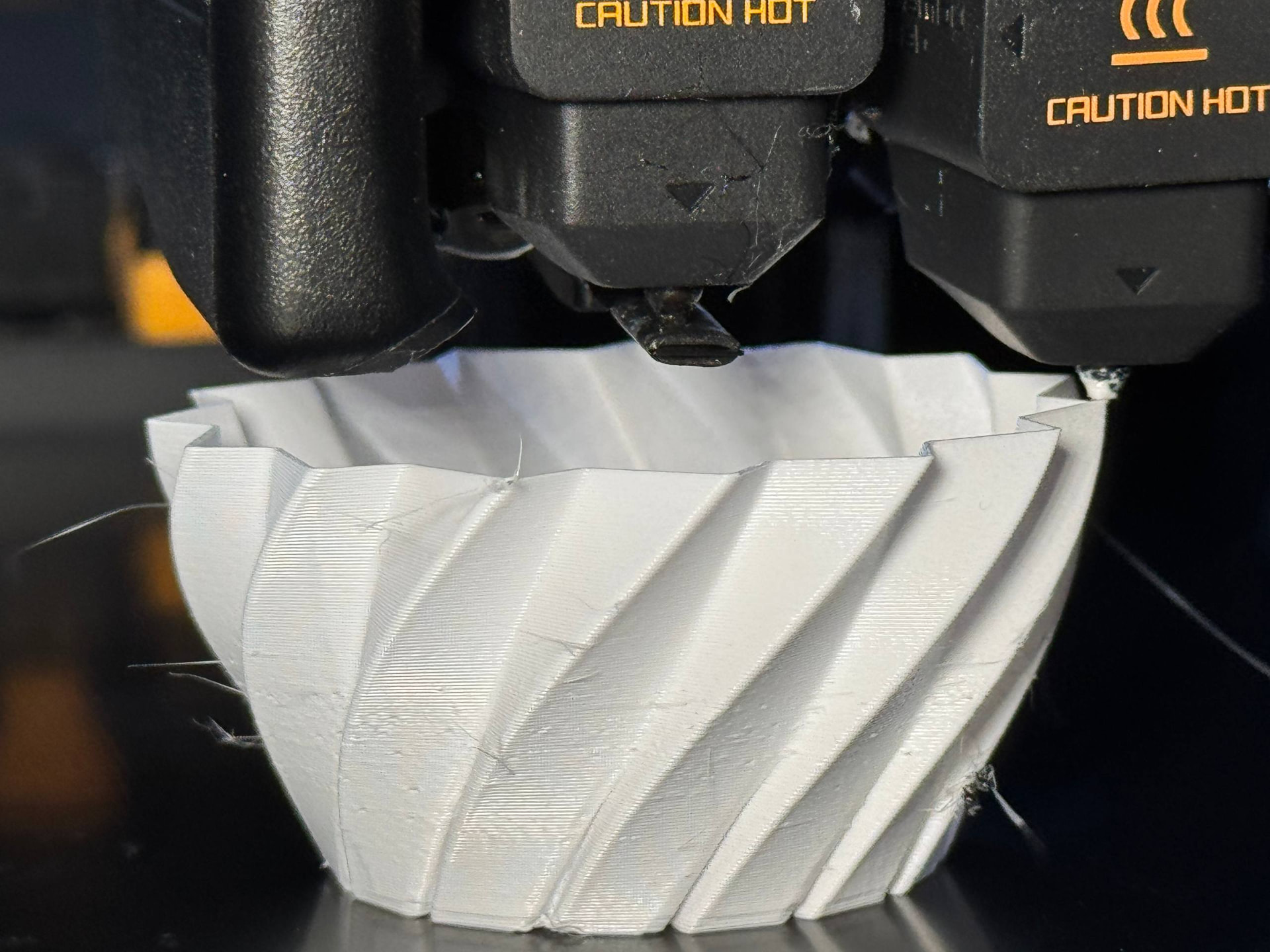
And why isn’t your first test with the Avocado color…
Hopefully it’s better after drying. I got mine a couple of days ago but will likely not get to testing until this weekend. I’m hopeful your experience is really just a drying issue the white does look more like the color I’m wanting since they discontinued the HF white.
To be completely fair, I do expect filament to be somewhat dry from every vendor. Because if it’s THAT wet - it’s at a high risk of permanently being damaged from hydrolytic degradation. This process is irreversible and for manufacturers it’s kinda … an one way ticket of spoiled stock on the shelf.
Also, to be honest, don’t remember a day when I had that badly wet common material right out of the box. I mainly use Prusament, Polymaker, recently Inslogic (fancy sunlu) and they all are quite good out of the box.
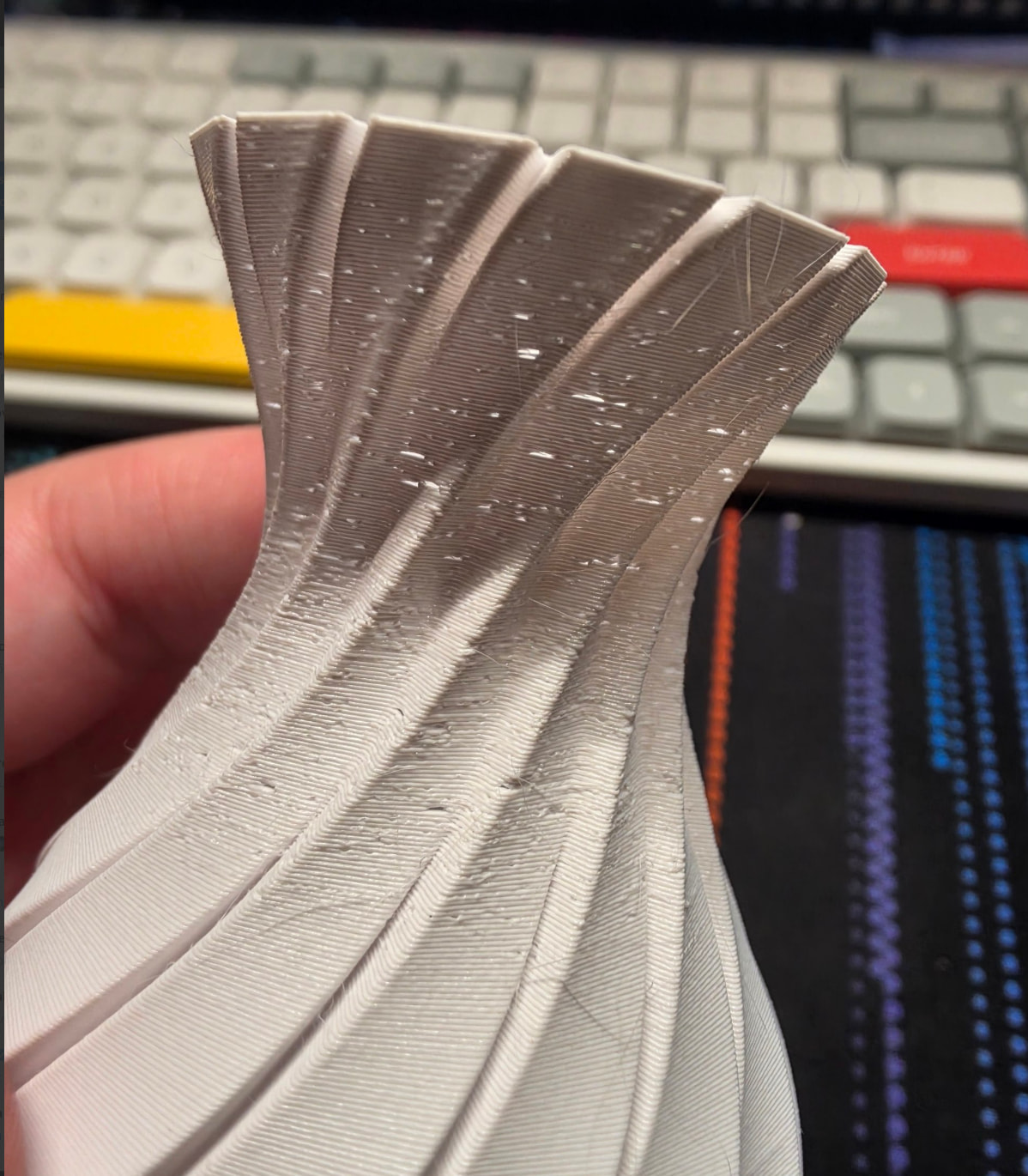
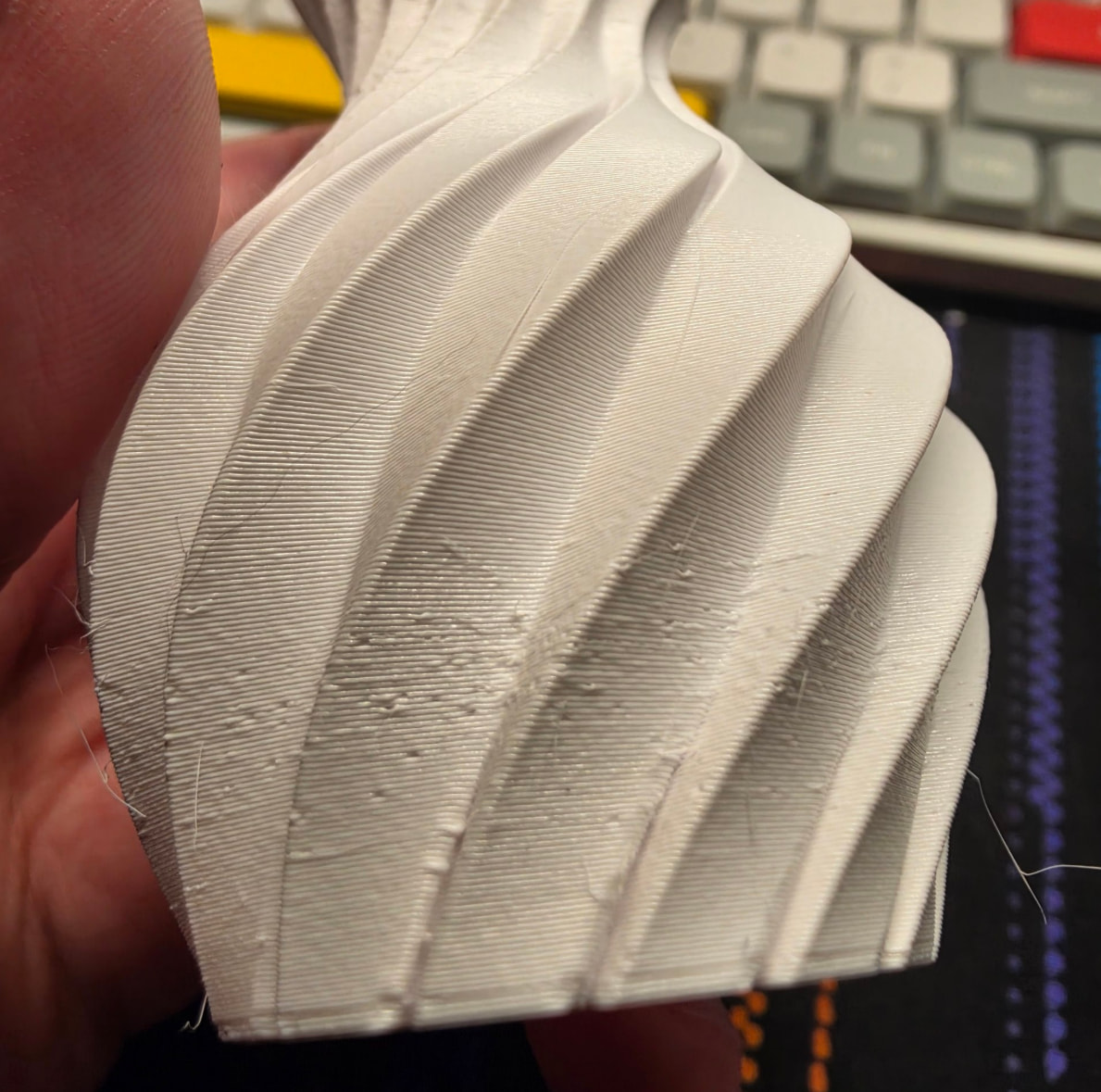
TL;DR in a pinch, the filament should be printable, minor issues can be expected, but … I’m sorry - THIS out of the box is a complete shiiit.
However, ultimately, I should blame myself - should’ve read all of this.
Because I wanted to compare to Inslogic PETG Pro White. Avocado color was in the dryer for the past few hours and I put it into the AMS … a few minutes ago. Let’s see if drying for a few hours resolves the issue or if it needs an overnight drying (which honestly, is likely will make a no go material for me). If I would have to throughly dry every PETG spool like it’s a Nylon … it just wouldn’t make any sense, especially with BL’s claims about moisture and PETG Matte.
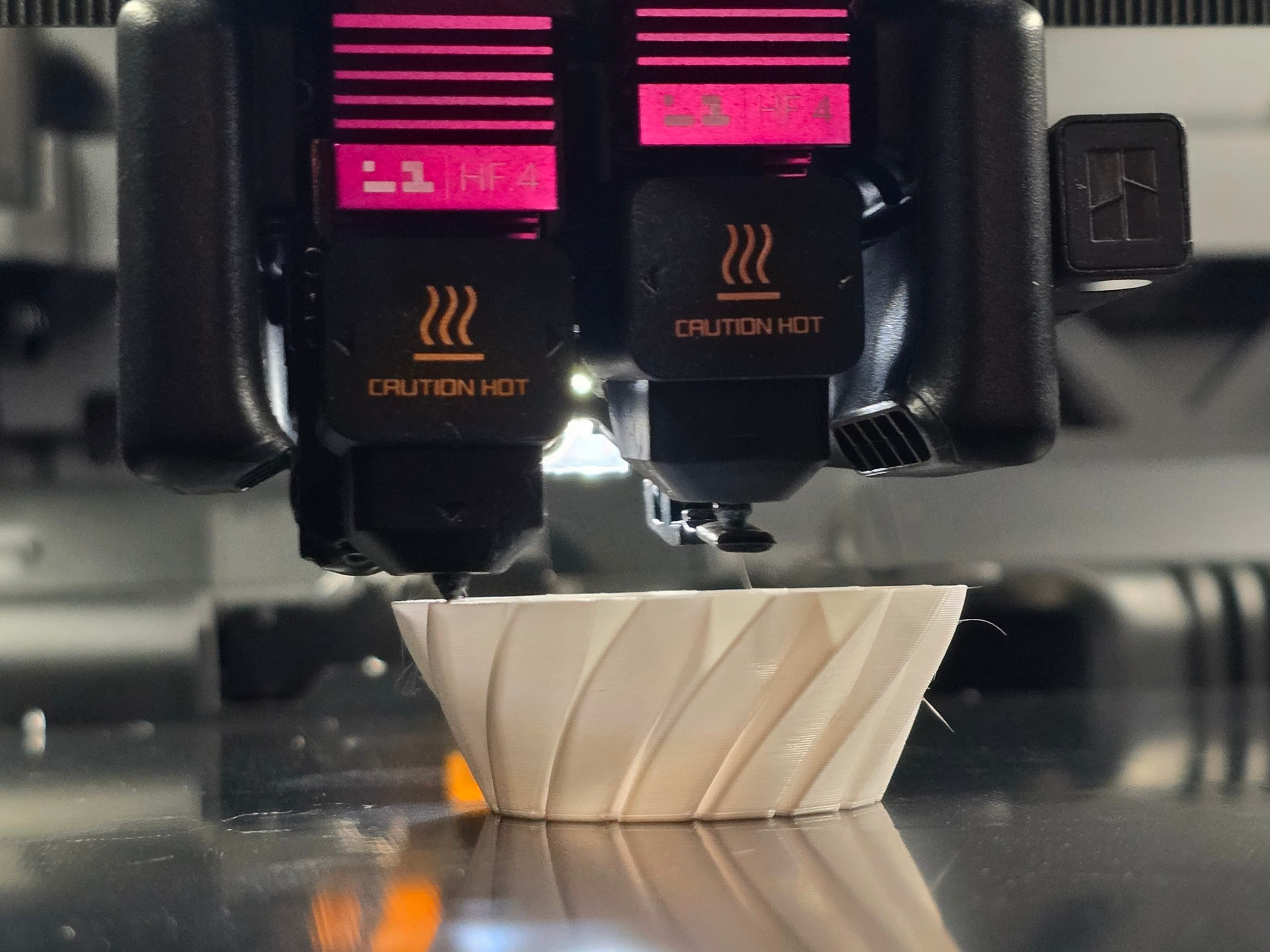
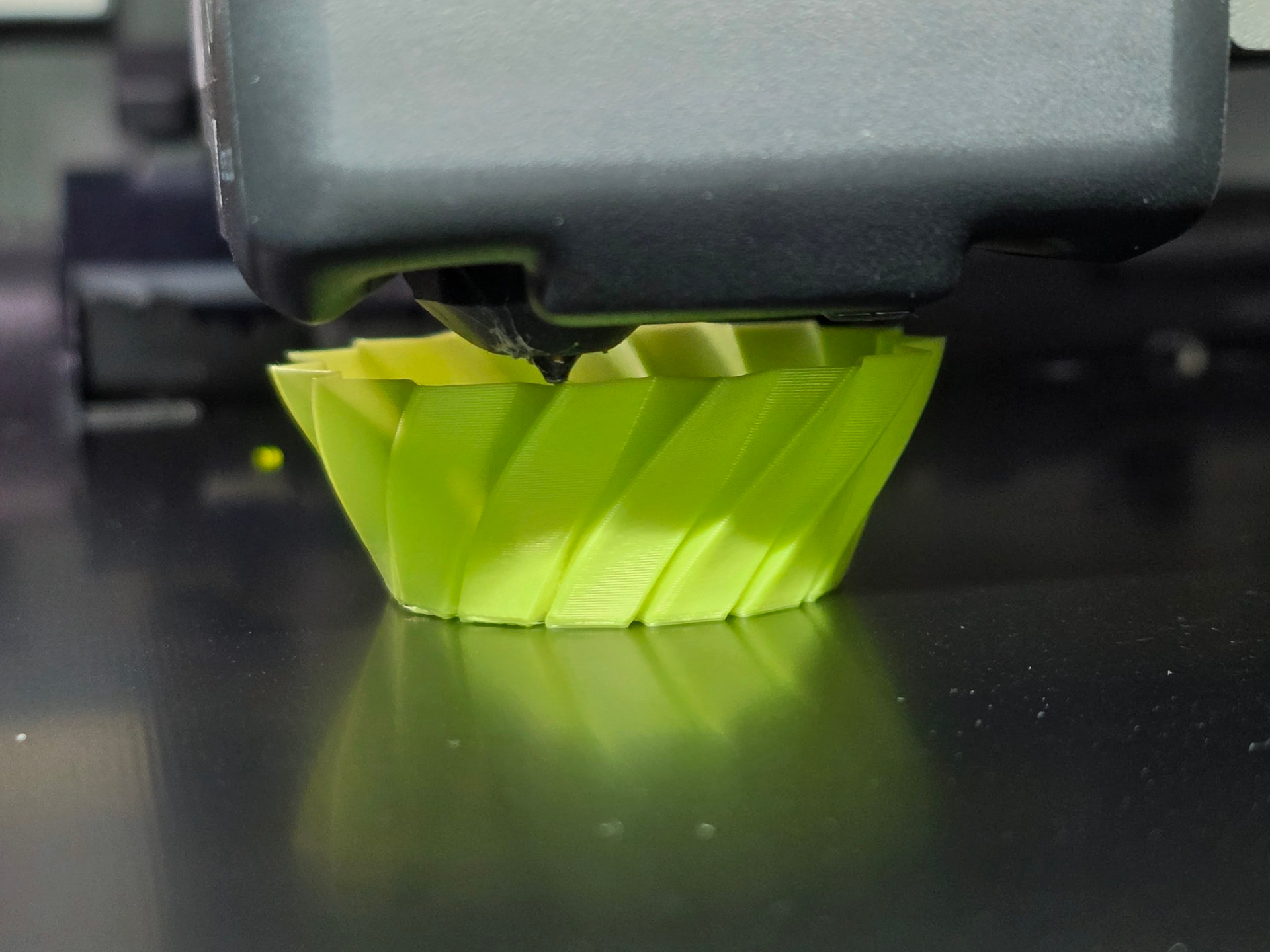
By the way, as a side note. I hope that drying also resolves the layer adhesion on this small vase… because it is weak AF on a waterlogged one.
 .


 &