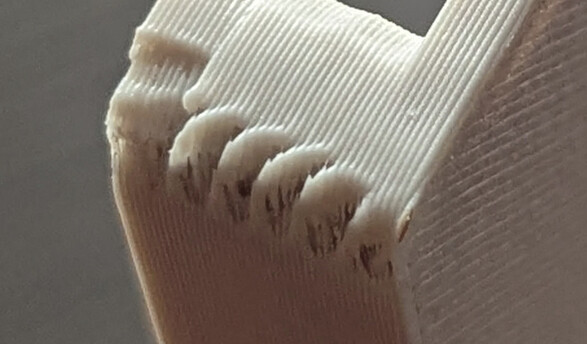
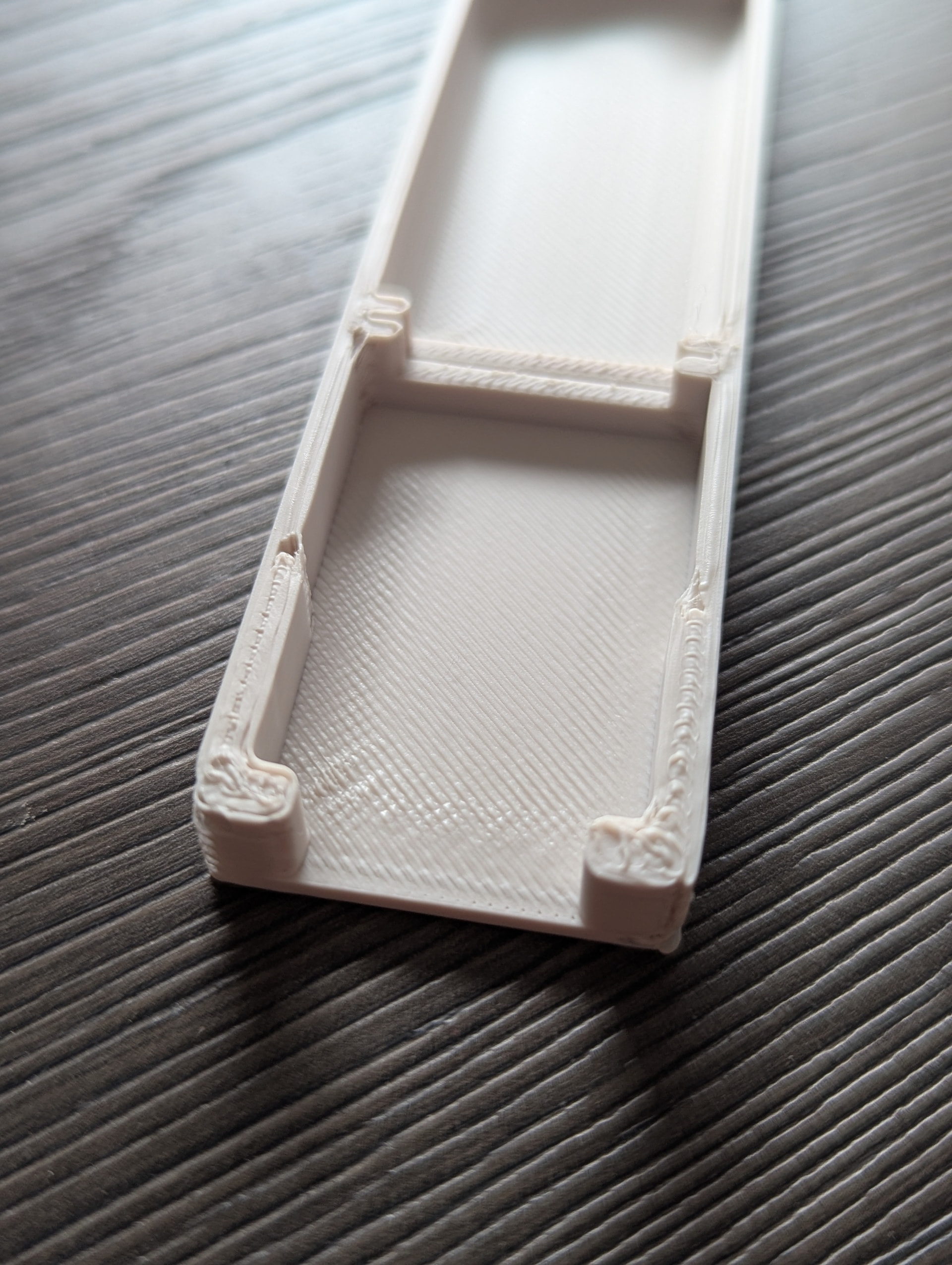
For some time now, I’ve noticed a significant drop in print quality with my X1-Carbon, and I don’t know the cause or how to fix it.
I have performed all the maintenance steps:
Cleaning carbon rods
Cleaning and greasing Z-axis lead screws
Y-axis and Z-axis linear rods
Cleaning extruder and hotend
Replacing the hotend
Belt tensioning
Cleaning the case
I can’t get decent results on simple prints using the default profile with Bambu PLA Matte. I only get normal-quality prints again if I cut the speed roughly in half.
What can I do?
You covered the best practice parts. Just to confirm:
Your did dry the Filament (again)? Due to the higher pigmentation, Matte picks up more moisture much quicker and dry storage usually can not keep all moisture out.
You did run through the printer and filament calibration routines after the maintenance?
To me, the edge defects hint at edge curling which can happen at high speeds, especially if there’s moisture in the filament (longer cooling times => softer underlying layers enabling “better” edge pull-up).
The messy infill (highest flow) and low layer adhesion (edges and inner circle outer wall pull off) point into that direction, too.
Thanks for the reply.
Yes, I run printer and filament calibrations often.
The only thing, I never do, is drying the filament; I store it in boxes with silica desiccant.
I know it’s a poor argument, but in my 10 years of using printers, I’ve never dried a filament
I’ll give drying the filament a try, but I find the prints are just really bad overall.
Many think storing filament with desiccant is drying it or keeping it dry but that’s only true if people keep their desiccant dry. Don’t maintain your desiccant and storing with desiccant becomes essentially the same as open filament storage. And at room temperature, even with dry desiccant, drying is extremely slow and will be incomplete.
A gradual change/loss of print quality can point to filament moisture. It’s what happened to me. My prints started out great when I got my X1C but after the seasons changed to spring and the humidity started rising, prints started showing water issues.
Also, new filament can have too much water in it to print properly. The bags it’s packed in are semi-permeable to water vapor so it leaks in from manufacture to your door. It’s a dice game if a new spool is suitable for printing fresh out of the bag.
My desiccant ist always dry, I always dry it on the radiator when it gets dark.
But I’m testing out the drying process now; one roll is already in the dryer at 50 degrees.
I also went ahead and ordered the Sunlu AMS Heater.
If you have thick-walled sealing polyethylene boxes like the Praki cereal boxes, or even a gallon ziplock bag, if you put the spool of filament in the bag/box with a hygrometer and seal it up, you will get a number for the humidity that is characteristic of the amount of moisture it’s carrying. Same for desiccants (which is how the desiccant industry essentially does it). Important to only have one or the other in the bag/box though. Put both in and the desiccant will dominate the reading.
You want to make your measurements at similar temperatures since relative humidity has a big temperature dependence.
An RH number for your filament as well as for the desiccant would possibly be revealing. If you do the measurement it takes a while for a hygrometer to “settle”. 30-45 minutes or so.
Extrusions are slowing and ramping in that corner [not well] and that is the domain of pressure advance. Unless we’re looking at a gnarly and horrific seam.
I dont have a good eye for matte filament, dont use nor like it; but I’d also listen to the others and dry it anyways, cant hurt.
I’ve implemented all the changes now.
I’ve done all the calibrations—flow and dynamics—and dried the filament.
I also installed a new nozzle.
I’ve reduced the speed now; unfortunately, there’s no other way.

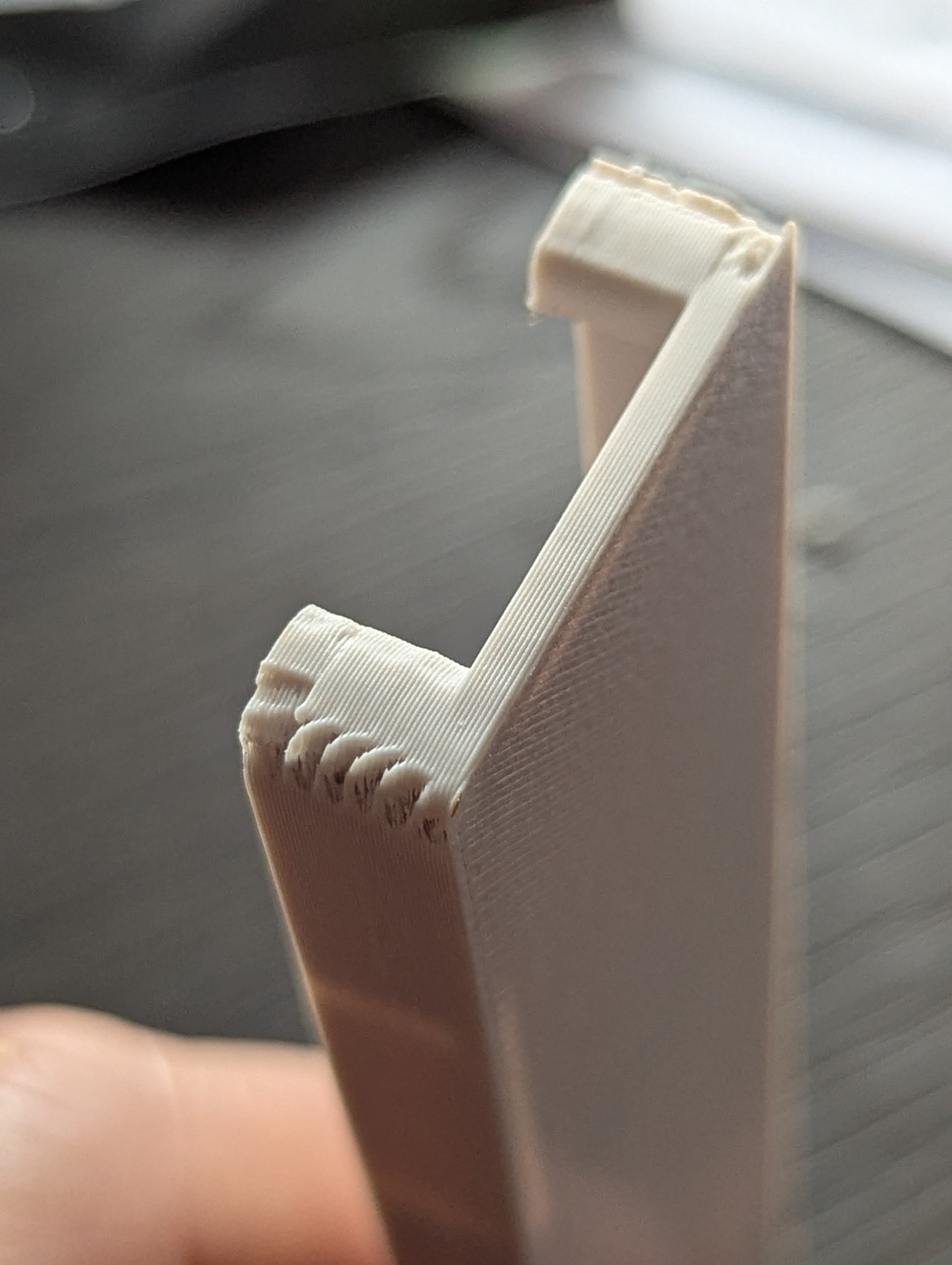
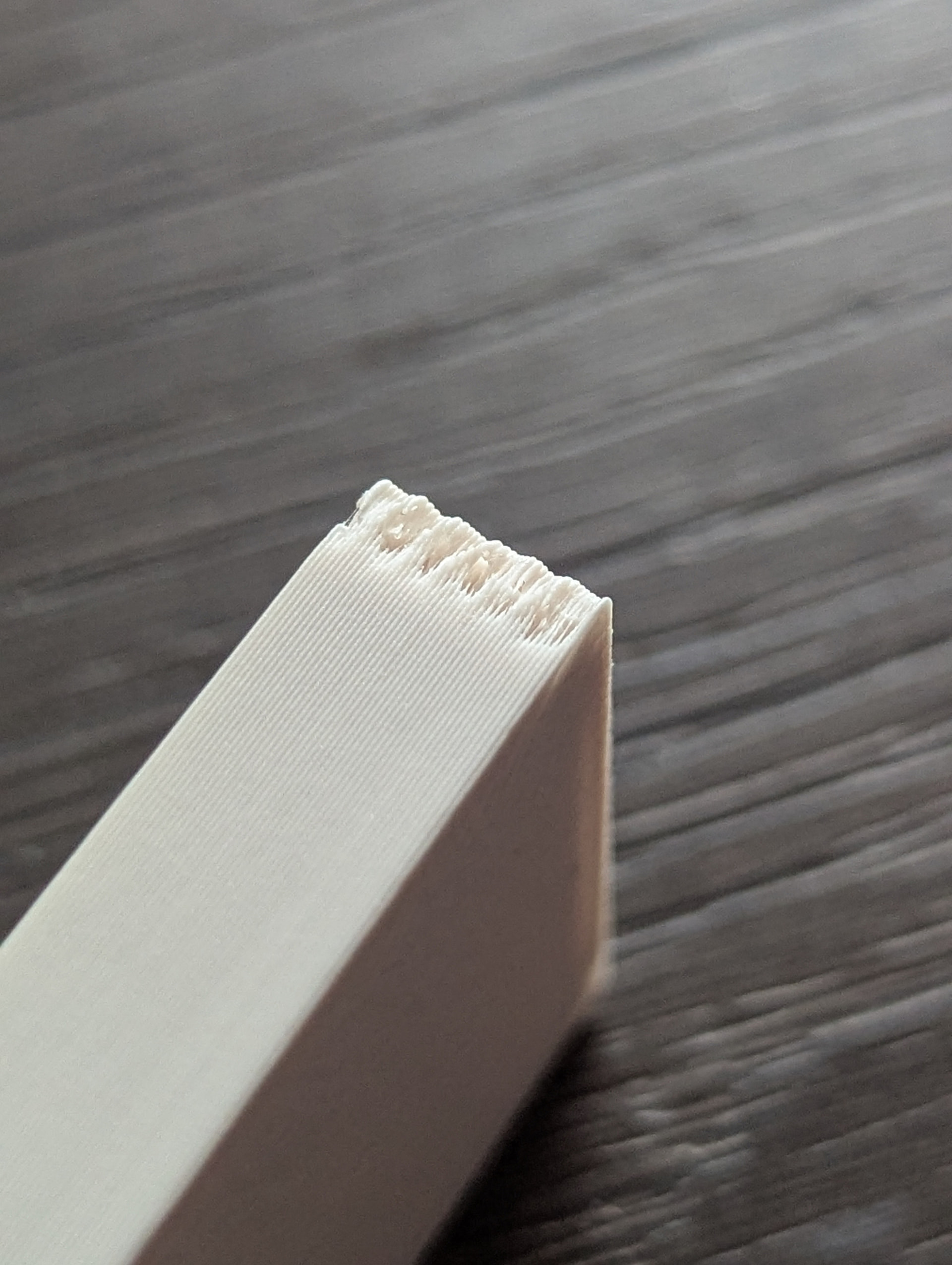
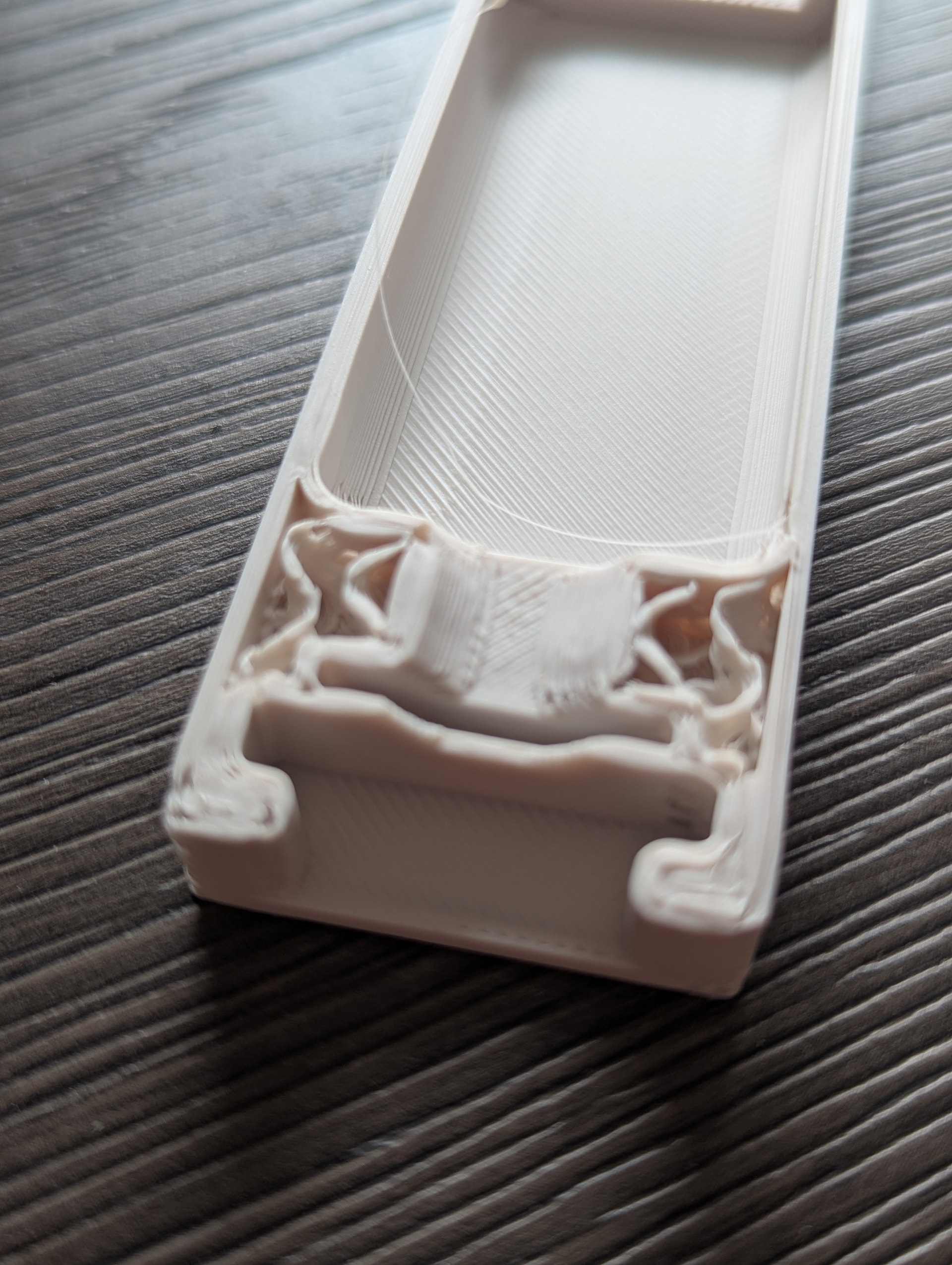
 &