TBH those patent and copyright systems were made in the [relative] dark ages, if one were reimagined with the capabilities of our current [future] civilization, the time limits of all this stuff would be like, a couple years. You can fully realize an idea to the point of manufacture and distribution to the hands of every human in civilized areas of earth - all in like 1-3 years, nowadays. Locking up productive knowledge for longer than needed leads to unproductive lawfare, stagnant industry, and 3rd world jurisdictional exploitation
I don’t “think” - I’d look it up. Example:
- A European patent is valid for 20 years from the filing date.
That’s not right unless you meant something else?
In fact, depending on the legal situation, that does happen a lot - in which case a patent enters the public domain. The same applies to intellectual property, even though the timeframes differ.
For example:
- The patent for Lego bricks no longer exists; anyone can use and sell them, as long as they don’t infringe on the intellectual property rights: the Lego brand name. An example of how a patent became public domain and Lego couldn’t do anything about it.
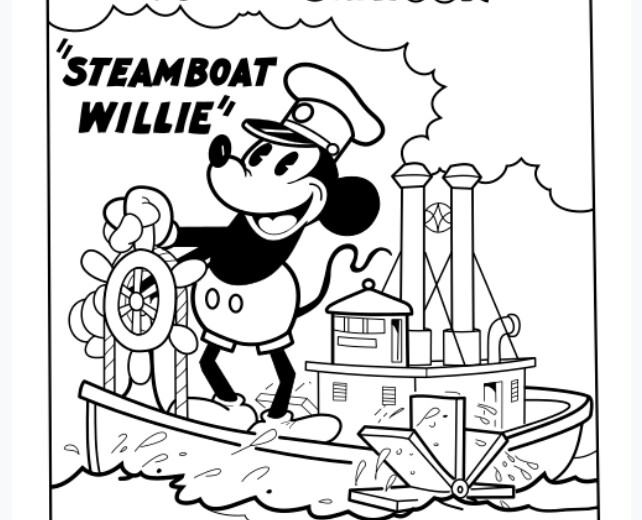
- The original Mickey Mouse - the intellectual property - also entered the public domain, specifically the “Steamboat Willie” version, and Disney couldn’t do anything about it. In fact, though, this only applies to the old version - not the current ones - since Disney still holds the rights to the new ones.
- Does also apply to Popeye. The Flintstones will be the next to enter the public domain in 2055.
Here are a few examples of patents and intellectual property that have entered the public domain. Two different topics, yet they have something in common: After enough time has passed, they enter the public domain.
Anyone can now use the old Mickey Mouse:
However, you haven’t answered my question yet, so I’m not sure what you still want to discuss. Are we still talking about open source, or how to give credit to a particular person? Is this more of a discussion about what feels like the right thing to do, or about what the legal situation is?
that is very unrealistic. Often it takes 1-5 years just to start. Let alone improve before releasing. It is posible to develop a product in 1-3 years. But that rely on knowing what you are doing. Knowing where to get the pieces. It is obvious by those statements you have never tried to “hands of every human in civilized areas of earth”. I have had some of my products produced 100 million parts. That is just the parts sold. Not counting the knock-offs.
Different people will have different definition, but it is one of the things that one knows what it comes.
In terms bringing 3D printing to the masses, the next milestone will be when the slicer is made obsolete, i.e. in most cases, AI slices the model better than individual users doing it by themselves.
I have never tried AI slicing. The part I don’t see AI as getting right is knowing what to optimize for. It might be better than an average person. But there are too many falce directions the person might prompt it to optimize for print speed but not understand it needs stength.
I don’t think AI slicing is a thing yet. But either Bambu Lab or another startup that is to come will make that happen. Right now BL may have a leg up because it probably has collected some data through their cloud services.
But the need to use a slicer has to go. Having to learn about things and terms such as pressure advance calibration and Arachne wall generator will keep the general public 10 miles away.
BL has a temporary solution called one-click printing. It is working for many, but it has dependancy. It depends on designers or print profile creators to make the right profiles. That is not a guarantee. Some designers don’t know how best to slice their models. Some make a profile only because they need one to pass the upload process.
The problem with prior Profiles is there are some things that are very dependant. So if someone is printing in Denver Colorado that is very dry. It is very different than printing in Florida where it is very humid. That is saying nothing about calibration. There are lots of setting that can get it into acceptable. Just because it worked fine on one machine, even in the same area, does not mean it will work on a different machine.
1 Like
I get the term “expired Patent” is referring to the change of status. What I mean is the patent does not expire, it changes. If it expired someone else can patent it. It goes from the patent holder limiting the sales of their idea to anybody can use that idea.
Honestly? After more than two months since the last reply, I’ve forgotten the context of what this was even about. Maybe, maybe not, I don’t know - the topic’s so far in the past… 
1 Like
my question was not “How long is it valid for?" It was asking for an opinion. Not asking about the law. The Law is different depending on lots of details. Back to the standard legal answer “it depends”.
I don’t have an opinion on your comment because I’d first have to read everything again to even know what it was about. This isn’t meant to be disrespectful, but it’s purely a matter of time management. The topic is complex, and after more than two months, I’m not going to spend time reading up on something that was was discussed several months ago.
My answer could only be wrong without revisiting the full context. It would be rather disrespectful to write something just for the sake of responding. 