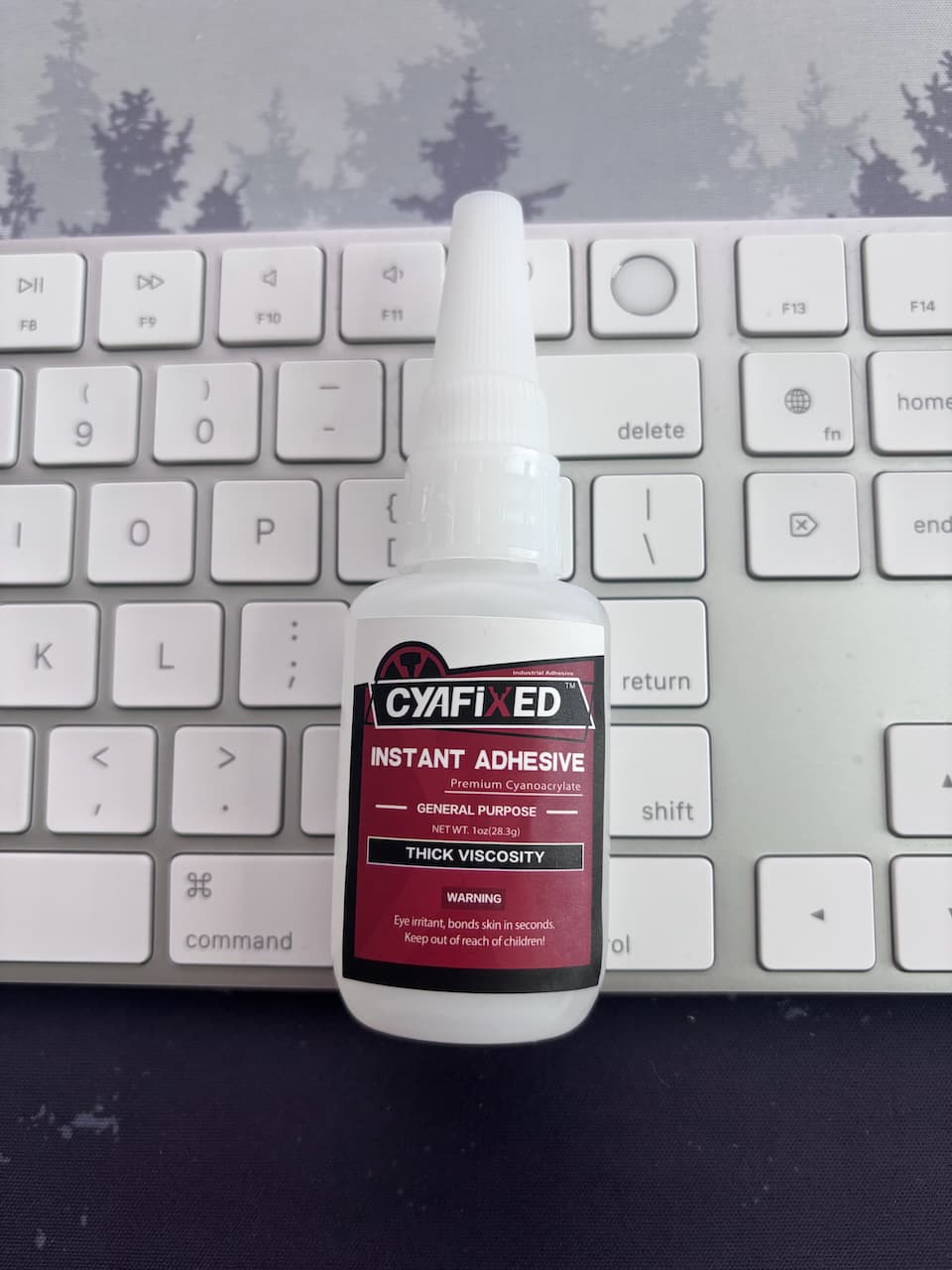
Any form of glue specifically designed to weld with polylactic acid will unsurprisingly(!) work really well.
EMA plastic glue is designed for PLA, various places sell it in a nice bottle and give it their brand name and charge large amounts for it (gloop) but you can go find really cheap alternatives anywhere by searching “EMA Glue” and just get the cheapest one you can find - It bonds with the plastic, if you can seperate them after it’s dried with your hands you should be wearing a cape
Weld-On is now rebranded as SciGrip. 16, 4SC (same as 4 but lower VOC) and 3 are all widely available.
I have built acrylic salt water aquariums using SciGrip 4SC, had them in my living room for 10 years with no leaks. I would not try that with superglue. In general I can attest to the strength of a welded bond over what super-glue can do.
For PLA bonding I have 16 and 4SC on hand but I was not able to test using 3 because I don’t have it. I tried Sci-Grip 4SC on some PLA-Silk and it definitely melts the plastic and forms a strong weld. 4SC can be tricky to work with as it is much thinner than water. Some people say Q-tips work for application. Bonding with applied pressure helps. After bonding you need to let the solvent completely dry out of the plastic over several hours before testing the bond. Sci-Grip 16 did not melt or bond as well, but my tube was a bit dry so my test-case might not be very scientific.
See my previous reply. I would use try Sci-Grip 4SC for PLA. It has very low viscosity but it works well. It definitely performs a melting weld on PLA. There are some videos online that Sci-Grip 3 works, but I have not tried it. I have also tried with low success to get Sci-Grip 16 to work on PLA as a welding bond. So I can confirm your result there.
I did just that, and interestingly enough I found almost exclusively websites in the UK selling that stuff (I’m in Canada). Is there a reason for that? I found some locally, so it’s all good. Just curious as to why it seems to be so extremely popular in the UK. Can anyone weigh in on this?
Did you try Acrifix 1S 0116? It is an industrial glue i bought on ebay. Needs a minute to set, but after 24hrs no way to pull it apart. Works only on pla directly so do not paint it first.
I should have made it clear when I started the thread. It absolutely, positively, must NOT be baking powder. It has be be baking soda. Now, you may ask what would happen if you used baking powder and my answer would be “I don’t know.” But, when I was a kid, I would take empty glass jar out of the garbage, fill it about 1/3rd full of my mother’s baking powder and the rest water. Then I’d screw on the lid and shake it. Then I’d rare back and throw into a dry ditch filled with rocks. Kaboom! I would make my own grenades and my mother was always mysteriously out of baking powder. I still have all ten fingers and my right ear. Pure luck!
When I was a kid, we did it with pill bottles (this was before child safety caps). It would fizz up and blow it off like a champaign cork. For second graders, that equaled wild excitement from the imagined danger of it all.
I feel a bit sorry for kids these days: they don’t seem to have an interest in any of that natural discovery. All they know is video games. But I hesitate to even say that, because now I sound like an old fuddy duddy. What you and I remember so vividly… all that is gone, erased, like it never happened.
Amen bro!
My mother drank instant coffee that came in glass jars. Never occured to me what would happen if I was a little bit slow on the trigger. I’m a proud fuddy duddy and have the scars to prove it.
This was recommended by someone on reddit. I’ve been using it for a couple weeks and so far it’s been doing well on pla. Anything I’ve tried to pull apart has been ruined before the bond broke.
This is the exact same brand i’m using. One thing to watch out for - it off gasses a lot. I’ve glued parts together, put them in a box, and came back the next day and they were covered in a white haze. Just make sure you let them cure for a day or more before sealing up any parts.
The other thing I don’t like about it is that it expands when it dries, so it pushes parts that were flush apart a few mm. I haven’t found a solution for this aside from leaving more space in the model for the glue to expand.
Oh, I didn’t know that. I’ve been using it to glue in things like eyes and small parts. I guess I should look for something else for larger parts then.
Yep. Same here until some chemist comes up with a solution. And that’s not to say that there is one. People swear by CA, but I can always pull it apart without damage to either part. I don’t admitting-- I want it “welded together” the same way PVC plumbing goes together. At the present time, that’s asking too much. But anything short of that is merely tacked together which was my theses when I started this thread way back when. Ain’t no glue for PLA.
Actually this should be a perfect video for CNC Kitchen. I just sent him an invite to the MakerWorld forum. He’s very busy and unlikely to reply. It would be good to see someone put this to bed once and for all. CA is CA is CA. If I’m wrong, I’m wrong.
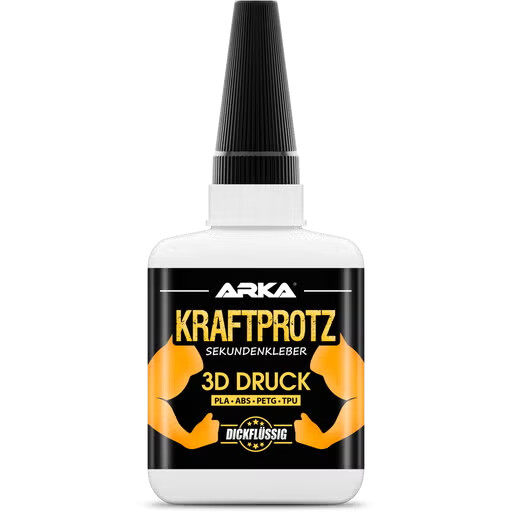
It does say ca on the back of the container. I should try some of my 2p10 that I use for wood and see if I notice any difference on strength. I wonder how similar the two of them are.
 What you and I remember so vividly… all that is gone, erased, like it never happened.