No way to get mig in there and it would vaporize the surrounding plastic. not only that, but it would involve passing current through the bearings which would either spot weld them in place or at the least put bumps on the bearings and rails where the current passes. Bambu suggested the rubber band trick (more likely a chunk of latex glove given the sizes involved) or steel wool. JB might work - hadn’t considered that one.
I’m guessing that some company figured out that having assembly line people applying liquid loctite leads to inconsistencies. Thus, they came up with a paste version that can be applied to the screws in screw production, and the manufacturer just buys pre-coated screws.
That is exactly it
I’m sure MIG wire can get there and the gas will easily fill the cavity. If you put the ground on the allen key and just spot weld with just one click on the trigger, current will only pass from the key to the screw and don’t think anything will arc anywhere else, heat will be limited as well.
This of course is a very last resort when you’ll have exhausted every other methods.
Steel wool is actually a very good idea
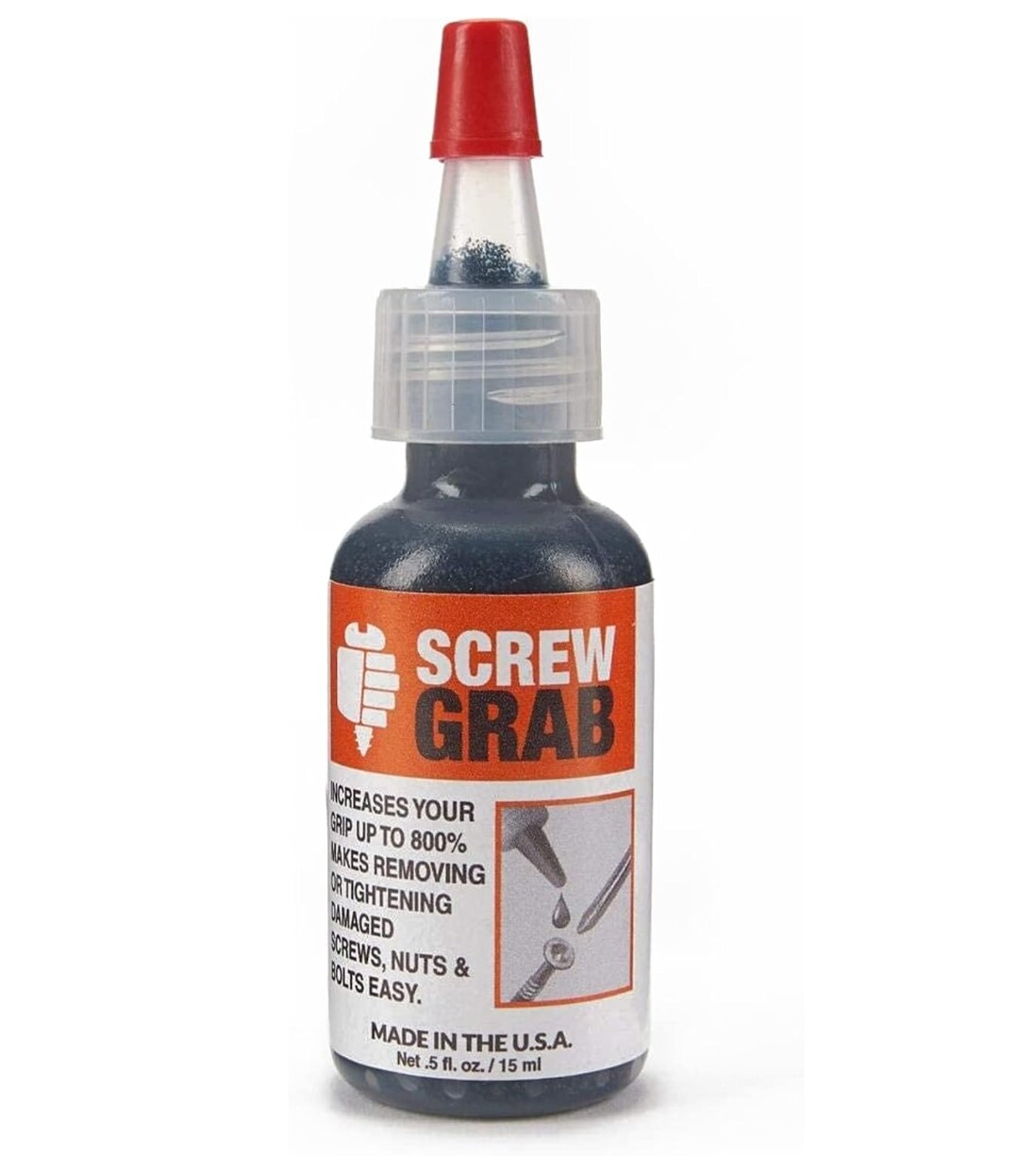
I see what you mean now. Im more used to welding nuts to stripped and stuck fasteners. The nuts give you the ability to remove it and the heat/expansion/contraction usually breaks the “stuckage”.
Interesting. I have another brand but it dried up years ago. What I do have is some stuff called “Clover” which is a carborundum/oil paste used for polishing stuff on the lathe, and that might be worth a try too.
chinese factories’ screw glue != loctite formulas, nor is it correct to expect any of the colorants match. Don’t put too much effort taxonomizing the existing state, lol.
If it’s the right grit size, go for it! I thiiiiiink carborundum should be hard enough to work similarly?
Well, absolutely no luck. I have tried the standard size (1.5mm ) allen, all the way up to a 2mm allen, as well as T7 and T8 torx, alone and with: single layer pice of a latex glove (.1mm), double layer piece of a latex glove (.2mm), rubber band (.5mm), steel wool, and the clover grit (interestingly, made by loctite), and a screw extractor. And no movement whatsoever. Last resorts are heat and jb welding an allen or torx to it.
I re-read your initial post and the way I understood it is that you received a brand new X axis assembly from BL so you don’t really need the one that you are removing.
In that case, why don’t you just use a larger drill bit and just shear the head of the screw off? The remaining part of the screw will stay in the guide rail but you can try to remove it later with some heat and a pair of pliers or whatever but you’ll be able to remove this assembly and install the new one.
The amount of screw remaining will still retain the part. i don’t believe the plastic bearing holder can be deformed enough to pull the x-axis out
Have you drilled the screw when you tried the extractor? If you drilled deep enough, the tip may have left a center mark on the screw shaft which will be there to guide a 3mm drill bit to machine the screw to the thickness of the support. If not use a 2mm drill bit deep enough, shear the head off and then use a 3mm bit to machine the screw. You may want to go 2.5mm first
didn’t drill the head. In fact, the hogged out area is so wide and steep that the screw extractors can’t work. If I drill the head for an extractor, the remaining material is so thin that the head would probably pop off anyway. will see what bambu wants to do tomorrow.
Bis question is how to deal with the y-axis bearing and carrier.
That would be a solution if BL can provide you with just a replacement carrier. The y-axis linear rod seems to only be held by screwed saddle clamp on each ends.
I feel like this is one of those times where some picture would be extremely beneficial to getting help.
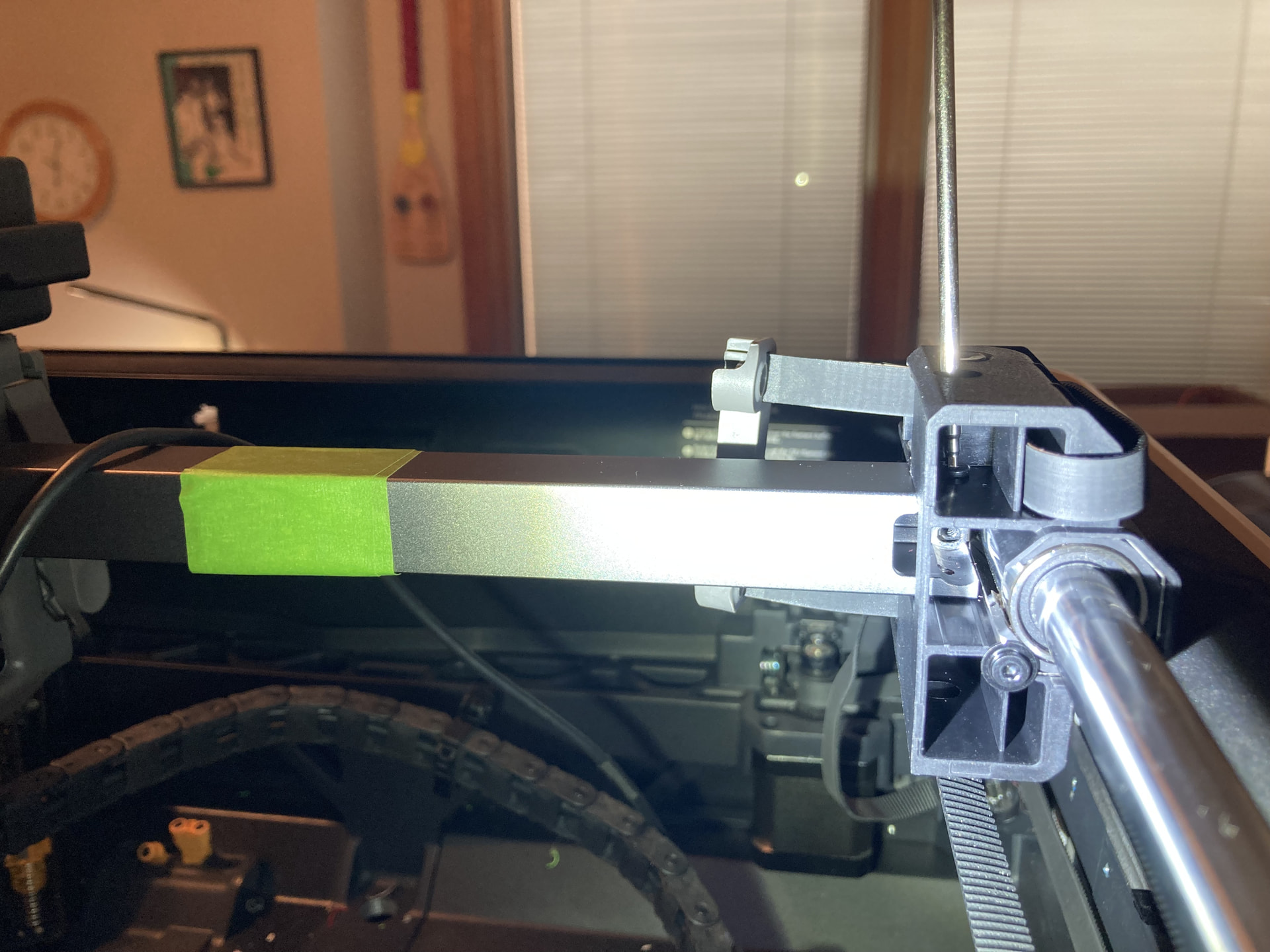
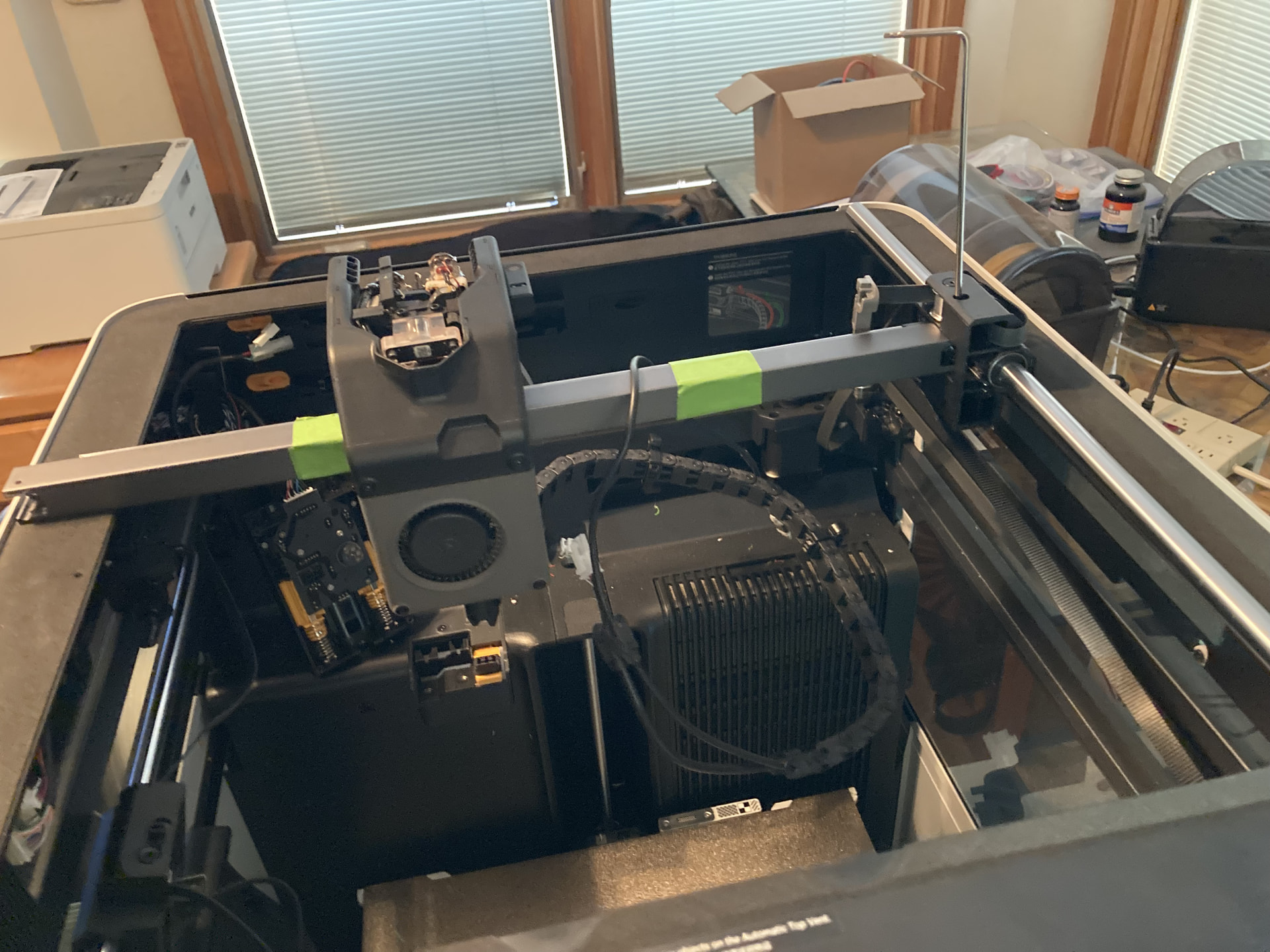
Can the square tube be moved forward and aft at all with just the one screw remaining?
If it was me, I would try to use needle nose pliers that have serrated tips and grab the head of that screw. Then first try moving the square tube forward, clamp the pliers tight, and push the tube back.
That might break the screw loose and it may take a few iterations to do it.
Feeling brave? You could try chiselling it out using the side access to that cavity.