Twenty minutes in the freezer will often help separate the model and the plate.
The curioius thing about lightning infill is that there can be literally zero infill touching not only the bottom surfaces but even the bottom layers:
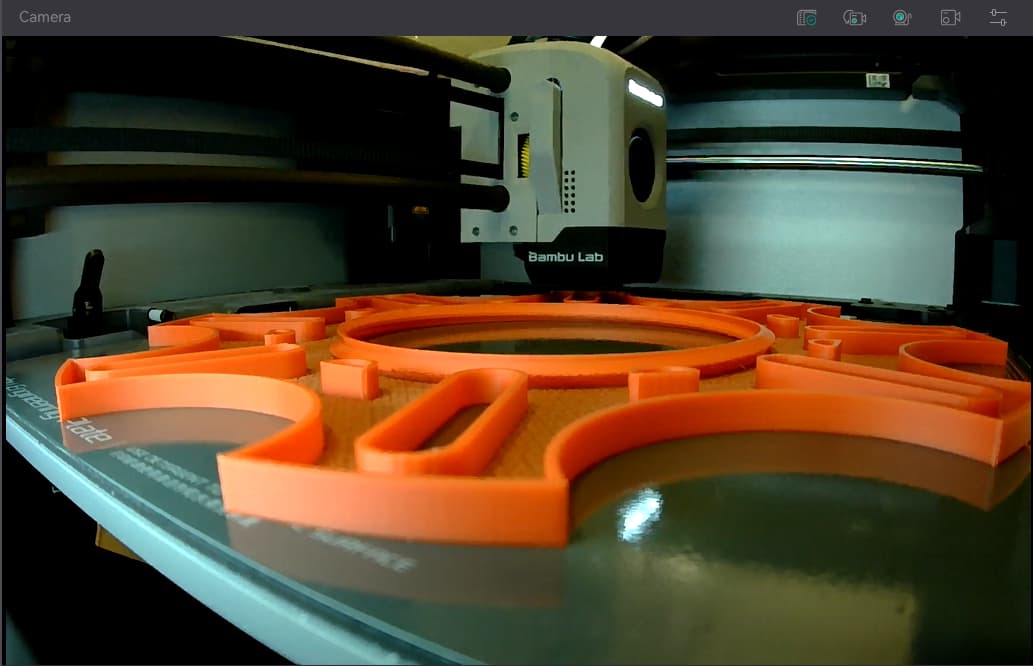
I’m not sure whether or not that’s a good thing, so I’m giving it a try so I can better decide. Even though I configured for 50% sparse infill, the lightning infill barely even starts getting produced before the print model is about half its print height:
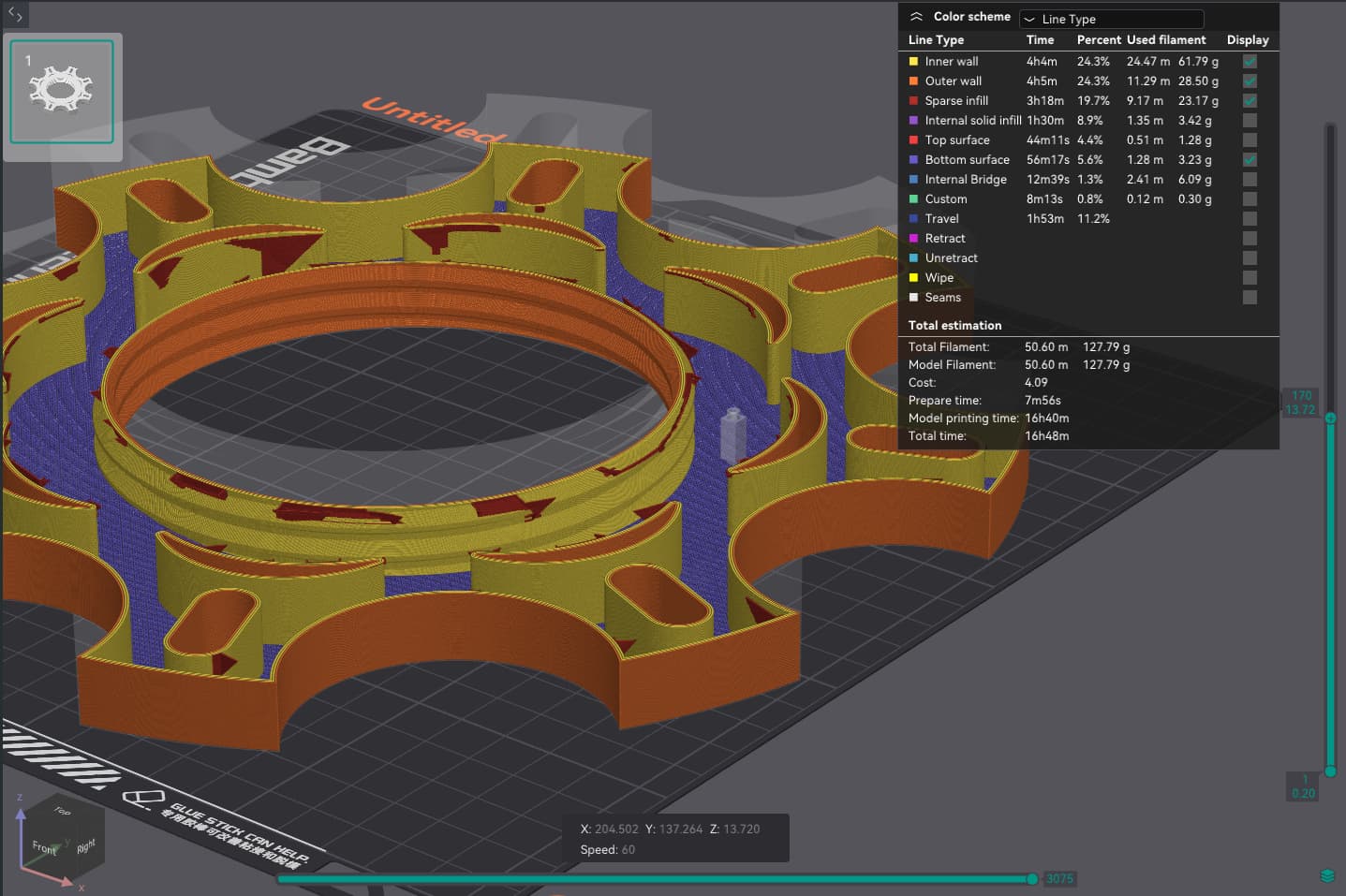
Lightening infill is designed without any regard to any structural element other than the top surface being able to be printed as intended.
The eventual model should be considered “display only” as there aren’t any guarantees the sides or base as printed will have sufficient strength that the other infill styles would have provided.
It is designed for fast printing.
It has excellent use cases, just make sure yours is one of them.
It’s getting close to the point where it will be doing the bridging over the lightning infill to prepare for the top layer.
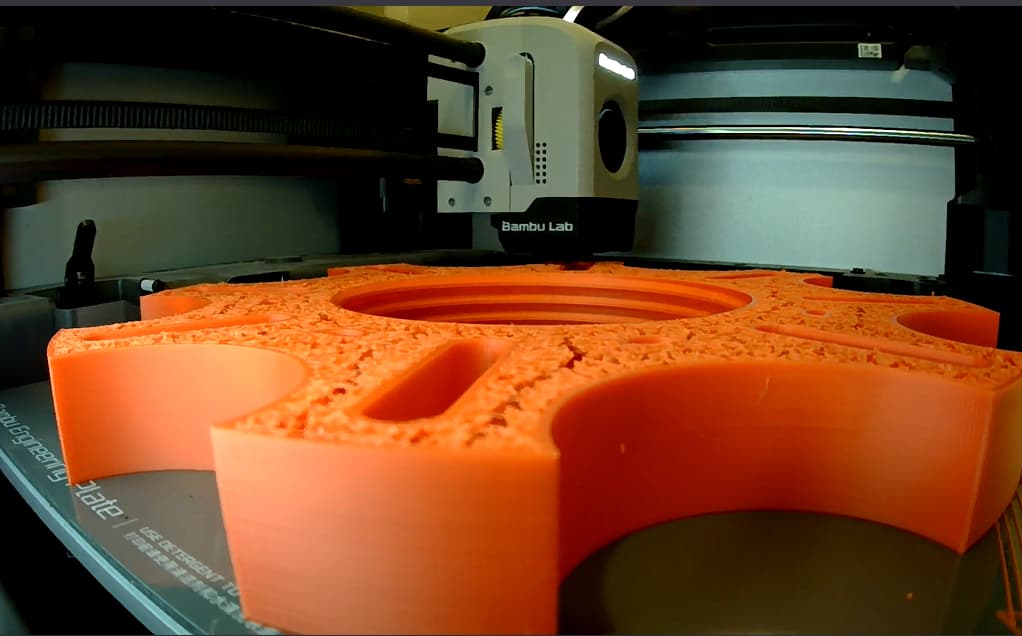
No evidence of any warping that I can see. There is a small amount of rubbing sound as the nozzle goes over some areas, but at a 0.08mm layer height, maybe that’s to be expected even without any warping?
So, as my first “warp avoidance” experiment, it seems to be succeeding at not-warping. As noted by @MalcTheOracle the lightning infill does look a bit fluffy and insubstantial. It occurs to me now that I could have bolstered some additional top layer support by hanging some kind of beefy reinforcements off the interior extrusion walls. That would happen entirely “in the air” above the bottom layer and therefore shouldn’t contribute to any warping.
Alas, the best laid plans of mice and men… the bottom ripped off again, similar to the time just prior:
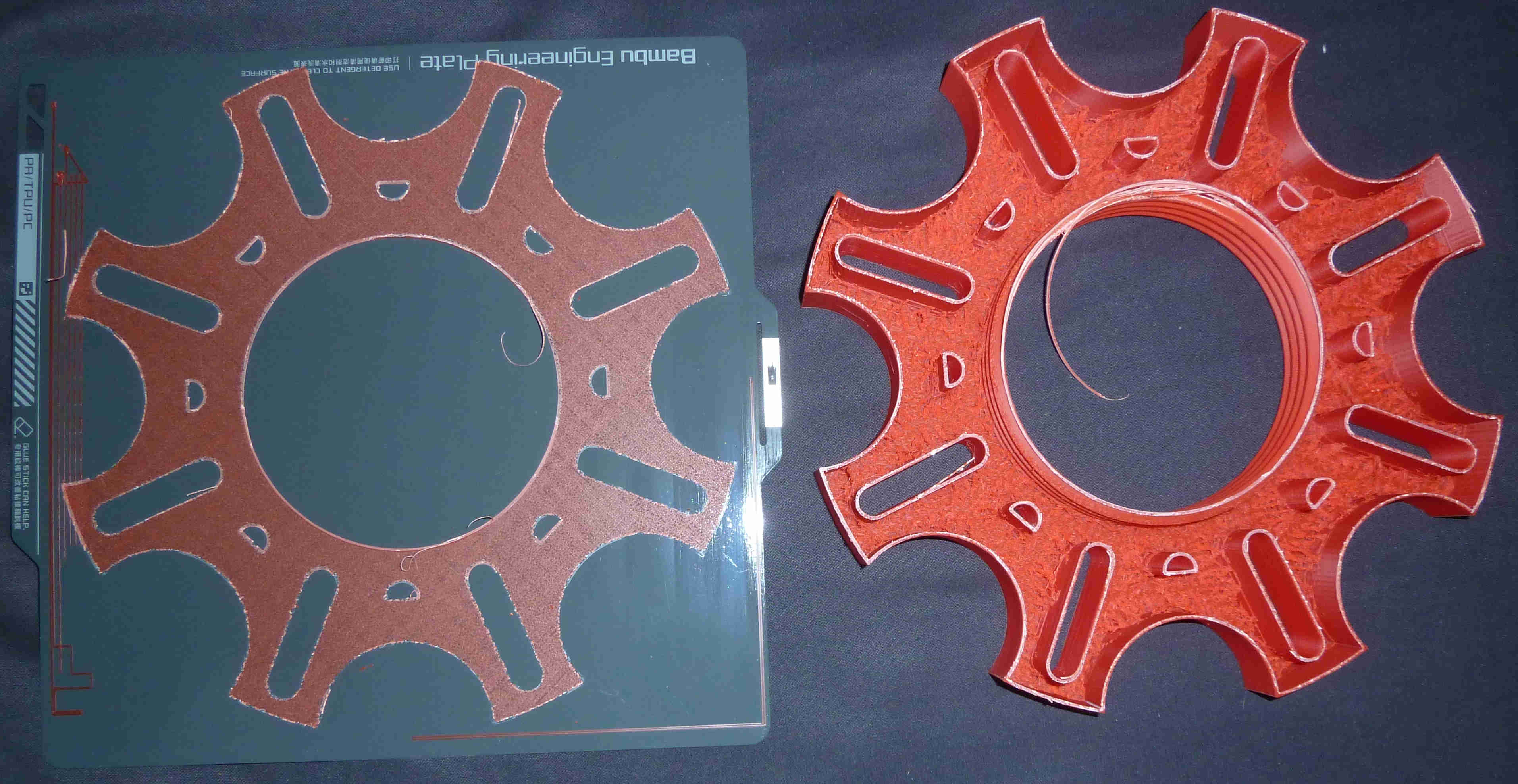
So… I’m going to ditch Hilbert curves. The idea is sound, but they just don’t stick well enough to walls. I’m going to return to gyroid as the sparse infil and monotonic as the solid infill. However, this time I plan to have enough pattern interrupters that I hope it will limit the shrinkage:
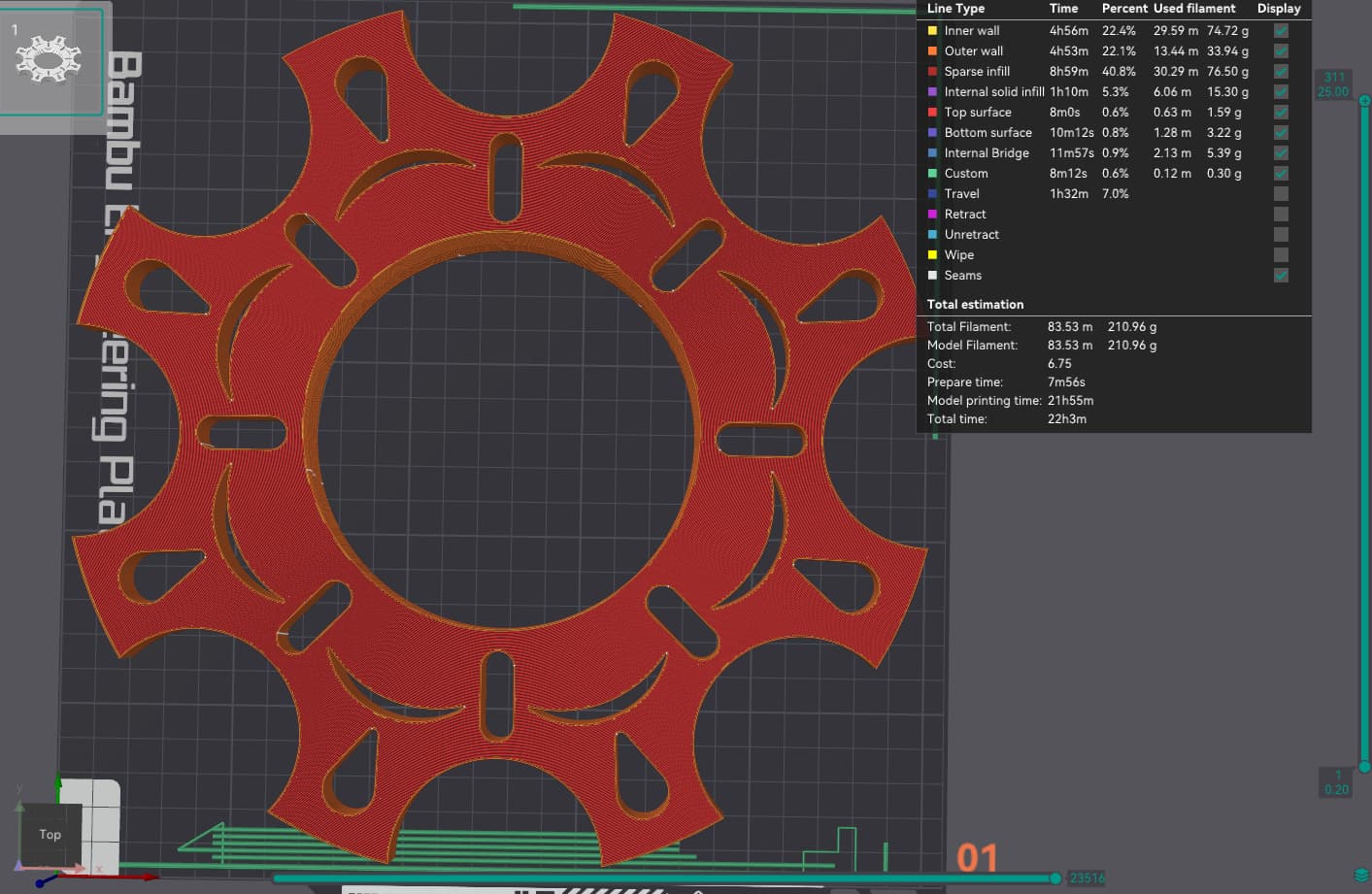
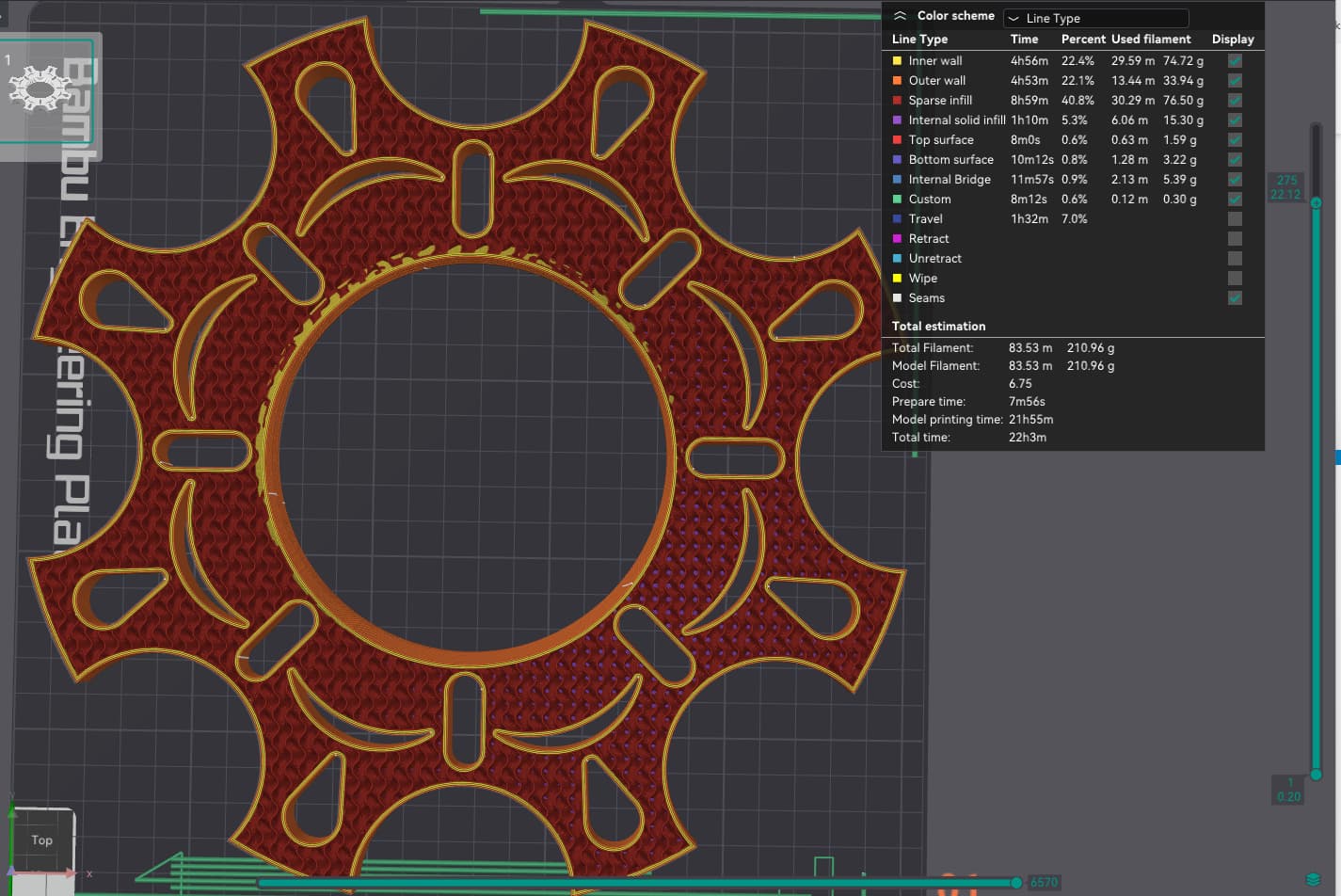
Fingers crossed. If this doesn’t work, then I’m going to punt on ASA altogether for big prints and switch to either a “no warp” or “low warp” filament, remove the fancy interrupters, and revert to a plain vanilla print, like what worked for me prior to falling down the ASA rabbit hole.
And maybe this will be next:

a 200w chamber heater mod for the X1C.
It would have been nice if Bambu had released an upgrade kit to do this, but why do that when they can maybe release a new printer with that feature and try to sell me that instead? I guess it was my fault for buying this printer when it didn’t have what turns out to be a critical feature (a heated chamber) needed for printing all the kinds of filaments this printer is meant to print. Yup, I’m bitter about it.