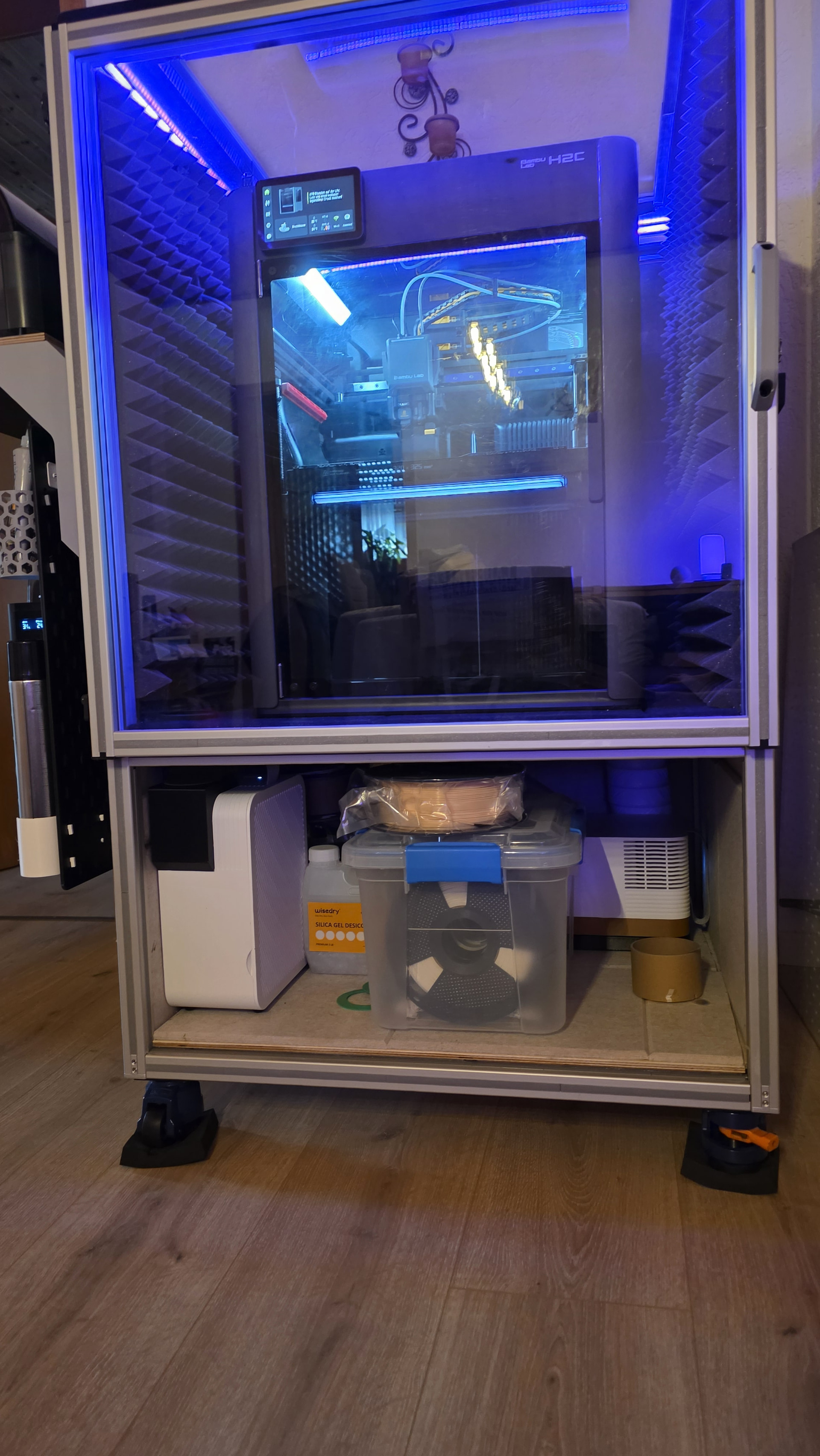
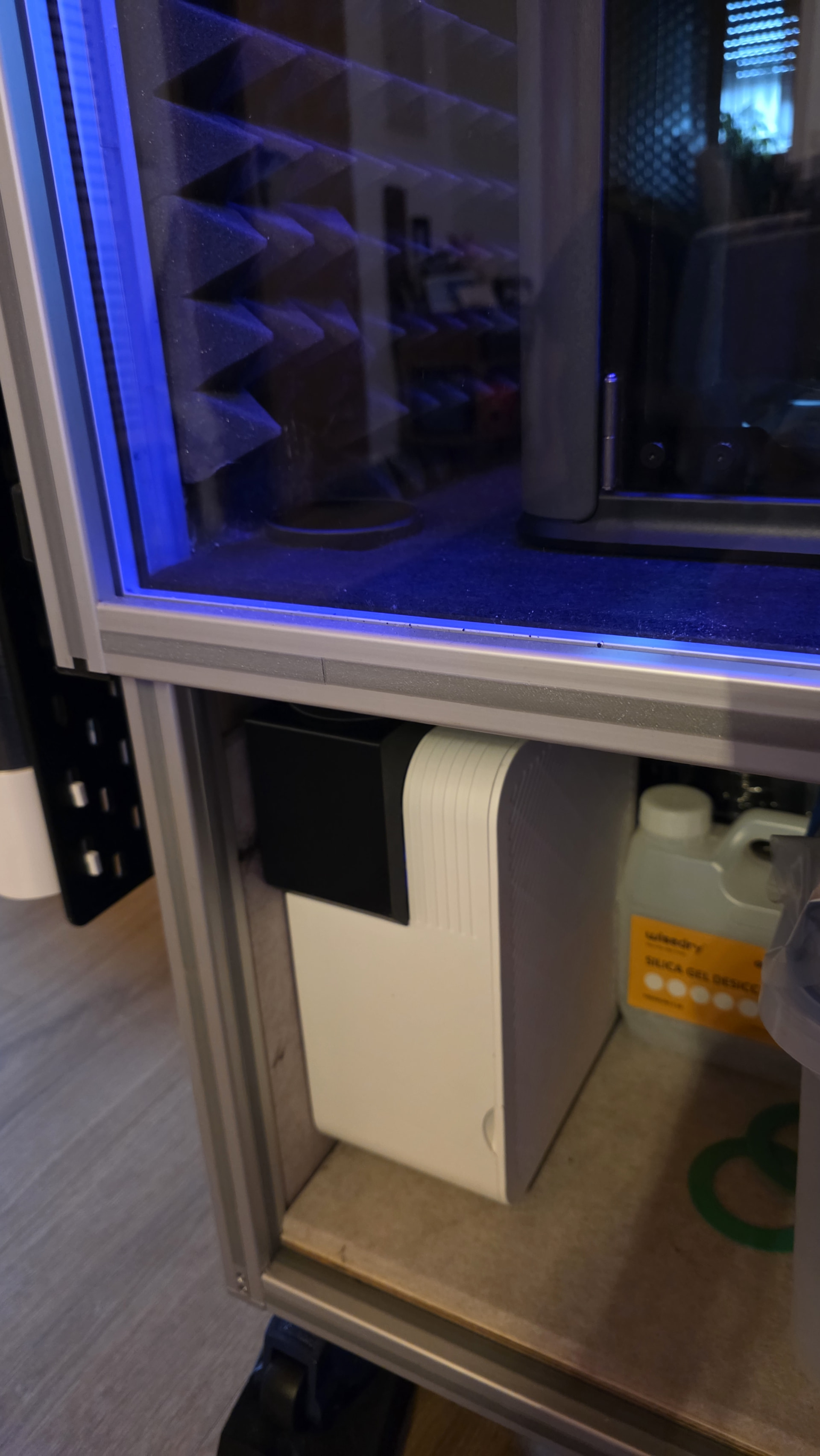
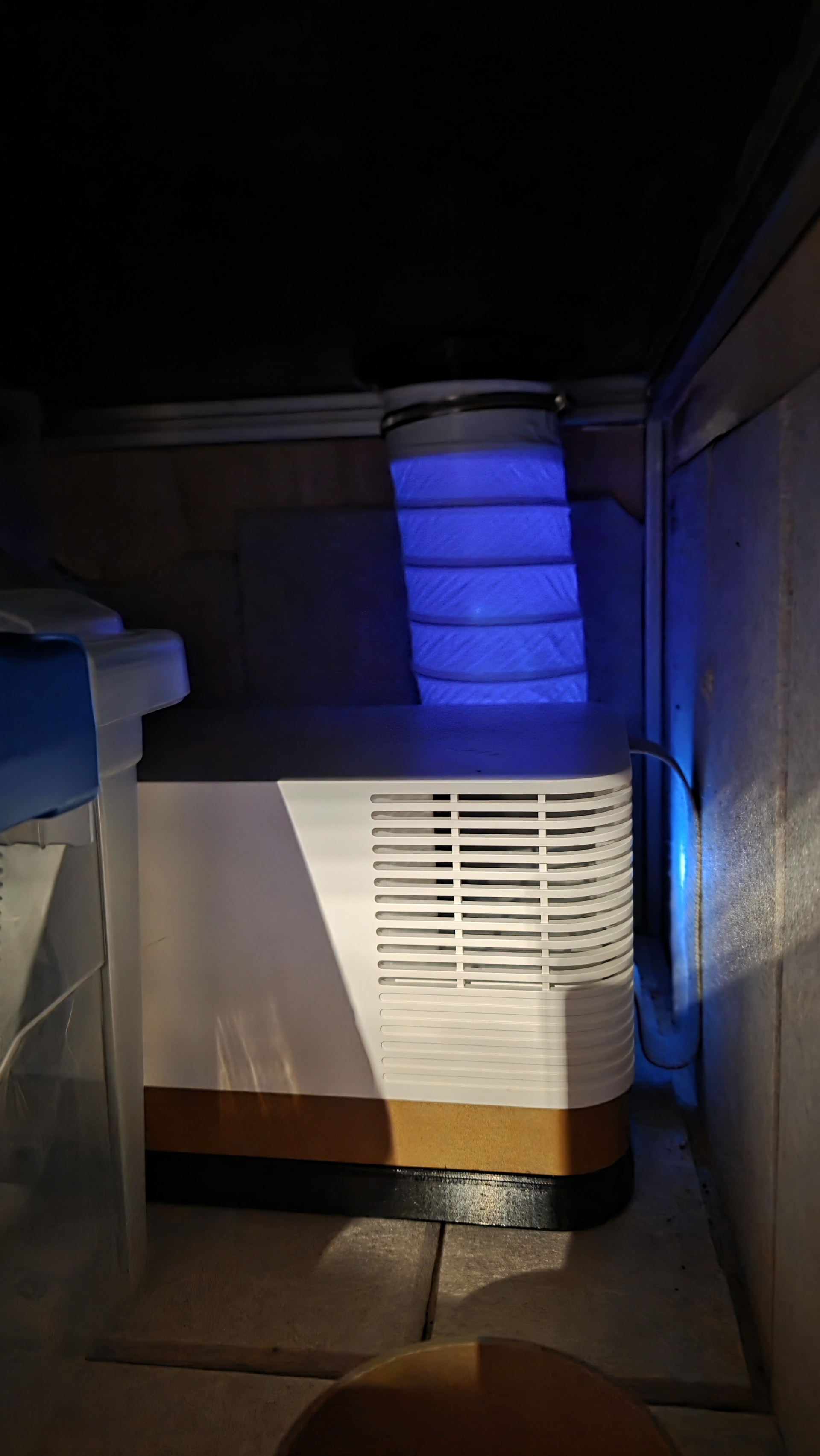
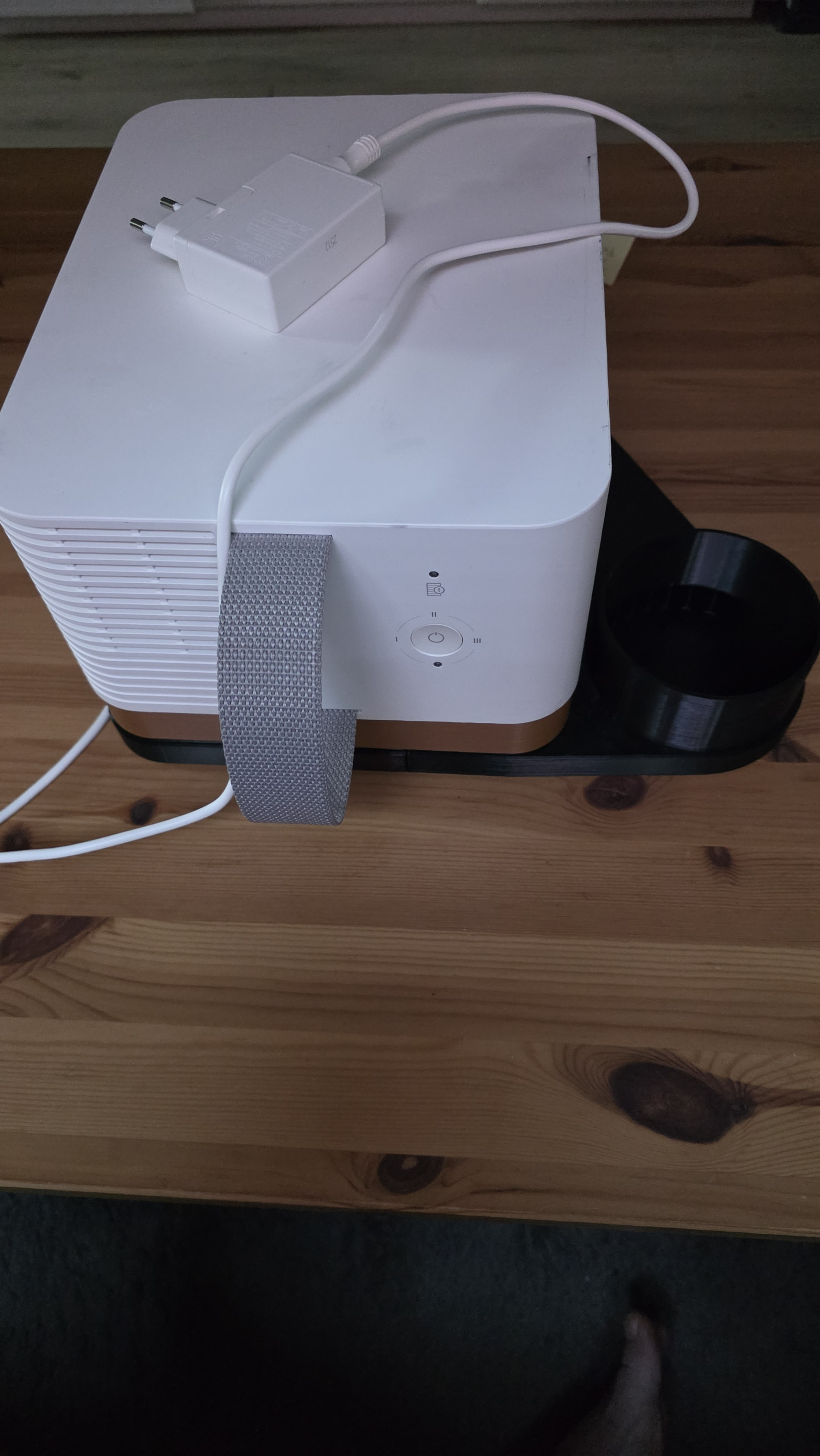
The shown picture above was my first attempt for an filtering solution. My final version has one Ikea uppatvind AirFilter for intake and one for outtake. In the outake path is a addiational carbon filter before the air gets into the Hepa Filter from ikea. I don’t want dust through the intake and that’s why i filter it also.
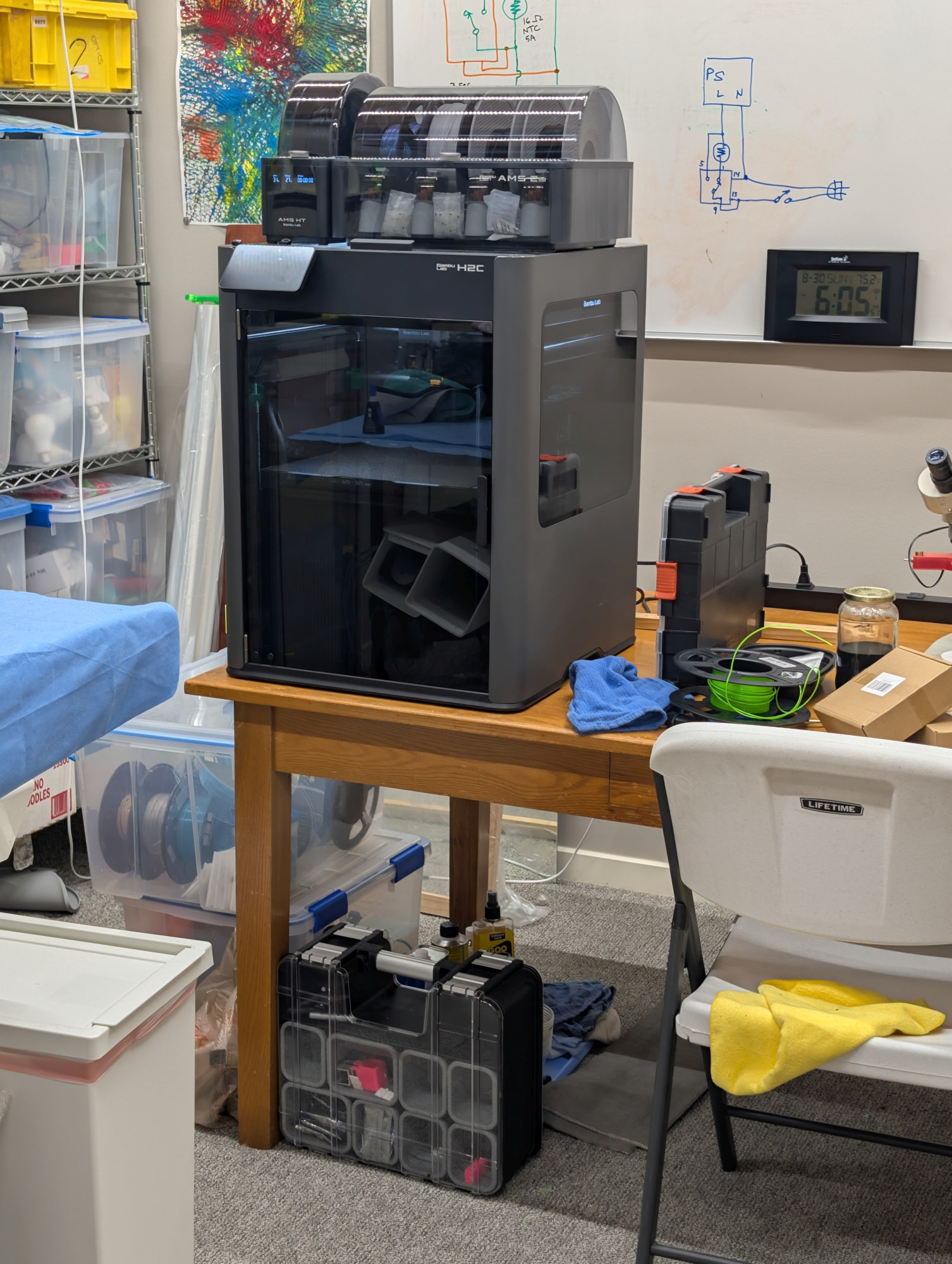
The table is as solid as a rock, level, and is where the printer calibration was done.
I bet if you printed that plate again and watched around the time of the failure that tossed the AMS, it might get obvious what happened.
My money is on some aspect of the print got the print head moving back and forth for a while without interruption and at the perfect frequency for the printer to hit resonance. At resonance energy gets accumulated in the swinging mass and the amplitude gets bigger and bigger until “something”.
Got to say it might be something else, and my first thought was dust messing with the foot grip too, but since that’s unlikely, I wonder if it’s just a model that gets the printer swinging. If it is, we could see some evil folks make models with whatever features so it hits resonance for a (probably specific model) printer and finds everyone that prints it with an AMS sitting on top of their printers.
Excellent point - @mke_printer can you share the model you were printing? I’d like to test it as well.
As long as you test it on the same model printer with the same hardware on the print head, I think. If that’s right about it hitting resonance (I don’t know), to get the same resonance effect the mass and frequency needs to be the same. There will be a range of masses and frequencies that would work but I have no clue how wide that range is.
I just know I’ve seen my printer shake the table it’s on like crazy sometimes which actually might be a part of this equation too. It is just physics.
And this might be key. My table is a tiny bit wobbly. There isn’t play but it’s a computer desk that is a little flexible and some of my printer’s shaking energy gets dissipated wagging it back and forth. I’m not that familiar with the masses/motions stuff but bet being on an inelastic table could keep all the resonant energy up in the printer and AMS mass.
Definite grain of salt. I think that’s how it would play but any with backgrounds in that kind of stuff would know better. And the proof would be if mke_printer watches another print to see what happened.
Yes you are correct.
But why is the shaking making it fall off?
We need to understand what is different about your setup, or if there is a fault in your printer.
Do you have video of the machine operating?
edit As others have said it might also be a particular model doing something weird
I used to have the printer on the floor (until my hobby room furniture was built) and it was fine. The floor is engineered wood over concrete.
Here’s the file I was printing.
It was printing ABS filament using the left nozzle.
Have fun!
dust cover frame clamps.3mf (911.9 KB)
Here it is on the table:
Ah. But I think there might be something about the print involved too – if it actually is resonance. I’ve had my printer get pretty wild on the table it’s on and also wondered just how bad it could get but no crashes to date. But only printing certain models seem to provoke the more extreme vibrations.
And the particular printer model may also make a difference depending on extruder mass, speeds, etc. I think for a particular print file I bet only some model printers go wild with vibrations or may go wild on different layers, etc., only on certain prints.
Not surprised! I would never placed an AMS or anything on top of it. I have 4 AMS 2 and 2 HTs above but on a shelf. Works phenomenal 
I had an AMS on top of my X1C for two years. Now I have an AMS 2 Pro on top on my much shaking X2D.
Works phenomenal!
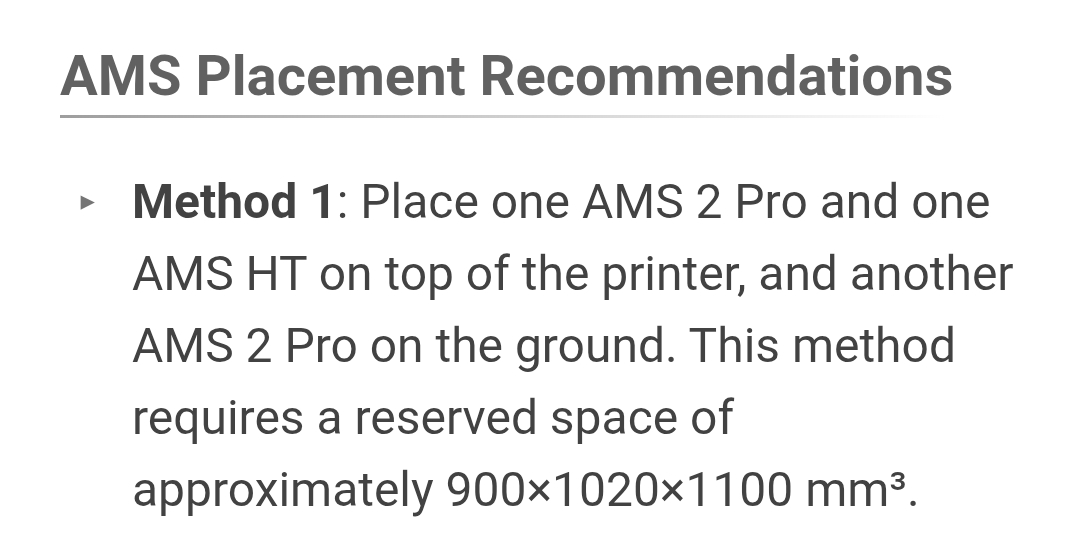
The parts I was printing were oriented with the long dimension parallel to the Y axis. That means that the tool head and additional mass of the X axis accelerate to full speed and then decelerate before reversing. I have printed more of those parts with the orientation switched so that the long axis is parallel to the X axis. That means it doesn’t have to throw the X axis back and forth as much which greatly reduces the dancing of the printer.
If you’re going to put the AMS on top of the printer, I suggest that when possible, you orient larger parts so that the long axis is parallel to the X axis, not the Y axis. That may help prevent the printer from throwing the AMS off the top.
Damn sorry that happened to you and glad it didn’t break, those things aren’t cheap. I’ve noticed my H2C does wobble more than my P1S, bigger printer more moving parts etc. I’m in the process of cleaning up my basement for a proper set up with strong shelf’s. I’m looking into anti vibration mats like the type you use for washing machines etc. Don’t know if it’s any help but I can at least report back if there’s a noticeable difference. I’ve read posts of people reporting the little feet can come off or loosen after a while. Still just offering bandaids for the problem I’m afraid
A couple days after the AMS shake off incident I started seeing error messages about the toolhead camera not working. I took the back cover and fan off the toolhead and found the connector for the toolhead camera had come out of its socket. I’m wondering if the same shaking that threw the AMS off the top of the printer also shook the camera plug out of the socket.
I plugged it back in and put the toolhead back together and it’s working normally now.