I would not put too much thought into this picture; at least not more than just a generic diagram of how Bambu’s CHT is “designed” to be.
All those colors are nothing more than just colors. No way they are the indication of the material used in the construction.
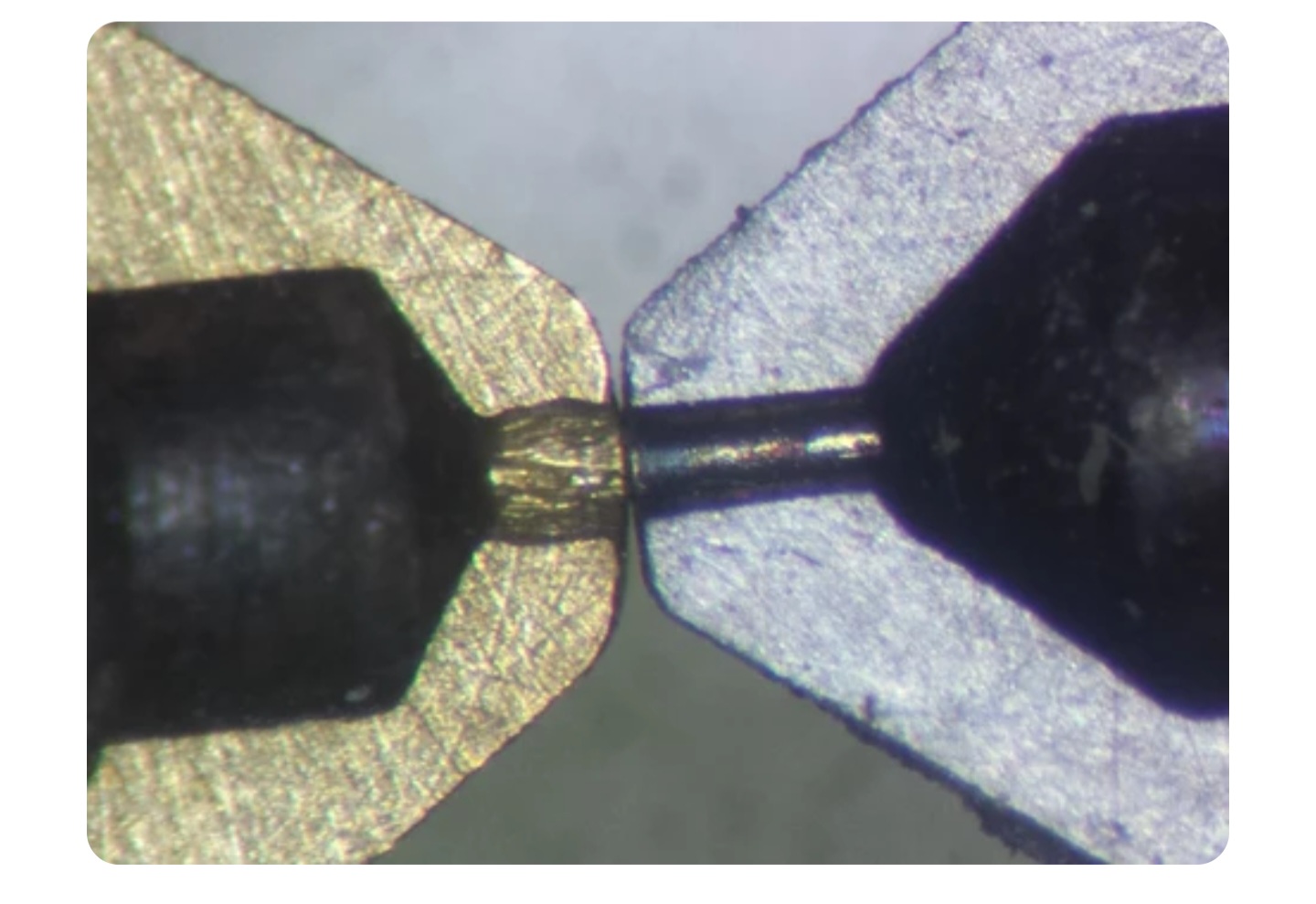
Fun fact(s): Did you guys know that only CHT Tungsten nozzle from Bambu has brass brazing on the tip? Regular nozzle doesn’t have that brazing. I suspect this is due to the earlier testing that resulted in an elevated defect rate of shooting tips out of the nozzle body.
Also, CHT Tungsten has bronze plated color, while regular has silver color. Why? Who knows.
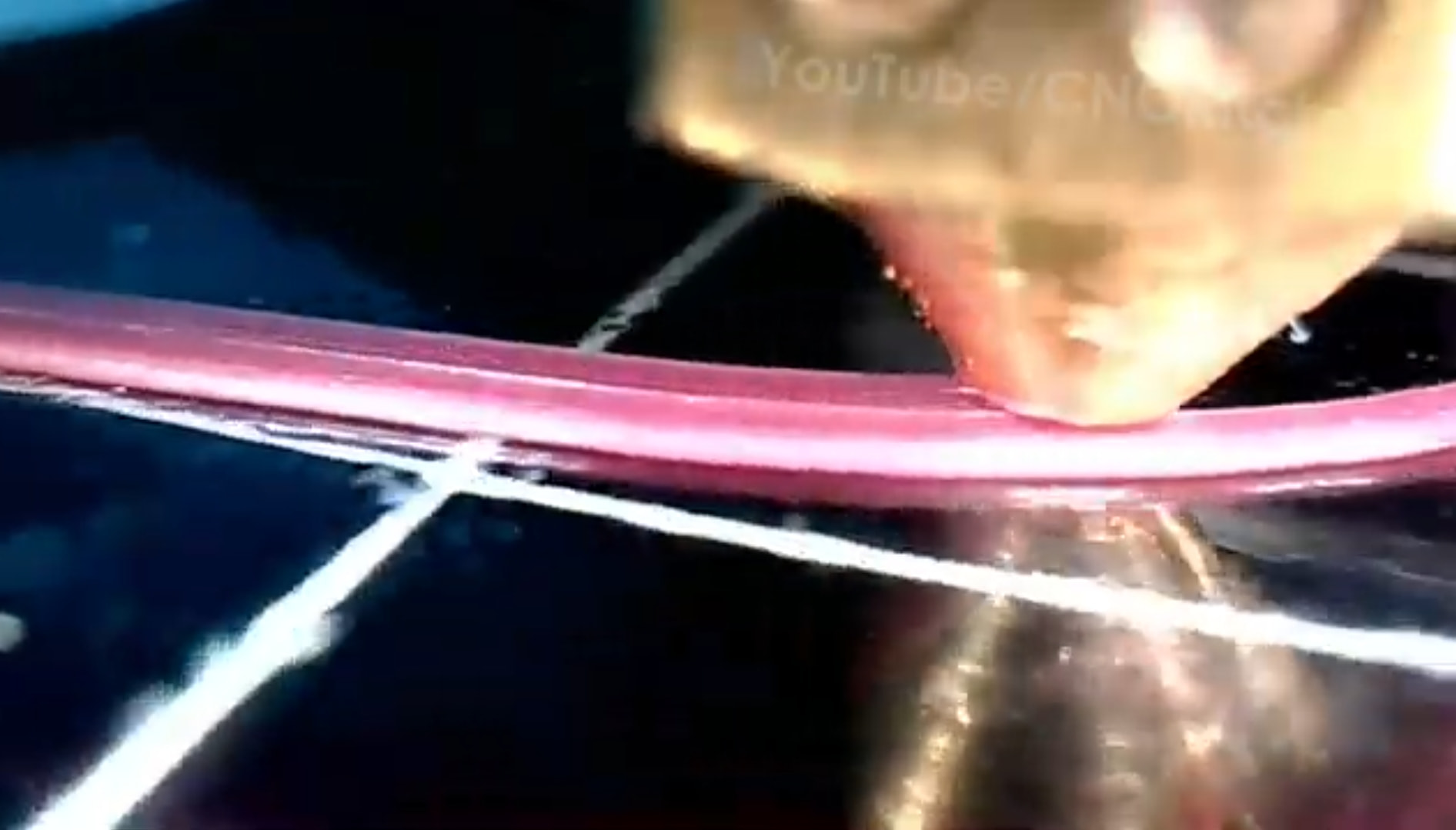
Weird how every single layer doesnt come out ironed. You need a closer shot to show whats happening. I had a macro picture a few years ago but can’t find it
Oh ok. I was thinking you could literally sand a mm or two off the tip and the ID would still be the same. The nozzle would just be shorter. My weird brain was thinking the constant sanding of the internal tube was what caused the internal tube to grow.
Eventually the internal diameter will increase also.
It starts internally where the larger diameter transitions to the nozzle diameter. That is the location where the pressure on the surface is the highest.
So eventually your 0.4mm nozzle will become a 0.6mm nozzle.
How much the tip wears also is strongly influenced by the layer height. The smaller the layer height, the higher the wear.
As you can tell, they are 2 different nozzles, but it shows the inside of the nozzle tip. Its larger(worn), before the nozzle tip face wore down to the point that the internal tube widens. The tungsten one is still the same size…Inside the nozzle. It creates a situation where the nozzle is laying down a wider strip of filament than the printer has planned for. Means tight gaps get closed. Print in place parts no longer work etc. Now look how far the nozzle tip surface would need to wear before it got to the larger internal melt zone.
On a side note, I have nozzle that come to a point \/ with an extremely tiny tip surface. For conveyor printers.
Surely the tip diameter increases also as thee fibers that are pushed around the sharp corner between diameter and tip face.
But the wear of the tip itself counteracts that partially.
The left nozzle btw. Is a very poor design with a standard drill tip angle for the larger size.
I bet we find that both are correct but everybody wants the other person to be wrong. It most likely protects the tip surface and internals. Good conversation either way.
Also, regarding the magnetic tips: After talking to someone a bit older and more into metals than I am, I’ll relay this info:
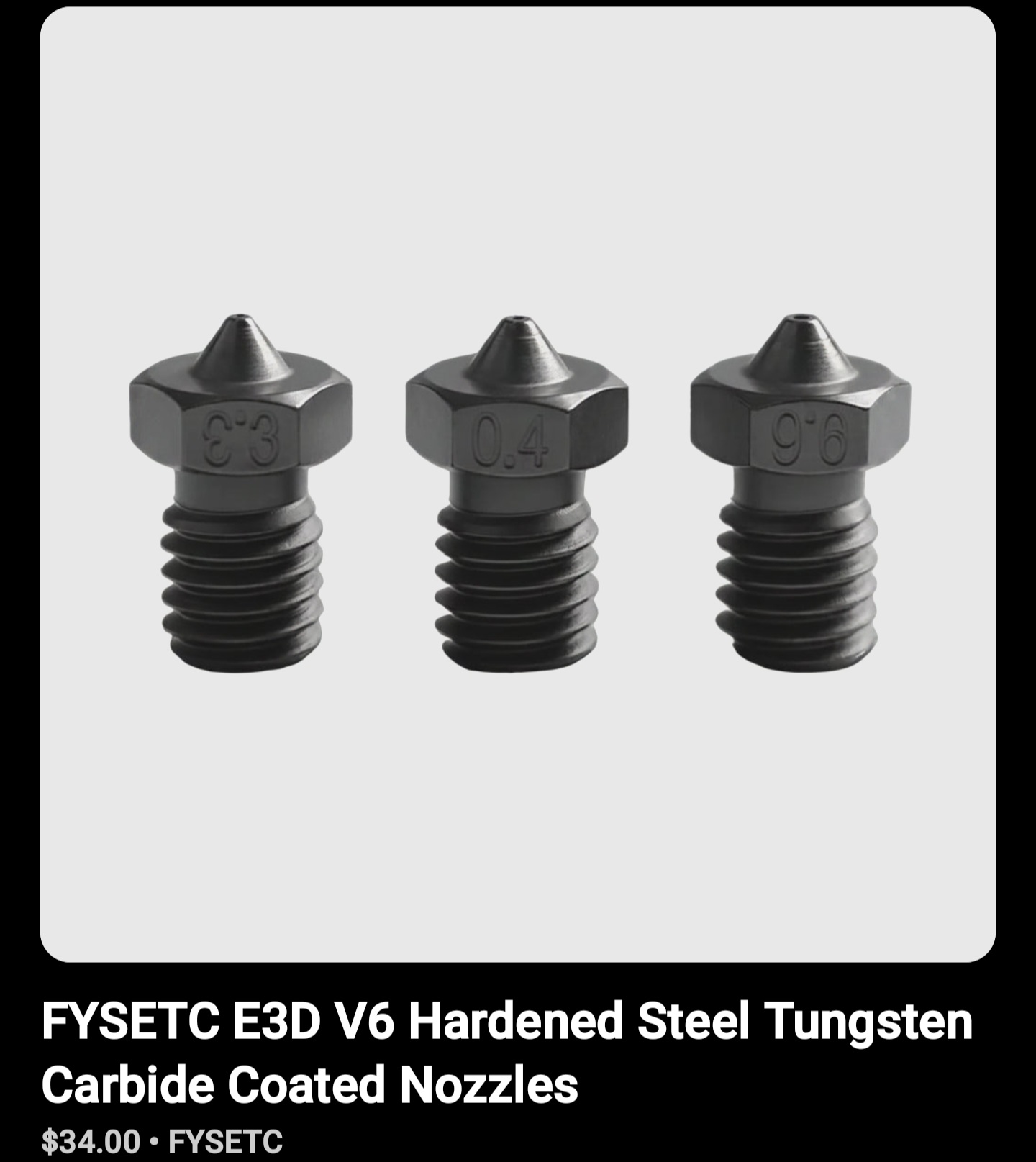
There are two common types of tungsten carbide based on binder material: Cobalt and Nickel. Nickel based versions of tungsten carbide are not magnetic. Cobalt based versions ‘respond to magnetic influences’ (that is how he put it) He also informed me his XRF analyzer wouldn’t work on something that small, especially with the contamination/coatings. (‘give me a square inch of un-oxidized clean material’; He has some cool equipment!)
He also corrected me somewhat: He described a high temperature flame deposition technique used to coat steel shafts/wear parts with various materials, including tungsten carbide. He stated this is a technique for large objects, not small ones and it requires post-processing [grinding] to get the finish desired.
He was immediately dismissive of the steel sleeve coated with tungsten carbide idea (‘its either steel or carbide; it doesn’t make sense to mix them; if you have a steel base doing thermal cycling, the [carbide] coating will crack; just make it out of sintered carbide. It’ll be cheaper anyway’.)
Any recommendations for a USA based seller of the ObXiDian 500? Seeing E3d, but no stock of the 0.6mm. Same with Matterhackers. Do you have any info on the actual tip material on these? And how to do you unclog them [with their 4-channel design]?
I did some digging. looks like standard flow tungsten nozzles are solid tungsten and non magnetic but the high flow has a Cht insert that is magnetic(sorta like the picture I posted before). Maybe the CHT portion is hard to manufacture in solid tungsten? No idea. It sorta makes sense of the early reports of the internal cht portion failing.
Based on internet reading so take it with a grain of salt until Bambu verifies
Anybody have a standard flow h2d tungsten to test?
Wild. I ordered one too. To cut in half. Thanks for the input. Looks like they may have both magnetic and non magnetic versions in the early runs. And that cobalt or iron is usually used as a binder.