Hi everyone,
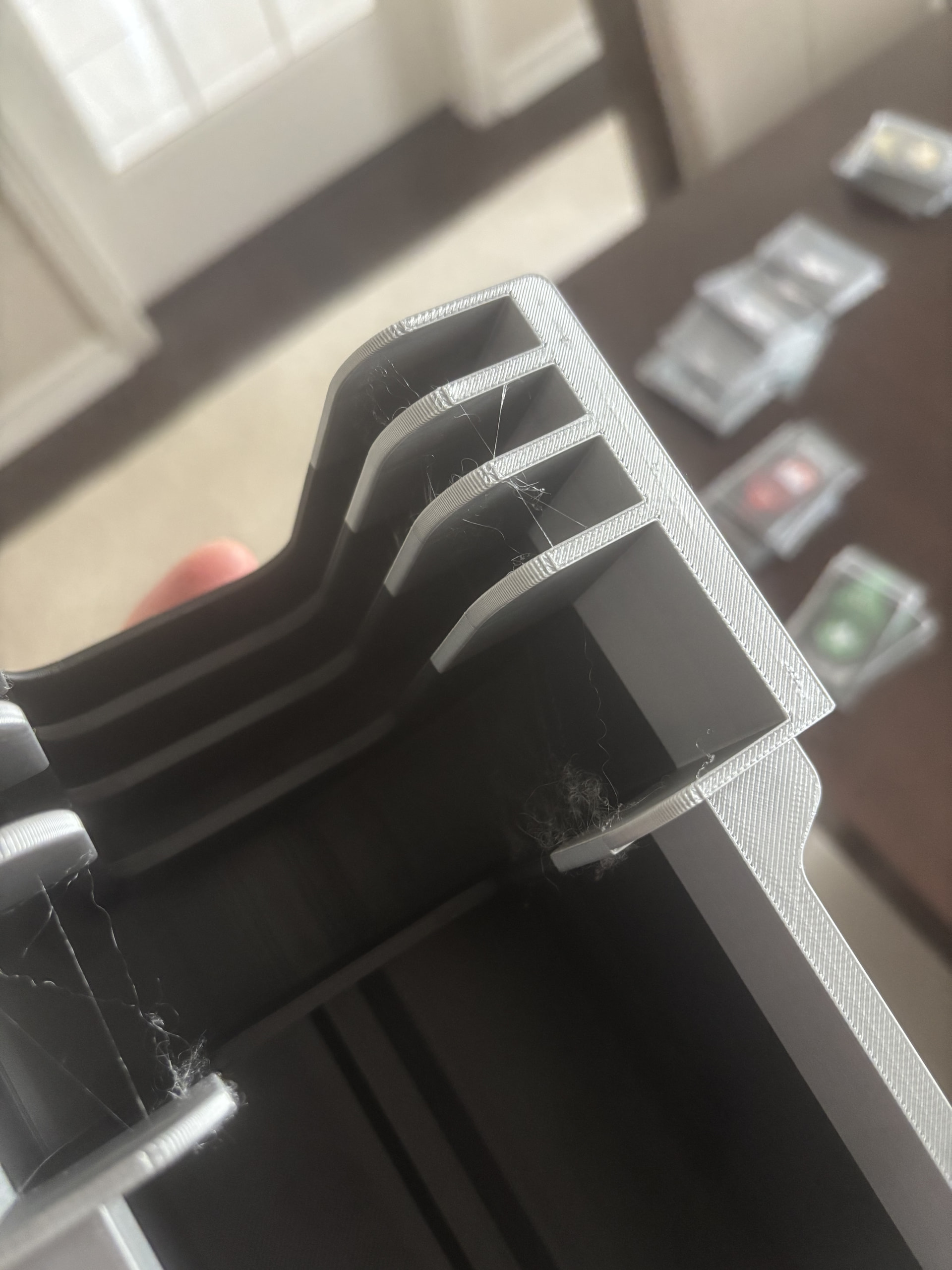
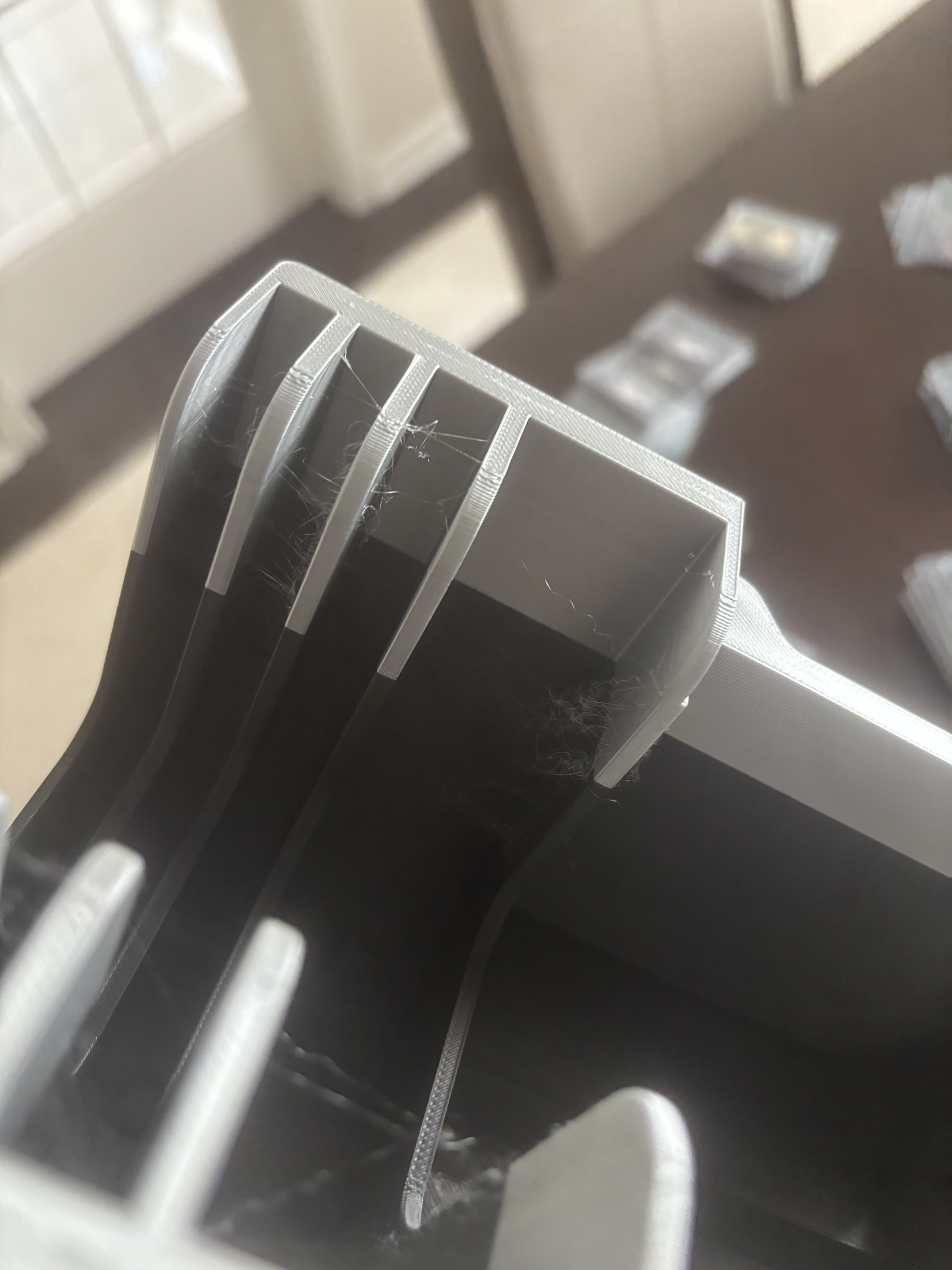
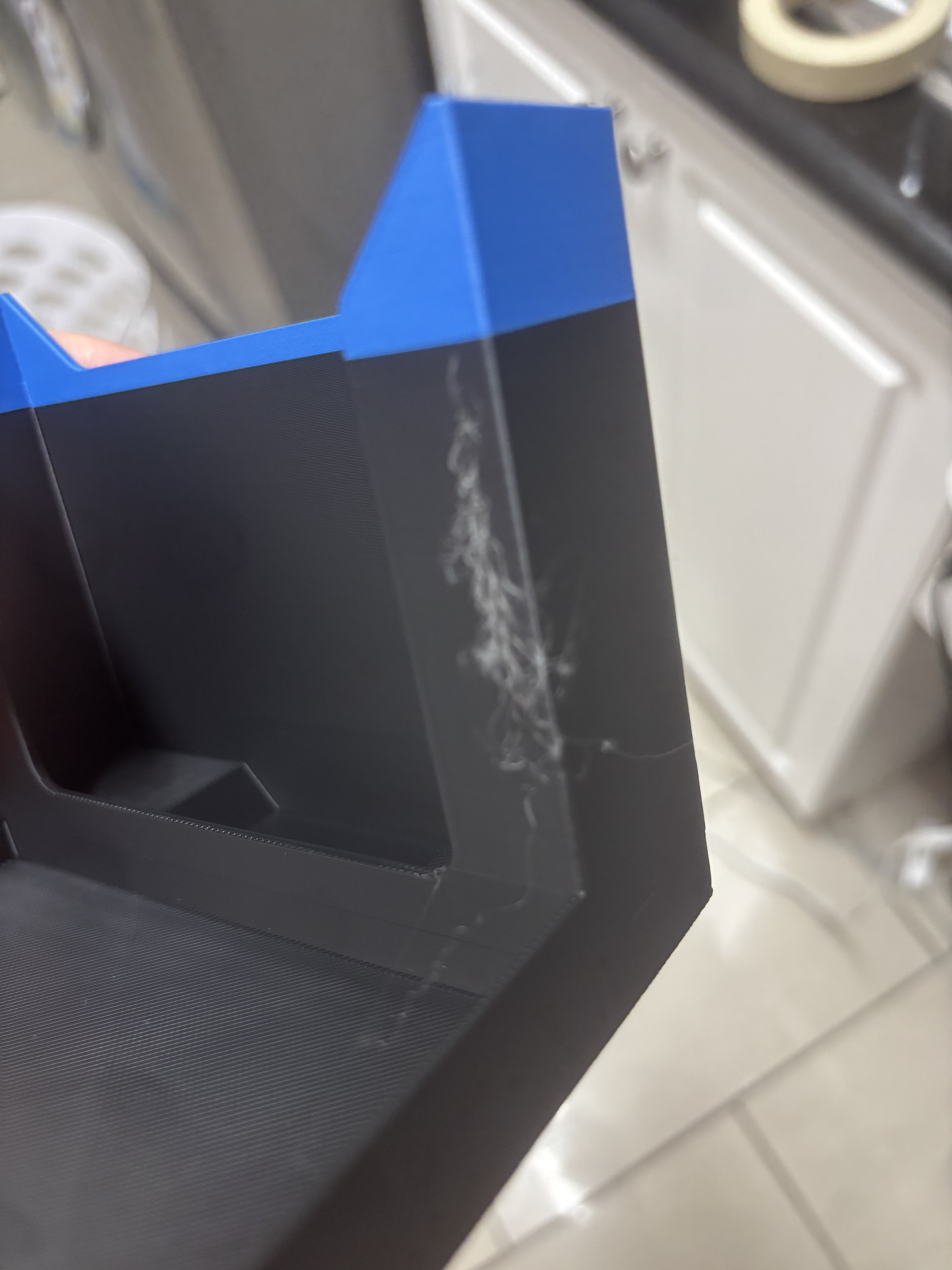
I’ve been struggling with persistent fine, spiderweb-like stringing on my Bambu A1 with AMS Lite, and it’s driving me crazy. Sometimes it’s just a few wisps, but other times it builds into cotton-like clumps, as shown in the photo.
The prints otherwise look great, but the stringing is ruining them. A hairdryer warps the PLA, and brushing leaves marks. It’s especially bad between thin dividers on board-game inserts, where it’s almost impossible to remove.
Here’s what I’ve tried:
-
Filament: Bambu PLA and eSUN PLA+, same issue with both.
-
Drying: 50°C for 8 hours in a filament dryer. No improvement.
-
Temperature: Lowered from 220°C to 210°C, then 205°C.
-
Retraction: Increased from 0.8 to 1.0 mm, enabled Wipe While Retracting.
-
Travel: Enabled Avoid Crossing Walls, max detour length 0 (unlimited).
-
Wall order: Inner/Outer. Also looked into other wall orders.
-
Slicer: Started fresh with the stock 0.20 mm Standard A1 profile (Bambu Studio 2.8.2.61). Otherwise mostly default speeds and accelerations.
-
Nozzles: Tried different sizes, including 0.6 mm, which made things significantly worse. I’ve ruled out the hotend as the cause.
I’ve also reproduced the issue on generic stringing tests, so it isn’t specific to one model. I use a ventilated enclosure with an exhaust fan, although I don’t know if that’s relevant.
Has anyone experienced this kind of stringing and actually fixed it? Could it be something with the extruder, Z-seam, or flow settings? Is there anything else worth trying?
I’ve spent a ridiculous amount of time troubleshooting this, but am inexperienced and mainly relying on random old threads and AI. I would really appreciate any suggestions. Thanks!
So, I am gonna rant here a little - bear with me.
What most people call “dryers” in 3D printing are little more than hot air blowers. They move hot, wet air around and think that lowering RH changes the moisture content.
While these methods get 3d printing filament pretty close to usable, you can still have issues like this from time to time.
If you are patient I have used this method to get my AMS down to “0%” humidity:
- Obtain desiccant if you don’t have any. Silica gel is fine. If you don’t have any already, I suggest getting the orange color indicating stuff for ease. More is better.
- Make sure you have a sealed container available. Common filament storage boxes like “the cereal box” work fine.
- ‘Dry’ your roll of filament again, but just for a couple hours to heat-soak the entire roll.
- Shortly before the 2 hour heat soak is up, regenerate your desiccant if you aren’t sure if it’s dry. I usually do about a minute in the microwave, flip, repeat a few times until there’s no more steam. Allow a little bit of time for the desiccant to cool. Can toss it in the freezer for a bit.
- When your 2 hour dry cycle ends, immediately put that roll into a sealed container with the dry desiccant. It’s important to introduce the desiccant to the system while the material is still hot, but the desiccant is not. This heat doesn’t last forever, but it helps jump start the process of expelling moisture into the container.
- Try the print again tomorrow.
Or you can just make sure you have a lot of fully regenerated desiccant and skip the time/effort of the pre-heat cycle. It just takes a fair bit longer.
Bonus points if you have a method to print the filament straight out of said storage box with the desiccant still inside it.
Alternatively, hit the stringers with a torch and move on like I do.
Thank you for the reply. It’s hard for me to believe that’s still the issue because I got the as I understand it well regarded creality drier and one of the filaments I dried for 2 cycles of 8 hours with new desiccant in the dryer slots. It didn’t improve the wisping at all!
Do you think it may still be a moisture issue? I’d be grateful for other suggestions.
Do you have any tips for the blow torch wisping removal method? I can’t do it without warping print. Do you use just a kitchen small blow torch?
Thank you
Sometimes plastic just strings a bit. Sometimes it strings a lot. After 15 years injection molding the stuff it’s just at odds with the local weather, or that particular batch of plastic could have ever so slightly lower viscosity than another batch and even when dried in an industrial dryer it will still do it.
You can use a lighter, if you have one. It wont warp anything unless you are really giving it the flamethrower treatment.
As far as the desiccant goes, “new” desiccant is not always fully dry either. Do you know how to and are comfortable to regenerate the stuff?