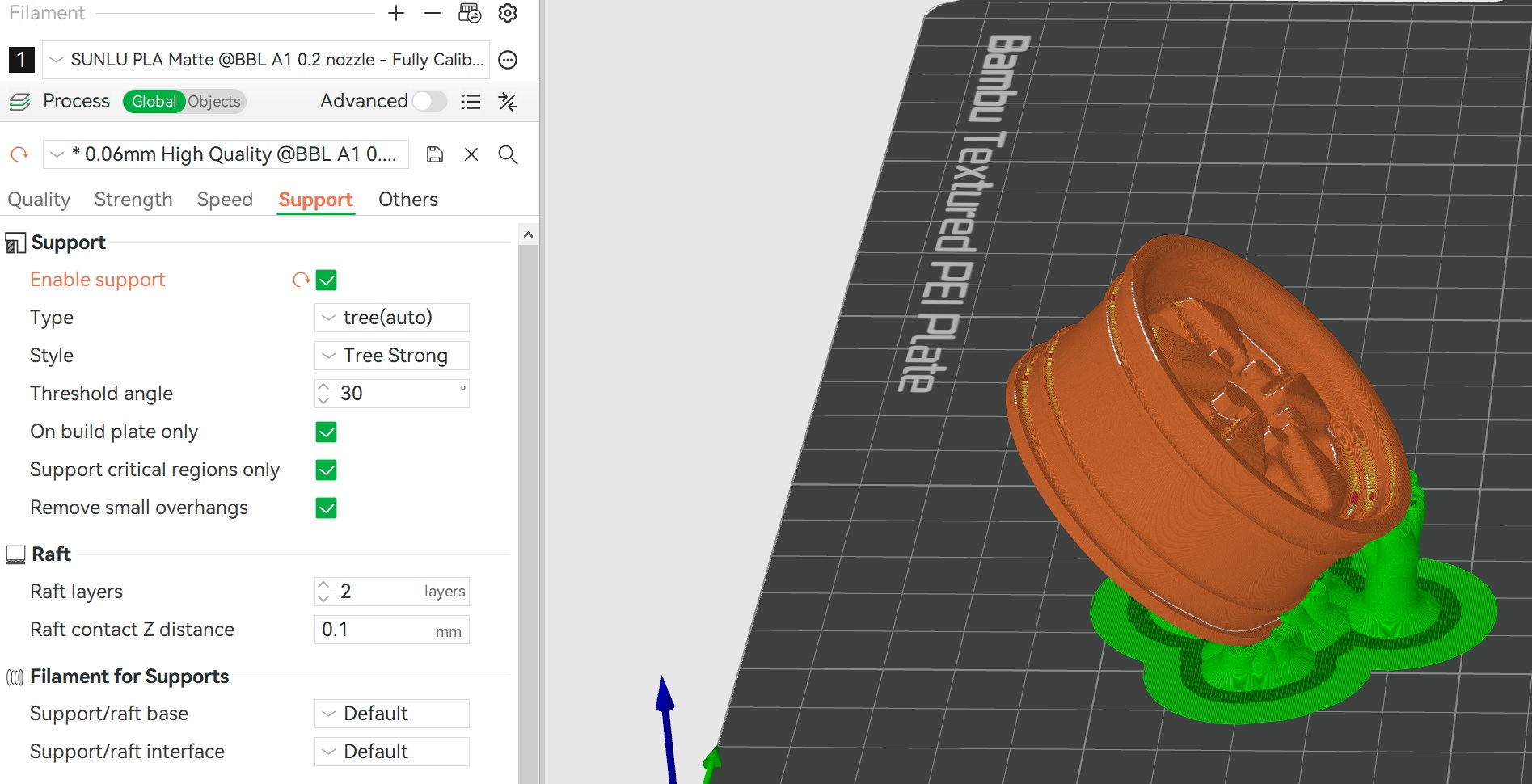
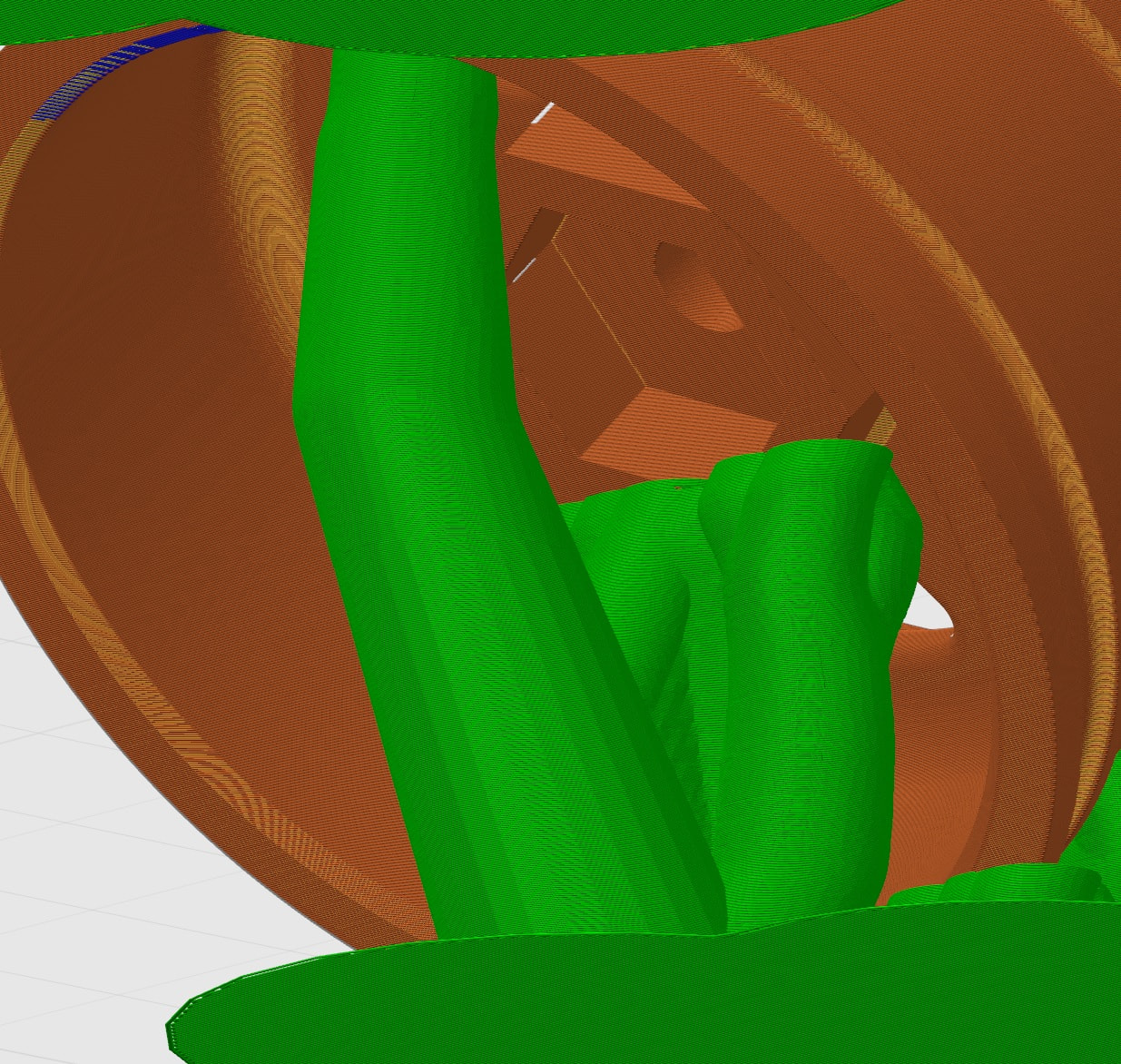
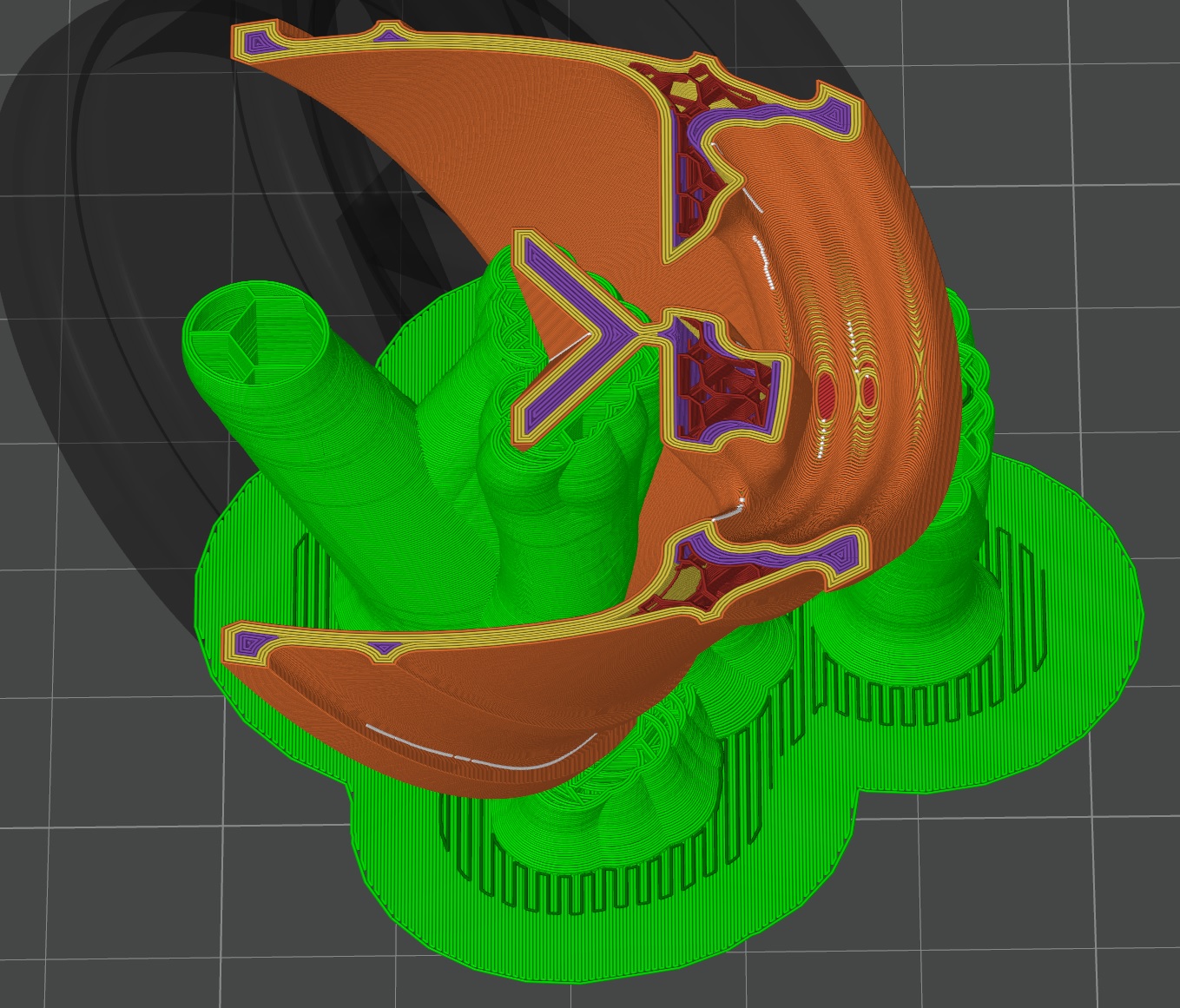
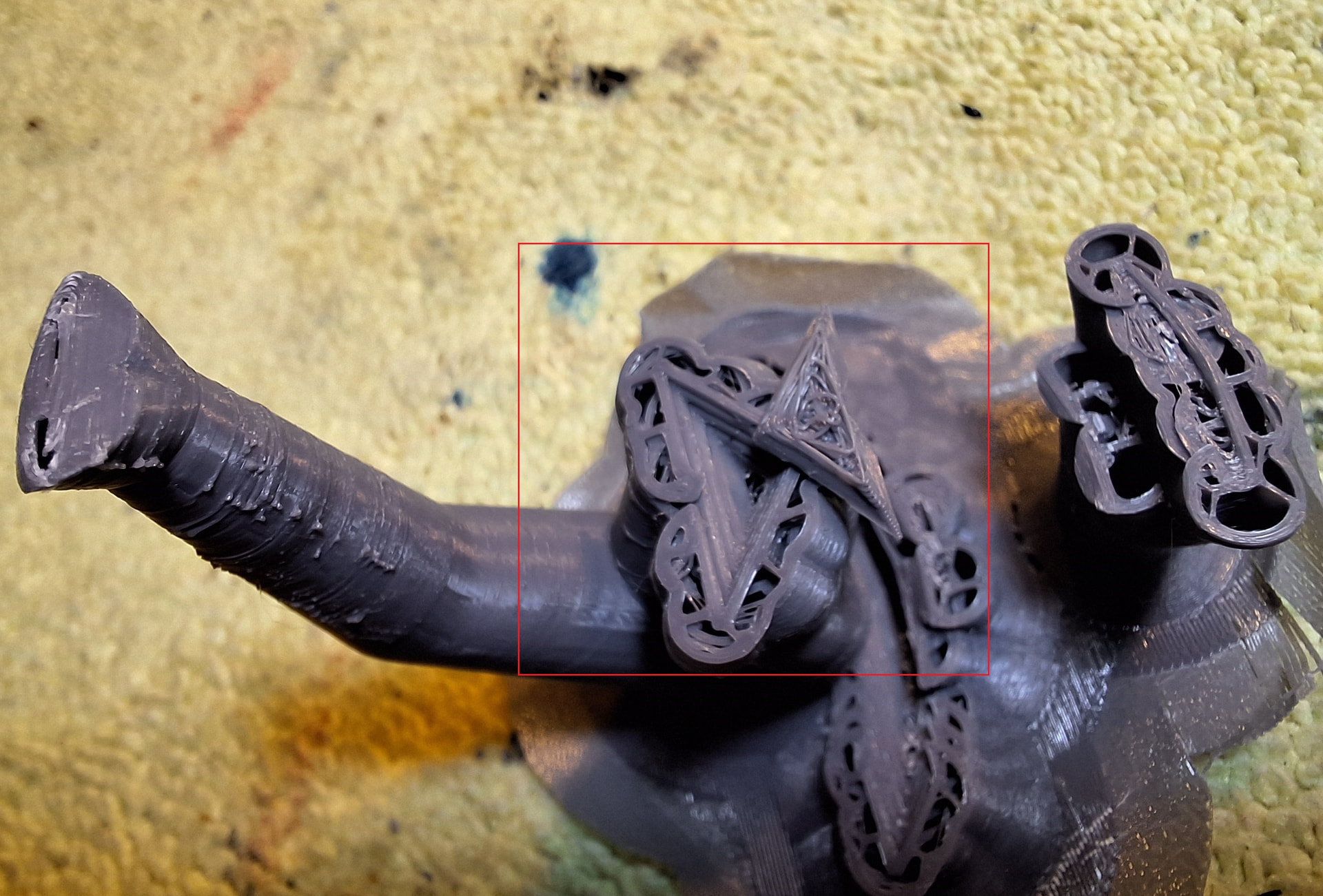
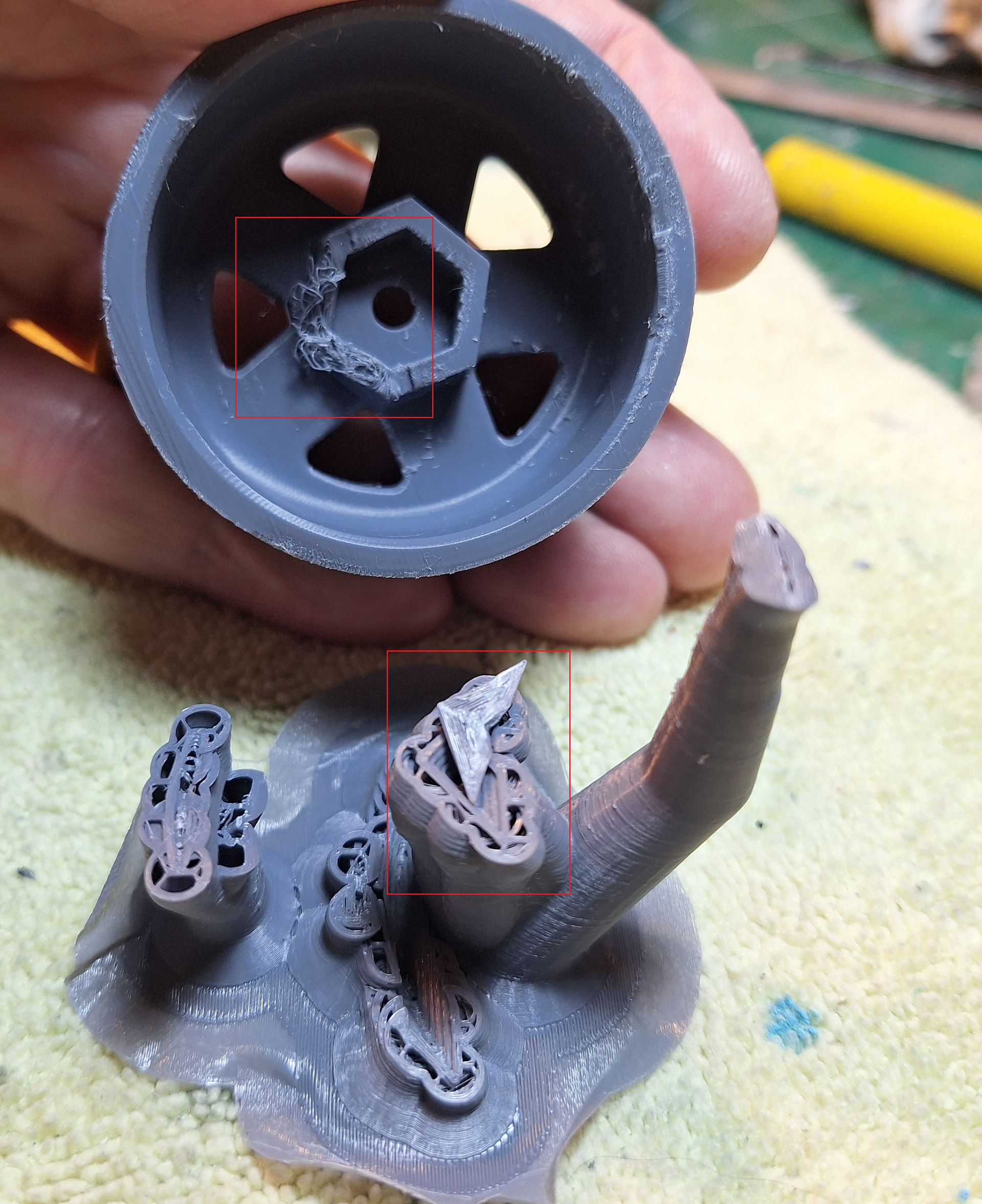
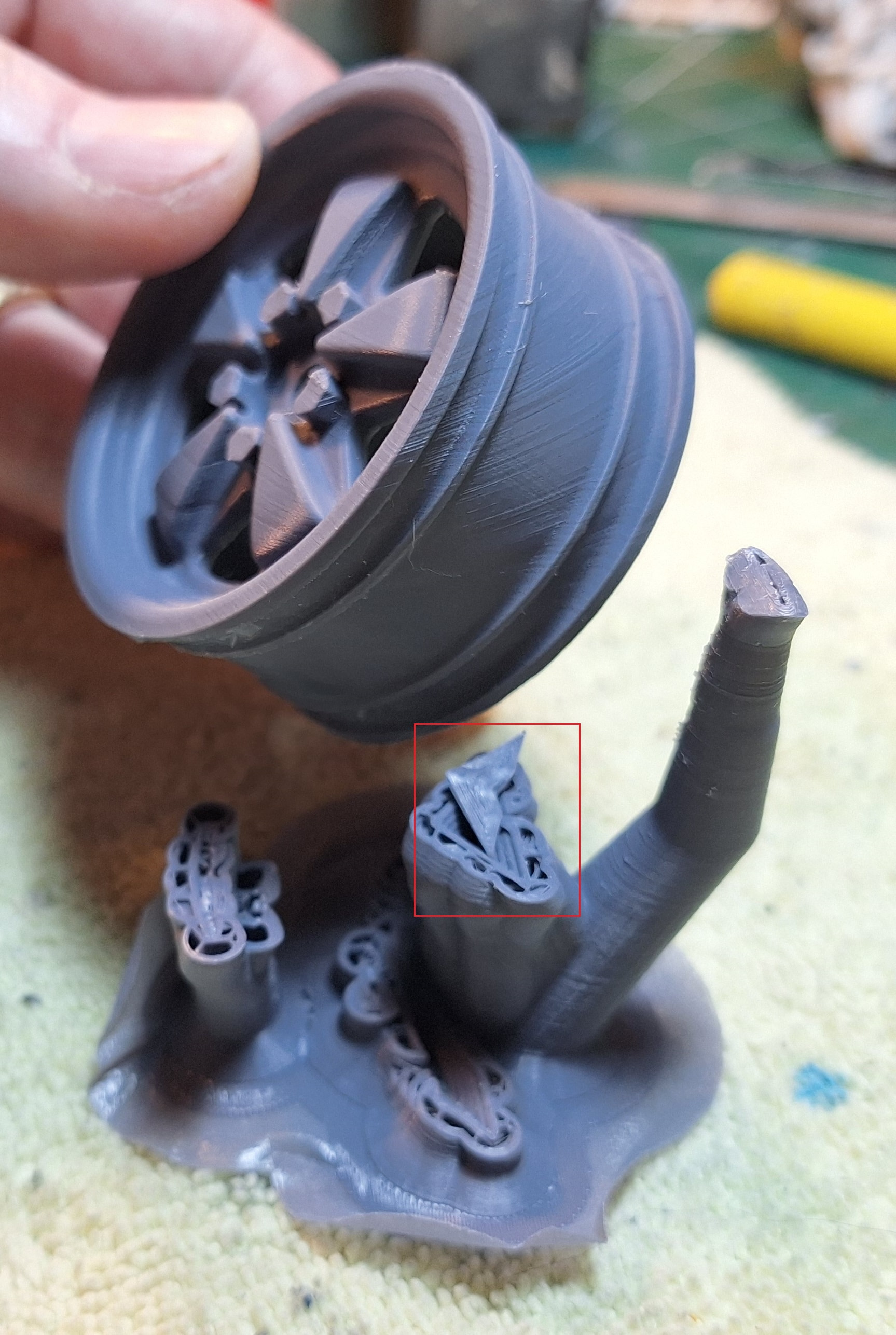
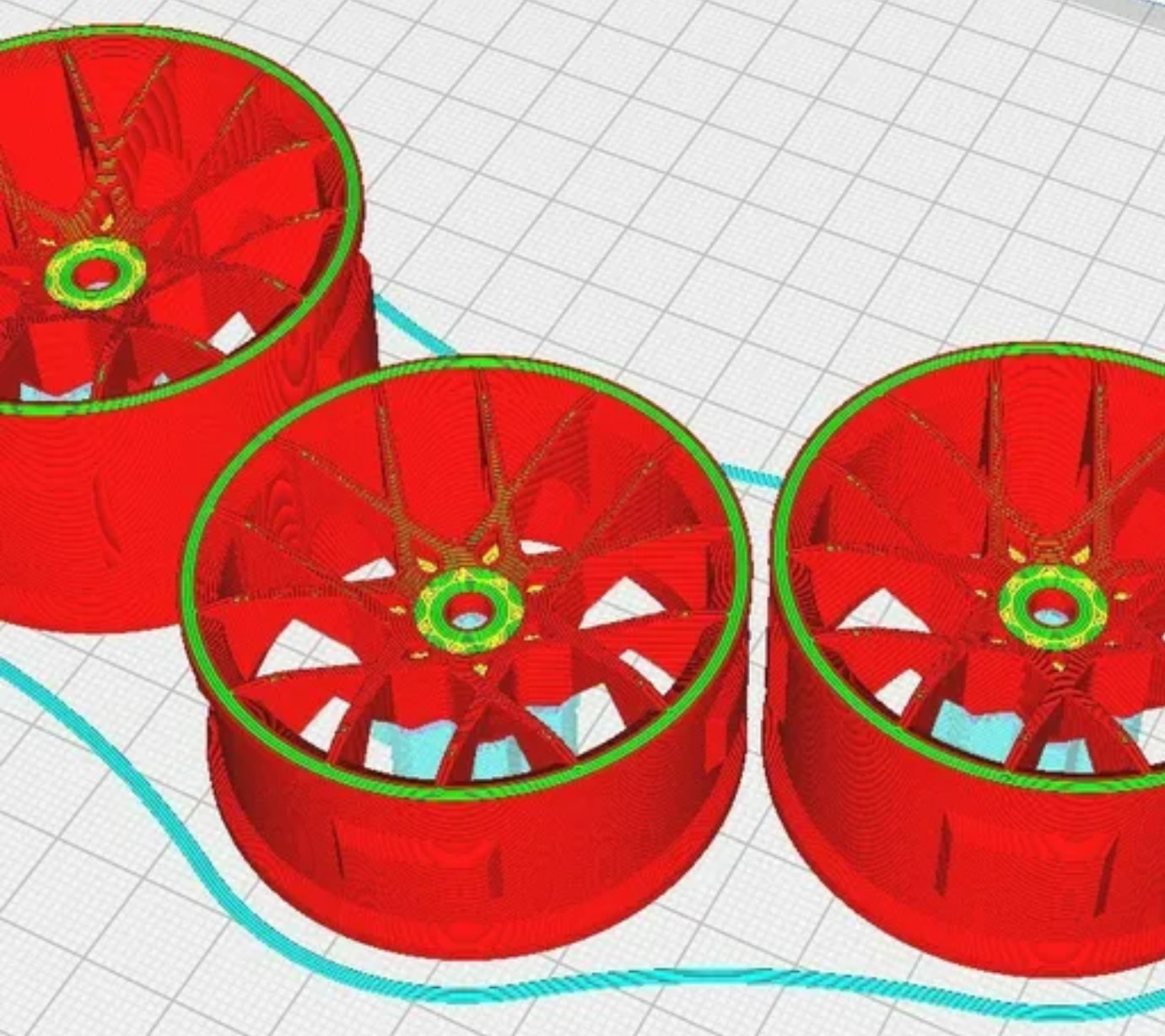
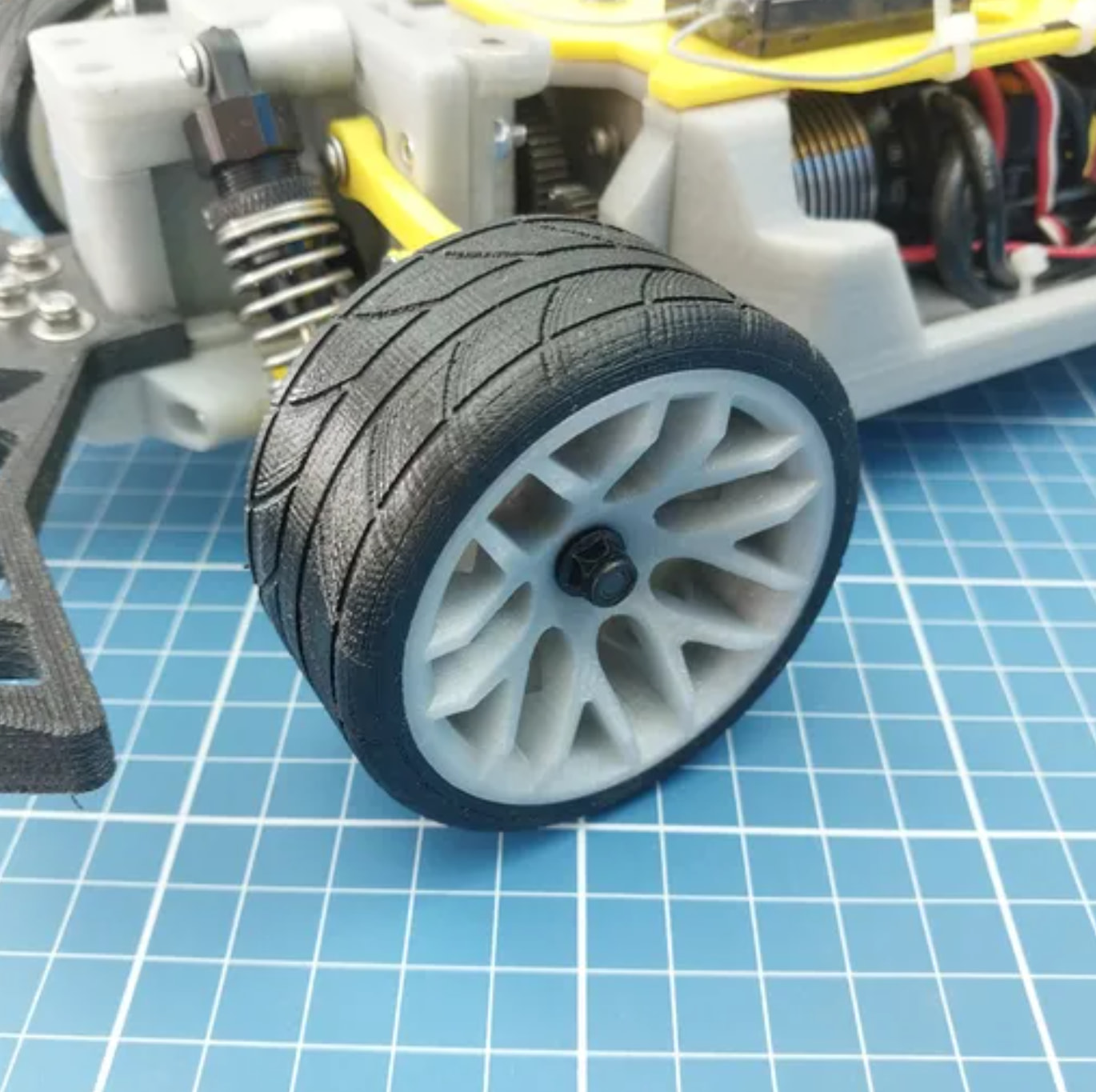
Hi there, hopefully someone can take a stab at this. I’m trying to print a wheel for my 1/10 RC car which is 26mm wide. I’m using a .2mm nozzle and PLA. I need to orient it at 45 deg as the bottom mounting flange is critical. I use strong tree supports for this. One corner of the bottom mounting flange is printed on the supports before it joins the rest of the wheel as the print progresses, but this is not happening. The corner prints, but is not joined to the wheel, causing the print to fail. I’ve tried printing this about 6 or 7 times and cannot get that part to print, no matter how I monkey with the support settings. I’m attaching some pics here of the affected portion. Perhaps someone can hazard a guess as why this is not working? Thanks for looking and please let me know if you need more info.
Ian
I understand the theory, but in practice a flat orientation shouldn’t really have much of an effect, right, in this case?
After all, the forces acting on the tire are mainly centrifugal, so a flat print orientation would actually seem ideal in that respect. Have you had any negative experiences with flat-oriented prints?
Could you explain your reasoning a bit more? Why does it specifically have to be a 45° orientation? And please don’t tell me it’s just because you saw it on YouTube. I’d be much more interested in the actual engineering rationale behind it.
More generally, though, setting the print defect aside for a moment: if mechanical strength is a priority, PLA is probably not the best material choice anyway.
I just took another look at what RC car hobbyists are doing - most of them print it this way, but they tend to use materials other than PLA. I’m no expert on that, though.
Thanks for the response! I’m not printing at 45 deg for strength. I tried printing flat with the flange side down, but either poor bridging or support attachment points compromised the flat surface required for mounting the wheel properly on the hub. Printing with the flange side up would have created cosmetic problems on the outside of the wheel due to support attachment points marring the finish. Appearance is important here after all… 
I may very well revisit this later in PETG if PLA doesn’t provide sufficient rigidity or strength, but one thing at a time…