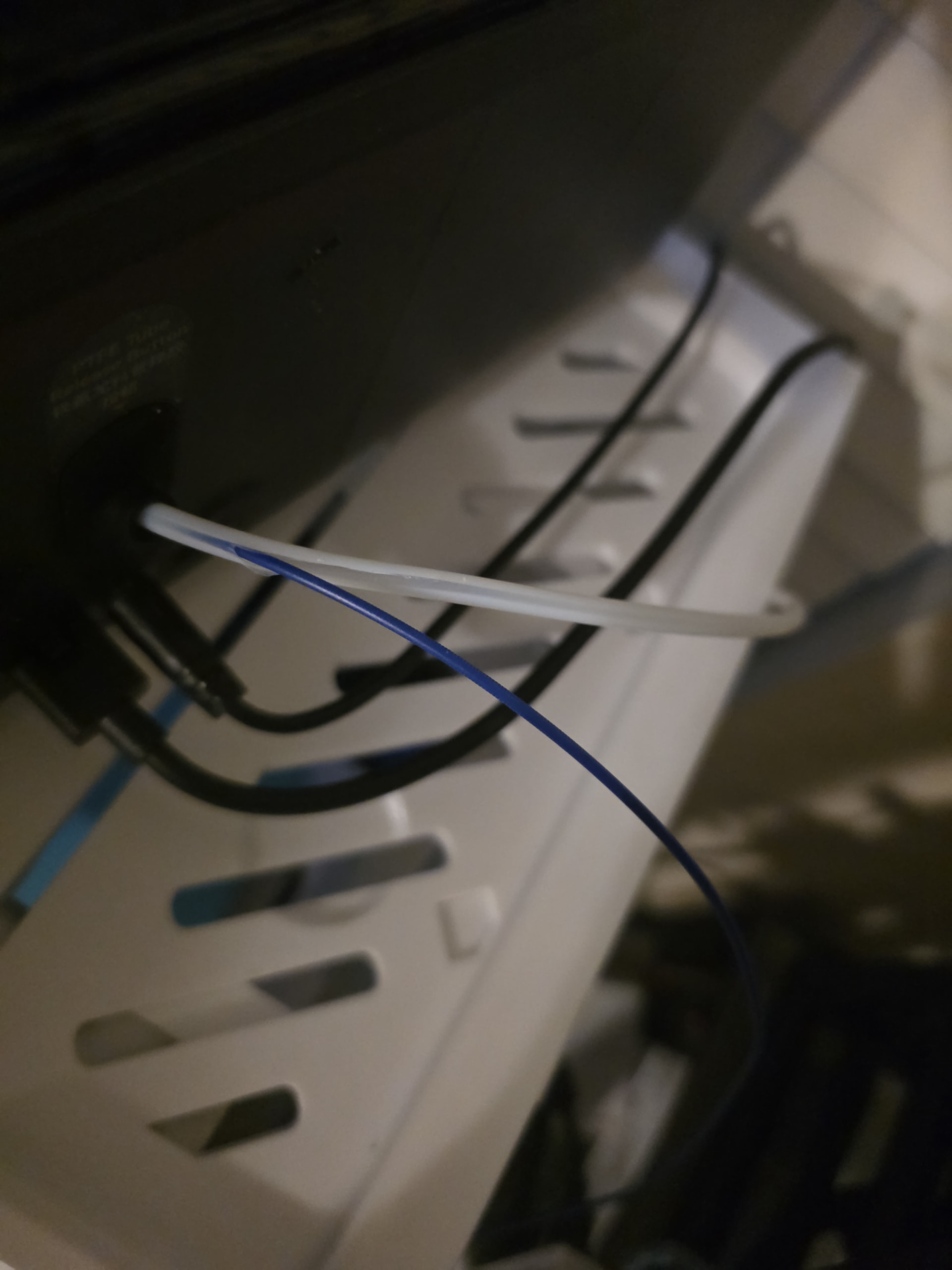
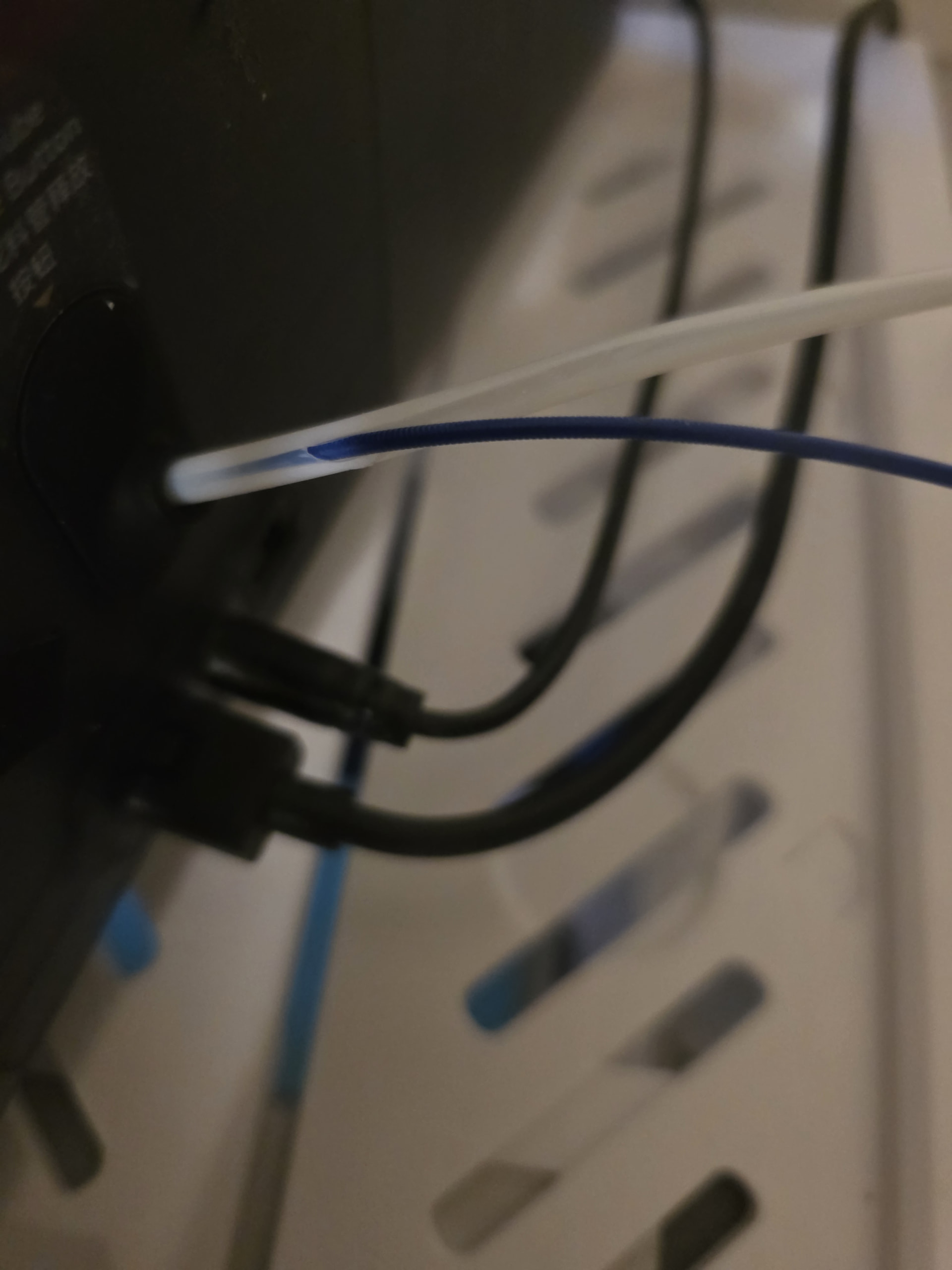
The Ptfe Tube that goes into the AMS 2 PRO gave up today.
Only Petg Basic, Matte, HF, Generic was used but it destroyed the Tube.
Check Pic…
The Filament in the Picture is Bambu Petg HF
Yep. Its a consumable item. I get about 500 to 800 hours before it splits like that.
i got about 800h on this AMS2PRO
Assuming you havent used it already. You should have extra PTFE that came in the box.
Best to buy a roll and keep it around.
oh i got about 30-40m of spare
Guess i can expect the others to go soon as well.
I will probably replace them all just to be on the safe side.
Cool. I didnt know what the exact point of the post was. You have plenty of spare.
I find that usually the tube coming from the AMS and the one going into the printhead always wear the fastest. The one post buffer and the smaller ones inside of the AMSs take a lot longer to wear out. Good thing it is so cheap to replace,
4500 h lol… I replaced a couple of tubes of the printer out of pure caution, but most of them are still the original ones.
I was surprised, a first for me.
The other AMS have way over 1500h, the one that broke was ~800.
Well i’ll be replacing the Tubes on the others as i have Time.
If the foto is how it looks like in use, the reason is probably the rather tight bend downwards. When you look at how the filament is unrolling, you see that the curvature goes all the same direction from the roll, into the feeder stage, through the hub and out of the AMS. Your bend downwards forces the filament in exactly the opposite direction. As a result, at each loading, the cut end of the filament will scrape on the inner wall and also during printing, the filament pushes with force against the tube wall.
I have a similar situation, but instead of going straight down, I added an extra loop upwards and to the right before going down again and to the left into the buffer. Instead of forcing the filament into an opposite curvature, it just has to slightly twist to follow the tube while keeping its curvature. The extra slack also allows to the filament to slightly relocate the tube in the position it likes best to further minimise friction and it arrives at the buffer at exactly the curvature as it has to assume from buffer to printer inlet.