Just wondering if anyone know what causes the damage to the build plat in the image below. We have had the X1E for over a year now, never had any problem with it digging into the bed but over the years found these two hole opening up. They are on the start of the flow calibration, the printer print fine even with these, so I’m 99% sure I can rule out any mechanical problem or calibration to the Z axis. I’m asking as I’m about to go get two engineering plates, would like to understand what causes it and if it something we can stop or if it just because the PEI coating is burning away or something like that.
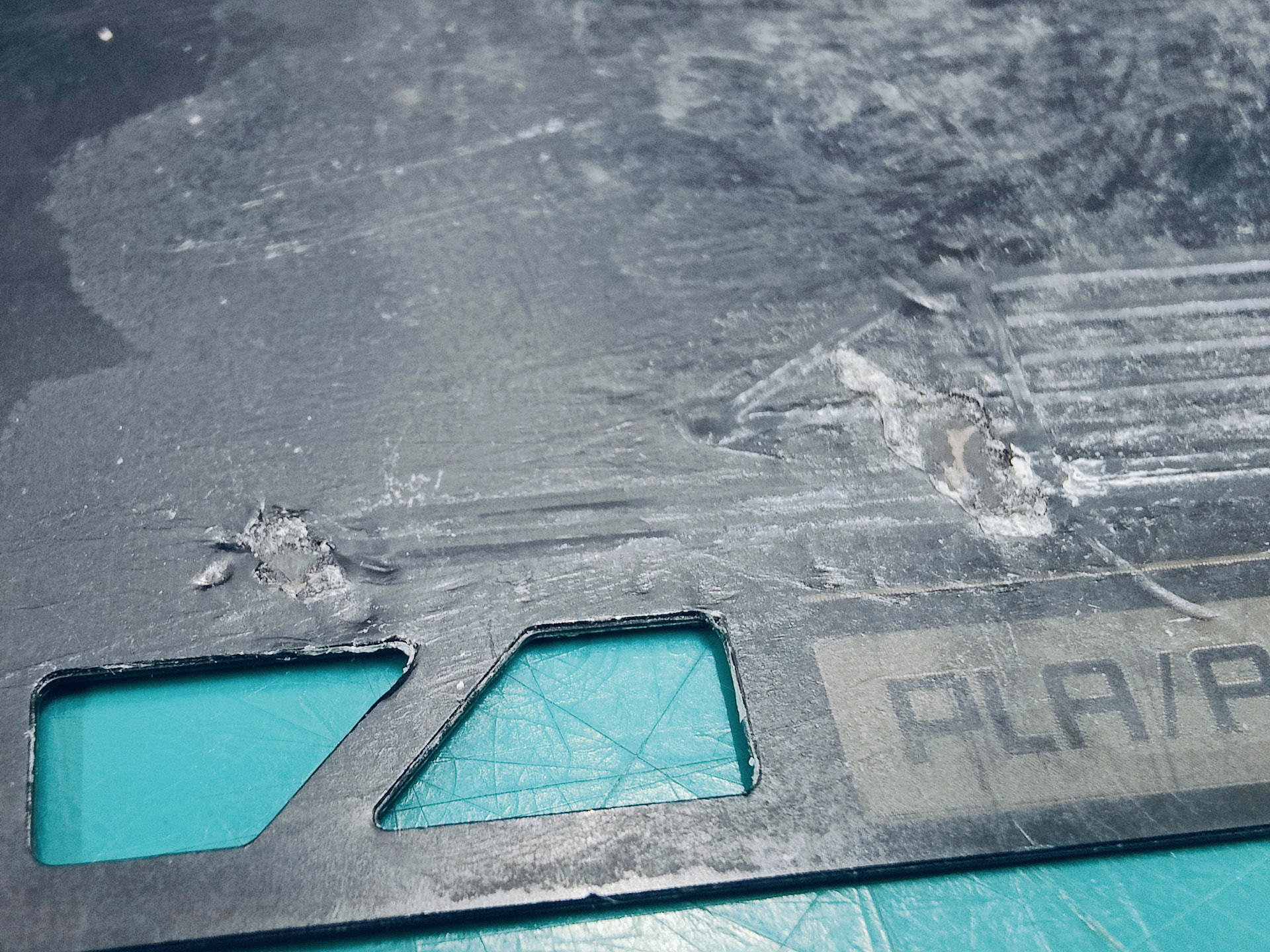
It seem your build plate has been used for a long time. The coating has blisrered, which is causing friction or collision with the nozzle.
What filament are you using the most on this plate? Have you taken a level to the print bed without the plate? While I don’t particularly think it’s a bed out of level issue, here’s a link of a few things to look at, pay close attention to the Z-Axis’ bearings as well, I’ve seen posts here showing that when those bearings move, it starts causing issues.
It would be helpful to know what filament types you use. The only similar damage that I’ve encountered was to an engineering plate. I did not apply the required glue, and the nylon print destroyed the surface.
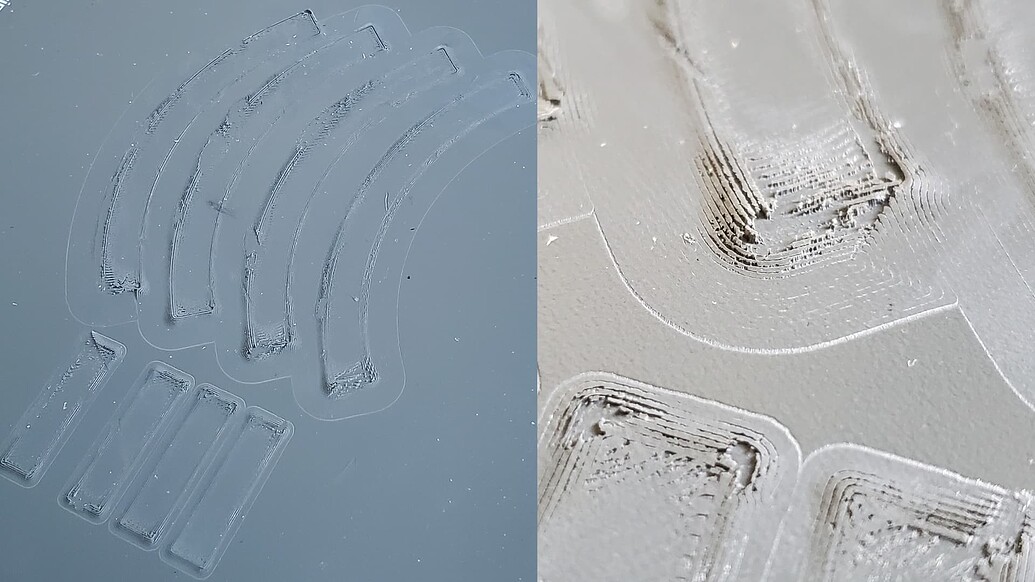
Plates are consumables, and yours appears to have had a lot of use.
I still like my remaining engineering plate, but it does require glue for all filaments.
My PEI plates do not need glue for PLA, but all other materials adhere and release better with glue.
I am having very good results with my new BIQU Glacier plate without glue for PLA, PETG, TPU, and ASA. Nylon still needs glue to resist warping.
So we are mostly using Raise PETG ESD on the printer, printing around 265-270 on the nozzle with the bed at 60. Always used glue on the bed for this material for releasing as it adhere well.
I don’t have level at hand at this time, but will check when I find one. Like you I don’t think this will be a issue as we have another PEI bed which has not got this damage.
Blistering dose sounds like a good shout especially given how long we have used this bed. First PEI bed I’ve used and had never see this type of issue before. It is possible the damage has happen when a co-worker was using it and hasn’t said anything.
PETG adheres extremely well to smooth print plates. I once ruined one completely by accident. You always have to wait until it has cooled down completely, or even put it in the refrigerator. It’s understandable that the plate will look like this after many hours / a year of use. That’s normal wear and tear.
In particular: All it takes is for someone to forget to wait until it cools down and pull on it, and the plate will sustain minor damage that gets worse over the months.
That’s why Bambu also says you should apply an adhesive / glue - not, as the name might suggest, to make it stick better, but as a protective layer, so that it can be removed more easily.
In fact, one of the main reasons - though not the only one - is that the glue does not make it adhere as firmly. Context smooth / engineering plate, but that depends on the plate itself, too if you need glue or not. For example, I don’t use any glue, and as I said, I rely on the freezer.

It might just be time to replace the plate.
I did notice a couple of things while looking into this, I’ve never used this filament so I don’t have personal experience with it, but the filament TDS recommends printing with bed temp of 80 degrees. The Bambu spec for printing higher-end PETG on the engineering plate is 60-80 degrees. Both companies recommend glue. I’m not sure what or if the higher temp will effect how you print, but it could be something you look into.
In my experience the Textured PEI are damn near immortal, and if the nozzle crashes into it and scrapes some speckles off, it still actually works fine just with a scar
The smooth type PEI / effects plates I find to show wear from repeated prints. Eventually the wear lines delaminate and then pull up, get sliced open by the nozzle and then its all ogre. With the calibration lines you’re kinda stuck due to firmware, but you can randomize the placement on the bed to keep yourself from printing the same thing 100 times on the same place in a row and destroy it.
I havent used my engineering plates nearly as much but I always hear people say they’re immortal too as long as you use glue and take care of them.
Thank for the reply’s, like a lot of you have said I think its just ware from always doing the calibration in the same spot and that the answer is a new build plate.