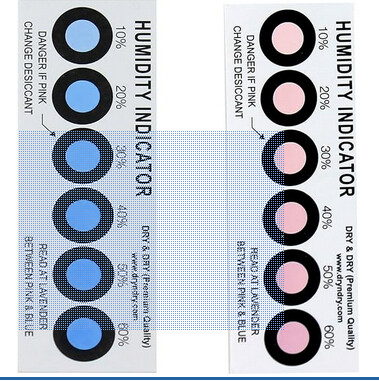
If you have installed desiccant containers in your AMS, how often do you change out the desiccant and what prompts you to change.
This is in regards to the containers that fit in the space between the primary feeders. I do not have the containers that go in bottom of AMS (currently)
I have 3 of the below in each AMS,
Sounds like you have your own supply of dessicant. Buy $5 worth of indicator silica beads. Mix a couple of them into your normal dessicant. When those change colors, change the whole container. If you’re just using a spoonful mixed in with your normal dessicant, that $5 will last you about forever. You can use the indicator as dessicant straight up too.
The highlighted indicator tells you what the AMS believes the situation to be.
Ideally, this should be 1 after dry silica is installed. In my experience, you should swap out when it reaches 3; it can go to 5.
I put mine in the oven in a clean oven roasting dish. Depending on how much you put in, you may need to stir up a bit to get some of the middle portions out to the edges. They heat the same way as meat; the outside gets hotter far faster than the middle. Stirring speeds up the whole process.
You can put it in your oven when you are cooking a normal meal to benefit from the same use of energy.
It will not melt using normal food cooking temperatures. Do not go nuts, or you will ruin a roasting tin.
Sounds like you have your own supply of dessicant. Buy $5 worth of indicator silica beads. Mix a couple of them into your normal dessicant. When those change colors, change the whole container. If you’re just using a spoonful mixed in with your normal dessicant, that $5 will last you about forever. You can use the indicator as dessicant straight up too.
I asked how long do people go before changing their desiccant.
I change my desiccant when it is changes from blue and is heading towards pink.
The actual process I follow is:
dump the 3 containers of pinkish desiccant in a baking pan.
Pour fresh deep blue colored desiccant in 3 containers
Put the 3 refreshed containers back in the AMS
Place baking pan of exhausted beads in oven set to about 275°F oven
≈ 1 hour later I pull pan that is now full of deep blue beads out of oven
Pour the refreshed beads back in jug
I am just curious about other folks experience.
I subsequently have added fans to the containers. The time to go from deep blue to getting pink has decreased
Your question assumes the answers may be of value to you or someone else.
Given the time between needing to refresh is entirely down to your environment and the humidity levels where you live, there are too many factors to make any answer helpful unless you wish to know where you fall between everyone else.
That information will only come if people also state their physical location and average humidity levels across the entire year.
My image was an example; I do not let my levels go higher than average.
I have to assume you are in America, where air conditioning has been prevalent for many years.
This is not true of many other countries.
Having air conditioning in a U.K. home is very rare.
We have experienced four heat waves over the past few weeks, which have been debilitating. It is unlikely that the U.K. will transition to Air Conditioning without other environmentally responsible ways to power them, and the hydrofluorocarbons are swapped out for those that are not thousands or tens of thousands of times more potent, depending on the type, according to the U.S. Environmental Protection Agency figures.
We are unlikely to do the shift with the push towards stopping climate change.
The presumption that everyone experiences everything in exactly the way someone else does makes it hard to consider the perspectives of others.
My shop has heat and A/C, but I would not call it climate controlled. I keep it at 10°C in winter, and only raise the temperature to ~17°C if I will be in the shop for more than a few hours. I only use the A/C when the outside temperatures are above 30°C, and again, only if I will be in the shop for several hours. The doors and windows are open whenever possible. Humidity ranges from 40-90%, averages about 60%.
There is no point in comparing the frequency of desiccant changes. You have to deal with YOUR humidity, not mine.
This color change is the only measure that matters.
I am just curious as to how often people refresh their desiccant in the real world irrespective of what triggers the change.
Also trying to see if anyone uses activated alumina because regeneration of that stuff is way more complicated than regenerating silica beads.
I use activated alumina but I haven’t had to dry it yet. Not sure why it is “more complicated” than silica unless you mean the temp required. I do love the fact that when I started using it my AMS went from about 40% to 10% RH in a couple of hours. This was consistant across 6 RH meters. Of course that doesn’t mean they are spot on accurate but they are giving the same readings ± one of each other so it was a real drop.
Activated alumina is nuts, I like it. I have a small jug of it that I use for the ultra-humidity-sensitive stuff and I’d like to think it’s doing something above and beyond silica.
If they ever make an indicator for that stuff, itll be worth its weight in gold. Mixing in silica indicators is truly a nightmare cuz you need to fish them out to regen!
Activated alumina can pick up other contaminants besides water. The structure of an activated alumina bead is such that it is a porous matrix that can get clogged and heat won’t get rid of that stuff. It will also capture VOC’s which I know from testing get generated when you melt plastic.
I’m going to be honest. I have color changing and I’ll change it when I get around to it. Sometimes as soon as I see a change, sometimes a month later.
I have dryers. I can dry 6 rolls if I want to between 2 HTs and an S4. Those are almost always drying something I am about to use or think I may. In that I don’t seem to care much about the AMS. I’ve considered dropping the desiccant things altogether.
Before the dryers I think it really was the same. I have 10 little desiccant holders in there. 8 across the front. It’s the model, it’s slim and made to have 2 if you want in a space. I think I have them really because they were something to print and they add some color to the AMS. PITA to change them all but I like their design.
I’ve often wondered if they REALLY do anything. Sure they dry some, but it’s not like they’re going to dry a wet roll or reasonably keep the AH at a good point with opening and closing.
You can weigh it periodically if you have a good scale. I have read it will absorb 30% of it’s dry weight. Or if you print a lot just work out your own schedule. Most of mine I put in metal holders (no microwave) so when it comes time to dry I can put them in a small toaster oven specifaccly for that.
I put all the bags of dessiccant inside the typical printed containers and i leave them inside the driers to get all the cycles until they are like Atacama desert level, then i store them in a container. I change the ams ones only if I see the inner humidity over the top, that’s happen if i go away for a week, maybe.
But mostly I am full of silica gel, I paid it and I want to use it xD just this.
I change mine when I notice they are clear. I don’t wait 'til they turn dark. I think I left some in the microwave oven too long, and I think they are now permanently dark, even though they still seem to be working.
For drying them I put them into the microwave for 1 to 4 minutes, depending on how much I am drying. I repeat until the color is coming back. Then I put them in an open jar on top of a 176F coffee warmer. I put a paper towel over the opening, with a cheap temp/humidly sensor and leave it cooking 'til the humidity sensor is down to 10% (as low as it knows how to go.
I try to keep my AMSs at 10% as recorded in the front panel of my X1C, under the filament page. I change desiccants when the AMSs are still under 20%. I even keep the printer room at 40% with a dehumidifier. I have to empty it 1ce or 2ce per day. The one in the kitchen is bigger, so lasts 2 or 3 days… depending on the humidity outside getting in.
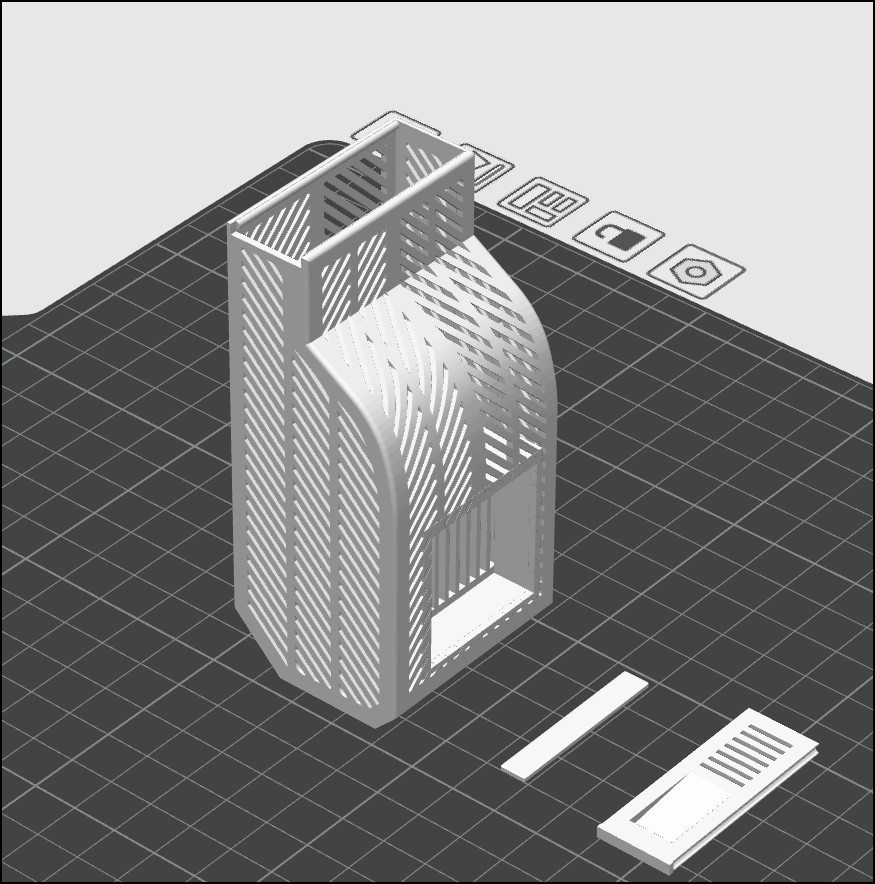
I took those models that you can fill with desiccant and fit between the AMS Primary Feeder and modified them to accept a 30mm x 30mm x 10mm 12V fan in and you want to talk about a significant change.
Quite the eye opener.
I’m in the process of modifying the models for my AMS 2 Pro which should be interesting since it has inbuilt drying capability.



 Time is a fictional construct!