Hi everyone,
I bought an Elegoo Matte PLA filament profile online and I’m not happy with the results: the prints come out clearly under-extruded (thin, weak walls). I’d like to hear your opinion on the profile and ask what you use for a case like mine.
My setup
- Bambu Lab A1 + AMS lite, 0.8 mm nozzle (standard flow)
- Elegoo PLA Matte 1.75 mm, dried in a filament dryer before printing
- Everything is printed in spiral vase mode (decorative vases, single wall)
- Bambu Studio [version]
Main settings of the profile (screenshots attached)
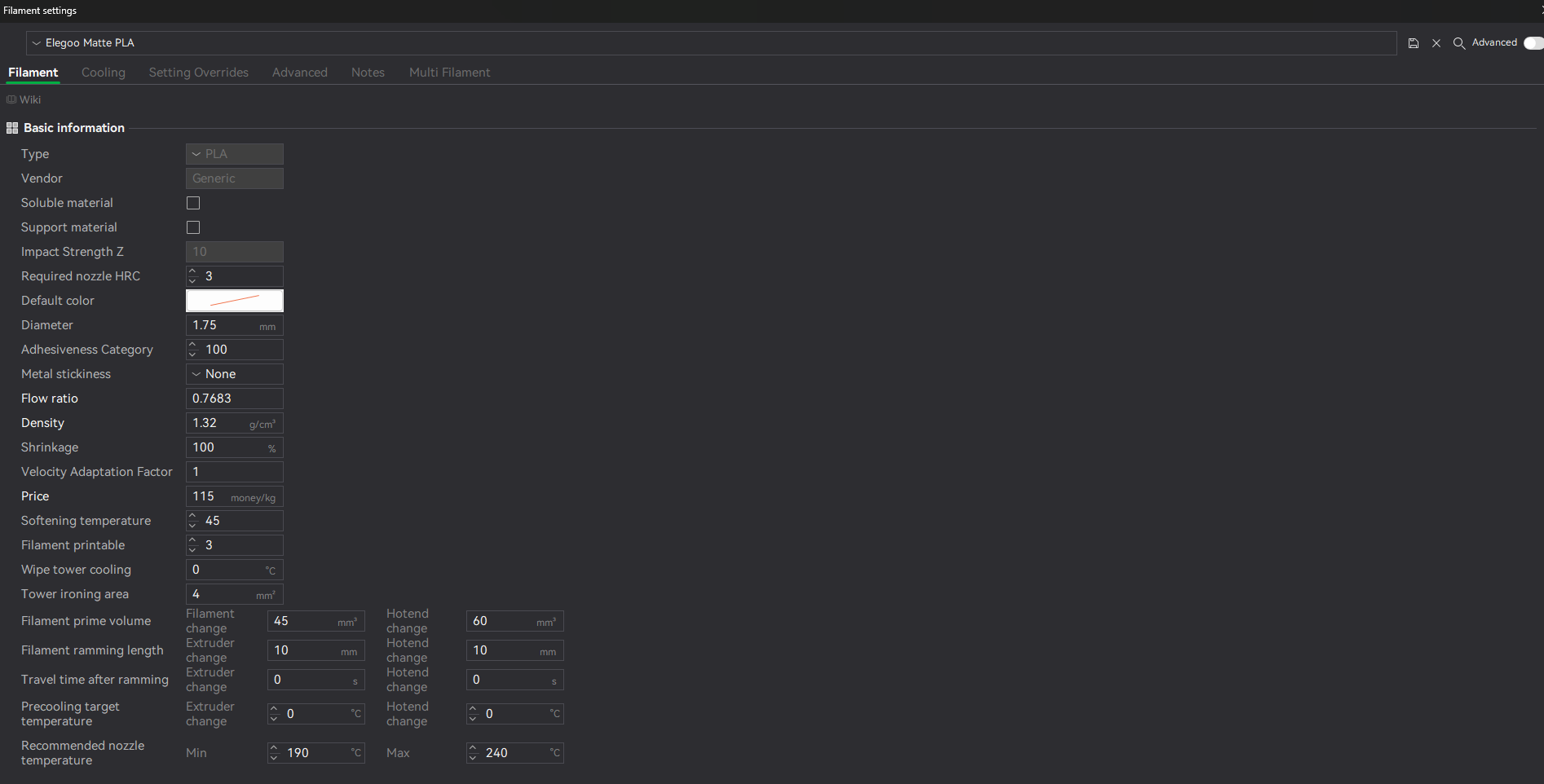
- Flow ratio: 0.7683
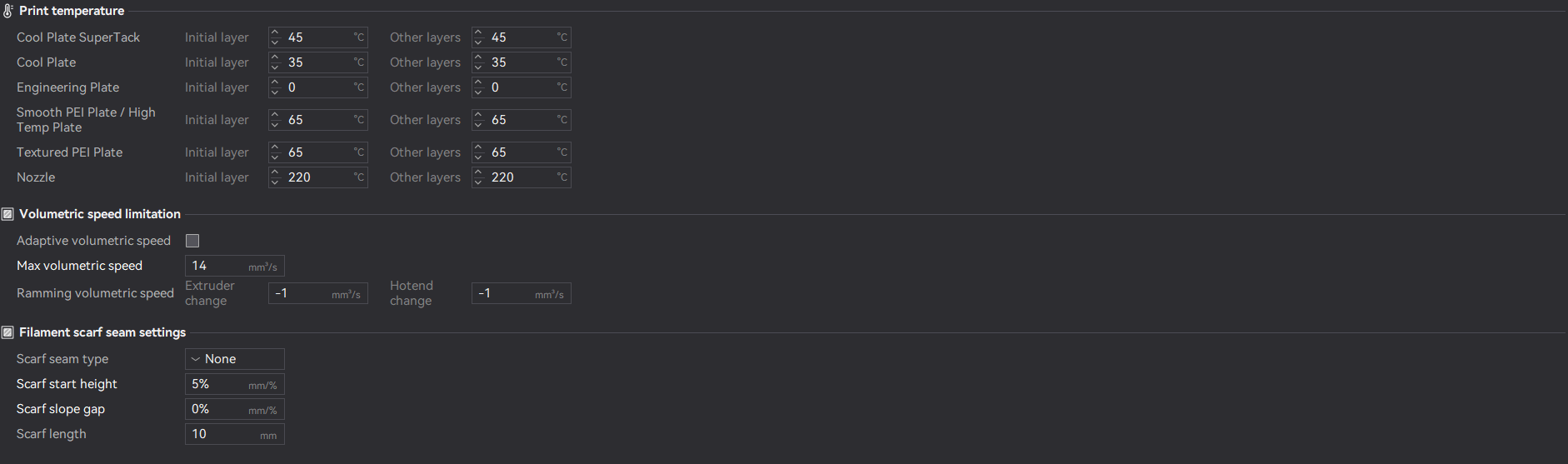
- Nozzle: 220 °C (all layers)
- Textured PEI plate: 65 °C
- Max volumetric speed: 14 mm³/s
- Density: 1.32 g/cm³
- Fan: min 60% / max 80%, min layer time 80 s, slow down for cooling ON
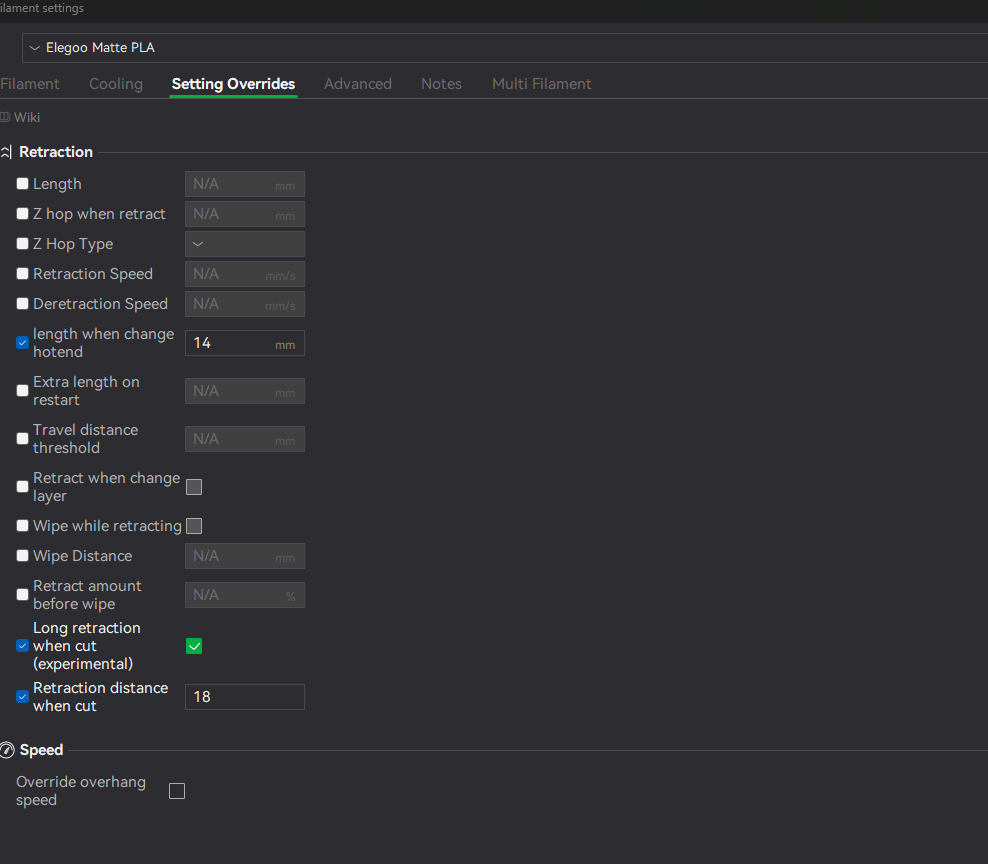
- Retraction overrides: only “length when change hotend” 14 mm and long retraction when cut 18 mm
Questions
- Isn’t a flow ratio of 0.7683 way too low for PLA? Could this alone explain the under-extrusion?
- For vase mode with a 0.8 nozzle, would you start from the stock “Generic PLA” / “Bambu PLA Matte” profile and just calibrate flow + pressure advance, instead of using a bought profile?
- Is there a “go-to” profile or recommended values for Elegoo Matte PLA on an A1 with a 0.8 nozzle (temperature, flow, max volumetric speed)?
- Anything specific to vase mode I should change in the filament profile (cooling, volumetric speed)?
Thanks in advance!