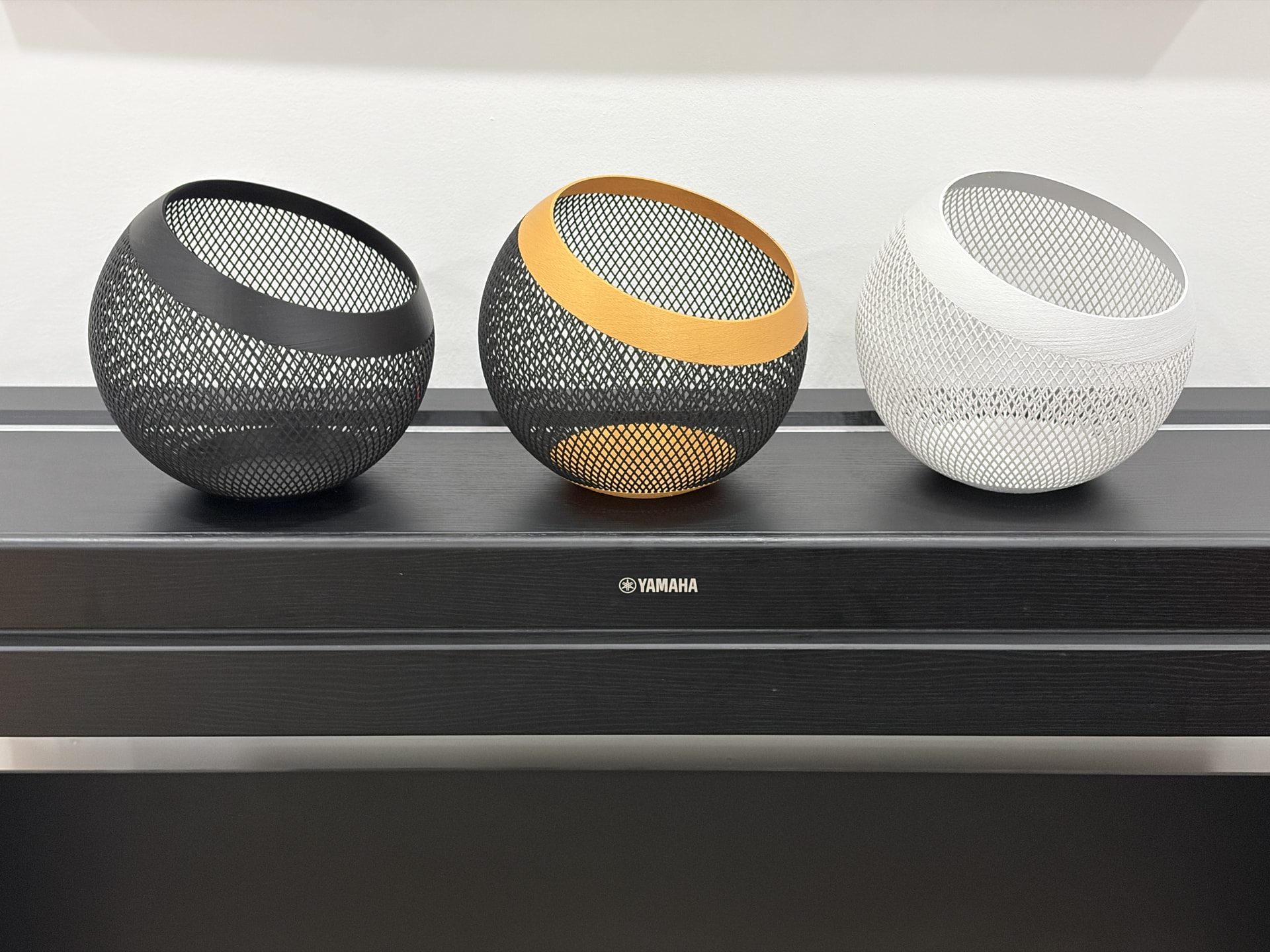
Full disclosure: I am a X2D newbie! 
The moment I got my new Bambu Lab X2D last week, I wanted to test its dual-nozzle, 2-color printing capabilities under extreme conditions. Rather than printing a benchmark model, I designed a print that combined multiple potential failure points into a single job.
What I tested:
 A model that fills almost the entire build plate (24" Diameter Sphere)
Dual-color printing with frequent tool changes
Very little remaining space for the prime tower
Steep overhangs and challenging geometry
Extremely thin mesh details (1.6 mm wire diameter)
Wet PLA loaded in both nozzles
Fuzzy Skin enabled to make the geometry even more challenging
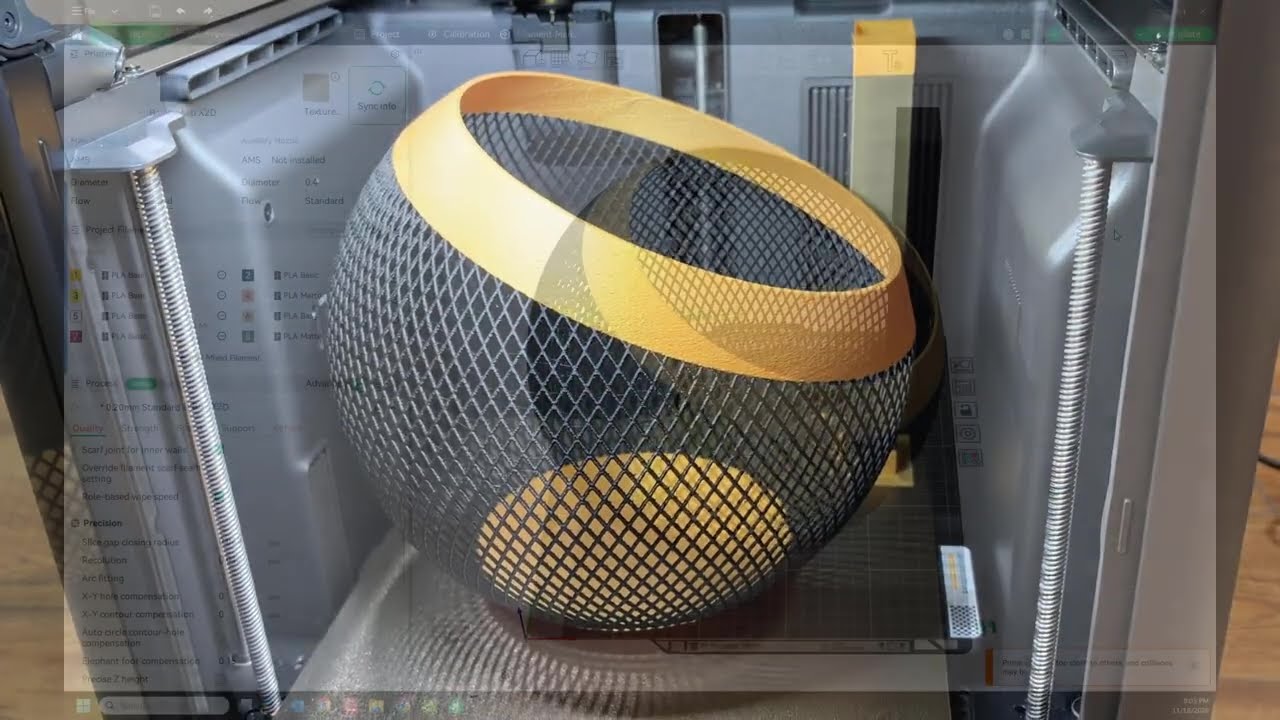
The Test Model
For this experiment I used my Halo Bowl design in a 2-color configuration.
The bowl is based on a 24-inch diameter sphere and occupies most of the X2D build plate. The mesh consists of 1.6 mm diameter strands, requiring the printer to repeatedly place material on very small targets throughout the entire print.
Because the model consumed nearly all available build space, there was barely enough room left for the prime tower. Bambu Studio even warned about its proximity to the model during slicing.
Filament and Print Setup
The black PLA in the left nozzle and the gold PLA in the right nozzle were both undried and noticeably wet.
In fact, the print initially failed when running at Standard speed, so I restarted it in Silent mode.
My biggest concern was the upper portion of the bowl. The black mesh strands are extremely thin, and the gold sections have to align perfectly with them layer after layer. Any loss of nozzle synchronization, vibration, or minor shift could have become visible very quickly.
At one point the printer paused and reported a potential shift. After inspecting both the bowl and the custom prime tower, everything appeared perfectly secure. The print was resumed and completed without any additional warnings.
Results
To my surprise, the final result exceeded my expectations.
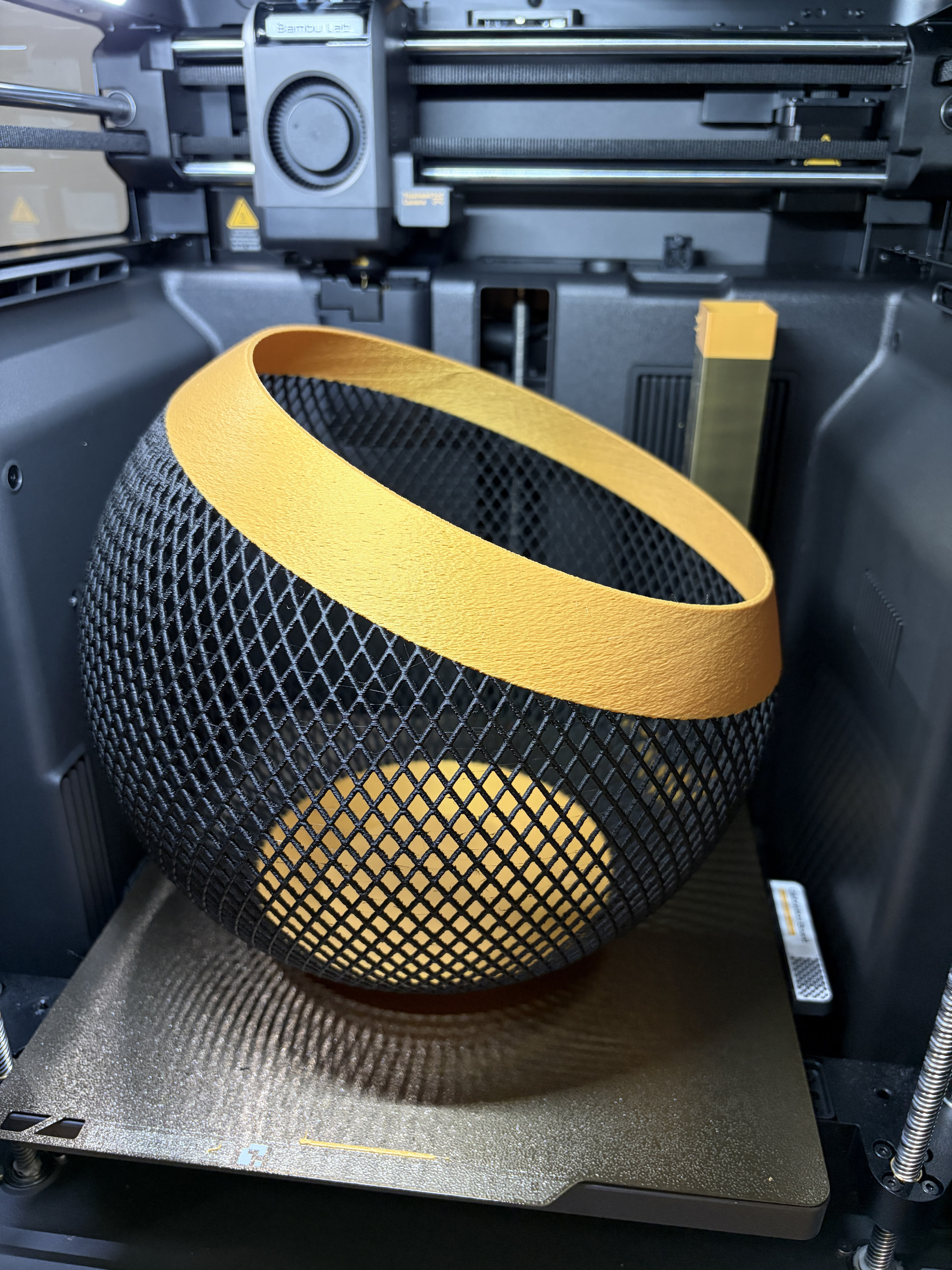
The mesh remained consistent, the gold and black sections stayed perfectly aligned, and the auxiliary nozzle performed remarkably well considering the challenging geometry and filament condition.
What impressed me most was the synchronization between the two nozzles throughout the entire print. Even with thousands of opportunities for misalignment, the printer maintained accuracy from start to finish.
Now I’m genuinely curious how much better the result would be with properly dried filament.
Test Model: X2D Full Size 2Color Test 24" Mesh Bowl 1.6mm Wire - Free 3D Print Model - MakerWorld
And the best part? The stress test left me with a pretty nice bowl. It was originally intended for Halloween candy, but it’s currently serving as storage for our tangerines. 
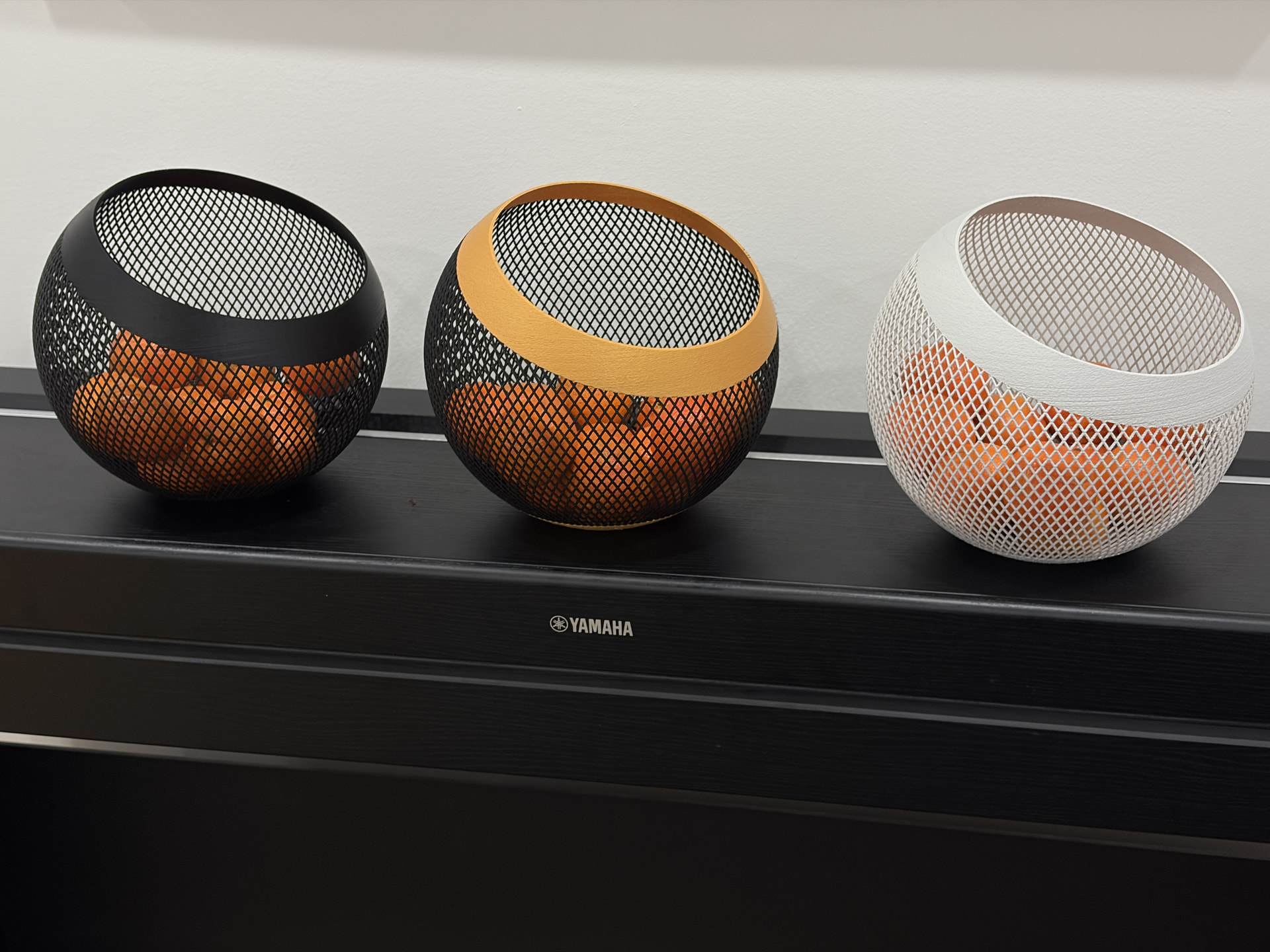
It also looks great next to its single-color siblings that were printed on a P1P.