I used Bambu Studio beta: v2.8.1.55.
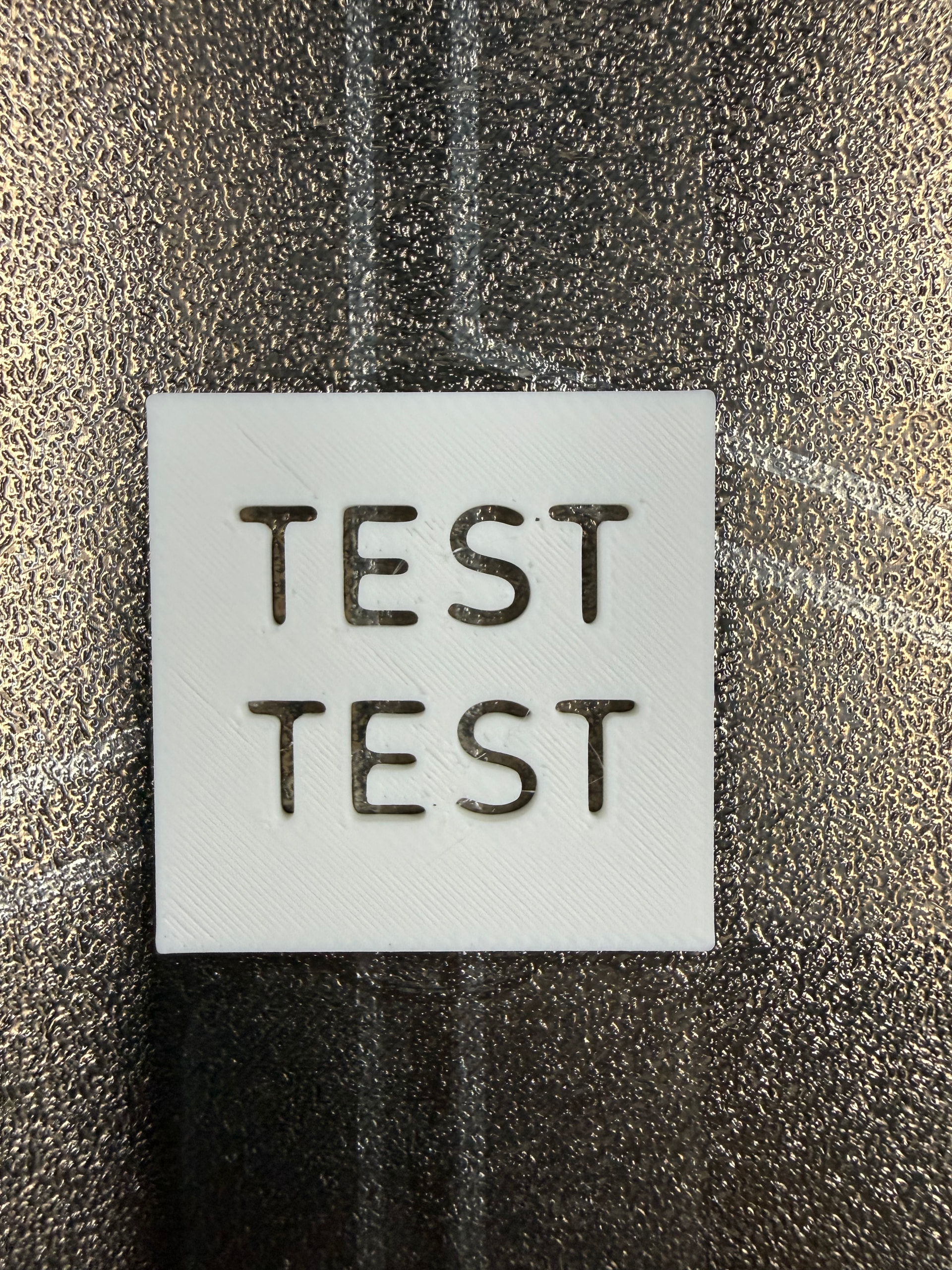
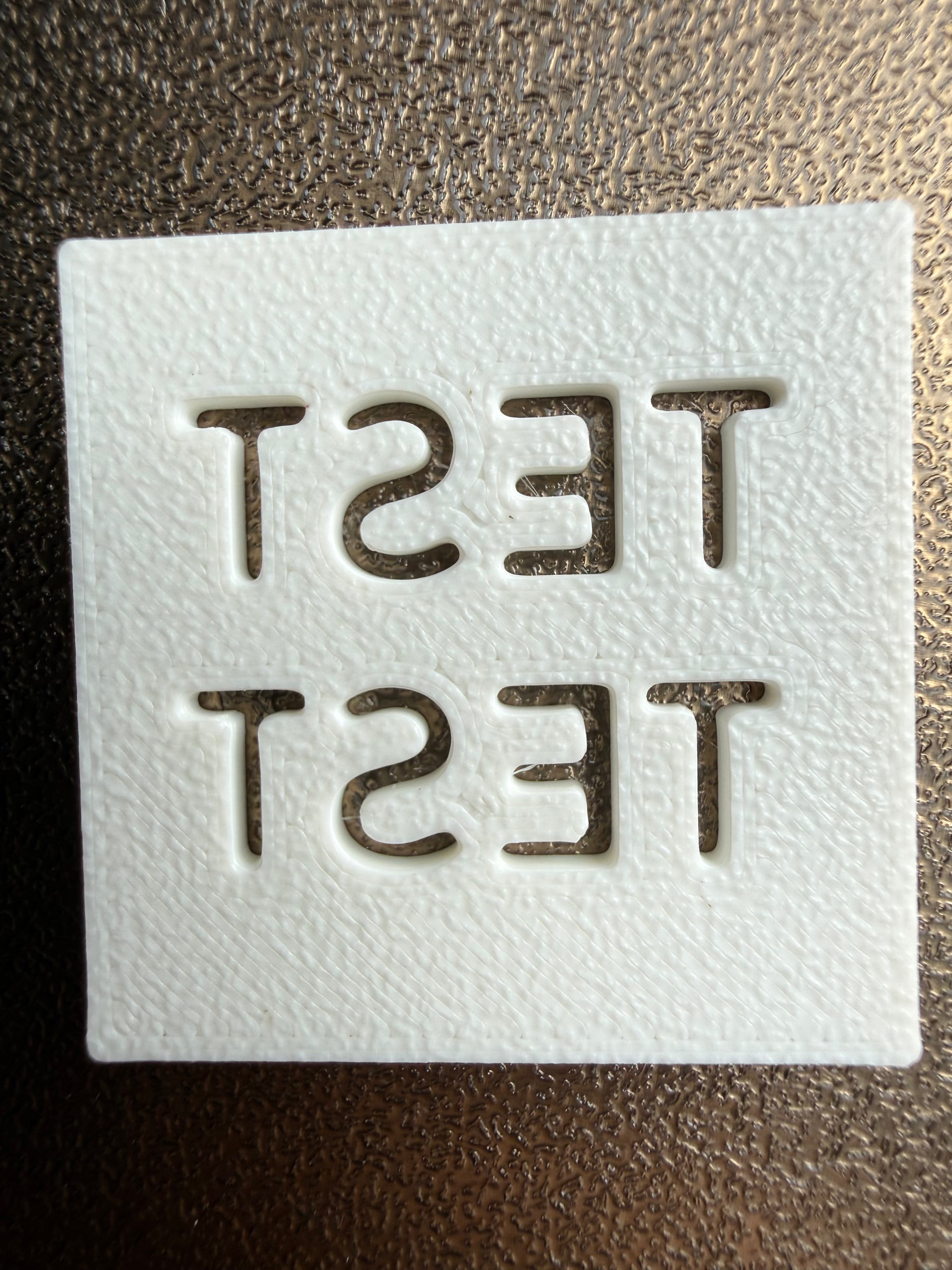

Yeah, you’re right about that.
Still, your top and bottom layers are printed/extruded better overall. Yes, I used Bambu Matte PLA, but we’re both using the standard filament settings. Those should work fine. I’ll try printing it with a flow rate of 1.05.
Was your flow really left at the default? I’ll also check which Basic PLA I have on hand.
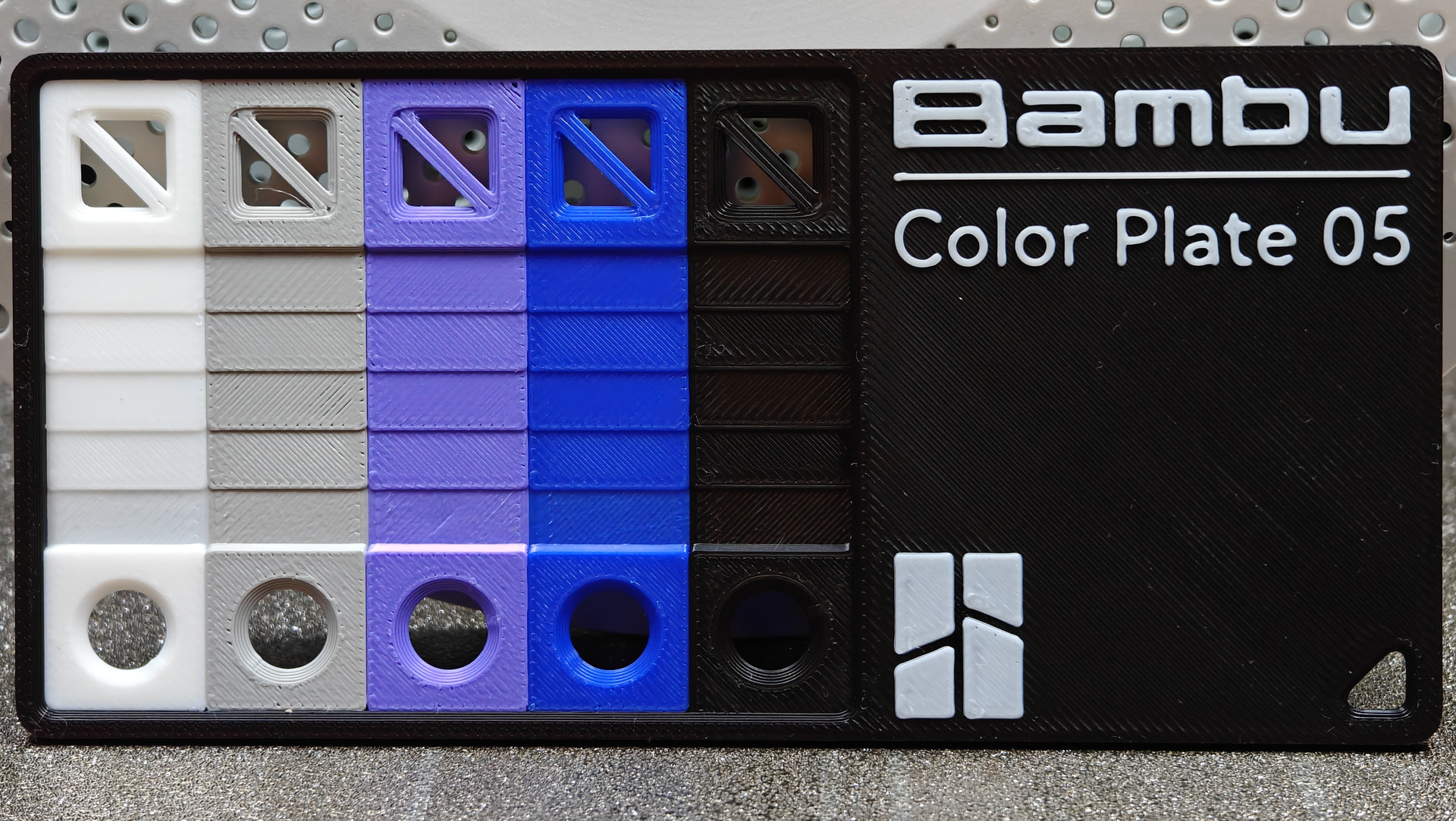
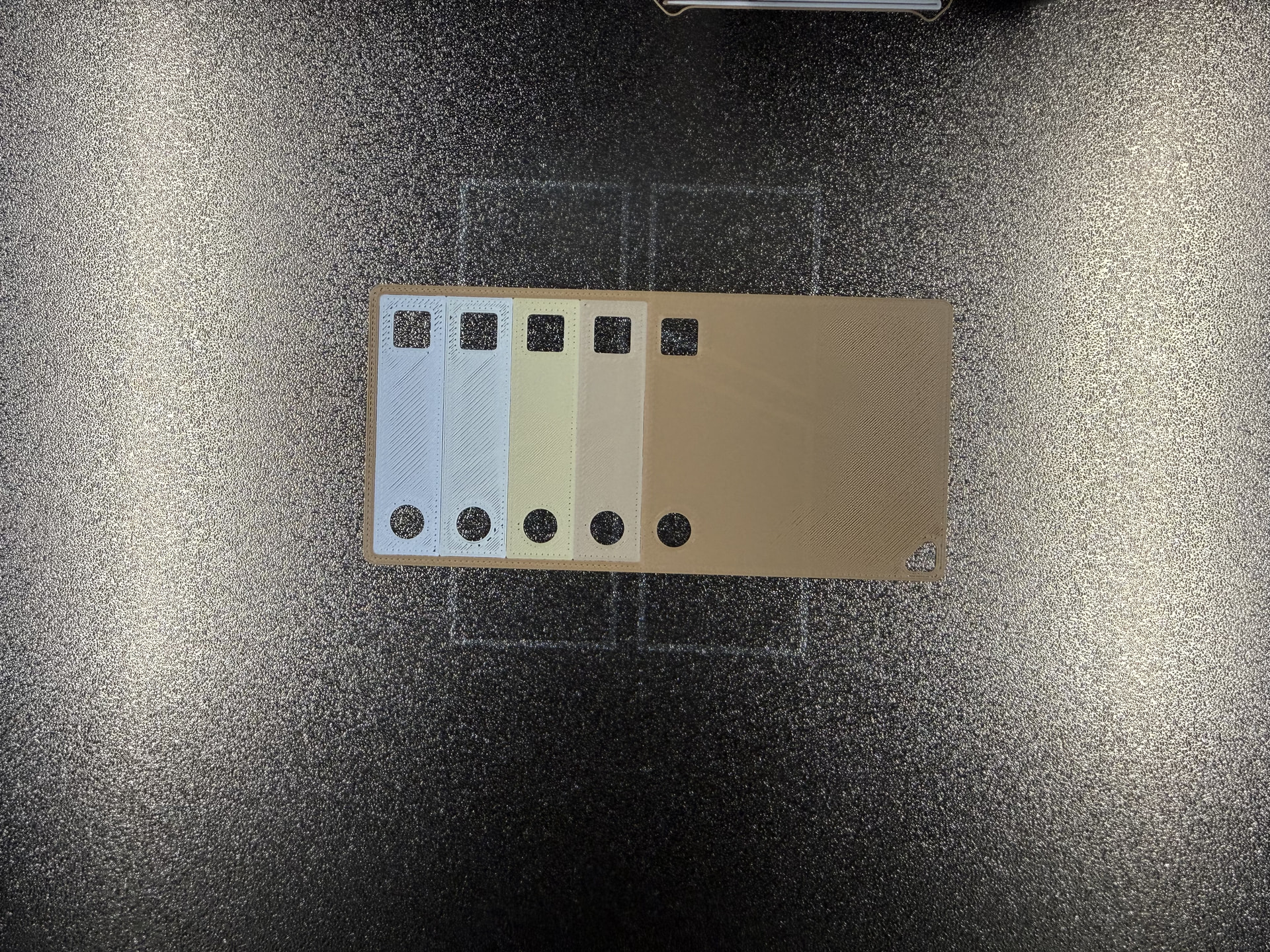
In general, I don’t think the/my H2C prints very well. That pre-sliced 5-color swatch is terrible; the colors don’t even bond, and it just falls apart in the end.
Confirmed default flow except where noted. Maybe it’s the difference in build plates. Believe I read somewhere the printer uses a slightly different z height for textured PEI vs cool plate. I was thinking the smooth surface of cool plate would exaggerate poor extrusion. I’ll try again using my textured PEI plate and post a pic.
Yeah, the first layer might benefit from the smooth surface. But take a look at your top layer. It looks like it extruded very well. Mine, on the other hand, has gaps all over and shows signs of underextrusion. I’m going to install the beta tomorrow to rule out the slicer as the cause. I’ll also test it with PLA Basic first.
If it wouldn’t be too much trouble, a print of the 5-color swatch using your H2C would be very interesting.
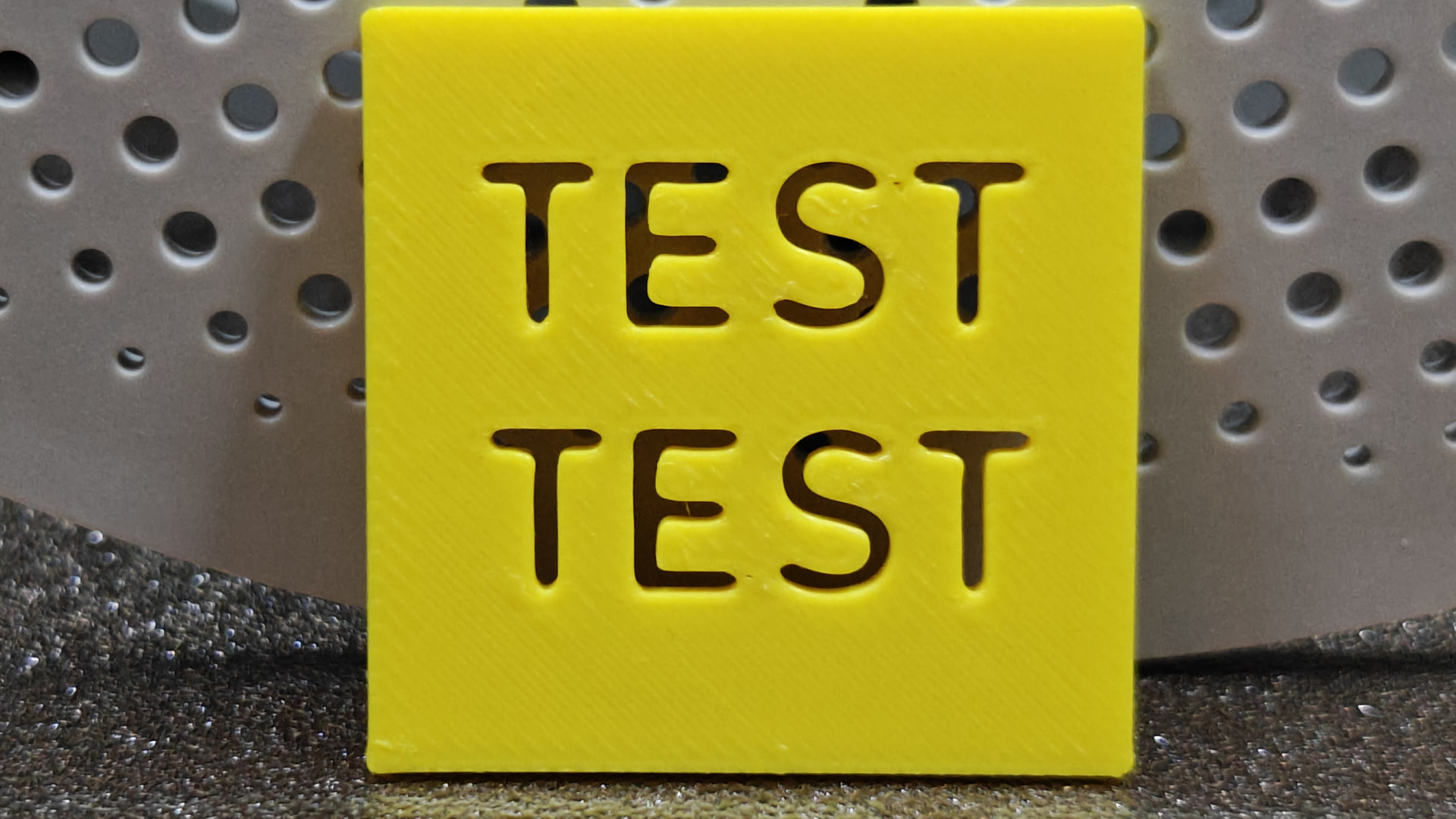
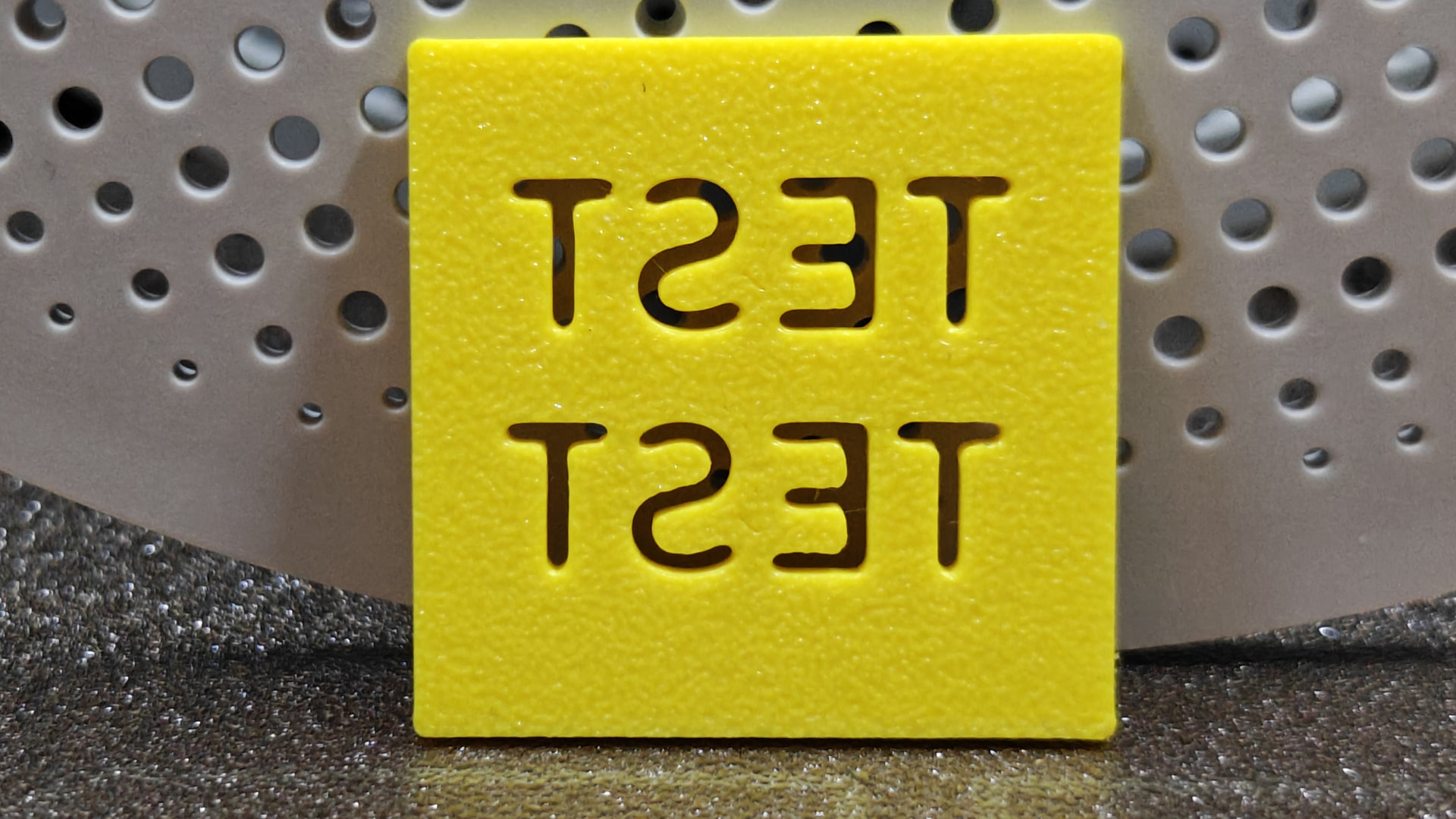
Hi,
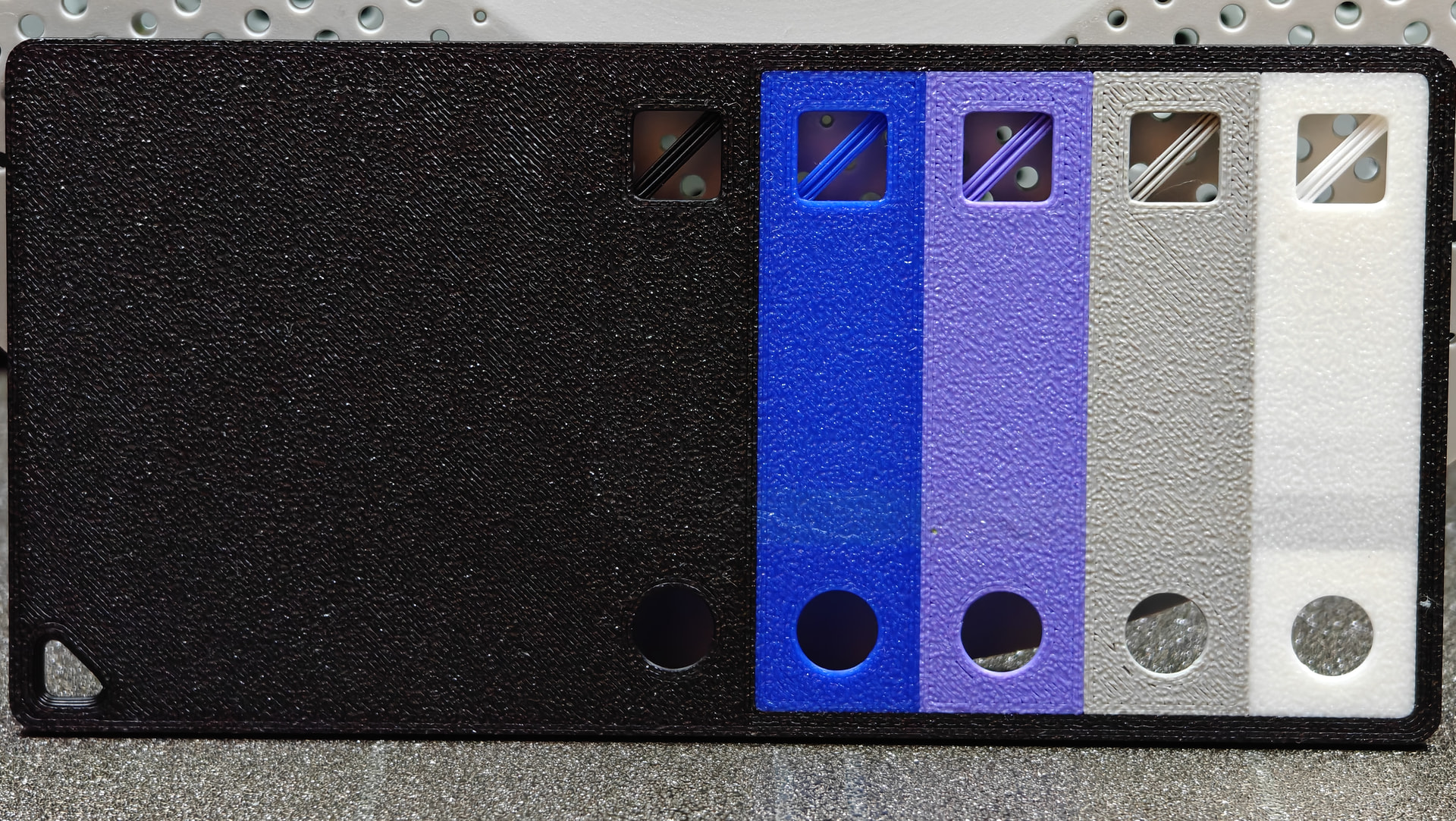
the “Test Test” 3MF file from @RogueOhio itself had a flow rate of 1.05 set under the Quality section of the model settings. But if I recall correctly, that applied only to the first layer. I changed it to the standard setting. So, even if you hadn’t noticed that, the top layer would have remained unaffected. Your top layer looks really good, though…unlike mine. And your pre-sliced 5-color swatch is also far, far better. Just look at the extrusion of the letters. Here’s a look at the test print I did back then. All Bambu PLA Matte.
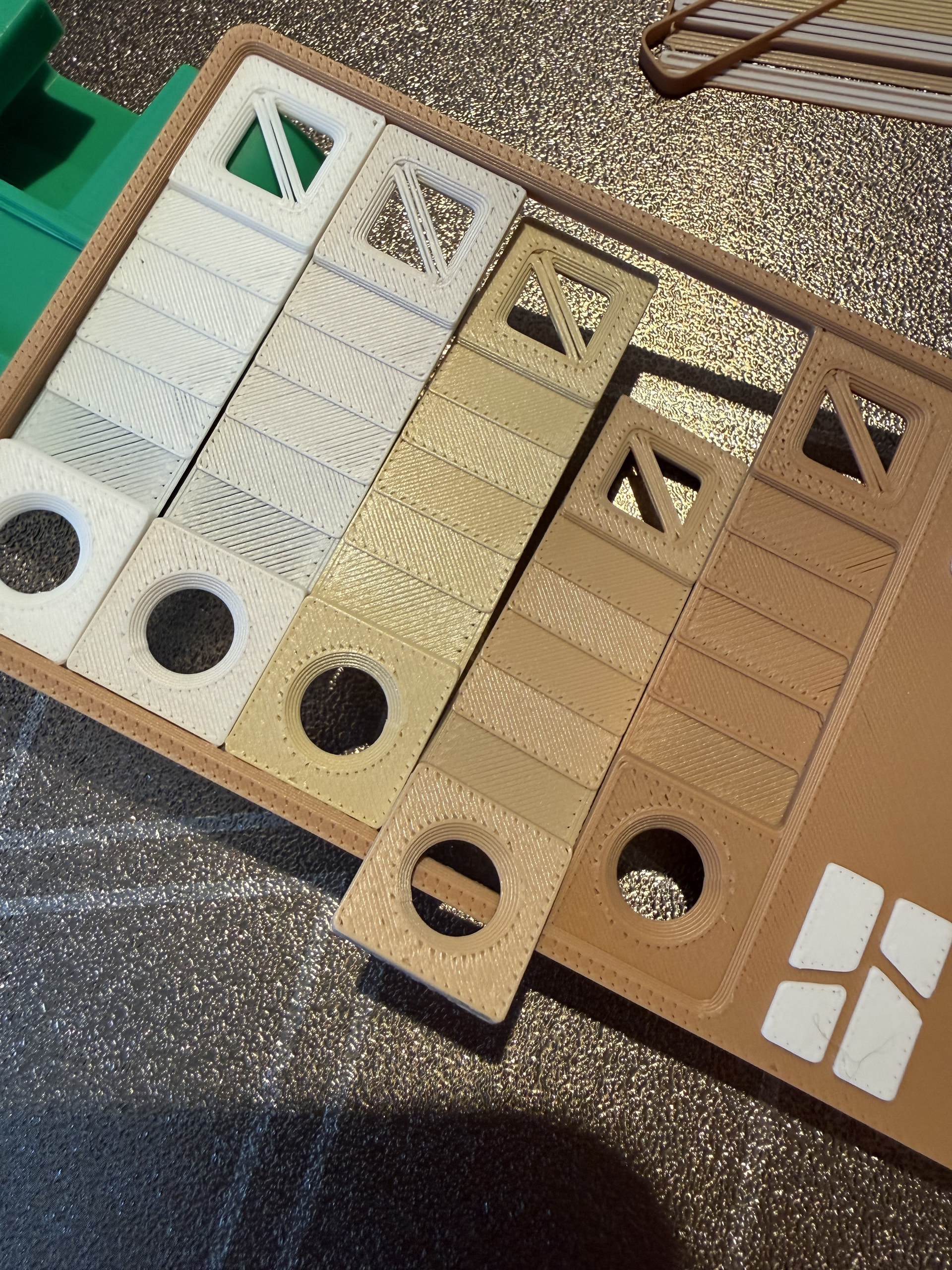
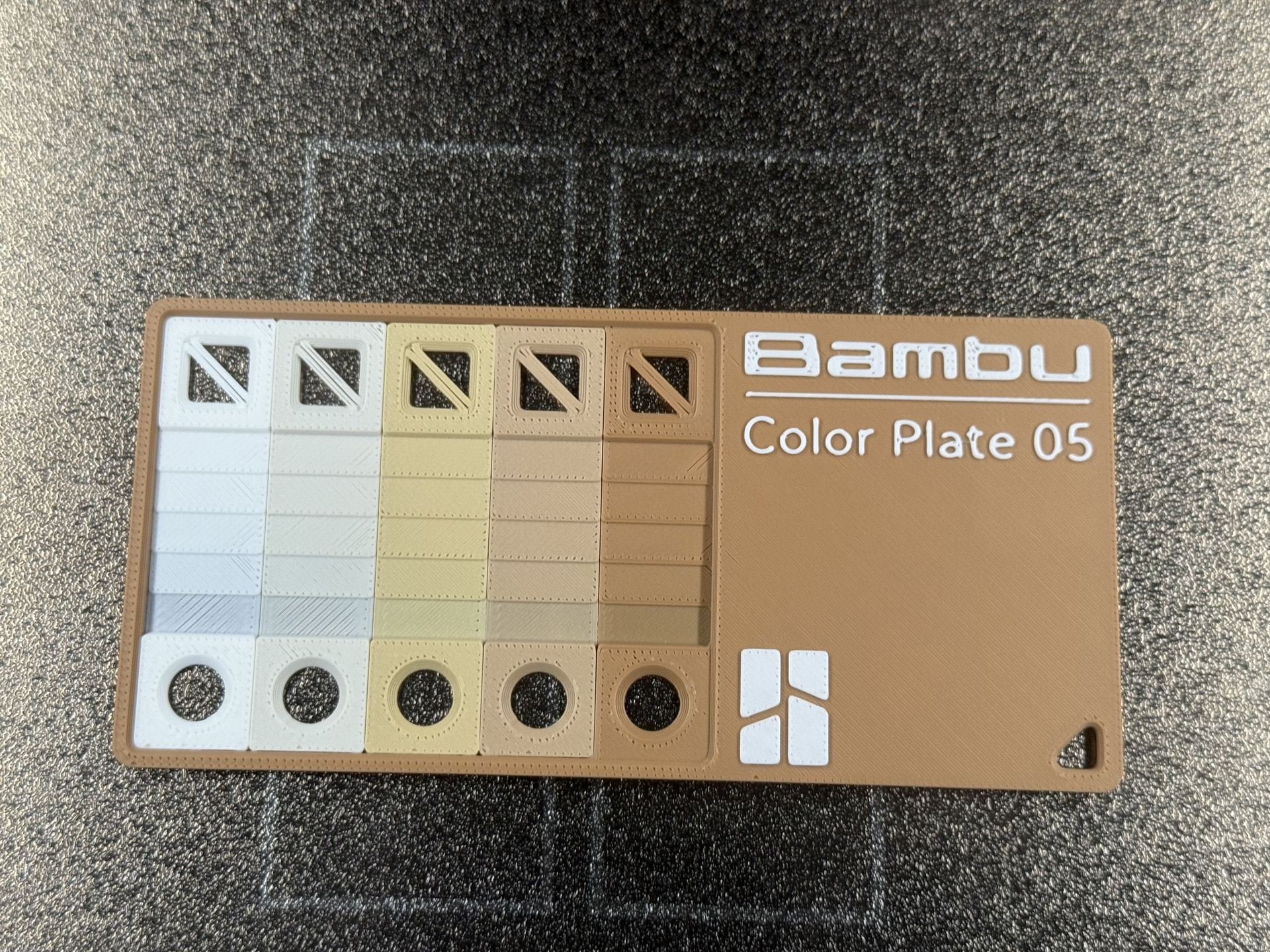
The issue I see, seems more related to an incorrect Pressure Advance (Flow Dynamics) calibration issue.
This could be related to a failing Eddy Current sensor.
It would be worthwhile to do a manual Flow Dynamics calibration.
But on the first layer image, there are also signs of a flow rate that is too low, or an incorrect Z-offset.
Support says that’s perfectly fine. Their own test print actually looked better, but when I pointed that out, they didn’t want to address it. They told me not to get hung up on the model.
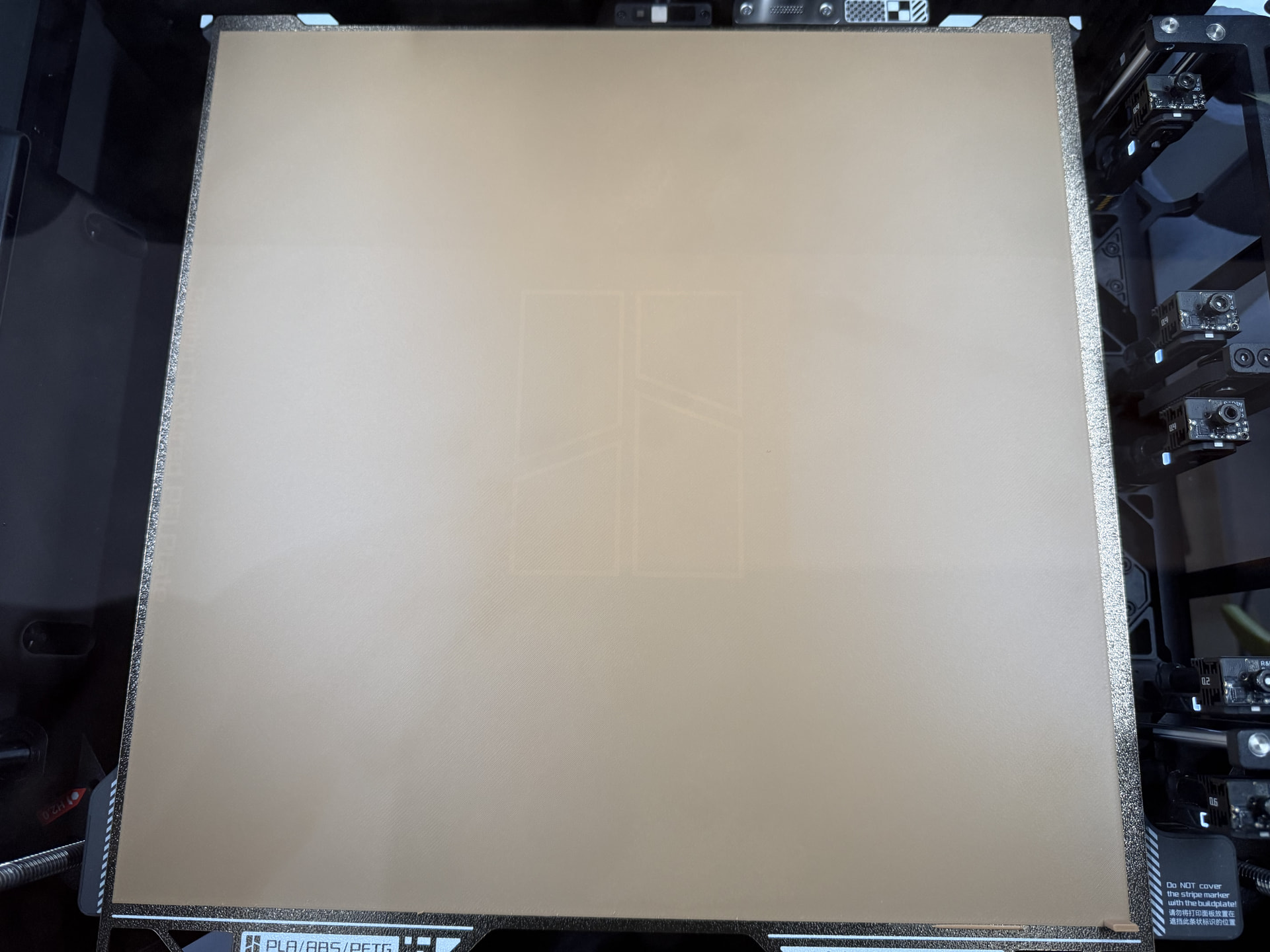
It’s an issue that tends to arise with multi-color prints. The first-layer test itself is absolutely perfect. That’s also why I think you’re right about PA—though I don’t think it’s just PA. After all, there are obviously H2C units that print better than others. Here’s a picture of the first layer.
It seems PA is measured standard with an Eddy Current sensor. Therefore a manual tested and defined K-factor could influence the results.
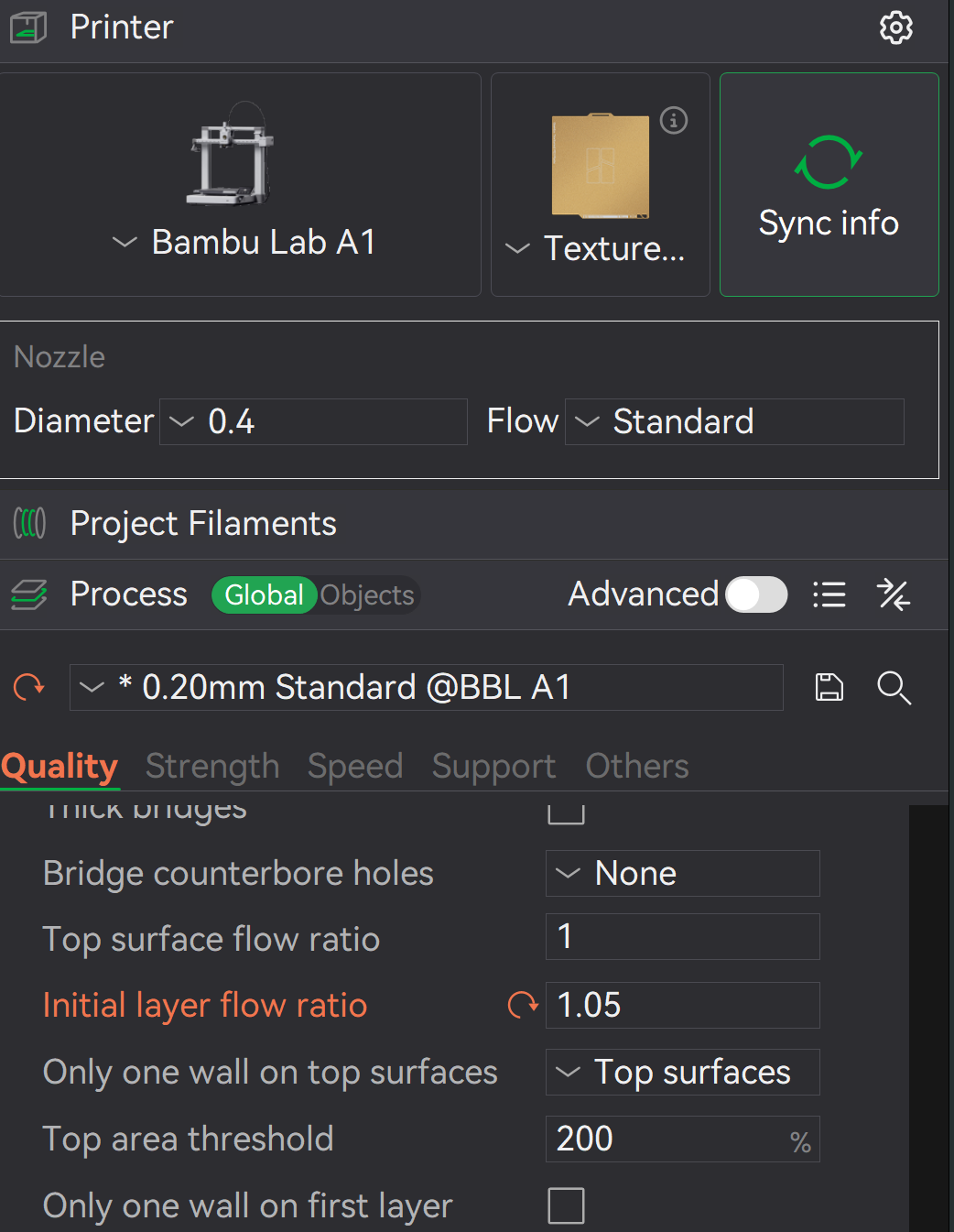
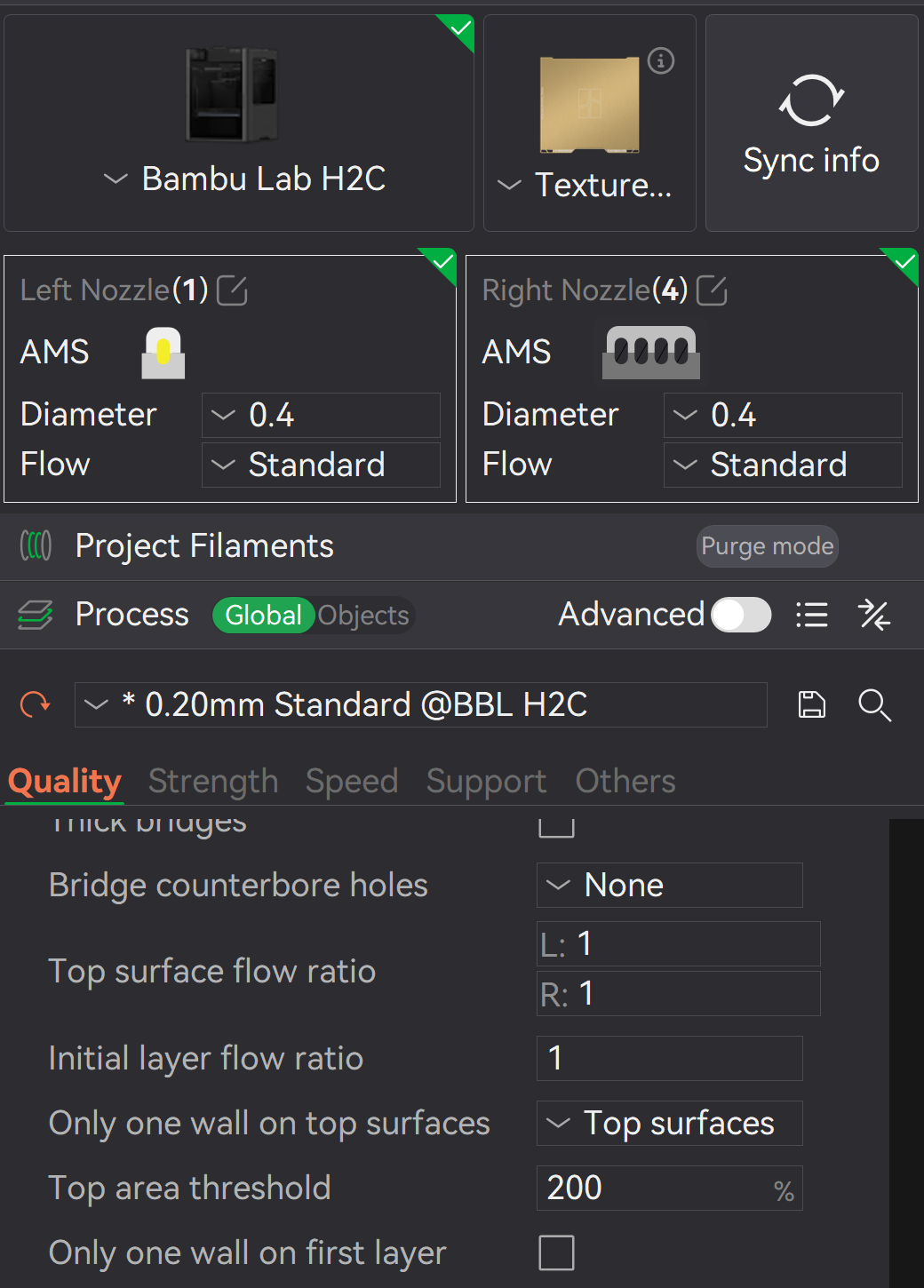
I saw that too in initial 3mf for the A1. However, it gets reset to 1.00 when I sync to H2C. Only non-default settings that remain are Arachne walls and disable Arc fitting. Objects view also shows 1.00 after syncing.
Edit: Your whole-plate first layer test looks better than mine. I don’t even have to post a picture, because yours is flawless. 
Yes, the first layer wasn’t very good at first. I ran the high-temperature print bed calibration several times—that’s a specific function within the calibration routine, in case you aren’t familiar with it. Since then, the first layer has been perfect. But that only applies when using a single hotend.
That brings us to @Gerrit Eddy sensor. I agree with you, but as far as I can tell, you can’t calibrate each Vortek hotend individually and then control them that way. I’ve already tried it myself. Please correct me if I’m wrong.
Besides, I feel the printer should simply do its job and calibrate correctly. Neither my X1C, P1S, nor A1 mini require steps like that. This is the first Bambu printer I haven’t been happy with.
It normally should take care of the Dynamic Flow calibration. But if your Eddy Current sensor is defective, then it just gives the wrong results.
Therefore a test where the calibration has been done properly with a manual calibration, gives you at least the capability to determine if the DF calibration is the issue.
If so, you have something to follow up. If a manual calibration is not improving the results, then that cause can be excluded.
Yes, but the sensor doesn’t seem to be broken when printing with just one hotend. The problems mainly arise when it has to switch between hotends (the Vortek side). This suggests that not every hotend is calibrated at startup…only the first one is. The sensor data is then applied to the other hotends, but it doesn’t match up because the hotends have manufacturing tolerances, for instance.
And even when it prints a clean first layer with a single hotend, the top layer still shows lines, gaps, and signs of underextrusion. I think there are multiple issues compounding one another.
Bambu provided me a test file - just a standard cube. Even that couldn’t be printed perfectly. Yet, the standard response is always just to increase the flow rate. But that’s not a real solution; it’s just a workaround. Especially since there are apparently H2C units out there that can print it better.
Unfortunately I can’t compare that behavior on my H2D.
So if you print one color with Vortek, you don’t have any issues either?