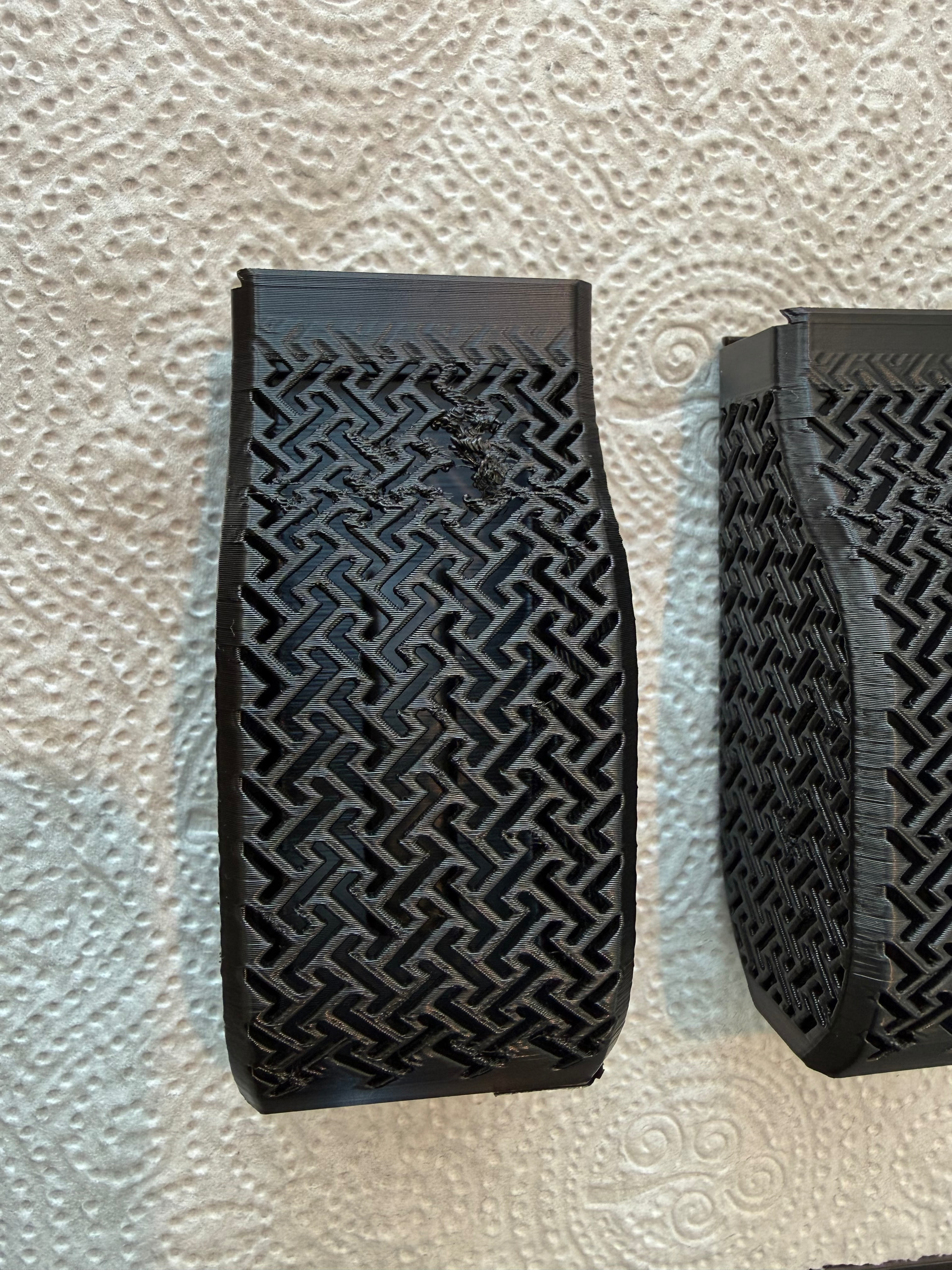
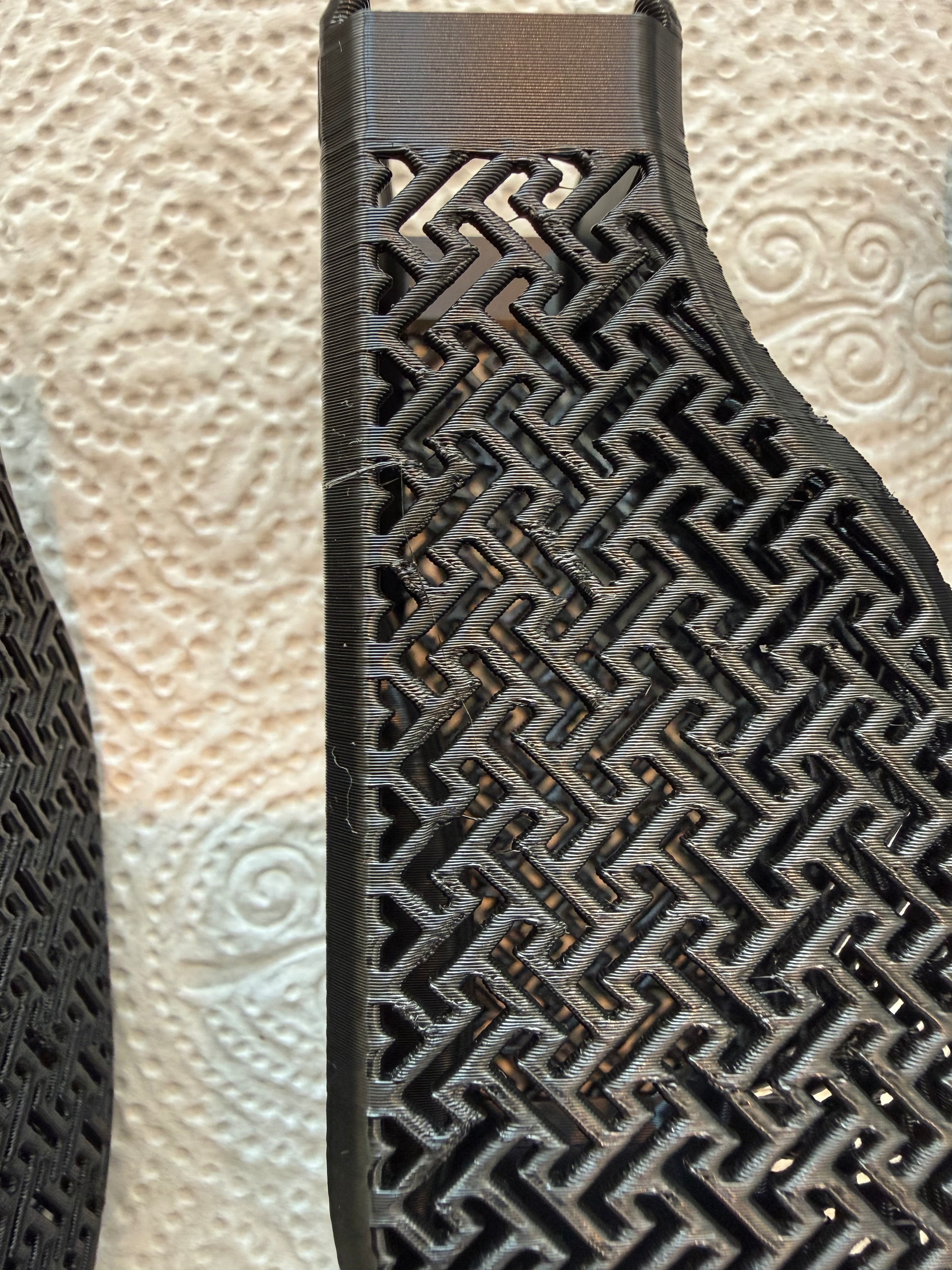
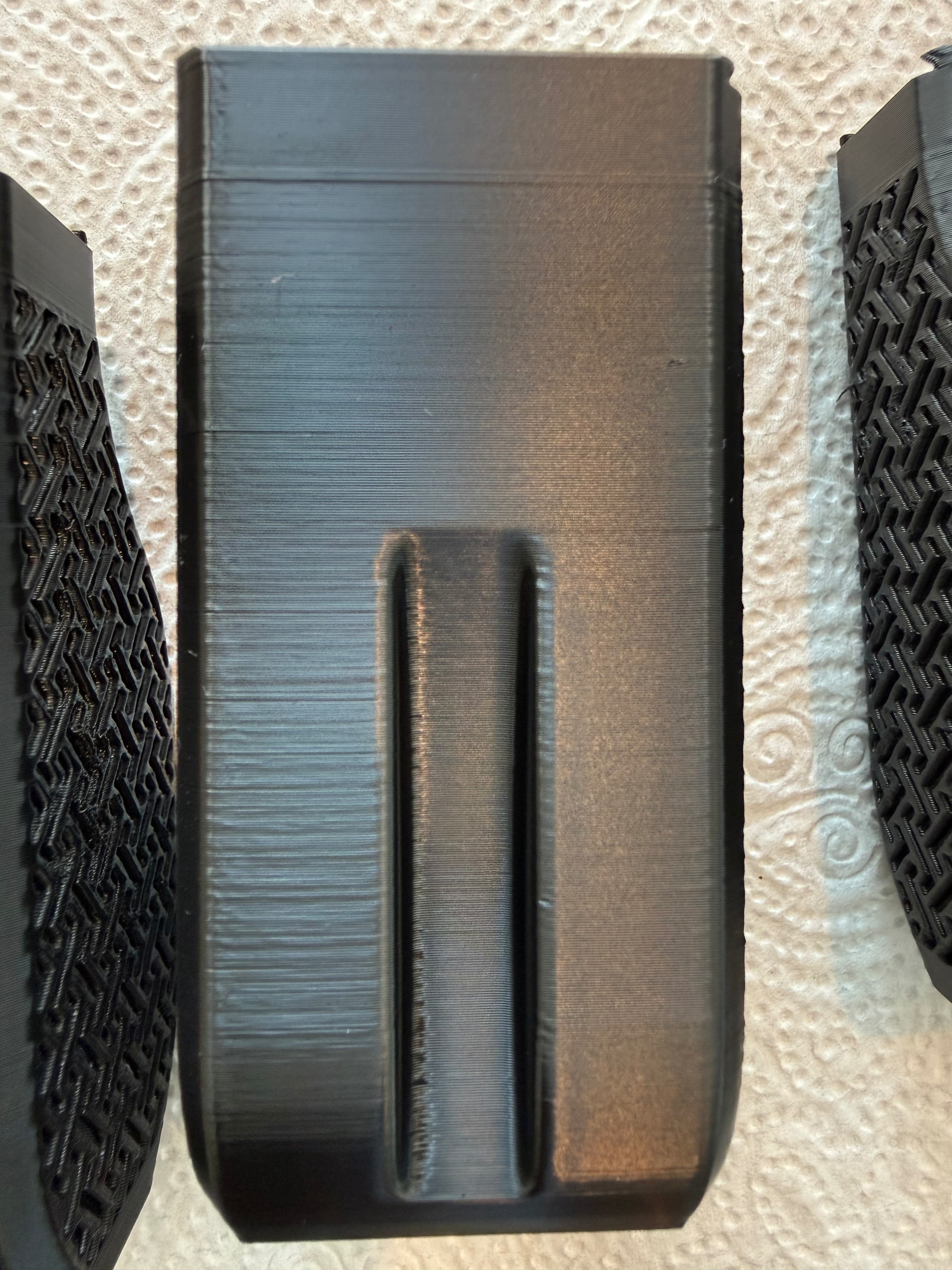
I had similar issues, but not that extreme with overhangs when printing some other items. Some places it worked perfectly, others it got messy. Not sure what is causing it or where to begin troubleshooting.
Humidity is at 23%, dried the filament before printing.
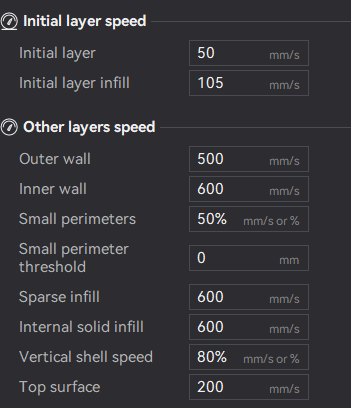
Since you have dried it (recently), that common issue should be OK. However, PETG does reward printing slowly. Not sure about the “new” PETG Basic (yet), but for the “old” PETG Basic I slowed down all printing speeds to 80mm/s while adjusting/checking cooling settings match those for “Generic PETG”.
PETG of all kinds like a hotter nozzle temp. I prefer 265ish for basic and HF. You can tell in the flow calibration line it puts at the front of the plate whether your temp is right. Thin, wispy line? Too cold. Massive fat blob? Too high. There’s a fairly wide range of “ok” between those two extremes.
I’ll try slowing it down I thought the profiles from Bambu themselves should be “perfect”, but I’ll give it a go and appreciate the info. I’ll also check the Generic PETG profile.
Flow calibration doesn’t adjust heat. They give a heat range in the filament profile, but only use what is set as first layer and subsequent layers (each their own setting) which are both not ranges. If it is undextruding due to not being melted enough, you have to up that temp yourself.
That’s good info. I would still expect the default profile would be tuned correctly with their own filament though. Trying to dry the filament even more at the moment, some said below double digits in humidity produced much better results. Is this really needed?
Drying is very highly recomended for PETG. But note that the AMS and dryers do not show filament moisture. The show the relative air moisture in the drier. So it is possible to have a reading of 10% on the drier but the filament to still be saturated.
So it is usually best to set the temp and duration and disregard the driers hunidity indication.
PETG has a default dry in a BL dryer, 65c for 12 hours. I would say 8 is a minimum for new PETG. So, step 1 is make sure you dried it at the right temp and for long enough. Then do the below.
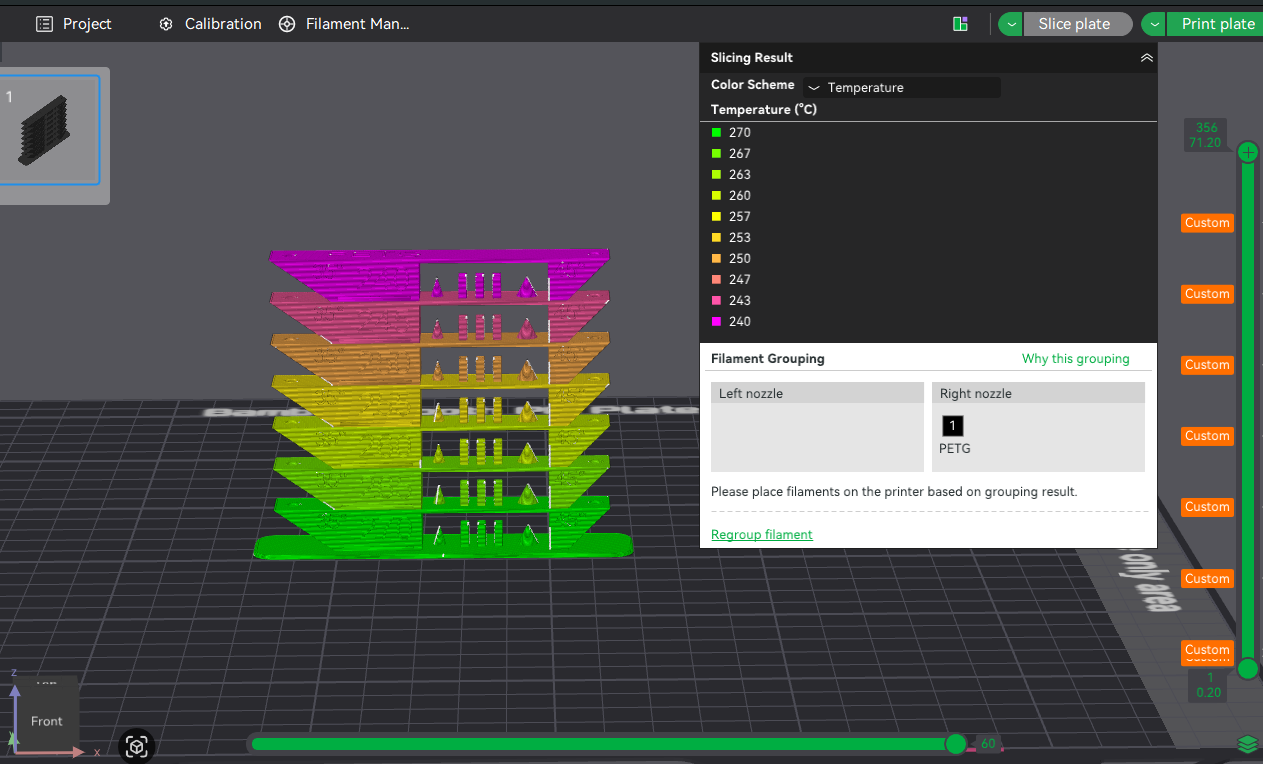
Download this and check the temps. Make sure you DL the STL file, not the 3MF, and then check to make sure the temp is changing per layer after you slice it.
PETG has horrible overhang performance and that model has lots of them, one of the reasons I dont use it often. If you want heat resistance with those pods I would print them from ABS or ASA.
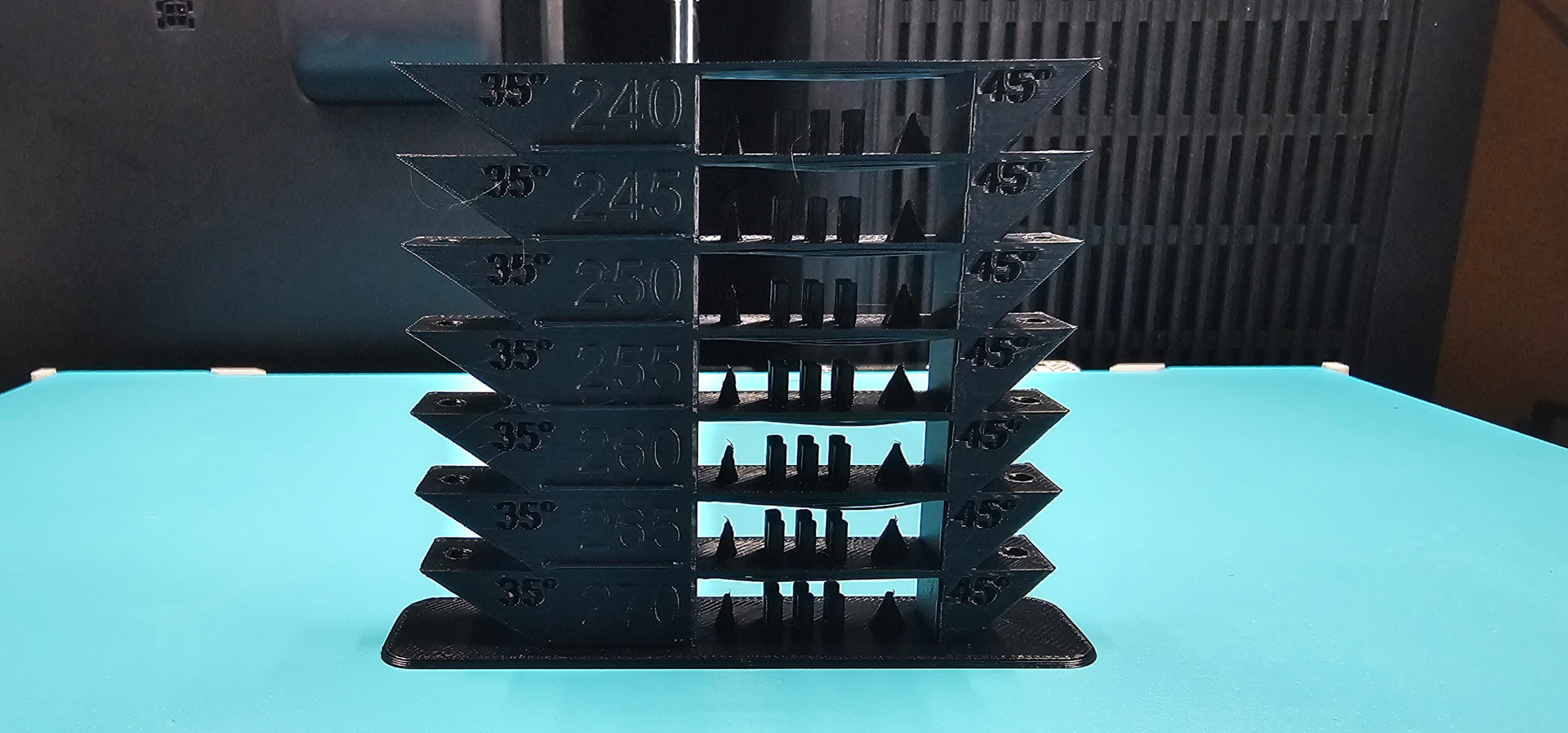
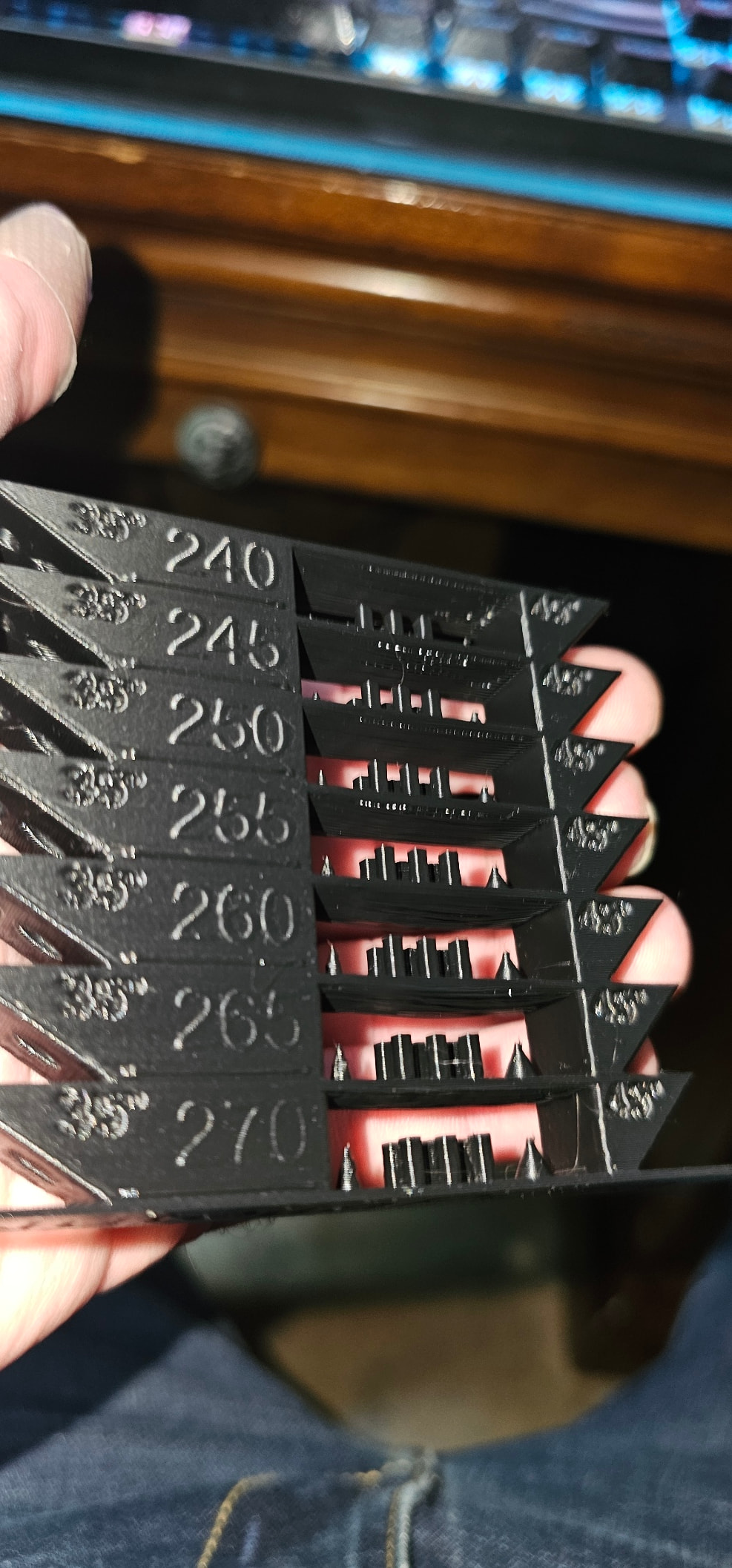
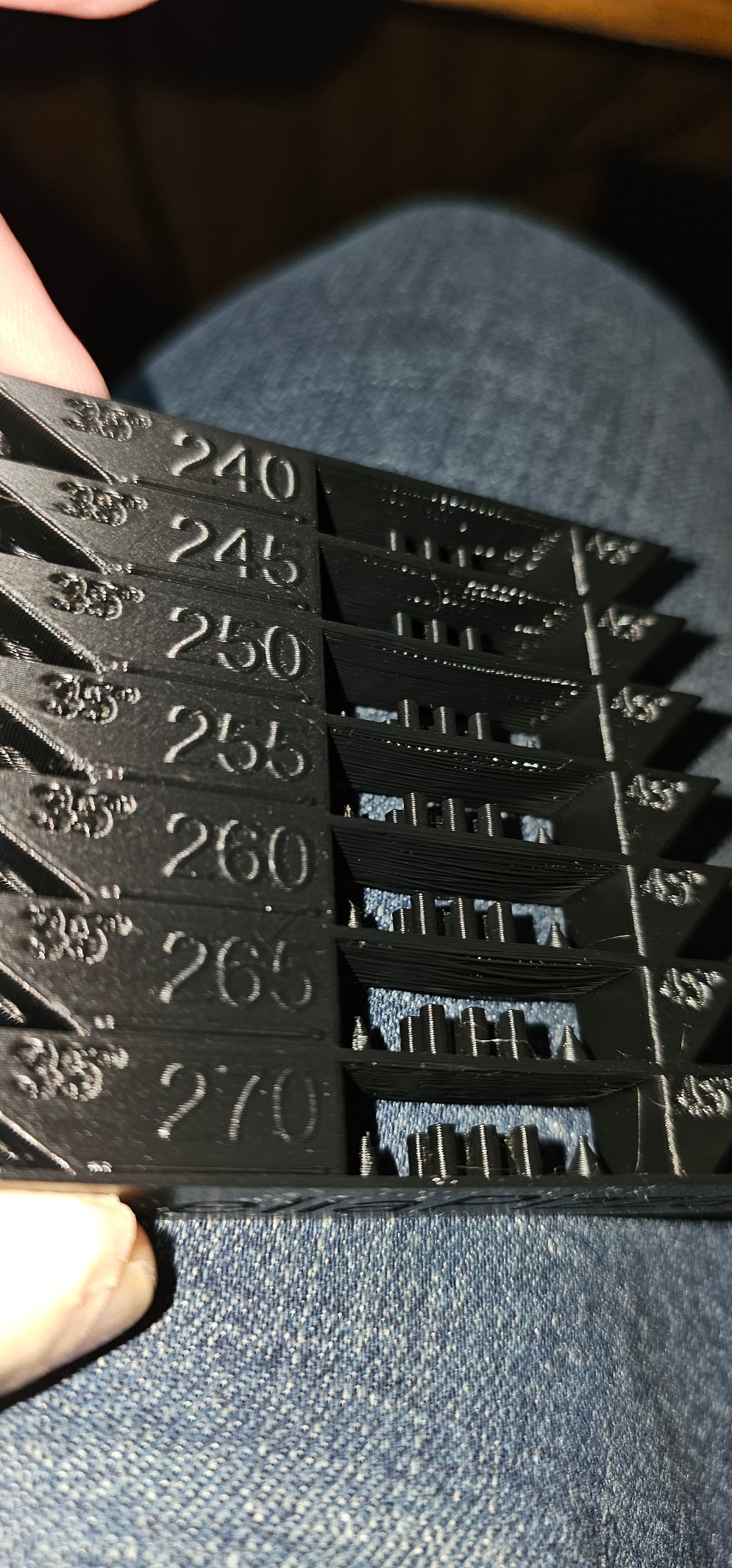
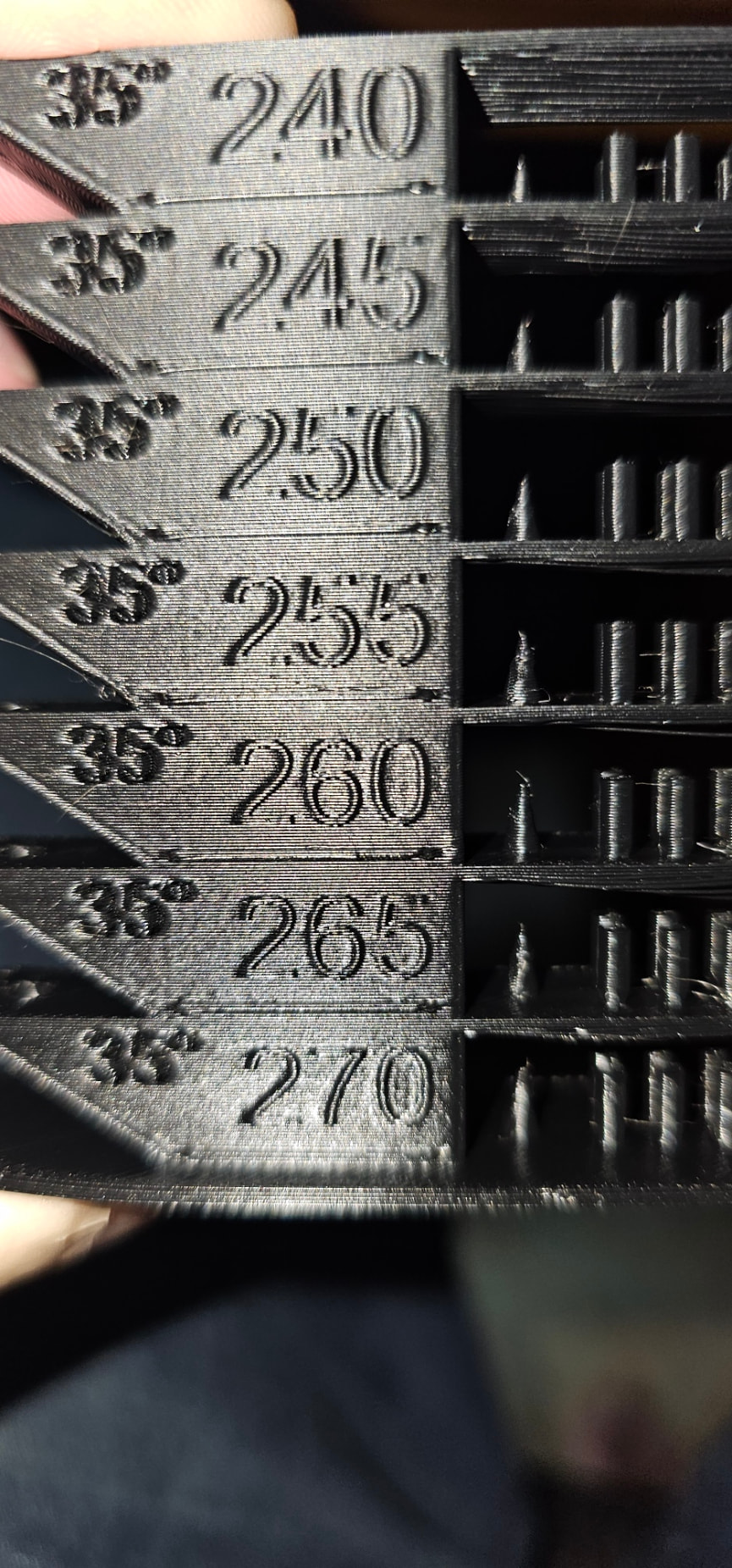
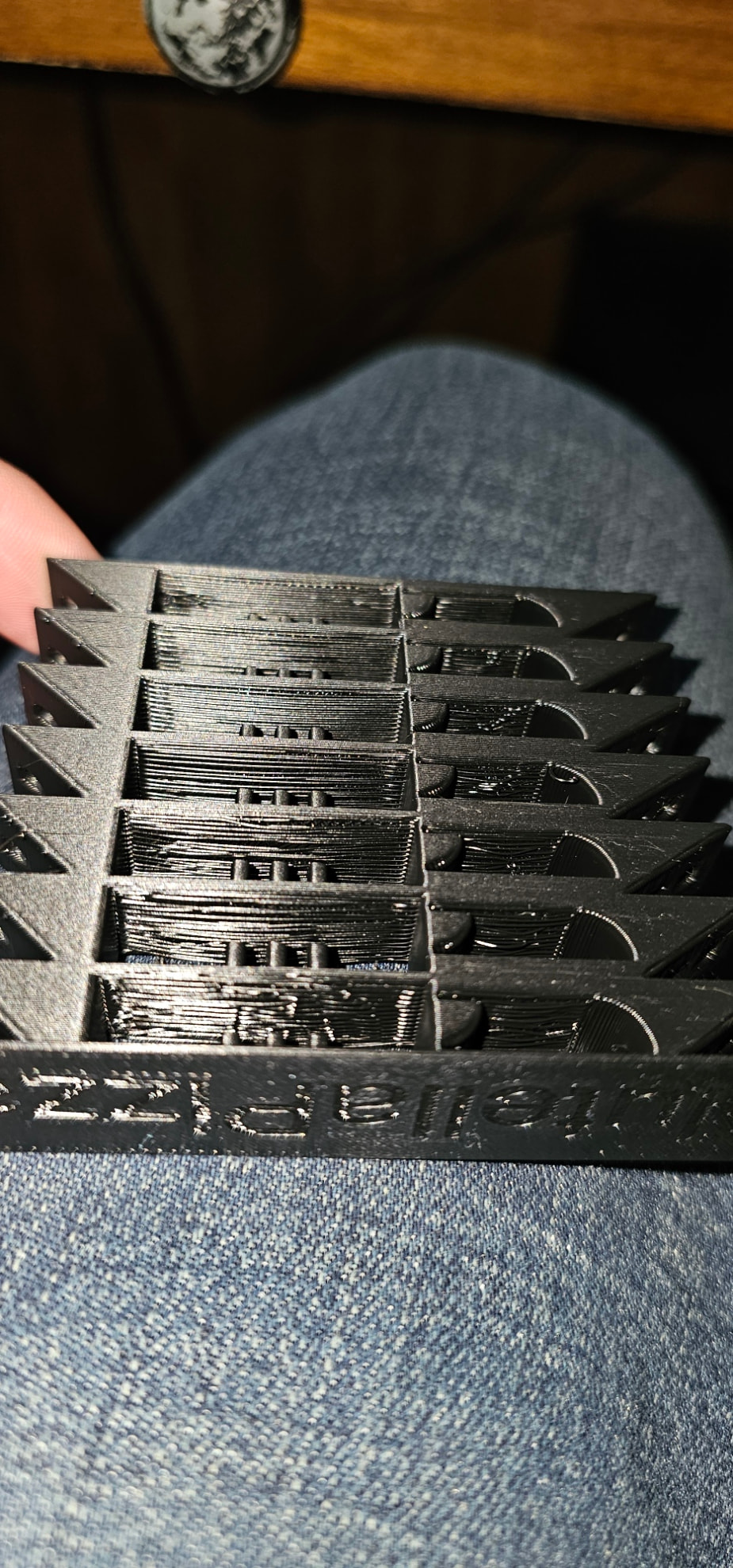
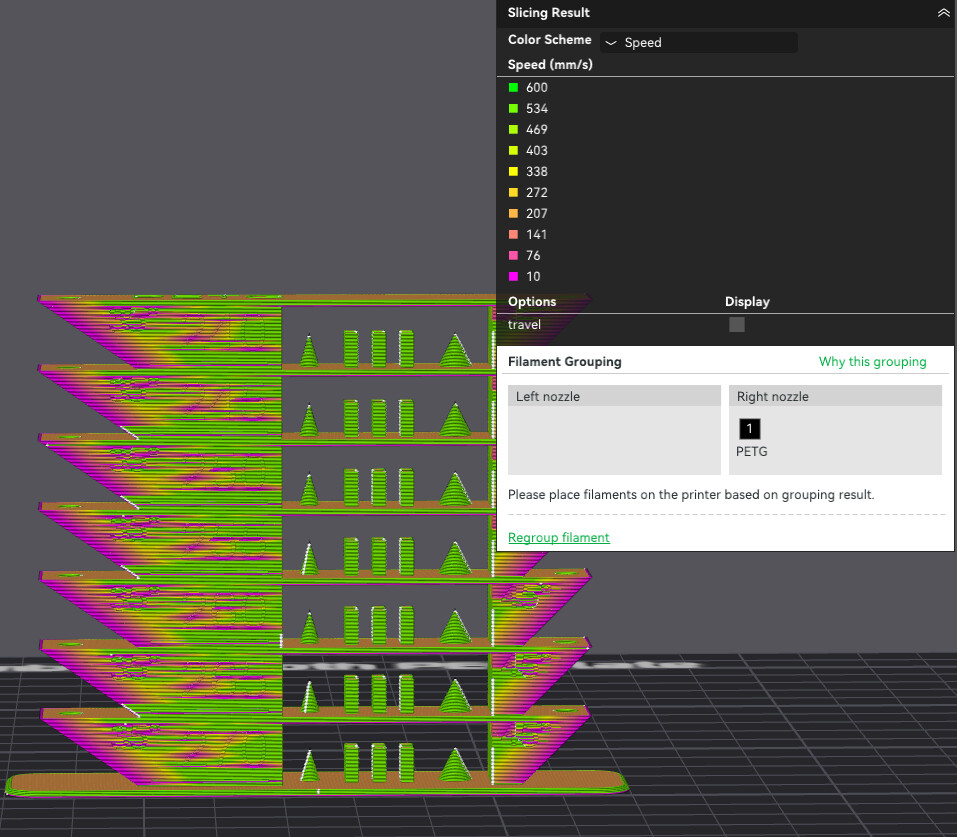
Here’s my temp tower. Default Bambu profile. Now this is PETG-HF, not basic, but still BL PETG. Printed with .4 HF E3D Obsidian nozzles. This filament was dried weeks ago, but it sits in an AMS2 with silica.
I see some not so great bridging until we hit 265c, but everything else looks fine. No stringing, good layers, good angles, etc. 265 is what my custom profiles are set to. Oh, and speed?
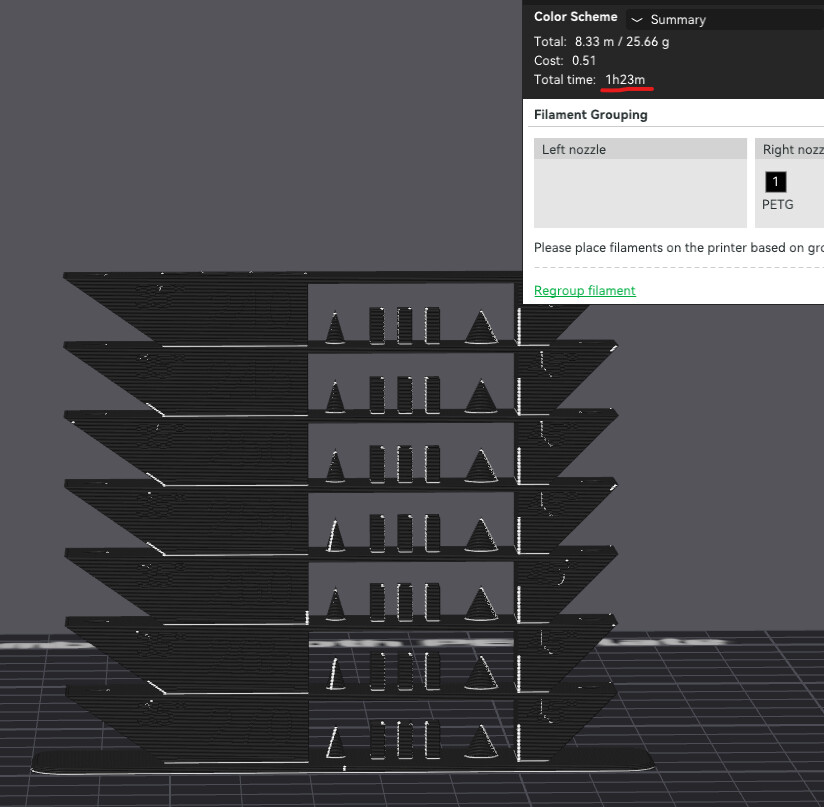
There’s a lot of myths with PETG. “Print it slow” is one of them. Default settings this is a 2hr print. That’s 30% faster than default, and I haven’t really optimized this for speed.
Wow, I really appreciate the breakdown here. I’ll go and print that tower and check it out. This is really good! Love that you’re actually debunking the “print it slow” myth, because that’s what I keep reading too.
No, fortunately you do not need an HF nozzle to print HF filament.
The additives used in HF thermoplastics tailor particular properties that in turn allow higher flow rates and higher print speeds.
Since nothing is for free, this usually comes with penalties in other properties. The BL PETG HG for example was very popular as it allowed higher print speeds with an acceptable knock down in heat deflection temp. Other knock-downs, iirc z-impact was also among them but I may be misremembering, were acceptable.
An HF nozzle on the other hand allows higher flow rates by enabling a higher heat transfer into the plastic in the melting chamber. The CHT nozzles for example split a single melting chamber into three smaller ones. This increases the internal melting chambers surface area, allowing a higher energy transfer to the thermoplastic. It is not recommended to use filled filaments with these as the smaller individual chambers are more prone to clogging.
PETG HF (there are other brands than BL available) is in my experience more tolerant to higher speeds. But the standard PETG blends do (again, in my experience) tend to benefit from lower speeds by improved overhang perfomance, reduced risk of wall separation, warping/curling and interlayer adhesion.
True, but I have printed the new BL PETG basic with my HF profiles no problem. If it couldn’t handle it, then it would underextrude, which it doesn’t, well, not at 265c.
That is indeed very interesting. While I have not yet had the chance to use the new PETG Basic, I admit that the slow-down approach is my sledgehammer approach to troubleshooting.
With the frequent shortfalls in PETG availability, I tend to have bunch of very different PETG brands and types. As a hobbyist, I only have limited time for the hobby and can not run through the optimizations for every different roll. So I do prefer the sledgehammer approach for myself.
Interestingly, the 265° are above the BL recommended range. So, lesson-learned: Trust your own data
I presume you mean the PETG HF variant, because the PETG Basic is fully in stock. This probably because nobody prefers it.
Bambu claim:
I am still searching for the “improved” properties.
Besides strength (which is similar to standard PETG), all other properties (flow rate/speed, matte look, stringing, ease of printing, etc.) are worse imho. It basically reintroduced most standard PETG properties again.
If strength is not the main goal, PETG HF is still my favorite.
I hope Bambulabs is still trying to get a new PETG type in their store that has similar properties as the HF variant. I know there are some competitors in the marker that come close, but none have the great matte look the HF has.
I am still “suffering” from the “all PETG sold out” phase earlier in the year. I wanted to print a bunch of objects in a matching color scheme at the time and had to go 3rd party.
So now I have a few 3rd party rolls to print through first.
The impact strength seems to have improved. At least, that was my take-away when adding the TDS data to my comparison table last night.
I am particularly interested in z-impact, as that is FDM’s weakest point. IIRC, only PA6-CF (and now PETG Basic) are able to beat PLA Basic in this. But both by only around ~12% (need to double check).
Still gotta dig out my old PETG Basic data for comparison though.
BL has absolutely pushed me into 3rd party filaments with their lack of HF availability. If they’re canning HF altogether, I might just have to buy HF elsewhere. I have had zero issues with 3P PETG HF filaments regardless of brand and I print them all with the bambu HF profile.
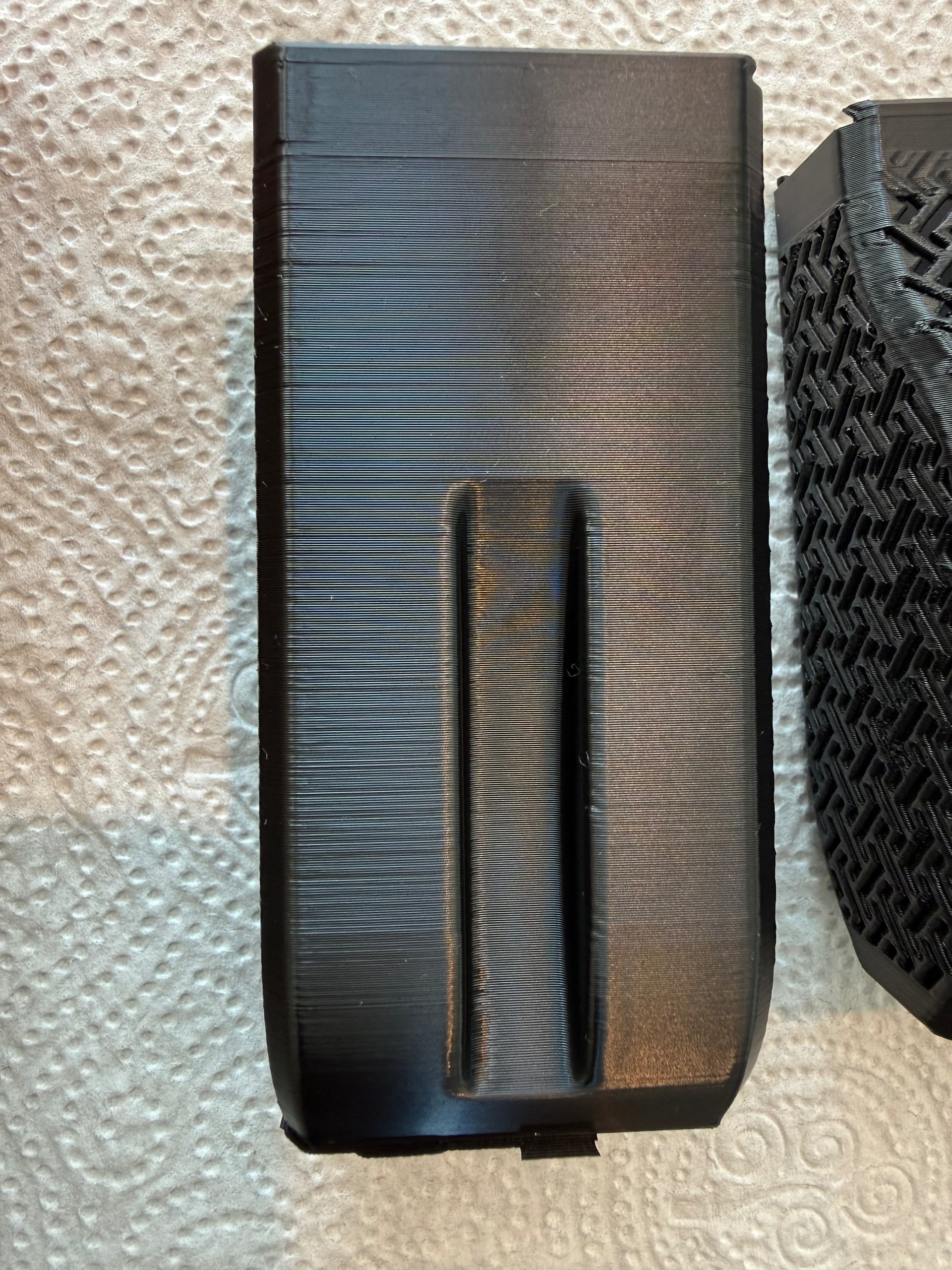
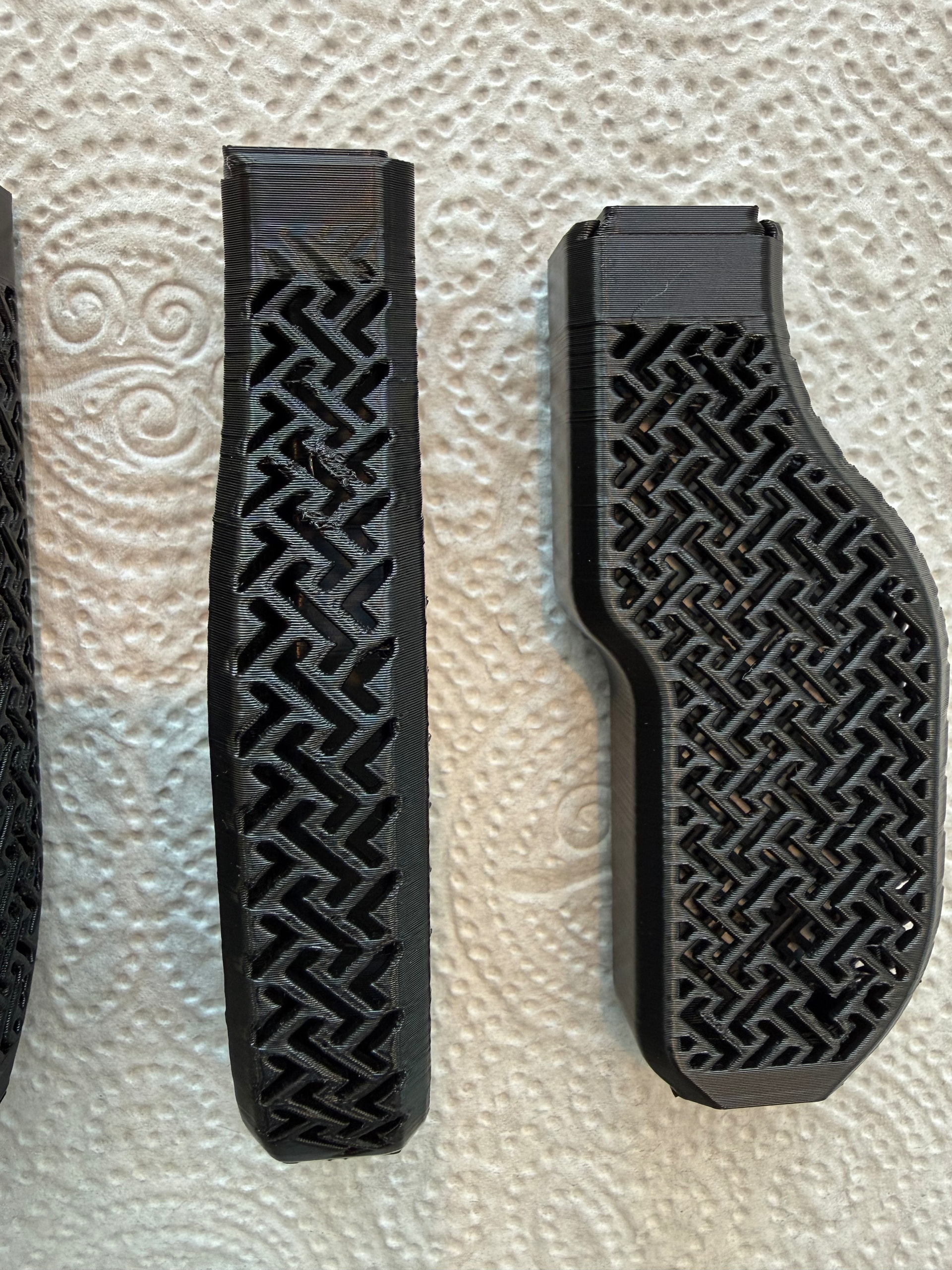
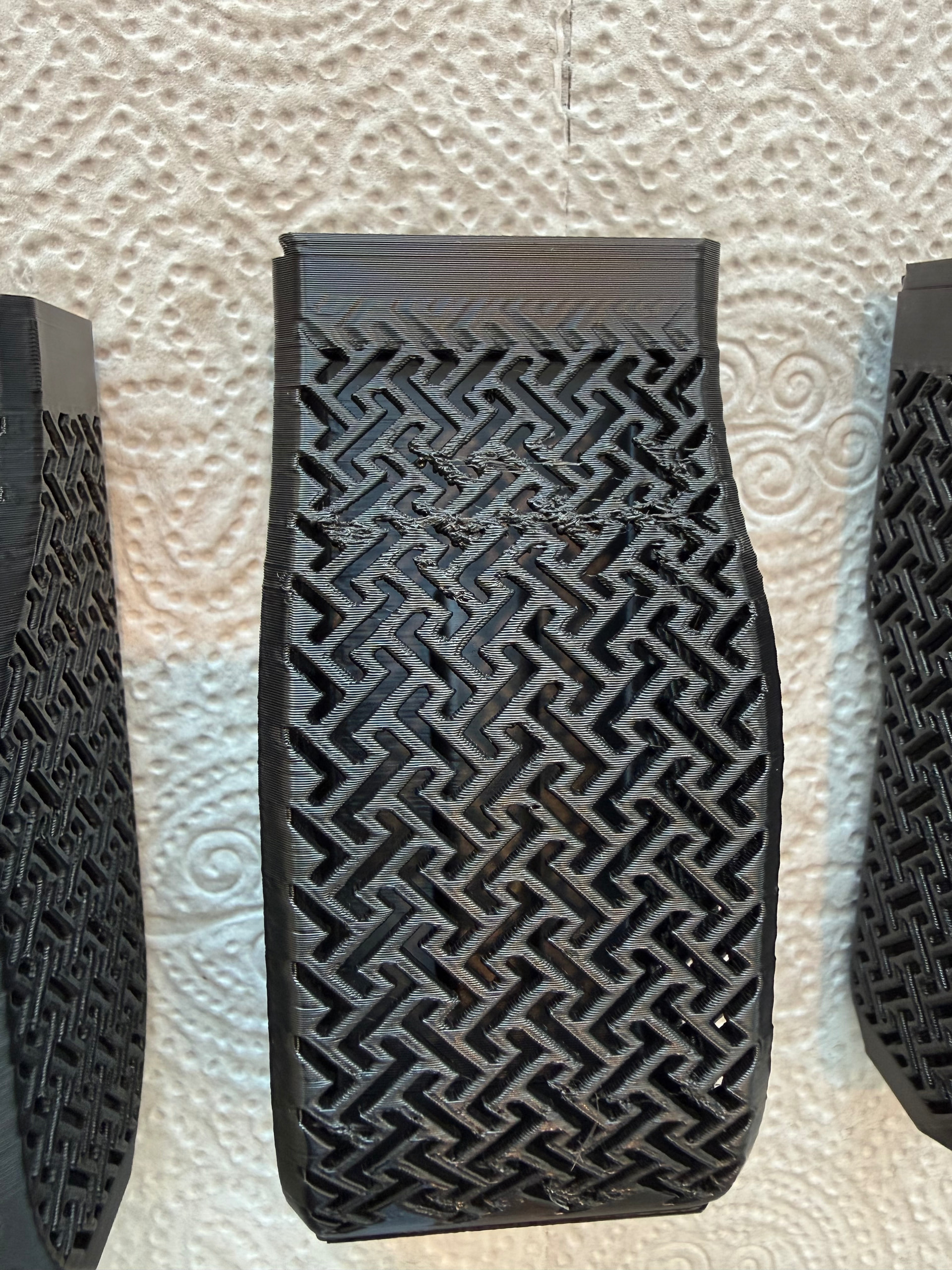
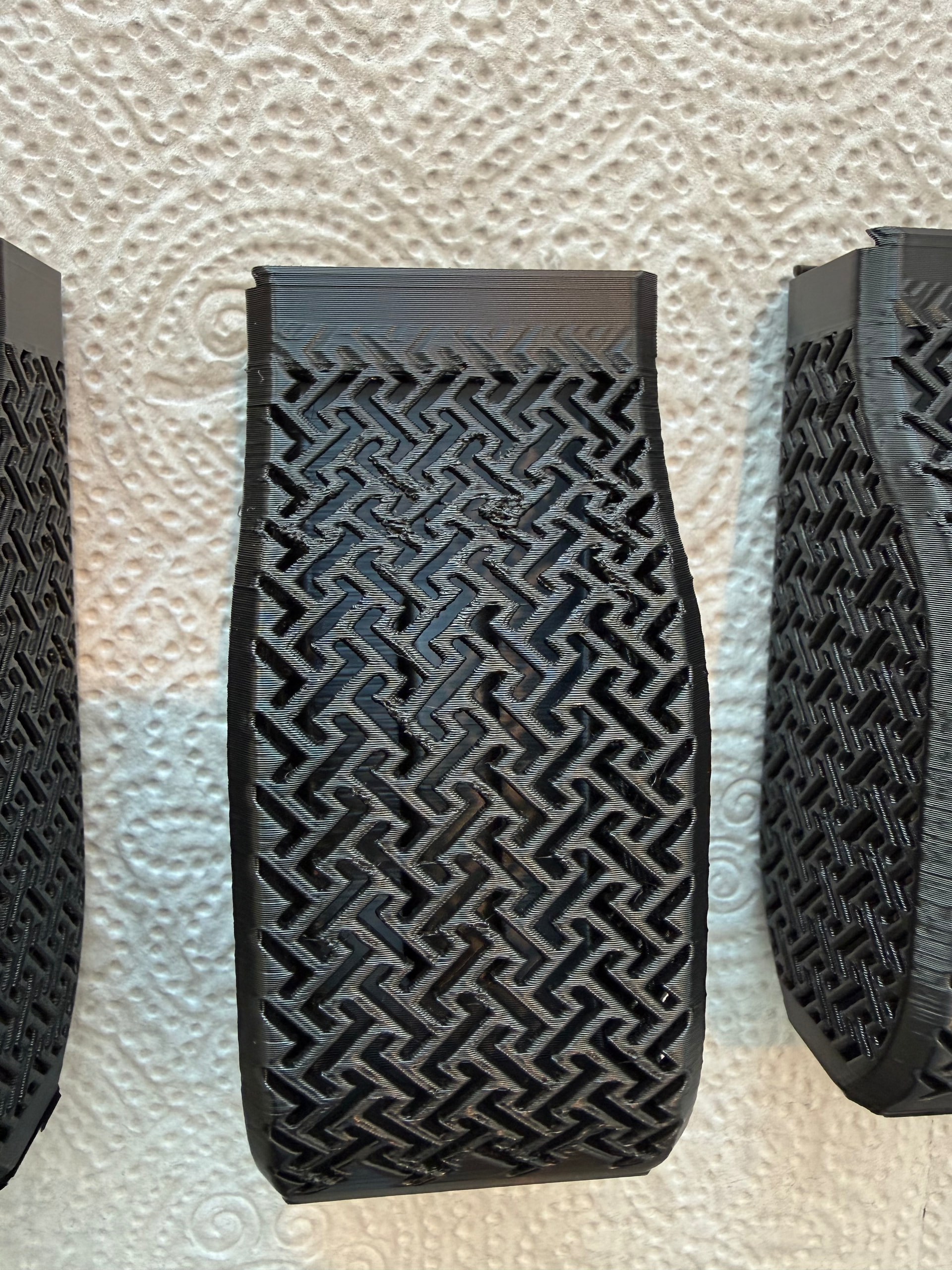
 &
&