Using H2S, AMS2p, Generic PLA.
I am trying to print fine lines less than 1mm wide and high. Like lace or leaded glass. First attempt produced nothing at all.
Any suggestions? Speed? Filament? Temps?
Thanks
Butch
Using H2S, AMS2p, Generic PLA.
I am trying to print fine lines less than 1mm wide and high. Like lace or leaded glass. First attempt produced nothing at all.
Any suggestions? Speed? Filament? Temps?
Thanks
Butch
The width is largely determined by the nozzle, not by the settings. So… the smallest possible nozzle, I guess? Even if you don’t want to print that thinly, there are plenty of tips…

Aiya I cannot use forum today
Sorry I misread your post
2 nozzle widths, that’s 0.8mm, will be OK if there is something to help it hold together, or it is purely decorative, but I would not do this on heavy or structural parts.
When you say leaded glass, if it is a window I would absolutely use metal and solder or braze it.
If it is lace that is placed on top of a pane, that would be ok.
If you are planning on having the lace support itself, I would not do that, and I would look at jewelerry manufacturing techniques (soldered or brazed metal again) or laser cut a sheet.
There is an artist who 3d prints “string” on her models e.g. rain effects etc

It is possible to print very tall single layer parts if they’re well supported.
Imagine a single thickness wall printed as high as possible. Defects would appear pretty close to the bed - pretty quickly because it’s only stable in one direction.
Now imagine three of those single wall sections arranged in a triangle with the corners juuuuust barely touching. You’ll be able to print far higher without defects, and the parts separate easily after print.
In creating window frames for ■■ and S scale models, I did some experiments to get the smallest details. Quite often, any line less than 0.5 mm wide tends to get lost in the slicer or blobs out. I tend to limit them to no less than 0.6 mm which takes two passes of the 0.4 mm nozzle. A 0.6 mm height exactly corresponds to three 0.2 mm layer heights. That is the smallest that I have found that reliably works. For fine detail, like what you describe, the Super Tack plate works better than a PEI build plate. Silk PLA will give you the most problems.
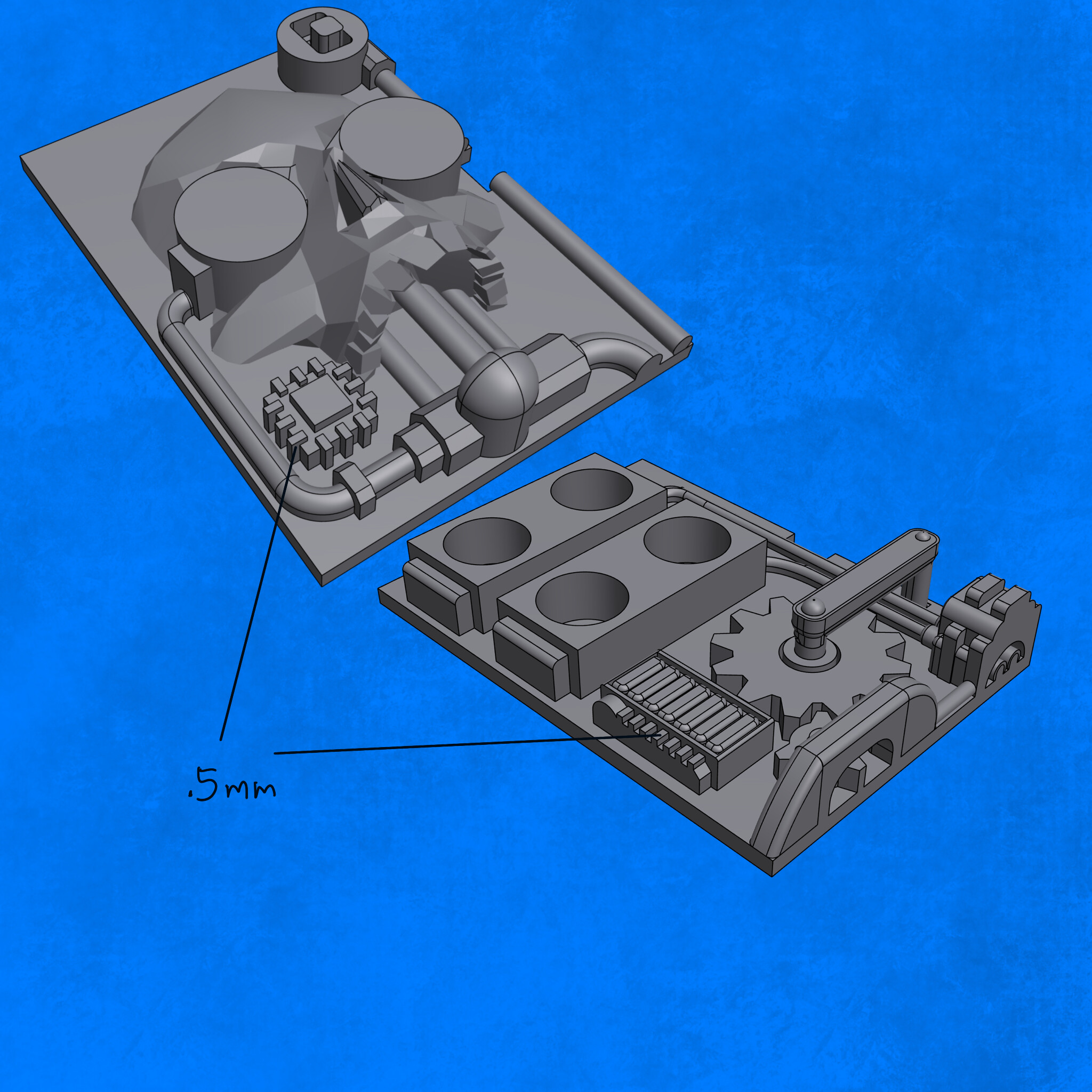
Yeah I design and build miniatures and I’ve found the smallest line I can do reliably is half a millimeter. See pic below. Although another poster above posted a great video about a woman making string art that I found interesting and uses a .41mm line, so a hair over the .4mm nozzle size just to make sure it is seen in the slicer. You should also use Arachne wall generator to be sure. I have my layer setting saved with Arachne on and no brimm because I use the Supertack plate. If your lines disappear after slicing it means that the printer cannot print them.
Now if you are trying to make something like bristles I haven’t tried that but if you do just make sure your line is at least the width of the nozzle and a hair so like .41. I imagine it will be more difficult to print vertically the higher you go.
For miniatures I am highly dependent on the Supertack build plate which I have the highest level of adhesion for pla/petg. Much better than the Cryo Frostbite plate and I am pretty saddened to see that the plate has seemingly been discontinued for the A1 mini as I throw them in the garbage and buy a new one after 1000h. The A1 mini plate was cheap to buy especially during sales.
To get really thin walls - less than the line width you need to switch the slicer to the Arachne wall generator.
For things like mesh you can go down to one line - but if it is a mesh grid then it will invoke a lot of head movement to draw the squares - so having two layers with one direction in one layer and the other direction in the other layer would mean long straight moves - so nicer lines - rather than lots of little moves which will mean less nice lines.
Personally for my tiny details models - I tend to keep walls to two print lines thick - otherwise they get too fragile. Or switch to the 0.2mm nozzle for parts of the model that need tiny details.
What a treasure trove of information! Many thanks to all who responded.
I have a 0.2 nozzle on order and will update this post on my progress.
A lot of good info in particular on line width.
For height, you can go below slicer defaults by adjusting the extruder limits in the machine settings.
But it gets tricky below 0.03-0.04mm layer height. The color-mixing option for example goes down to 0.02mm by increasing speeds to 350mm/s. Unfortunately, that makes it useful for PLA only atm.
 &

Your task would be much easier with an SLA resin printer e.g. Elegoo Mars.
I presume you know this, so I’m just asking what is the reason for not using one? They can be enclosed in a tent and vented to a window if you are worried about fumes.
I live for in an apartment and there is no way I could do resin printing here. There is no sink I could dedicate to it. Plus I don’t even want to deal everything required for resin printing. If I was at my mom’s house with access to the cellar workshop with the big sink there I might consider it. But there is no way I can deal with toxic resins in my apartment kitchen sink or bathroom sink. Plus I have extremely curious pets that are obsessed with knowing what everything is.
For the time being my 1/12 scale miniature business gets more orders than I can even handle and have to take preorders. My stuff has wired soldered electronics in it and everything. The only thing I am considering adding is the Morpho UV printer to print more detailed computer dash controls with things like odometers. The resin inks in that system are supposed to be different and less of an issue. I have expensive air purifiers in every room.
1/12th? Is that dolls house or parts for action figures?
I tried a .250 mm wall with a .4 tip. That math doesn’t work. It just printed nothing with me.
It all makes sense now.
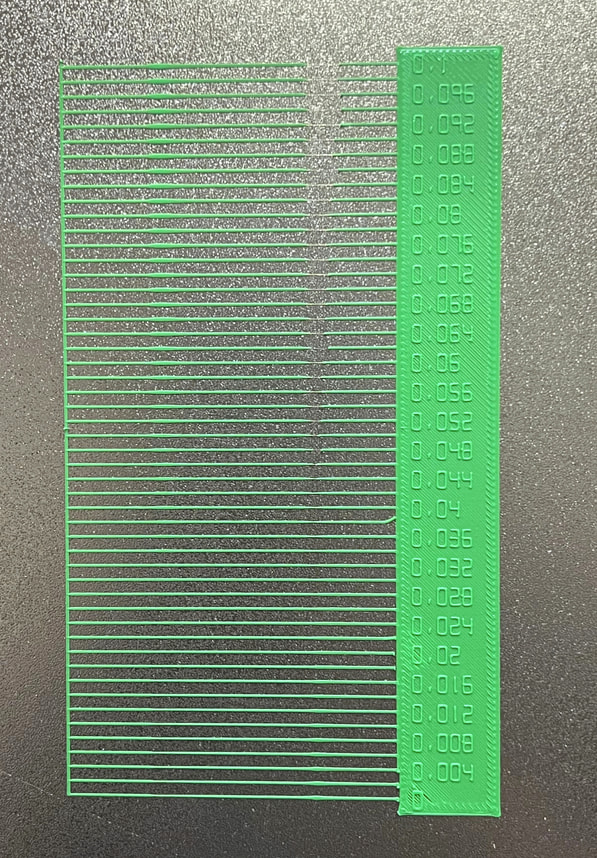
Hope this reply is in the right place. Here is my promised follow up on how thin is thin.
The thinnest lines that I could repeatedly reproduce with my H2S, 0.4mm nozzle, standard flow, and stock build plate was a line with a 0.4 by 0.4 mm cross section. Basically I used default settings except that I used the Arachne wall generator. Here are the results:
Many thanks to all that responded!