Hi everyone,
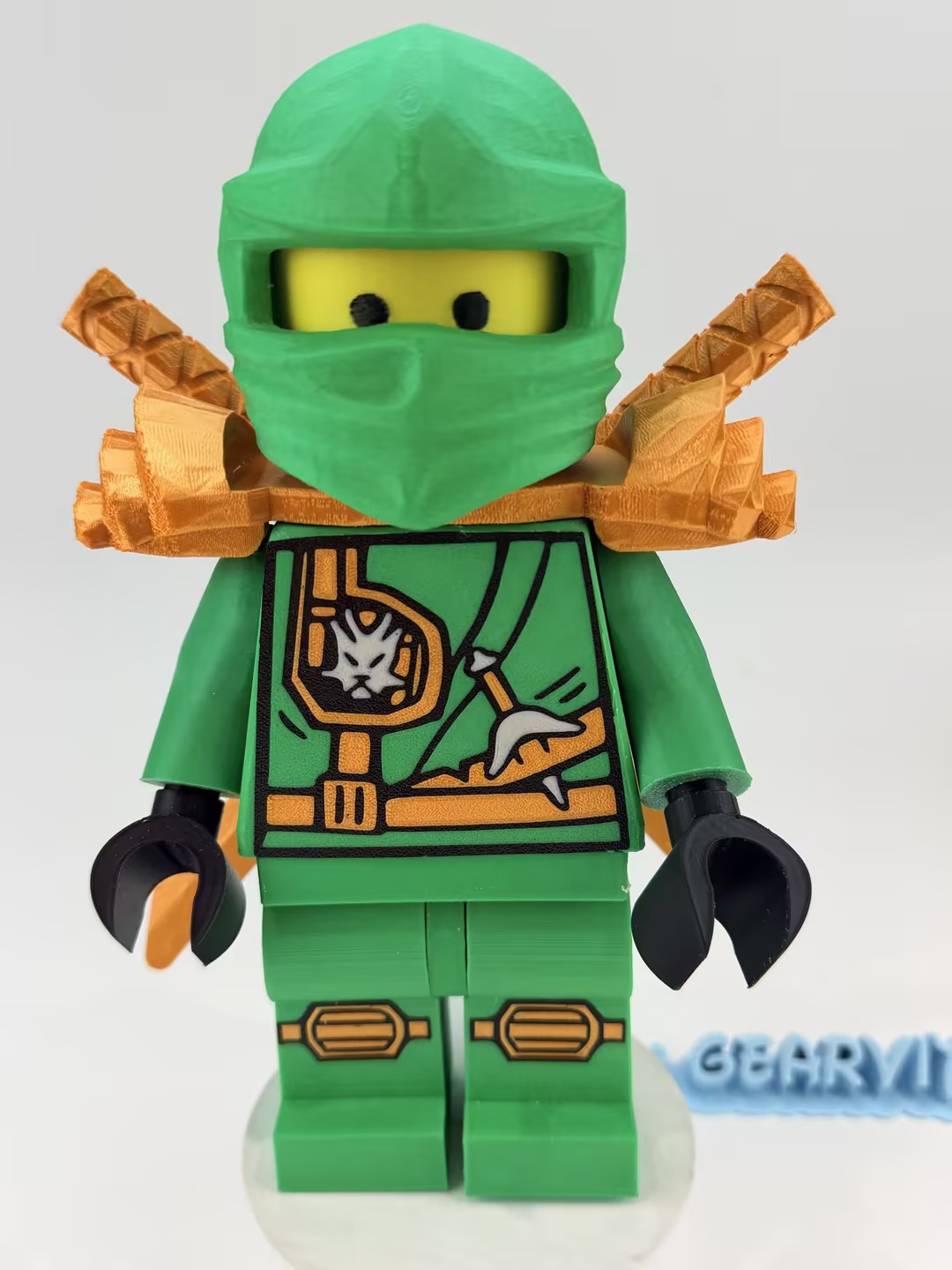
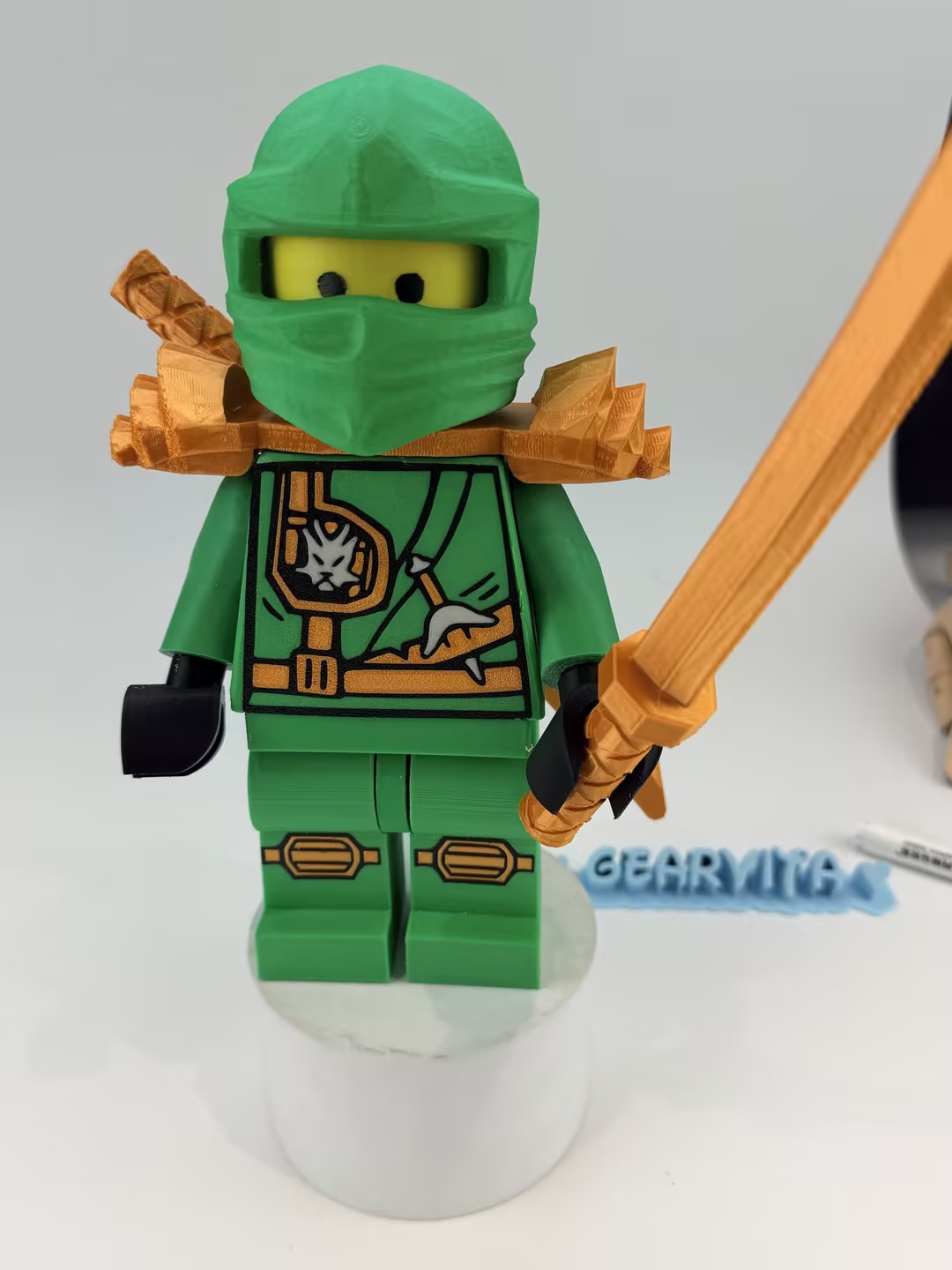
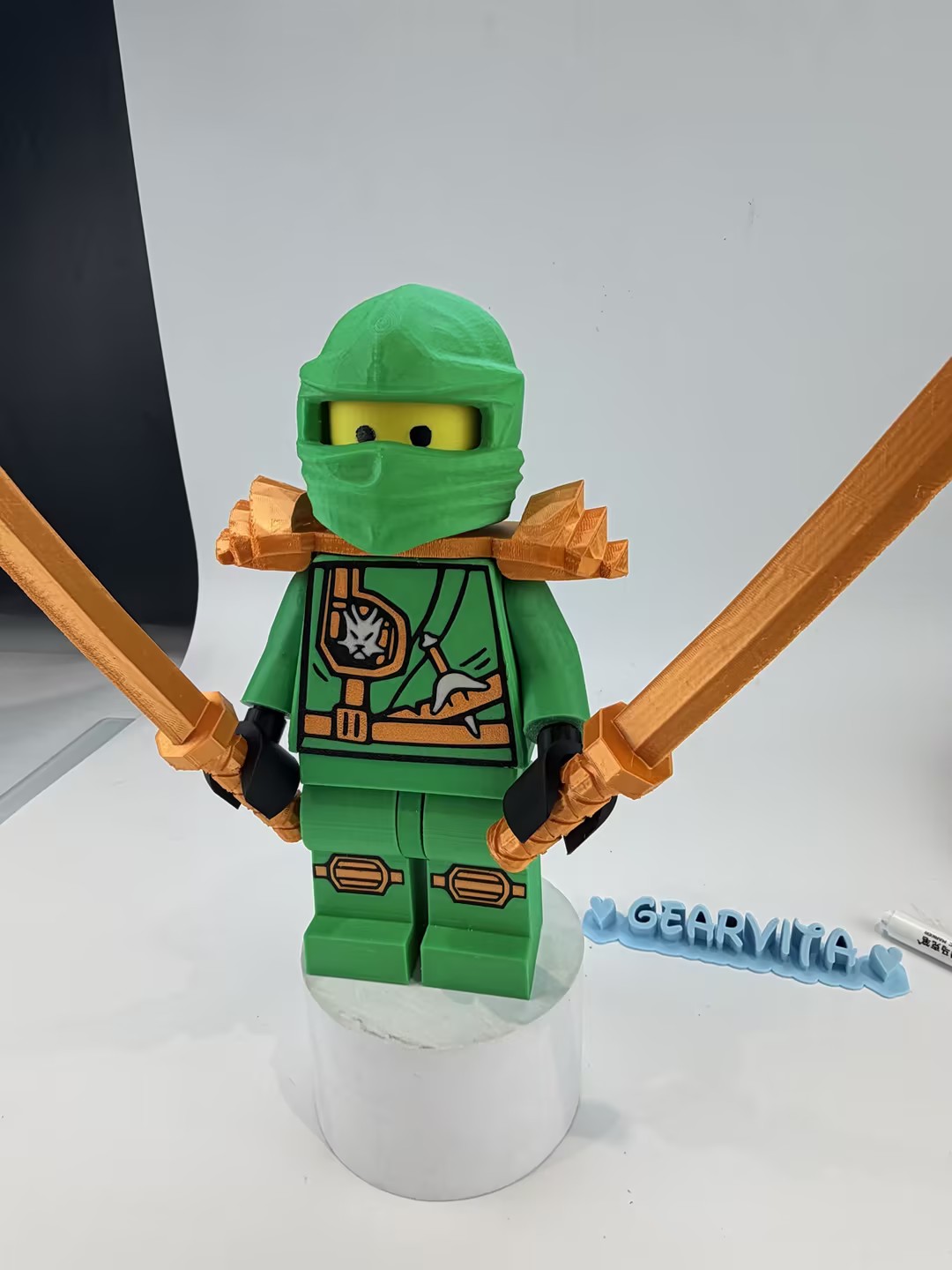
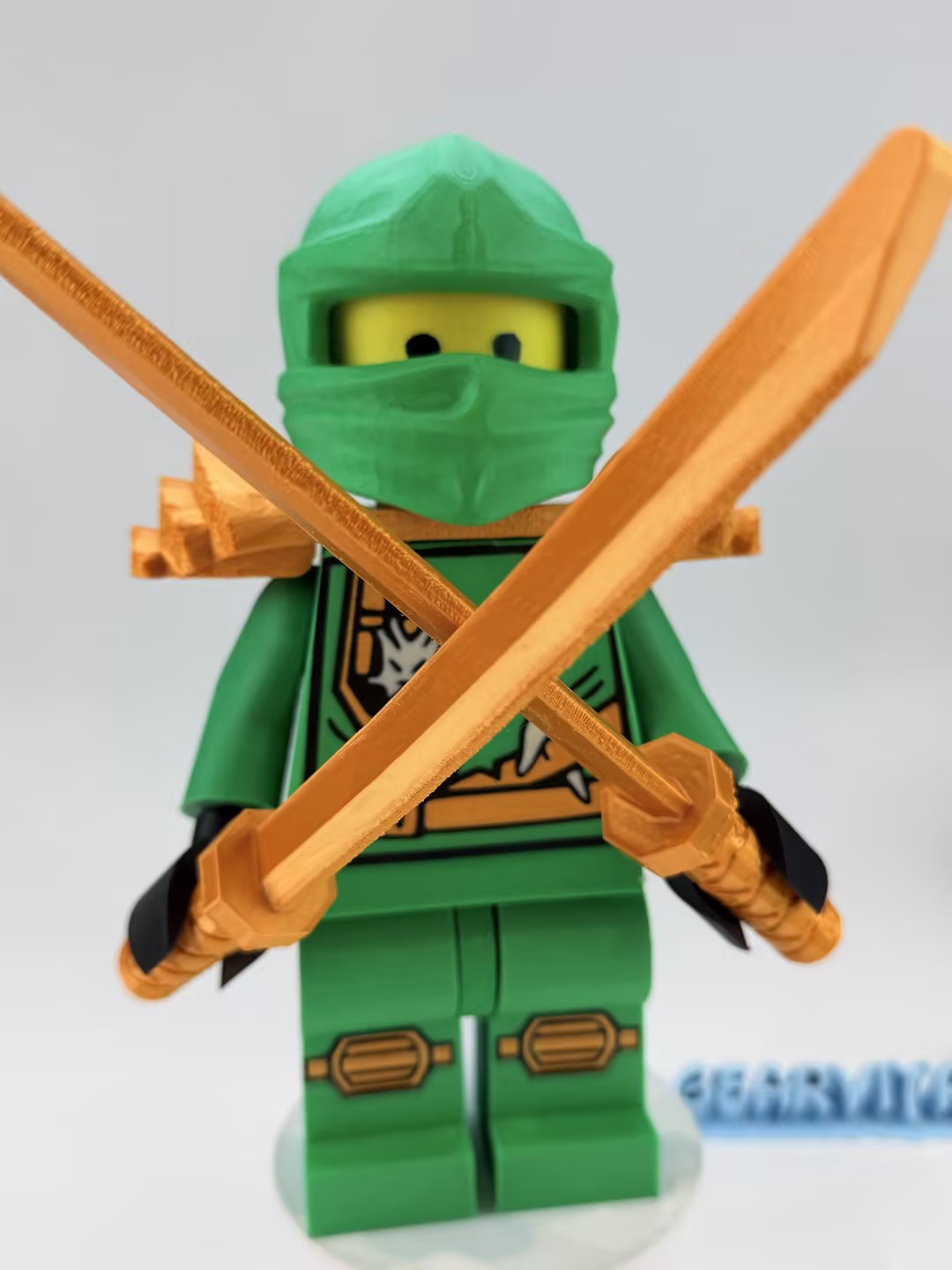
Wanted to share our latest large-scale multi-color print from the studio—a 23 cm (~9 inches) tall Ninja minifigure paired with 22 cm (~8.6 inches) dual katanas.
Since this model relies heavily on color blocking and snap-fit joints rather than post-processing paint, getting the right shade contrast and joint tolerances was the main goal of this run.
Filament Breakdown (5-Color Setup):
We followed the creator’s recommended palette, mixing Matte and Basic finishes to give the armor and hood more visual depth:
-
Bambu Green (PLA Basic): Used for the torso, arms, and legs.
-
Matte Grass Green (PLA Matte): Used for the ninja hood/mask to create a softer, fabric-like contrast against the glossy body.
-
Gold (PLA Basic): Used for the shoulder armor, knee accents, and the 22 cm katanas.
-
Black & Yellow (PLA Basic): Used for the facial details, hands, and crisp torso line-work.
Print & Assembly Notes:
-
Matte vs. Basic Contrast: Mixing PLA Matte for the hood with standard PLA Basic for the limbs really helps break up the large green surfaces so it doesn’t look like a single flat block of plastic.
-
Crisp Torso Line-Work: For the black outlines around the gold chest emblem, slowing down the first layer/outer wall speed slightly prevented any color bleeding between the green, gold, and black transitions.
-
Long Blade Stability: Printing the 22 cm katanas cleanly without tip wobble required good bed adhesion and slightly reduced speed toward the top layers.
For anyone scaling up articulated minifigure models like this—do you prefer printing the joints at 100% scale or tweaking XY hole compensation for tighter clutch power? Would love to hear your tips!