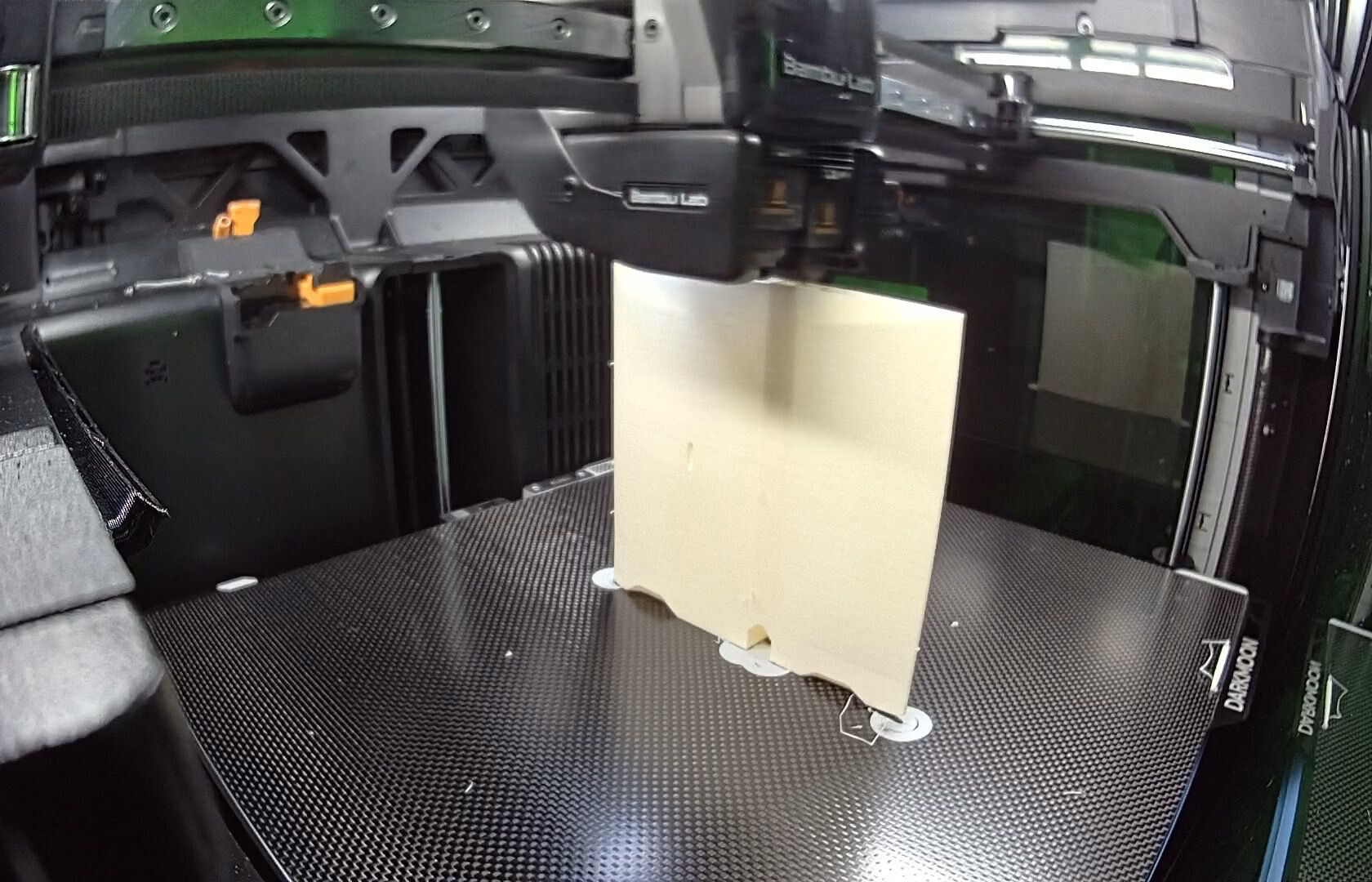
I’ve read that the part cooling fan should be off for LW PLA as it could impact on the foaming expansion.

I turn it off and within a few layers it turns back on again. I have unchecked keep fan on and have also unchecked cooling for overhangs, yet it still comes back on.
It’s affecting the outer print quality if I don’t catch it quick enough. On a 2hr print I don’t want to sit and watch just to check if the fan turns on.
You can change “Min fan speed threshold” from “30” to “0” and “Max fan speed threshold” from “100” to “0”
You could also set “No cooling for the first” to the total number of layers.
Either of those should keep it off for the whole print.
here is my 3mf for lw pla benchy
lw pla benchy.3mf (2.9 MB)
3DBenchy in all its glory — but it’s a poor calibration model for a filament like this 
I’ll admit, I printed one in ASA Aero too just because I could, but I don’t use that model to claim the profile is tuned. 3DBenchy is full of design traps that don’t reflect the kind of geometry normally used for PLA or ASA Aero prints.
My ASA Aero profile that prints RC parts perfectly doesn’t produce a flawless 3DBenchy at all. If I tuned the profile to make the 3DBenchy perfect, my RC parts would no longer print correctly — and vice versa.
it was my first pla areo print, i’m thinking of testing it with the breeze model x or the rafale by monkey brains rc. also, do you know a good benchmark print for lw pla?
Not good benchmarks since in this kind of 3D printing you may end upp with a lot of profiles using the same filament.
Some stores selling prints
- Eclipson Airplanes
Large catalog of 3D-printed RC aircraft. Frequently mentioned together with Bambu PLA/ASA Aero and offers ready-to-use Bambu profiles for their models.
 https://www.eclipson-airplanes.com/
- 3DLabPrint
A classic source for STL and G-code RC aircraft. Their models are often discussed alongside Bambu PLA/ASA Aero.
https://3dlabprint.com/
- PlanePrint
Develops ultra-light printable RC aircraft and explicitly recommends Bambu printers and PLA Aero for their latest designs.
https://www.planeprint.com/
- SoarKraft
Store focused on 3D-printed gliders and electric aircraft.
https://soarkraft.com/
ok thank you(25 characters)
As a friendly favor, do you happen to possess any ancient scrolls of wisdom about PLA Aero? 
I’m about to dive into that adventure in a few days to complete my noble ASA Aero saga.
It absolutely doesn’t need to be useful — pure entertainment, wild theories, or unverified printer folklore are all welcome! 
what are the ancient scrolls of wisdom about PLA Aero, i only have about 200 hurs of printing on a single p1s
I received my PLA Aero last night, so I’ll start testing it today.
I’ll run my standard calibration routine before printing anything, so I should have some results later today.
u can use this 3mf as a start, its approx 0.45 g/cm^3
lw pla benchy.3mf (2.9 MB)
Benchys is the worst model to test with.
I printed this wingprofile using PLA Aero
i did say it was just a starting point
If you run into even minor issues when printing foaming filaments—especially when using a higher foaming range—you’ll likely struggle to complete something as simple as a 3DBenchy. In my experience, it either over-extrudes and throws small bits of filament everywhere, leaving a mess, or it fails before the print even gets going.
Starting with a hollow calibration cube and focusing only on the walls is usually a safer first step.
I normally run the upper end of the foaming range for both PLA Aero and ASA Aero, and that does need a bit of adjustment on my side before a 3DBenchy turns out in a way that’s actually useful.
Still, every idea moves things forward, so it’s worth exploring.
so 3 bottom shells 0.8 mm thick walls 2x2cm cube for 0.4 nozzle?
If you’re printing a calibration cube, I would skip the top and bottom layers.
The number of walls doesn’t really matter, as long as you can measure the wall thickness accurately.
This is a part from Eclipson that I made yesterday.
I printed that plane in both ASA Aero and PLA Aero, and in my case ASA Aero came out lighter.
well asa has a lower density than pla already, after making it foaming its still going to be lighter than foaming pla. is asa areo hard to print compared to pla areo?
Once you know how to print ASA and PLA, they behave like any other standard filaments. However, at maximum foaming, ASA tends to have slightly weaker first-layer adhesion compared to PLA.
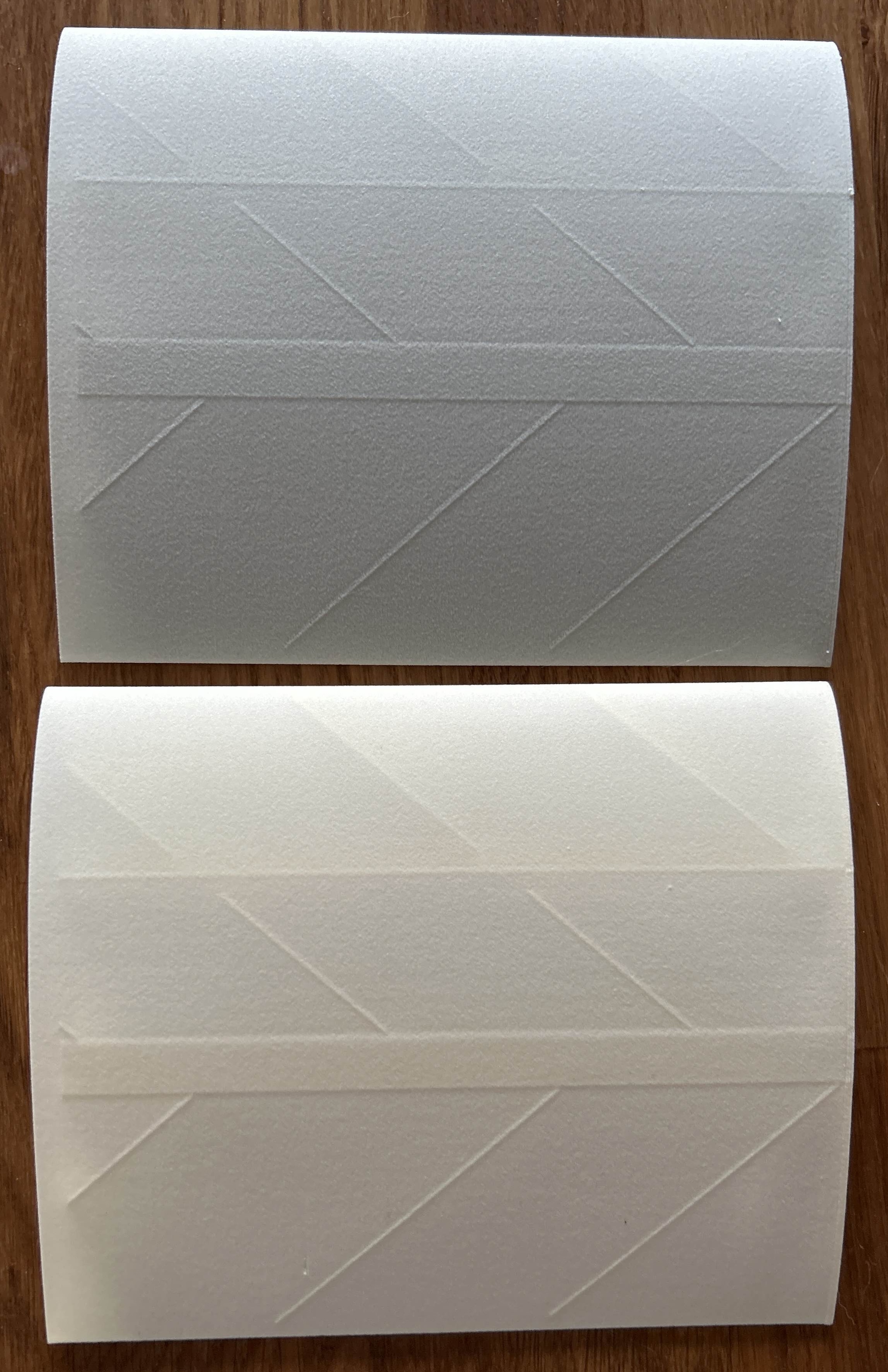
In this picture, the top part is printed in PLA Aero and the bottom part in ASA Aero. Both use the same line width and vase mode; the only difference is the print speed.
oh, ok(25 annoying characters)