Note - @krellboy has a good point and there is some misconception in this post. See down thread for details but take this post with some salt…
I’ve been saying over and over that humidity can be used as a stand-in for moisture content and can be used to decide if filament is dry enough for printing or not. Not everyone believes me.
Turns out the plastics industry has the same problems we do and they already solved how to deal with it. Spoiler - they measure the humidity of air around the pellets to determine moisture content. It works.
This unit doesn’t measure humidity directly. What it does is convert the water in the air to hydrogen and measures that so they can have answers quick. Hygrometers respond relatively slowly.
But they are indirectly measuring the humidity. That is where the hydrogen comes from that they do measure. There’s just a chemical conversion step in there. But what they are ultimately measuring is the humidity surrounding the plastic to determine water content of the plastic. And they claim it’s as accurate as a Karl-Fischer titration (the gold standard in moisture).
They aren’t measuring the water vapor directly but the hydrogen evolved from water vapor from a chemical reaction. Bam! It’s the same thing with a minor technical difference that gives them results faster.
The HydroTracer 3 sells between $14,000 and $23,000 depending on accessories. If you don’t mind waiting 30-45 minutes you can do the same testing on filaments for about $10 for a Praki thick-walled sealing container and a cheap hygrometer. It might not be as accurate and certainly is slower, but the principle is the same. Humidity tells you moisture content. They just go a step farther to convert to actual moisture content and get the numbers faster.
From their web page - it’s a schematic of how their instrument operates. They let the plastic equilibrate with the air and then indirectly measure humidity. But make no mistake - the underlying principle is using humidity to know moisture content.
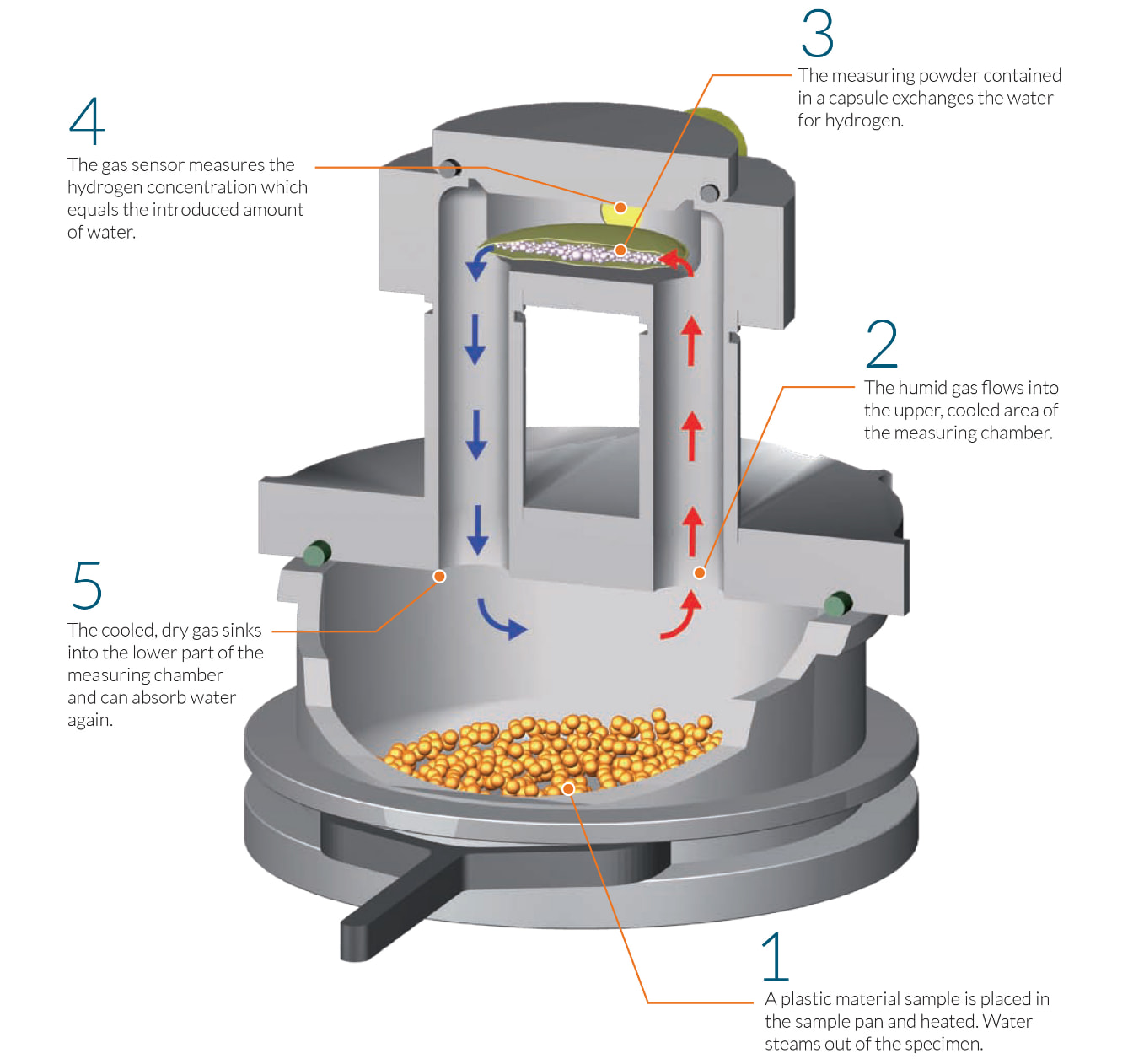
So for those who doubt it works, companies drop thousands of dollars on testing equipment that does the same measurement albeit much faster. But we can do it on the cheap if you don’t mind the 30-45 minutes you have to wait for a hygrometer to settle. You can even use a ziplock bag instead of a Praki. The plastic bags are just subject to water vapor diffusing across the bag walls and affecting the measurement if you leave them longer than necessary.
And they also appreciate how controlling water content (not just minimizing it) is key to good products, strength, warping, and surface issues.
They convert back to actual water content because they can. We can’t because manufacturers don’t provide the information we need. But it doesn’t matter. Humidity value proportional to water content or actual water content. Same thing.