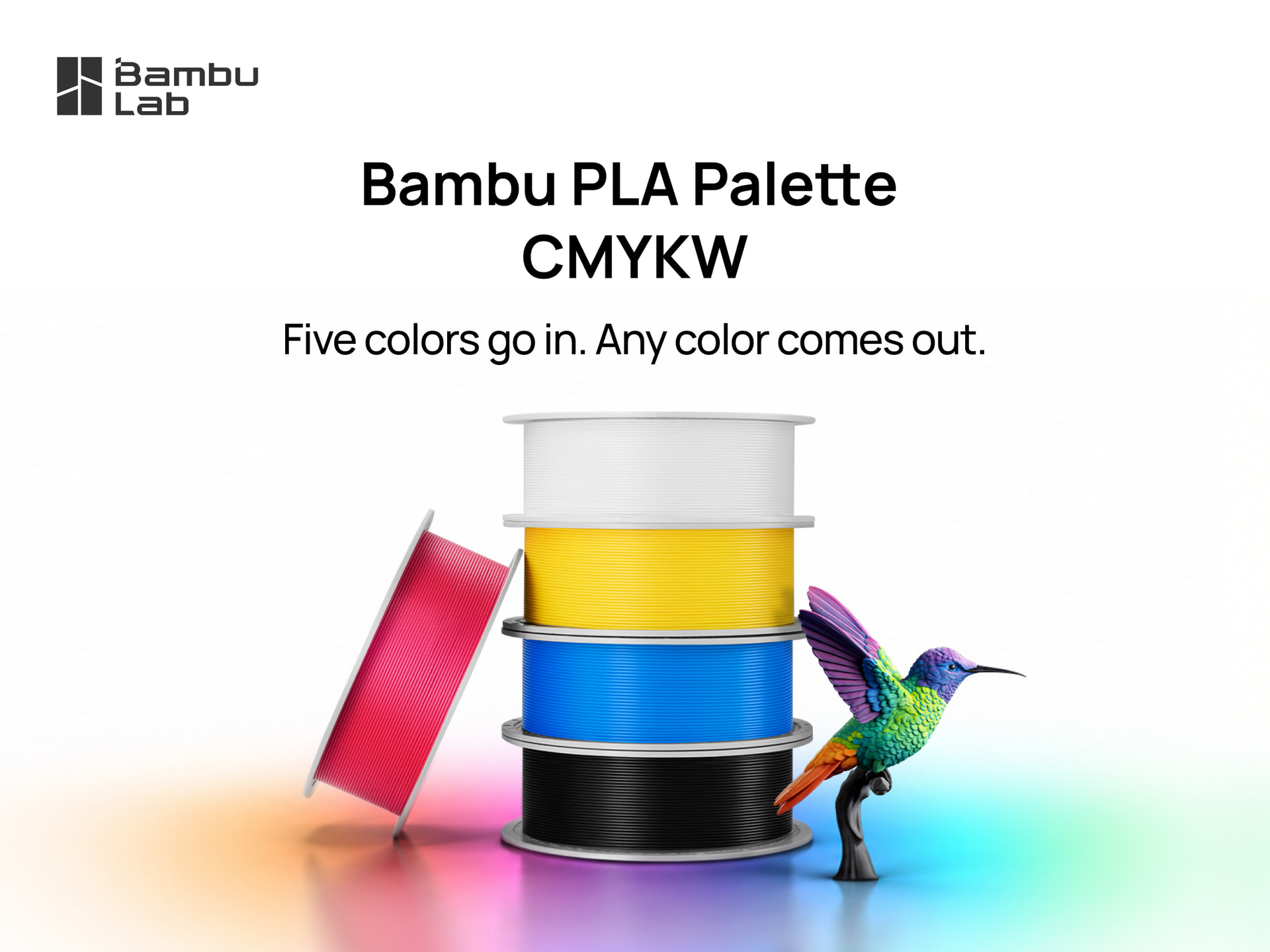
Bambu Lab PLA Palette CMYKW is more than five regular spools put in one box. It features a formula tailor-made for color mixing, to achieve vibrant and sophisticated colors with clean boundaries.
Entire color library in one printer
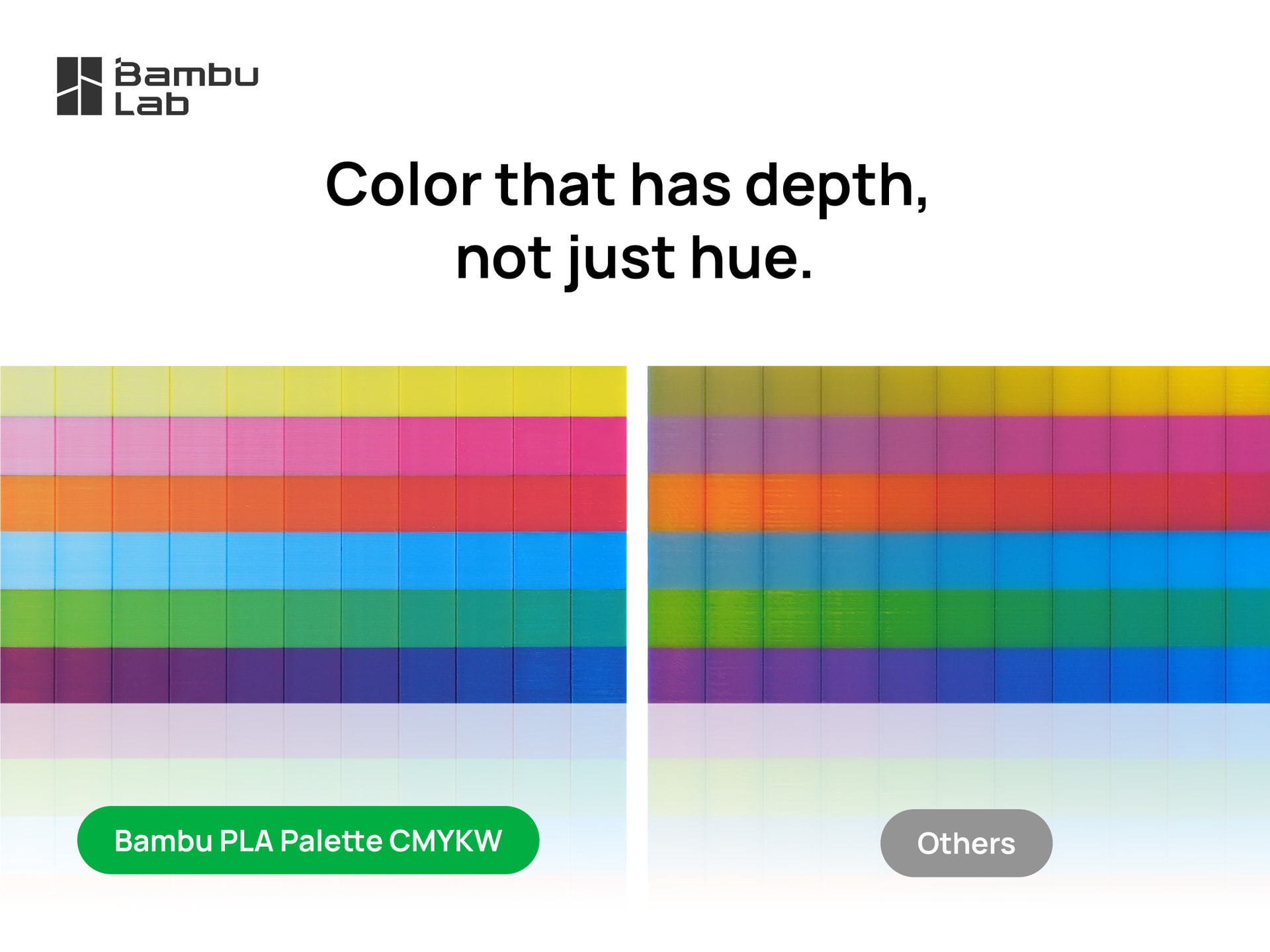
PLA Palette uses just five carefully chosen base colors – selected so that every pair blends evenly – to unlock 180+ color combinations through layered mixing. Having a wall of filament is cool, mixing the equivalent from just five spools is even cooler.
Most multi-color sets stack translucent filaments on top of each other, and everything turns hazy. PLA Palette pairs four opaque bases (cyan, magenta, yellow, white) with one translucent black. The opaque bases – built on the PLA Basic formulation with precisely dosed pigment – hold under 1% light transmission at a 2mm wall, delivering full saturation and clean coverage. The translucent black works like ink wash: its light transmission falls off predictably with thickness, so shadows deepen naturally as layers build.
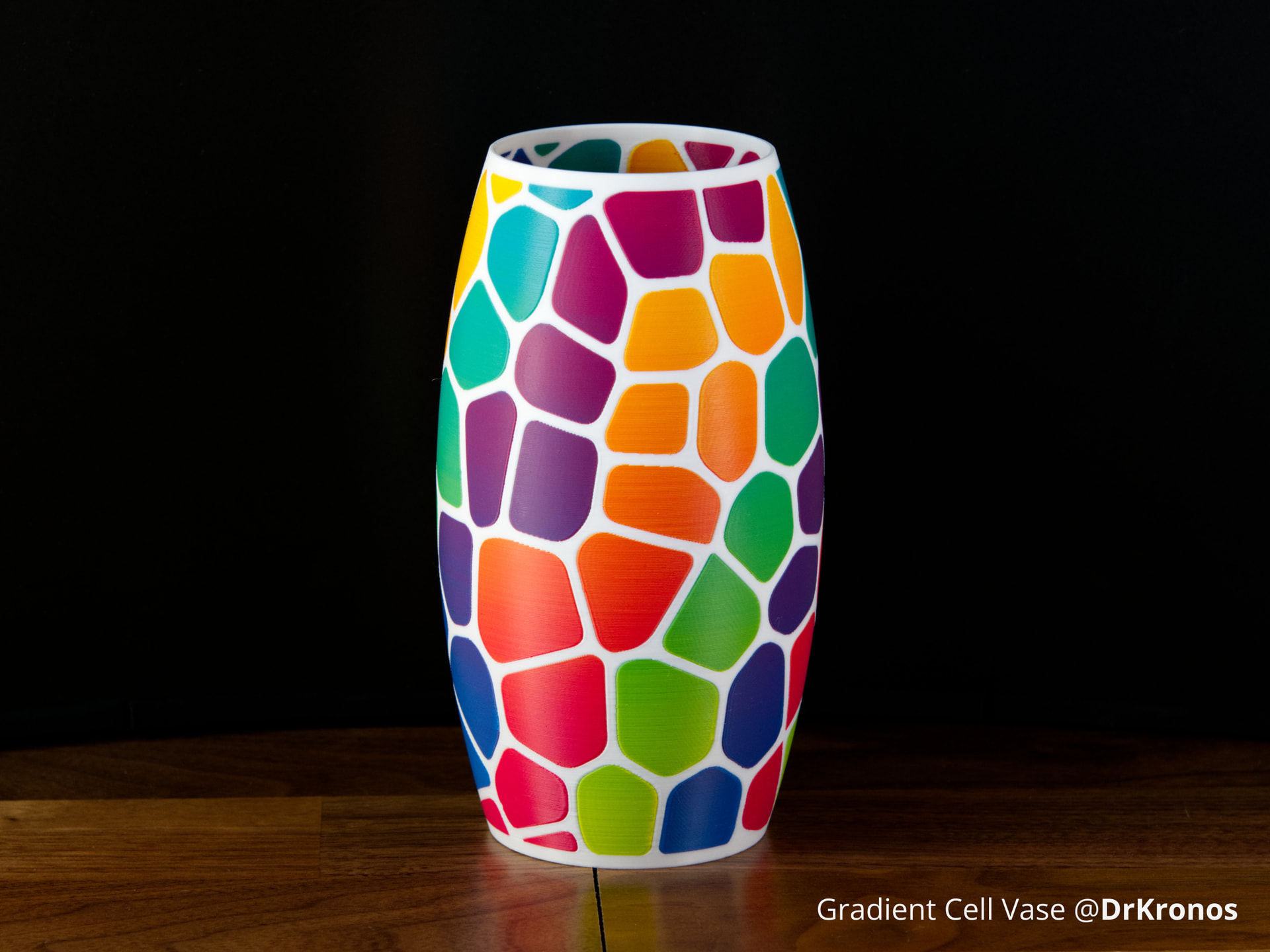
Gradient Cell Vase, created by u/DrKronoglopolos on Reddit.
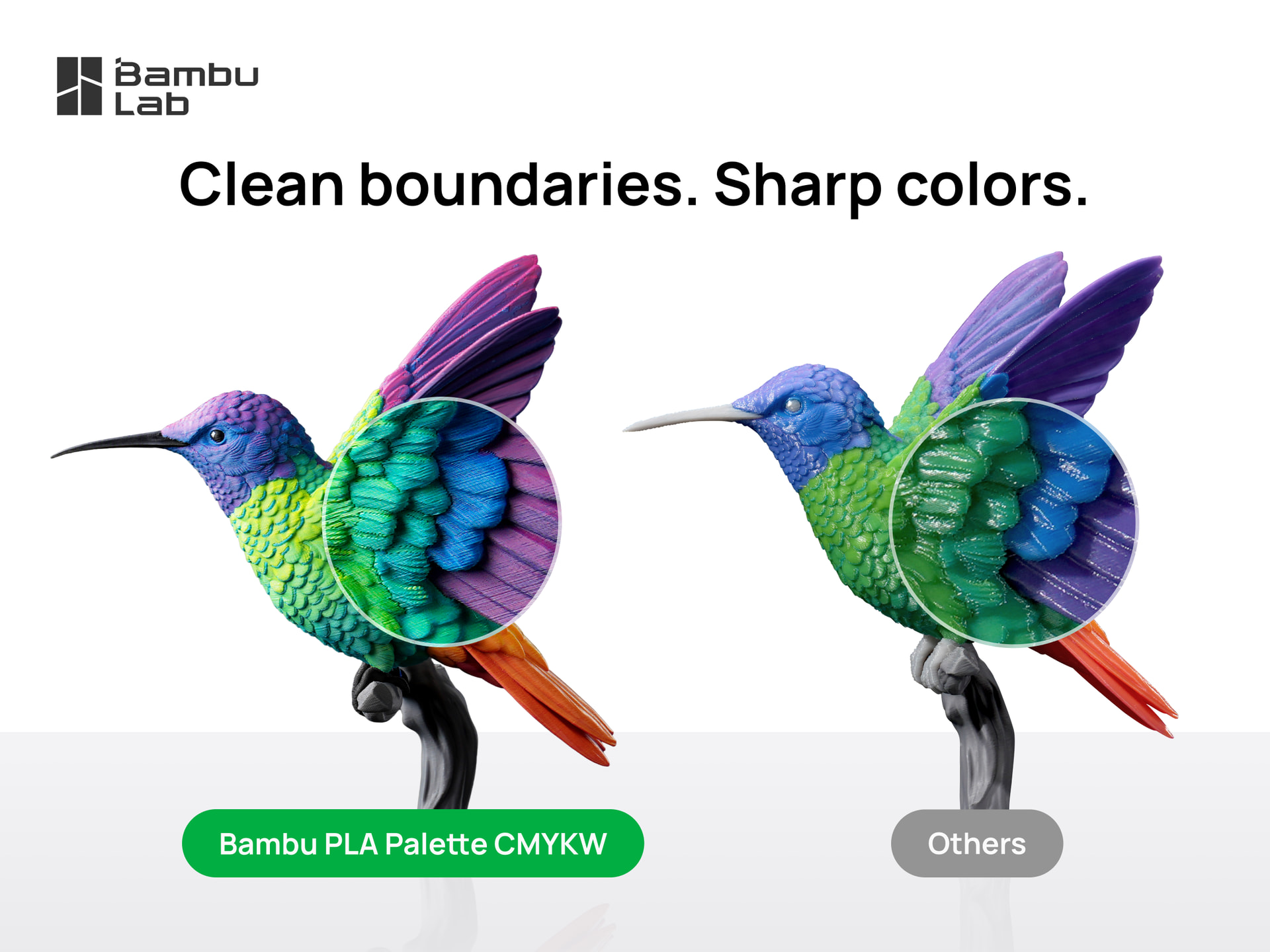
Clean color boundaries, swap after swap.
Layered color only looks good if the colors stay separated. PLA Palette is built on the PLA Basic base resin rather than a conventional translucent formulation, which significantly reduces stringing and ozzing during retraction and extrusion. Even through dense color changes, transitions stay sharp – no wisps, no bleed, no muddy edges.
See the blend before you print it.
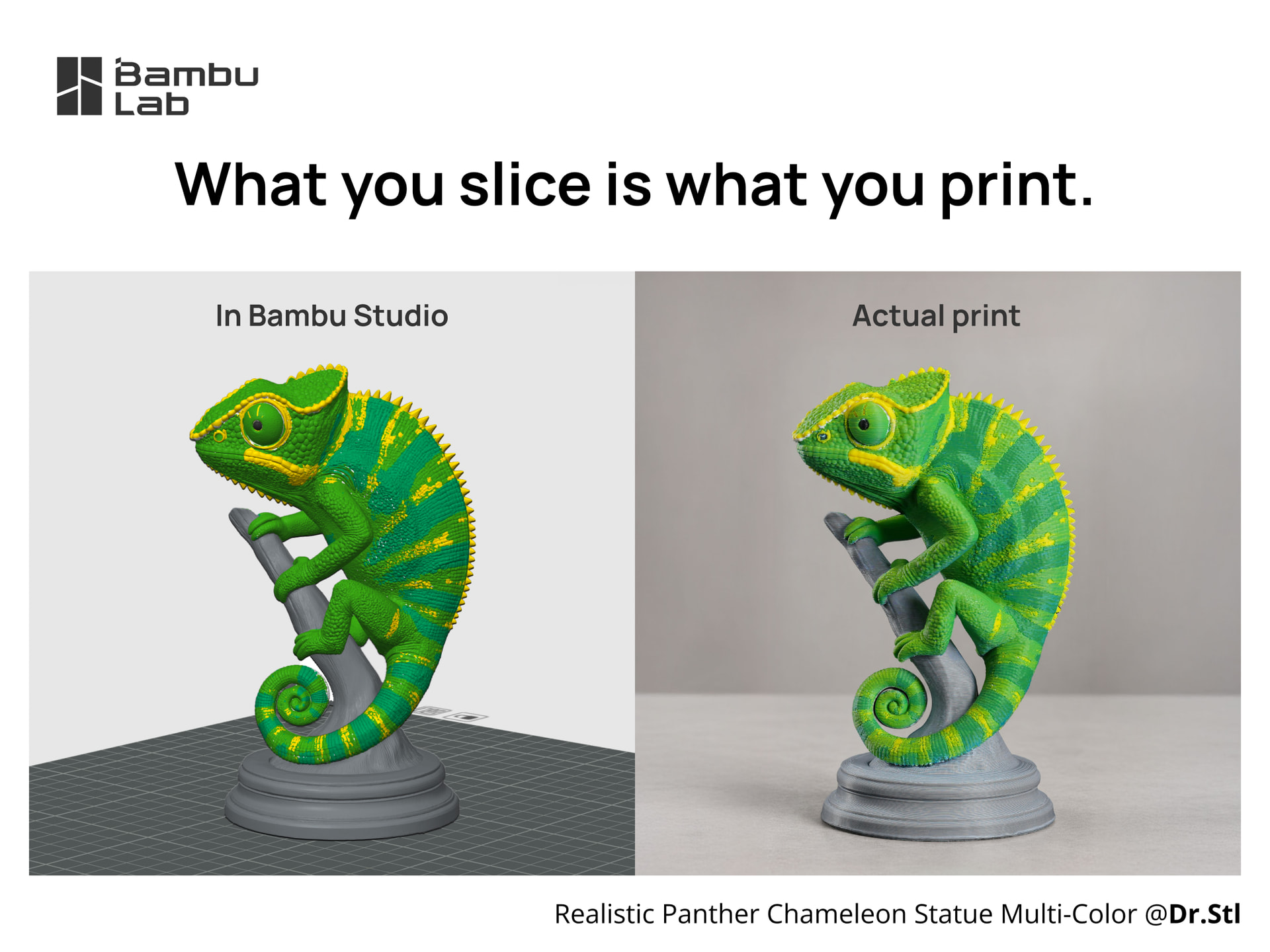
No dialing in ratios. No test swatches. Bambu Studio ships with a full PLA Palette blending database, so the color you see in the slicer preview is the color that comes off the plate.
Show a zoomed in top view of a slope of let’s say 1º printed with this technology in let’s say green.
Since it’s layers, it’ll show the layers and not a solid color. And stuff like this even on a H3C is going to waste a ton of filament into a prime tower, and even with fast changes, all those thin layers will still add up to a lot of time (and wear on the printer).
Now 6 simultaneous extruders doing each one color into 6 hotends feeding in a small heated mixing chamber into a single nozzle: now that would be an interesting setup if you can pull it off. Or if it’s too big to move about on a XY head (it likely is):
6 extruders into a mixing chamber that extrudes 1.7mm filament that goes into a PTFE tube to the printhead. It’s going not to be fast to change colors, but to add odd colors into a print, it would go a long way. Cooling the created filament: heatpump with the 6 hotends could help a lot.
A CMYK Bambu Resin machine that is home safe or can do all in one wash dry and clean would be my dream. Im practically surrendering my bank account at that point.
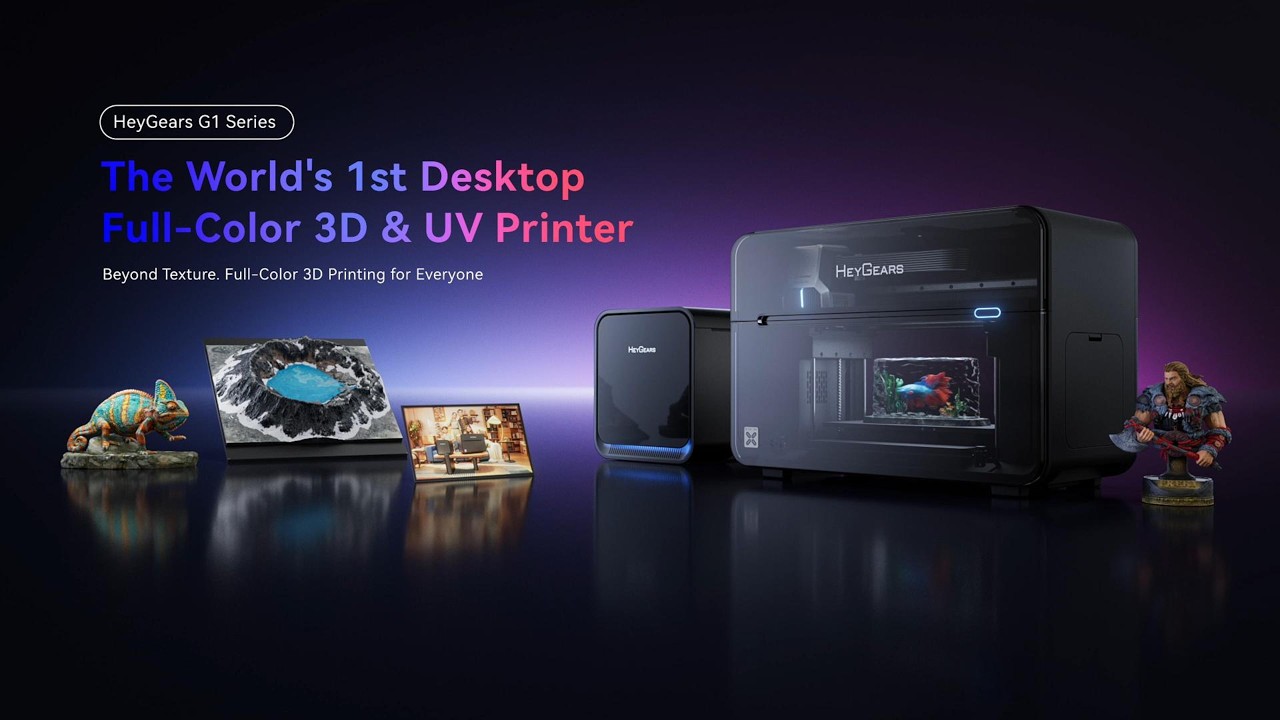
If you really wamt a real full color spectrum, get a UV printer. Then you’ll save yourself the trouble. Prices have now dropped to $3,200 - still a lot, but significantly cheaper than a year ago, when they were in the $10,000 range.
The advantage is that you can also print transparent material.
Problem is with mixing the filaments properly and not ending up with multi sided anisotropic filaments that have different colours of different sides.
But I agree, most of what I print are fine, detailed items where alternating layers would become visible. An alternative to dithered layers would be checkerboard dithering of top surfaces - that would remove anisotropic appearance but it would still look uneven.
Alternative to that is shell print, where there is base colour and a contour by transluscent filament. This method could add uniform large surfaces with that colour toned base colours (or just diffusive layer that blurs the underlying layered colours).
Great technology, and those prices are becoming interesting.
For figurines that require a lot of detail and colors, they are great, but the material choice is limited.
Like you said, every technology comes with its own strengths and weaknesses. When it comes to bang for the buck, FDM is still king, especially for technical and high-performance materials. It doesn’t get much cheaper than this.
Personally, I see both technologies working hand in hand rather than competing with each other. If someone can successfully bridge that gap, it would open the door to some truly exciting new applications.
FDM + UV = Instant Win
…not just because of the colors, but also because of the new possibilities they bring to the table.
Interesting thought. The materials definitely require some kind of compatibility in temperature and adhesion.
On the other hand it feels like you are letting go of the strengths of the individual materials. I think a hybrid solution of materials would be better.
But who knows what interesting blends we could think of.
Creating a series of CMYKW filaments makes sense. I imagine it would be great to introduce that same lineup in different types of materials, like matte PLA or PETG. Has anyone tried mixing other colour sets together? What are the results of mixing different translucent colours? Can you get a good series of grey colours by mixing black and various grey together? Please keep in mind my level of jealousy/envy may go up if you have mixed and come up with something wonderful.
Well the existing system can make almost all the colours. By using different colours it would optimise to make certain colours need fewer changes, or allow more shades of those colours with mixing, at the expense of making others worse.
The “translucent” black looks very opaque, probably is only as translucent as Prusa’s PLA ColorMix lol. Makes sense everything is tuned for the intended purpose, wish Bambu would make a real “PLA Translucent” black tho.
UV ink dirties its bed so given current tech I don’t see it going atop FDM beds being a great combo… (without severely limiting what you can do with it). 3D texture can take quite some time so separate machines will also be more efficient. I agree if they can combine it can go wildly full 3D. For now, good ol’ jig game…
Personally I’m waiting for 2nd gen of these machines esp. with how critical a stable ink supply is.
I forgot which reviewer it was but they did a print but instead of using the palette colors they used two colors that were similar to flesh tone. And the way they Blended made the skin look really good.
I would not recommend trying this without checking slicer preview speeds first.
When color “mixing” first became available in Studio, I tried it with PETG on a large part. I was rather surprised the print to have what looked like completely shredded infill. Checking the slicer preview, I noticed speeds for the sub-layer going to 350mm/s, well above any limits I set in the speed tab. So no surprise it did not work with my Generic PETG.
Taking an educated guess from my work on minimum layer heights, the 0.02mm minimum sub-layer height is well below the limits I found in my X1 and H2C tests as the extruders in those machines are not able to sufficiently control such low-flow conditions. So to make it manageable in the sub-layer, flow needs to be increased by, for example, ramping up speed.
With the H3C’s new extruder, flow control may be better though. Still not a guarantee that the slicer will speed up less though. But I’d be interested in minimum layer performance of the H3C compared to the H2C.
And of course, fibre reinforced, large particle loaded and probably even pure long chain polymers will not manage the 0.02mm sub-layer.
&
Addendum: But of course you can turn it around with for example modifiers. A stack of, for example, alternating TPU and PETG can be tailored to achieve desired stiffnesses. Can be interesting for tuned vibration isolators, directional stiffness controll, length reduction based stiffness profiles,… Model development is a bit more involved though…


 &
