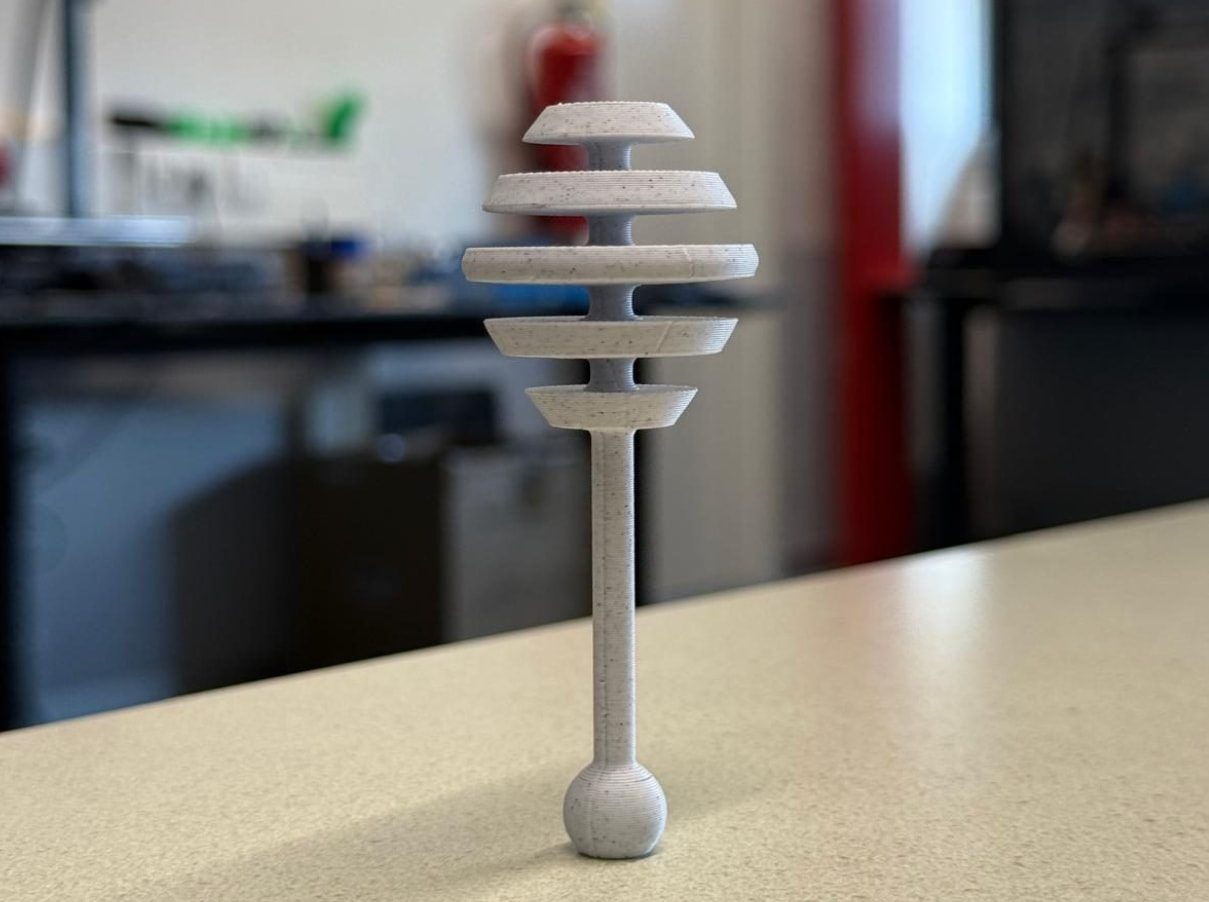
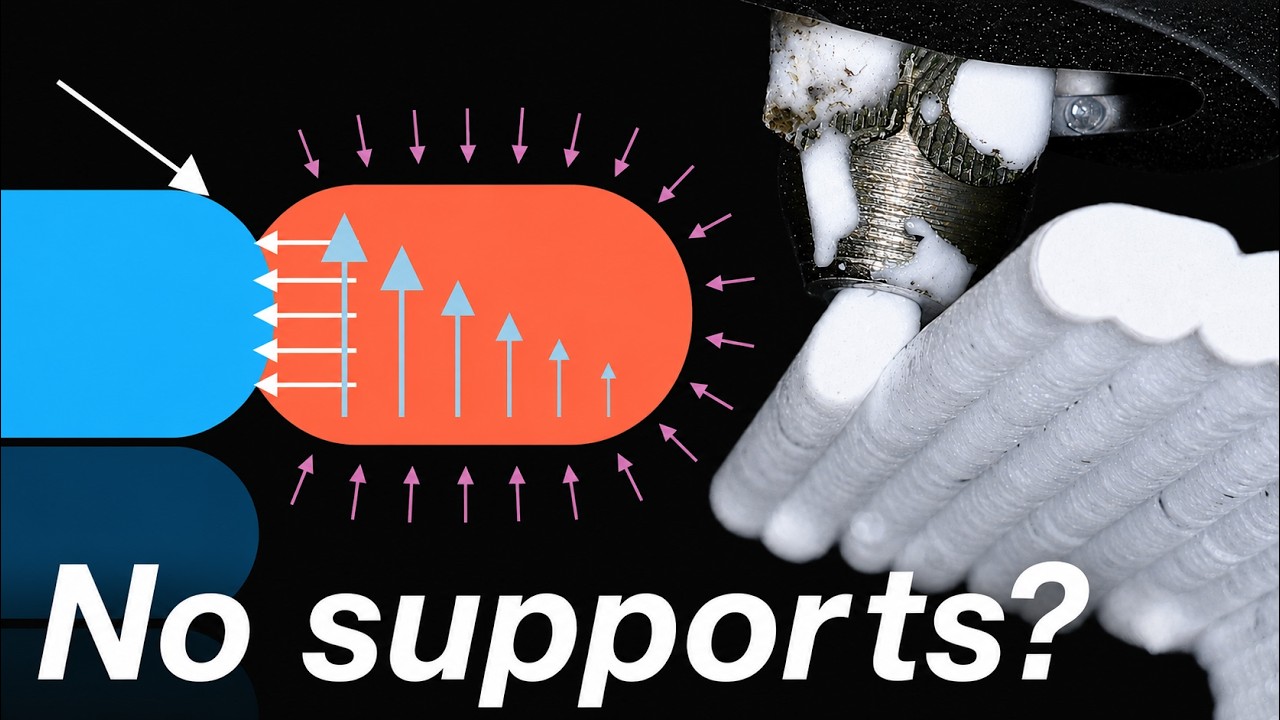
Support-free horizontal overhangs are typically seen as impossible on typical 3D printers, but that limit comes from how slicers plan toolpaths rather than from anything the printer cannot physically do. In this video, I explain how wave overhangs work - a path-planning strategy where the extrusion grows inward as a wave so each bead anchors to the one before it - and use microscope footage and animations to show why the material holds in open air. The result is an open-access paper and two open-source slicer forks that let you print 90 degree overhangs without supports on a standard FDM printer.
I first saw this using FullControl’s website FullControl - Unconstrained Design and was amazed at what we are able to print out with overhangs with NO supports. Very interested in this advancement in slicer technology and look forward to up and coming developments with slicers handling this tech. Orca slicer’s Wave Overhangs is cutting edge slicer in this tech.
After receiving a degree in Engineering, I went directly into Software Engineering when I graduated from University/College. I appreciated your willingness to educate and use terms that I once understood, yet needed a refresher without seeing it too simplified or an arragant approacht to prove how bright you are.
My printer is currently down, and I am waiting on a part order. I have gone to the site and will attempt one of my designs which has a small 180-degree arc, yet the slicer (Bambu Studio) generates a large number of tiny supports which leads to a large number of marks on the curves.
Then I have some bridging that always warps when connecting in the middle.
l’ll post there and here when I have a chance to print again.