Printing Delicate Details – What I Learned from My Wall Light Designs
Over the past few months, I’ve been designing a series of decorative wall lights. Each design brought its own challenges, but one problem kept coming back: printing extremely thin and delicate details reliably, without them lifting off the build plate or being displaced by the nozzle.
Two examples are my Christmas wall light Santa’s Ride, featuring the delicate silhouettes of Santa’s sleigh and reindeer, and Pillars of Creation, which includes some particularly thin decorative elements.
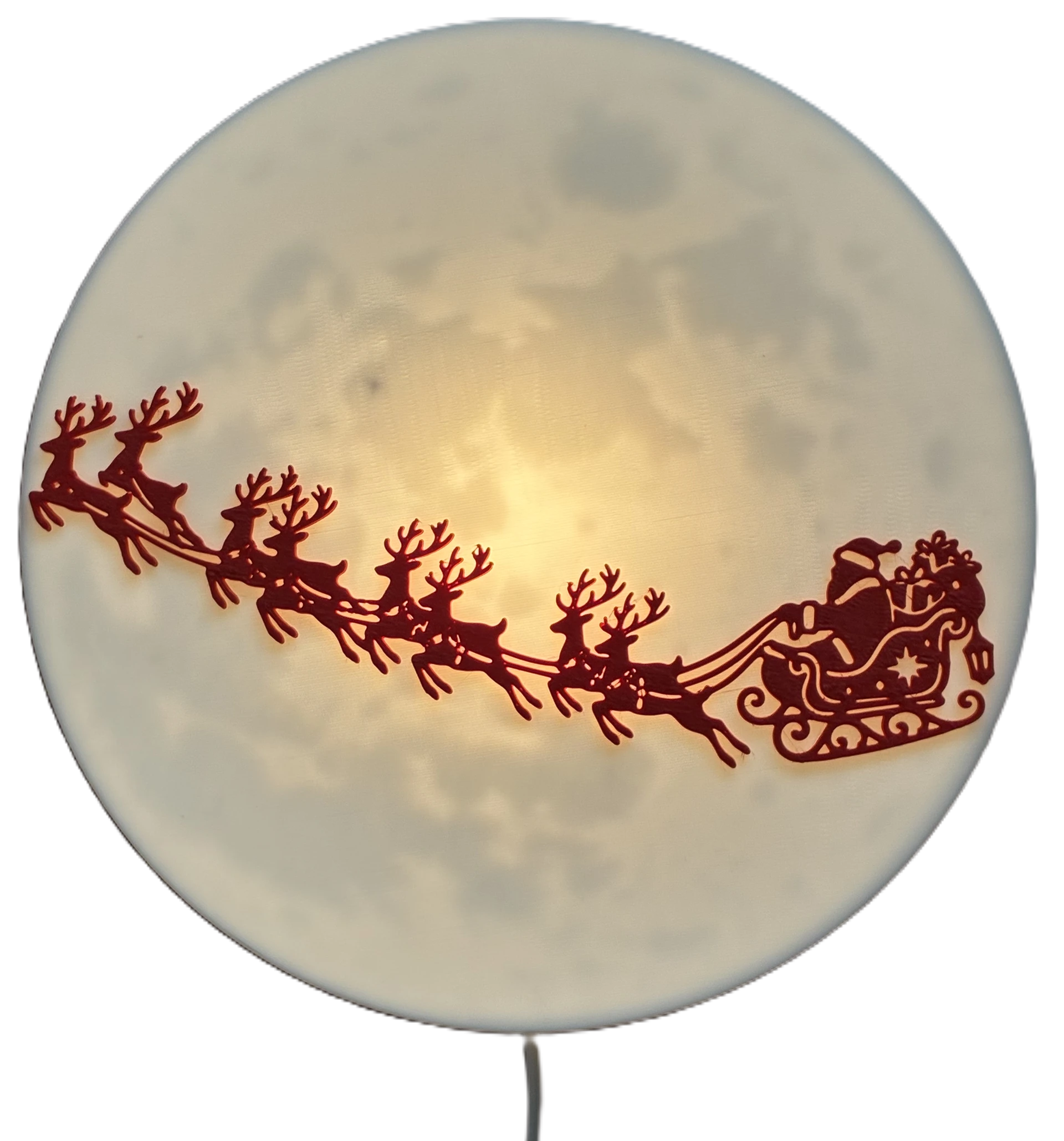

After quite a few attempts and several failed prints, I finally found a combination of print settings that worked really well for me. I’d like to share what I learned.
My Printer and Build Plate
For my wall lights, I use the following setup:
- Printer: Bambu Lab A1 Mini
- AMS: None – I print without an AMS
- Build plate: Smooth PEI Plate
- Nozzle: 0.4 mm
- Layer heights: 0.16–0.20 mm
My Smooth PEI Plate has been in use for quite some time and has noticeably lost some of its adhesion. It really needs replacing. This made printing extremely thin and delicate parts even more challenging.
The Challenge: Details Just One Layer Thick
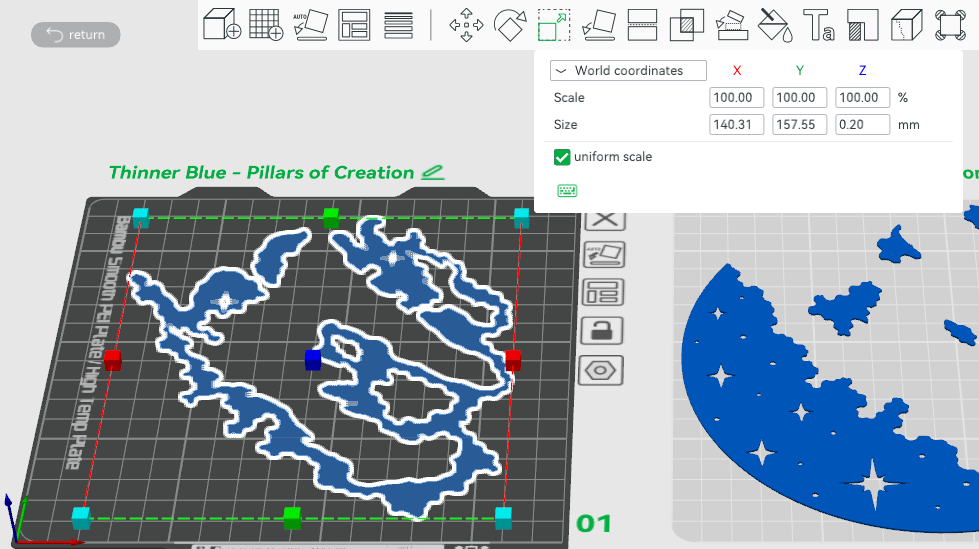
In my Pillars of Creation wall light, one of the flat decorative components is only 0.2 mm thick. At a layer height of 0.20 mm, that’s exactly one single printed layer. Printing parts this thin isn’t easy. With intricate outlines, even minor adhesion problems can cause sections to lift off the build plate or get pushed out of place by the nozzle.
I wanted to find out which slicer settings could make printing these delicate components more reliable.
My First Step: Reducing Print Speeds
My first approach was to reduce the print speeds.
For these delicate parts, I used the following settings:
- Initial Layer Speed: 40–80 mm/s
- Acceleration: 3000 mm/s²
- Speed for Other Layers: 100 mm/s and less
These adjustments already improved the printing process, but they didn’t completely solve the problem. Importantly, I applied these changes only to the thin and delicate components in my print profiles. The larger and more robust parts didn’t require these adjustments.
The Settings That Made the Biggest Difference
The real breakthrough came when I changed two additional settings:
- Wall Loops: 3
- Order of Walls: Changed from Inner/Outer to Outer/Inner
This combination made a noticeable difference in my prints. The delicate structures printed much more reliably, without lifting off the build plate or being displaced by the nozzle. Especially with extremely thin, single-layer details, this was a great result for me.
What I Learned
Of course, my build plate still needs replacing. Good bed adhesion remains essential, and no slicer setting can compensate for every possible problem.
Nevertheless, this experience reminded me of something important:
The condition of the build plate, surface adhesion, filament moisture, and small differences in individual printer setups can all have a significant impact on the final result.
To me, this is one of the general challenges of sharing print profiles. A model that prints perfectly on your own machine might not necessarily print just as reliably under different conditions.
That’s why I believe it’s worth making print profiles a little more robust, especially for delicate models, rather than optimizing them only for your own ideal setup.
I’m not claiming that my settings will produce the best results on every printer. I also can’t say for certain which of the last two changes had the greatest impact. But together, they made a clear difference in my wall light prints.
I’d Love to Hear Your Experiences!
Have you experienced similar problems when printing extremely thin or delicate parts?
Which settings helped you? Do you prefer Outer/Inner wall order, more wall loops, or completely different adjustments for these kinds of prints?
I’d also be interested to hear how you account for different printing conditions when creating profiles for other users, especially when they might have older build plates or less-than-ideal setups.
Looking forward to hearing your experiences and tips!
Best regards,
FormativeForge