Hi Bambu Lab Team,
I would like to suggest a concept for a future dual-nozzle printing system that could potentially reduce print time.
To clarify: I’m not suggesting that the current X2D can necessarily do this through a software update. This is a concept for a future Bambu Lab toolhead/printer architecture together with new slicer logic.
The idea is not simply to have two nozzles print different objects at the same time.
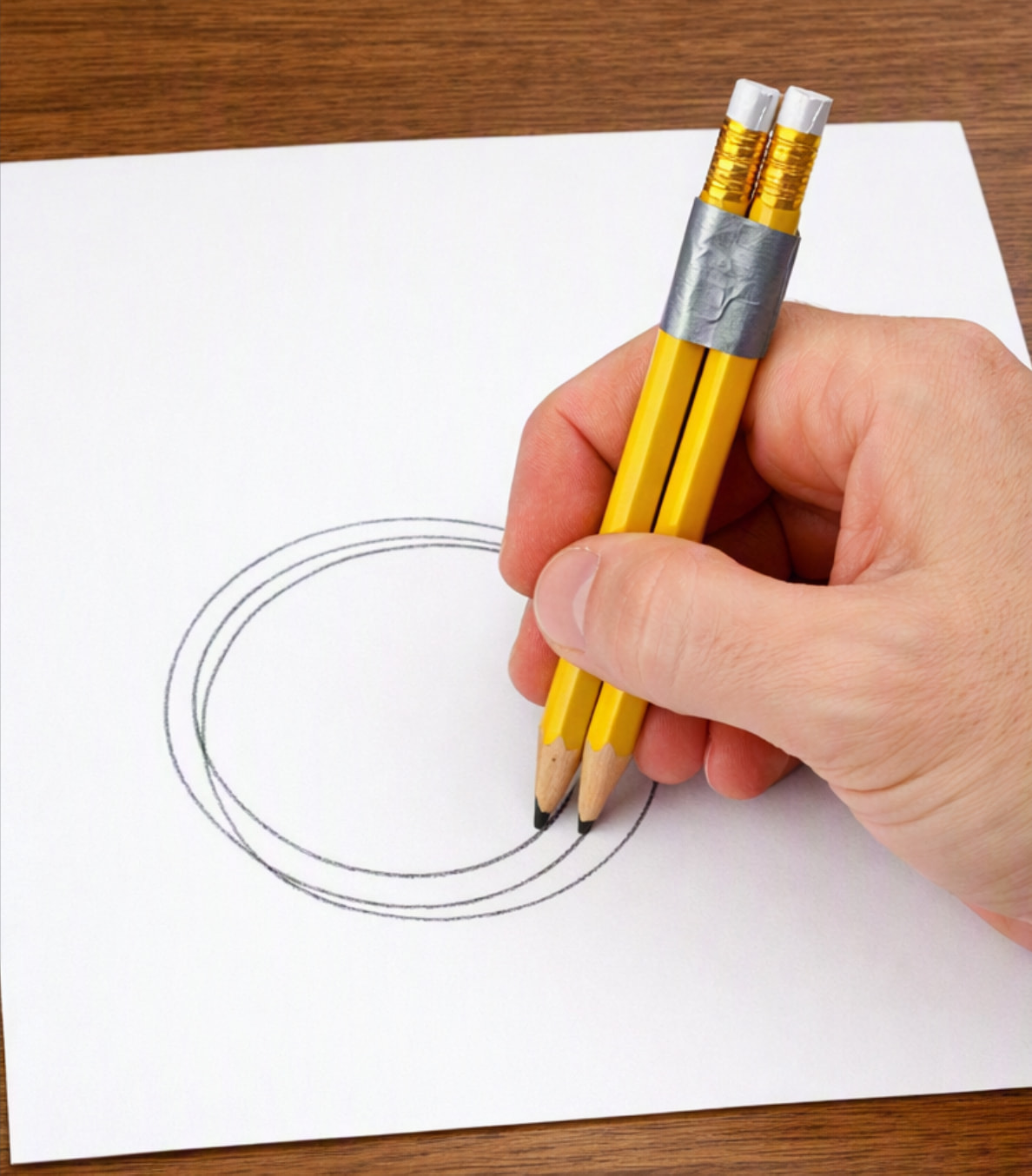
Instead, the two nozzles would have a controlled vertical and horizontal offset:
- Nozzle 1 prints the current layer, for example Layer 10.
- Nozzle 2 follows behind Nozzle 1 but is positioned one layer height higher.
- As Nozzle 1 deposits Layer 10, Nozzle 2 deposits Layer 11 directly on top of the path that Nozzle 1 has just completed.
For example, with a 0.20 mm layer height:
Nozzle 1 → Z = 2.00 mm → Layer 10
Nozzle 2 → Z = 2.20 mm → Layer 11
The second nozzle would therefore follow the first nozzle with a calculated XY path delay rather than both nozzles simply printing side-by-side.
Conceptually:
Movement →
Nozzle 1: ───────────────→ Layer N
↓ short path delay
Nozzle 2: ───────────→ Layer N+1
This could allow two consecutive layers to be deposited during approximately the same toolpath cycle in areas where the geometry permits it.
I understand that there would be significant engineering challenges, including:
- XY offset compensation between the nozzles
- Corners and direction changes
- Differences in geometry between consecutive layers
- Collision prevention
- Cooling/bonding time before depositing the upper layer
- Overhangs, bridges, and unsupported regions
- Independent extrusion and nozzle-height control
- Slicer path planning to determine where tandem printing is possible
The slicer could automatically identify regions where Layer N and Layer N+1 have sufficiently compatible toolpaths and enable Tandem Layer Printing (TLP) only in those areas. For complex geometry, overhangs, bridges, sharp direction changes, or incompatible consecutive layers, it could automatically revert to conventional layer-by-layer printing.
I believe this could be an interesting research direction for a future Bambu Lab printer or toolhead because it aims to increase actual deposition throughput rather than only increasing movement speed.
I would be very interested to know whether Bambu Lab has investigated a similar tandem-layer extrusion concept.
Thank you.