Hello all.
I’m gearing up to build a birdhouse with a streaming capable camera mounted directly above the interior floor of birdhouse.
In my search for a birdhouse I came across a different model that had a one piece roof stl file and one of the sides had a rectangular hole in it. There was another file made to cover the hole and it was noted in the instructions that they used and recommended using a translucent filament to allow some ambient light into interior of nest box. Good idea I intend to incorporate into a different birdhouse model.
What has been folks experience with Bambu Lab’s Translucent PETG? There are several tints?? available but I’m mostly interested in just how translucent BL’s Translucent PETG really is
Translucency is extremely variable based on a bunch of factors. They can be quite good if you nail down all the settings.
Plan to do some experimental prints to figure out how to get the effect and light transmission level you want.
Here are a few examples that may help.
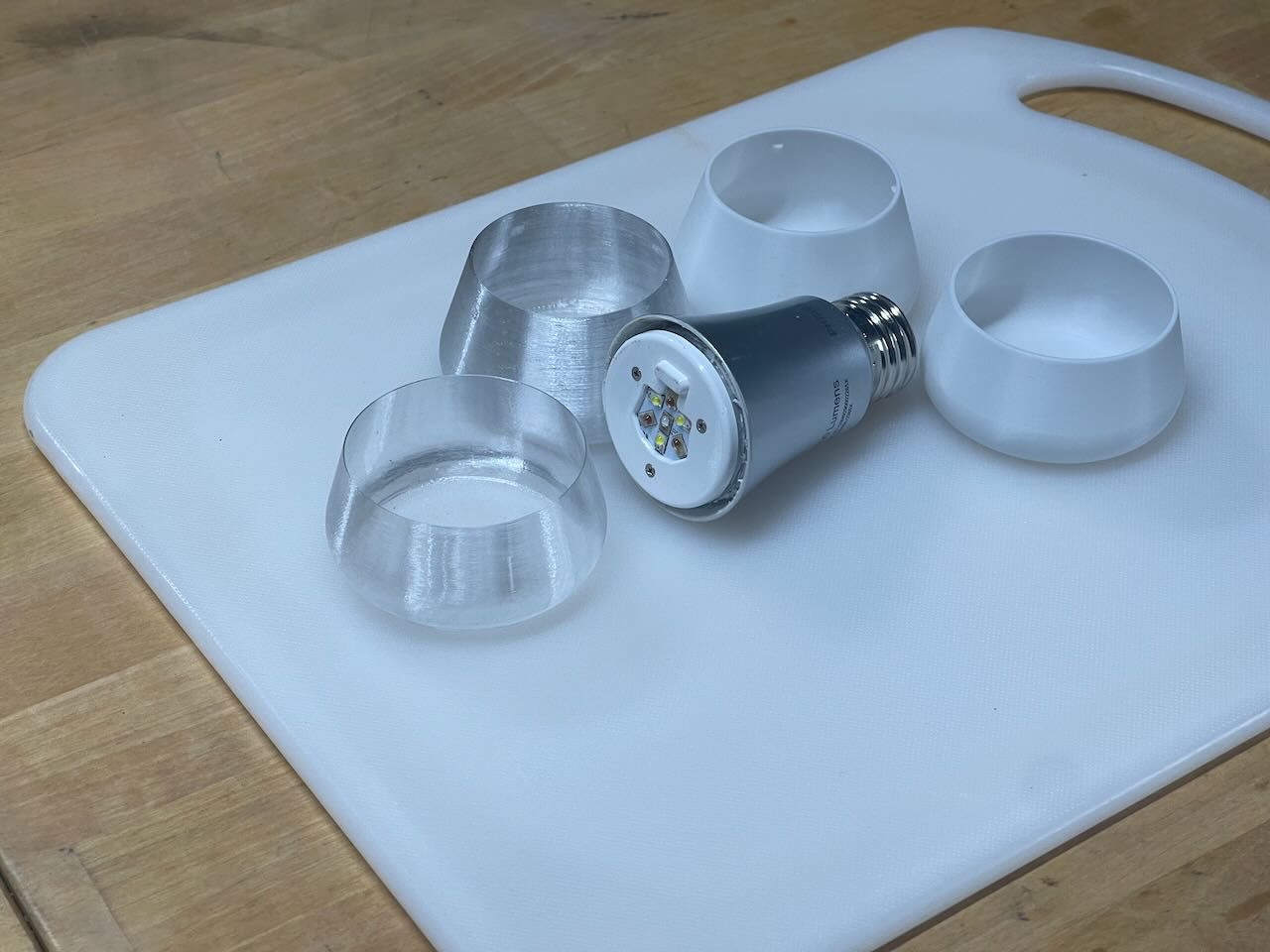
Transluscent PETG vs white PETG with one vs several walls:
This is light bulb diffuser for an OG Philips Hue bulb, back when they still used glass. (Newer ones are all plastic.)
- The one at far left was printed with a single wall and very slowly to get maximum clarity.
- The second from left is two or three walls thick, normal speed. Due to the multiple walls, it is not nearly so clear, but it transmits nearly as much light.
- The third and fourth are white PETG, same wall thickness as the 2nd. They transmit much less light, but are far more effective at diffusing light. (The clear ones turned out not to be very useful to me.)
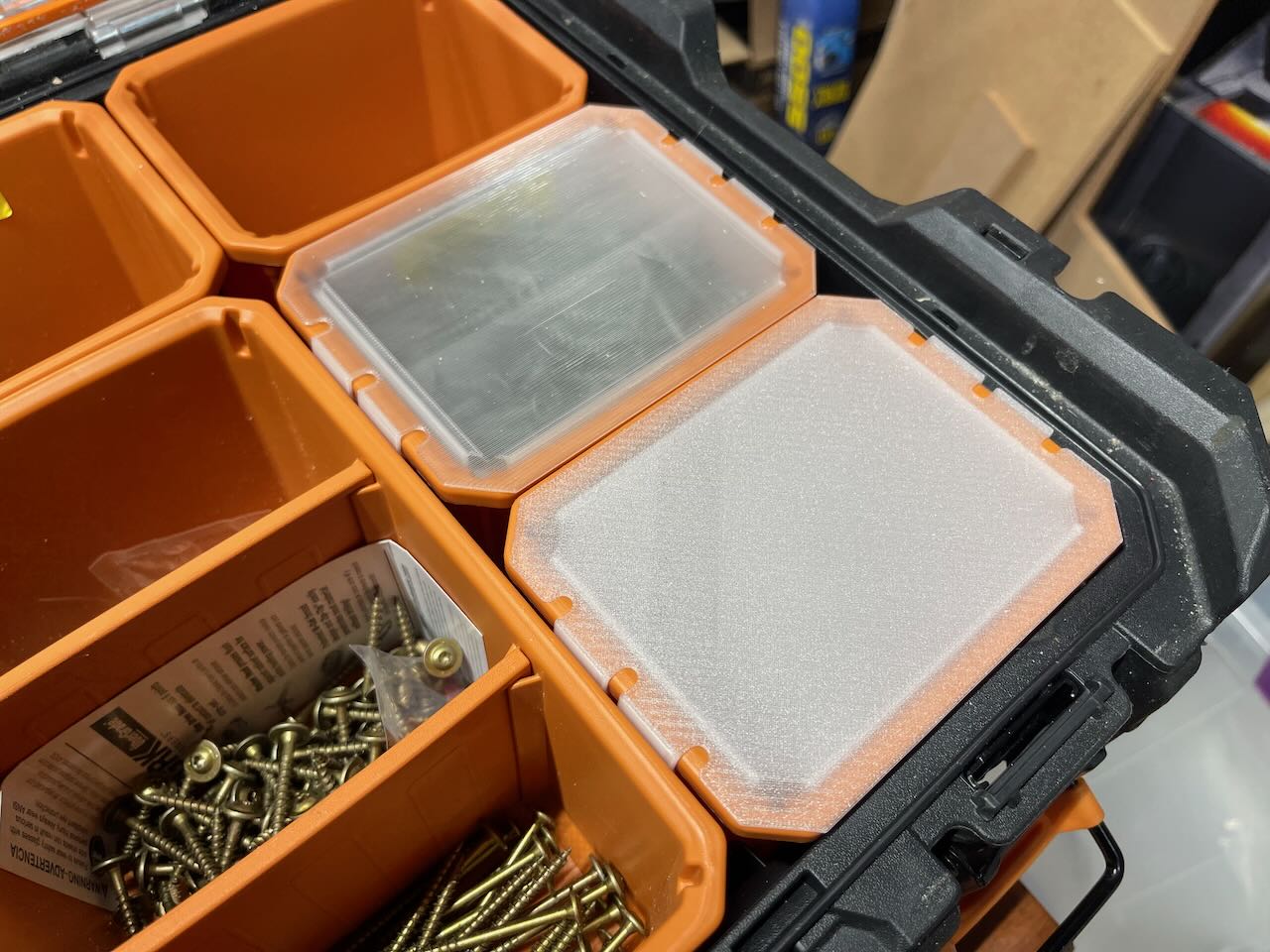
Translucent PETG, thin and thick panels:
These are covers for parts bins in a RIDGID organizer case.
-
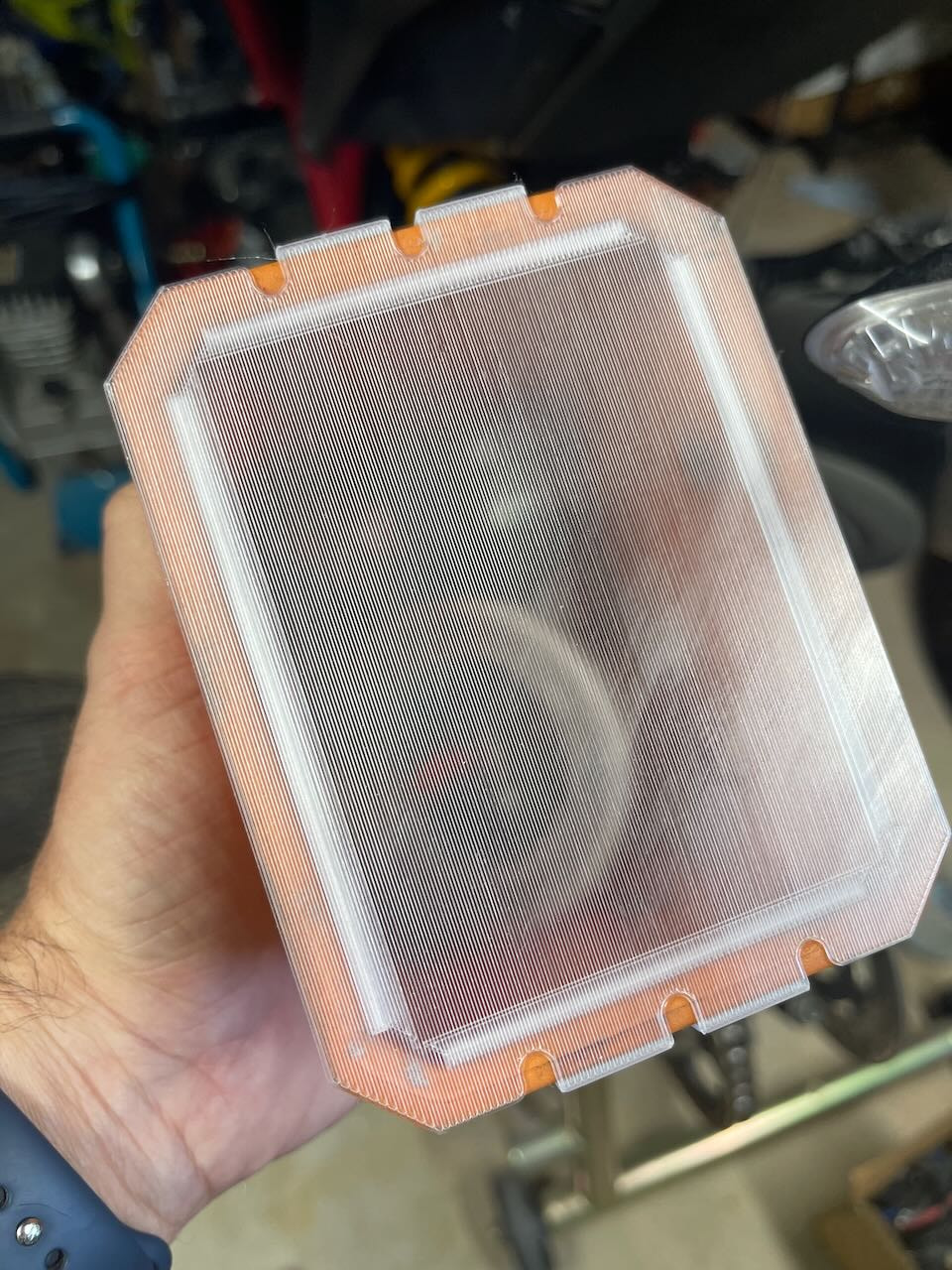
The left/upper bin cover was printed with most of it a single, 0.2mm thick layer. I aligned the print direction and printed it very slowly on a smooth plate to try to get maximum clarity. It’s still hard to see through, and it broke very easily.
-
The right/lower bin cover is printed at full thickness (I think it was 1mm thick?) and on a textured PEI plate. You can’t see a thing through it.
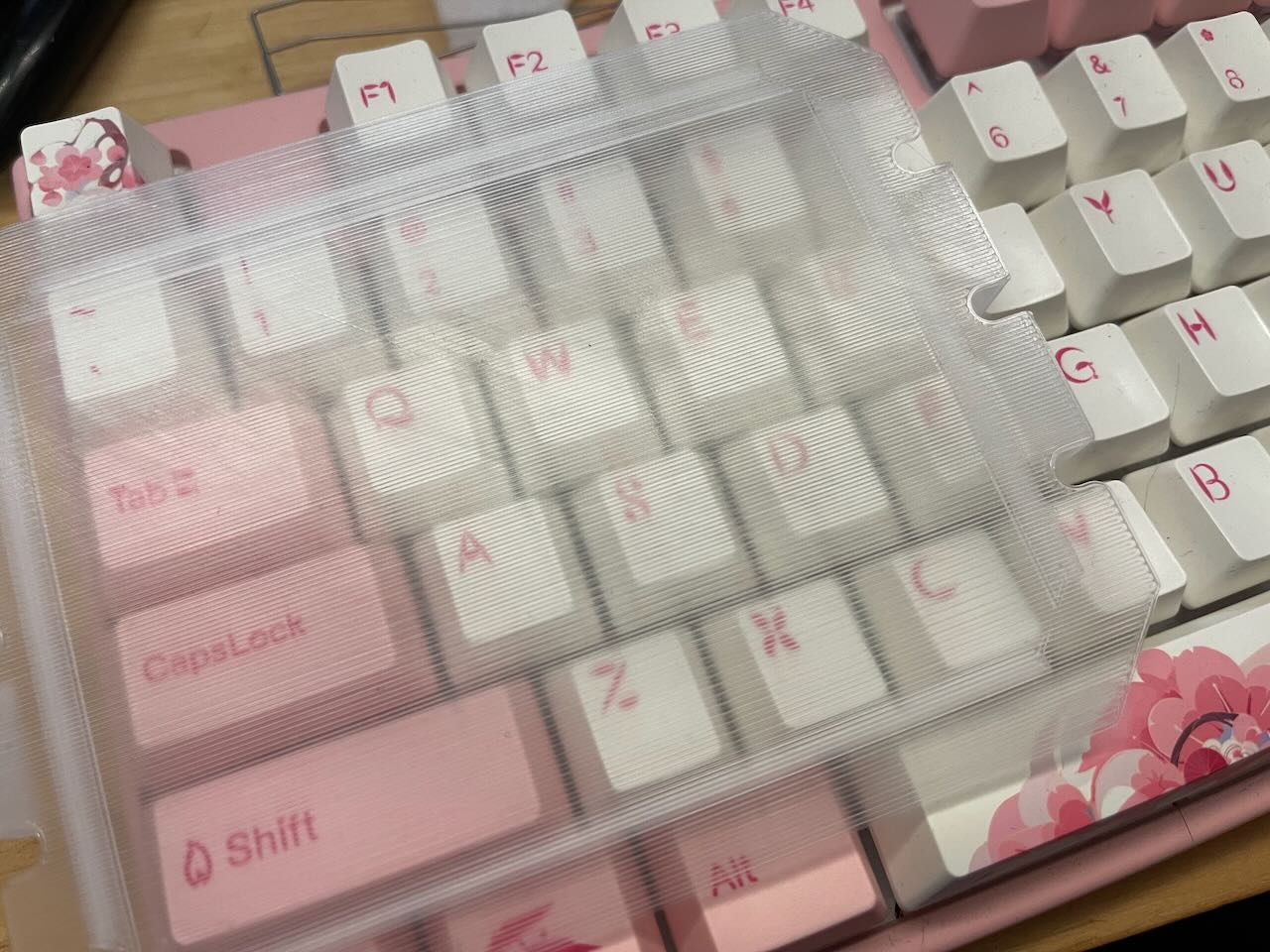
-
This is that first cover again. If you lay it directly on something you can see shapes through it, but back off even an inch and you only get the vaguest of shapes:
Transluscent PETG for ordinary functional parts:
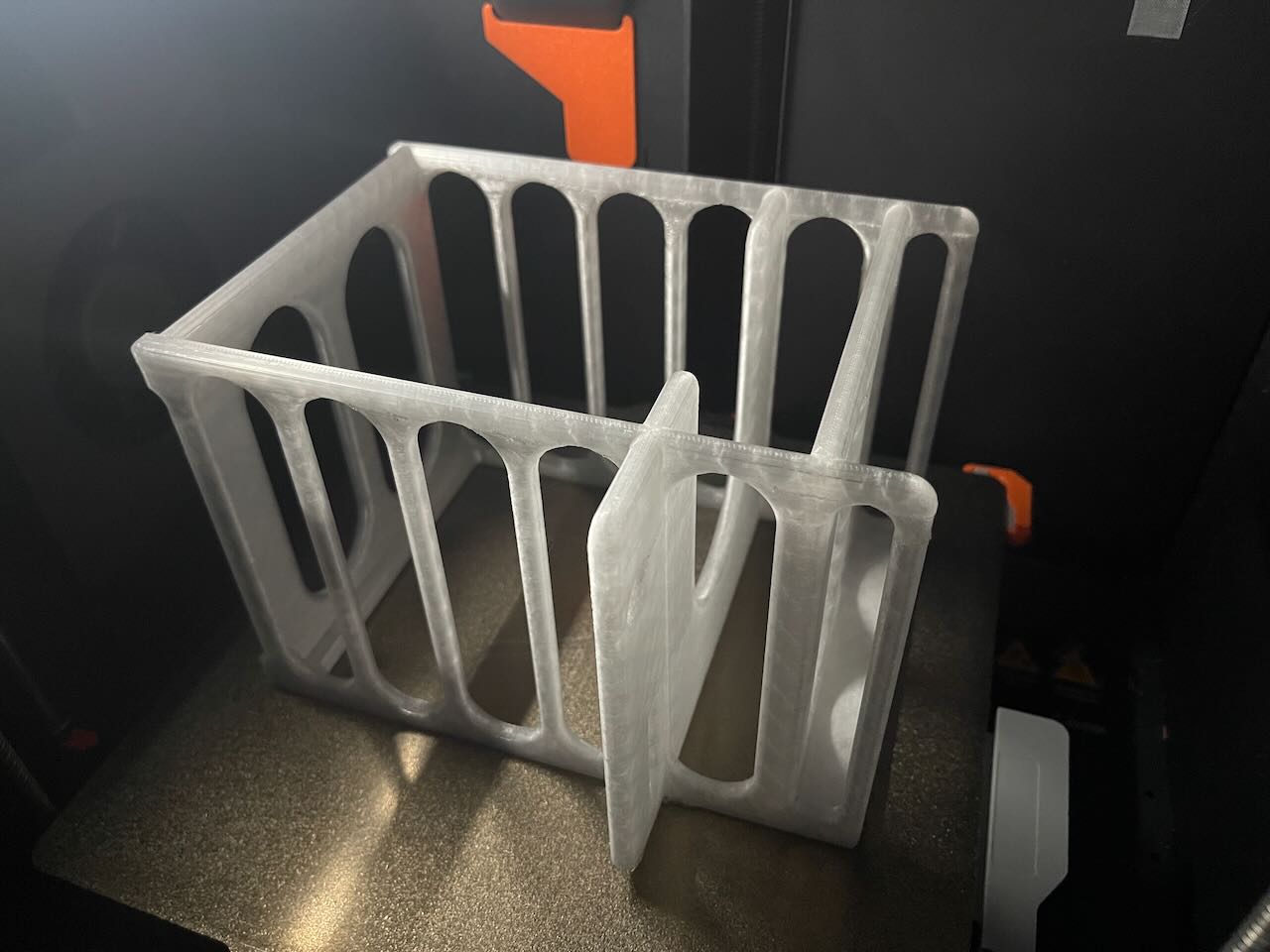
This is a structured organizer for my AeroPress coffee maker.
- I made no special efforts to maximize clarity or transparency. 2 walls with gyroid infill.
So, as you prepare for the birdhouse, print a few roof fragments. You can test just the roof by cut up the part in Bambu Studio and delete the extras, or by adding negative parts to them. Experiment with layers and infill patterns to find what works for you and your filament. I suspect you’ll find some suitable settings pretty quickly.
I recently measured voltage drop of a small solar panel when receiving sunlight through a printed Bambu PETG Transluscent sheet.
It went from 6.7V without a PETG cover, 6.61V with a 0.2mm thick PETG print above the panel and then dropped fairly linearly to 6.46V with a 2mm thick solid PETG sheet printed with a 0.2mm layer height, 999 wall count.
So you can still get quite a bit of ambient light even with thick panels.
 &
& 
i would just cut up a plastic bottle or buy a sheet of plastic or something
Printing anything clear in FDM is a load of hassle
If its just a flat panel you need of no curious geometry, definitely just cut it out of existing product packaging
“i swear honey, i needed to buy this tool… for the packaging…”