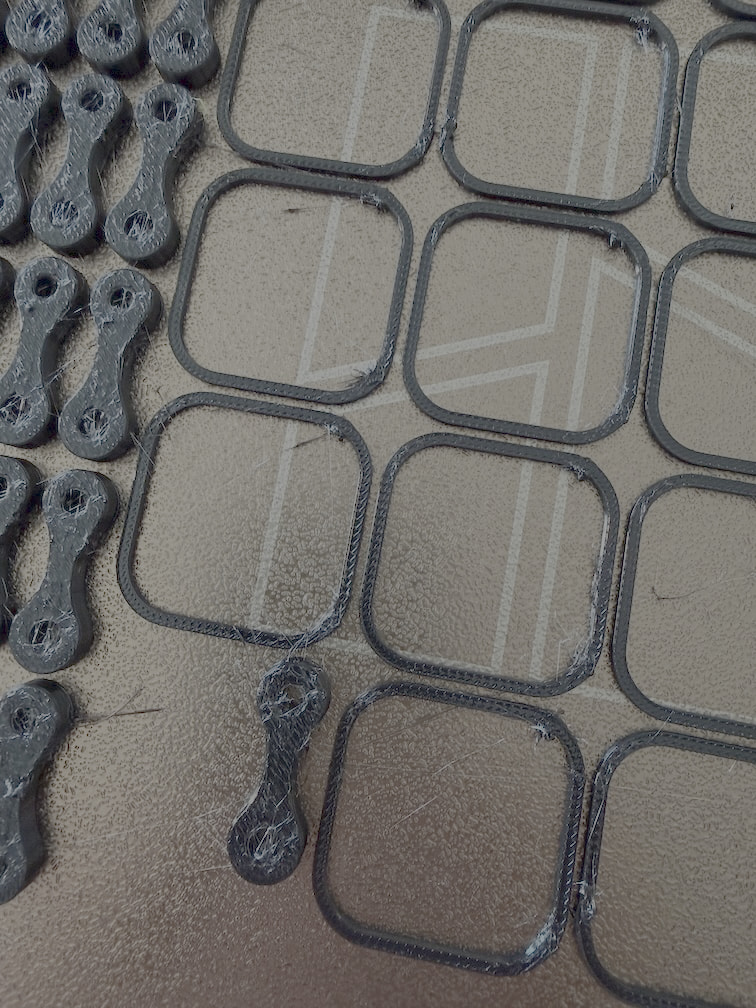
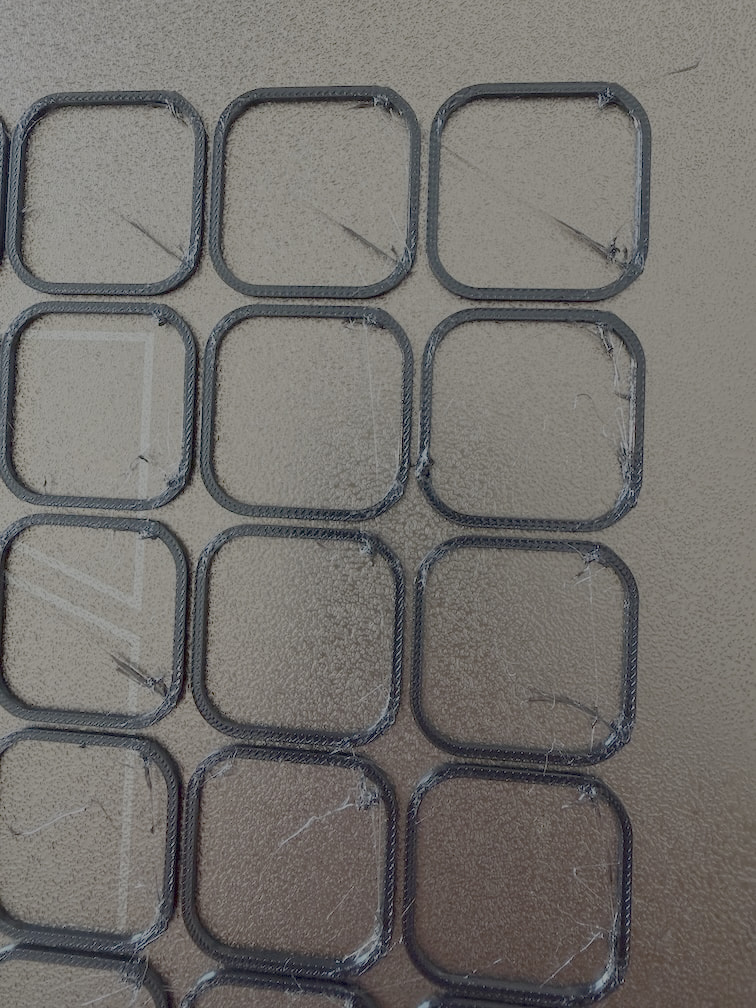
I’m just beginning to try and use TPU 95A for some toys a grandson wants. I can’t be of much (or any) help because I’m too much a newbie at this stuff. But I want to watch your thread and see what the guru’s might have to say.
I’m in the process of printing an auxiliary spool holder to mount my TPU spools on for use.
I use brims a lot for my prints. Don’t know if that could help you any. I also run my P2S at higher speeds (Ludicrous being a favorite) and it seems to cut down on the stringiness for me.
I tend to try things for myself and sometimes I get a better meatball… Those are my two suggestions. I’ll be watching your post. Thank You!
Also could try increasing the retraction distance by small amounts and perhaps retraction speed.
And slowing down the print speeds in general, depending on which process profile one is starting from (low layer height “high quality” profiles tend to have slower speeds already).
Go to 16:14 where he disscuss some tips about reducing stringing.
Edit:
You may ignore the rest of the video, focus only on the tips of reducing TPU stringing. As a typical youtube videos, it mostly is clickbait or advertisement. So take those information on the internet like grain of salt. I read from some novel book that says art of lying is to mix your lies among 95% of truth.
This is to clarify to everyone that not in my ignored list. It’s not to prove my self right to someone in my ignored list.
He put a big asterisk on his “no need to dry” statements - he was speaking specifically of 100% pure TPU, like the Push Plastics product. That filament is also quite expensive at $150/kg.
I use Overture 95A TPU, which cost only $28/kg. I don’t really care if it is not “pure”. It prints very nicely when dry, but if it is not kept dry, it will string, blob, and adhere poorly. The price difference makes the effort to keep it dry worthwhile.
If your prints are successful without drying, drying is a waste of time and energy.
If your print fails, you dry the filament, and then the print succeeds, drying is essential.
Failures have taught me that in my climate and shop conditions, I need to dry all filaments except for PLA, and even PLA sometimes needs drying.
It bothers me that the headline with this particular production manager and this particular YouTuber is always “DON’T DRY YOUR FILAMENT” and then the video is just an advert for f-n push plastics.
I have some of their PETG, which they also claim is impervious to humidity. It’s a load of hooey. Their PETG absolutely absorbs moisture, and it prints like garbage when it does.
Their big marketing claim is “our filaments are pure, we don’t put a bunch of additives in our filaments, and it’s the additives that absorb the moisture” - the reality is they’re a small manufacturer that clearly doesn’t have the budget or scale to engineer new filament formulae, they’re producing very basic, old generation filaments and claiming that’s a good thing.
Watch that clip will you? The thumbnail is a bit of clickbait, I admit, but there are some good info in there.
Beside that, I didn’t say you should not dry TPU. I only suggest to seek to time 16:14 where the the tips to reduce TPU stringing.
If you call me out directly, that was fine and that should be no problem with that.
But the way you word it, I interpret that “we say dry the filament, someone’s gotta…” as the tone suggests it was the fact and I was in the group of “saboteur people”, while you are in the group of good people.
Well, good day sir! You don’t have to reply to me since you are now in my ignore list and I don’t like to have conversation with unfriendly people to me.
I can confirm some of the information in the video. I cannot confirm about the filament this guys is selling. I live in Aus and I cannot buy his filaments.
Matter of fact, I do have a 7-8 years old unbrand white TPU sitting around on the shelf with punctured plastic bag. I didn’t have a need to print TPU since a few months ago. Well, it prints as well as newer bought sunlu black TPU 95A (which dried and kept in AMS with dessicant beeds).
At first I printed the old white TPU spool even with sunlu drybox running during print, but laziness got over me and I started leave the white TPU out in the open for months while not actively use it. Turn out it prints while outside drybox just the same even after it’s been left out in the open a few months.
FYI, I am kind of the paranoid type: P1S inside insulated enclosure as my most used plastic is ABS with bad fume and , with humidity sensors everywhere, inside printer, inside the chamber, outside the chamber, a few meter away from the printer and inside each filament container.
That the story.
I think nowadays the filament is mostly alloy, so the experience we had before (in the reprap era) was not really 100% true anymore.
There are so many great videos on TPU, it’s honestly a bizarre choice to post this particular one. It’s an ad with a few tips sprinkled in.
These stupid advertisements keep getting posted, and then inevitably lead to just more confusion and aggravation from the contrarians who use them as proof to never dry filament.
I’m a bit sick of it, to be honest.
You’re not a saboteur, but you aren’t really helping, either.