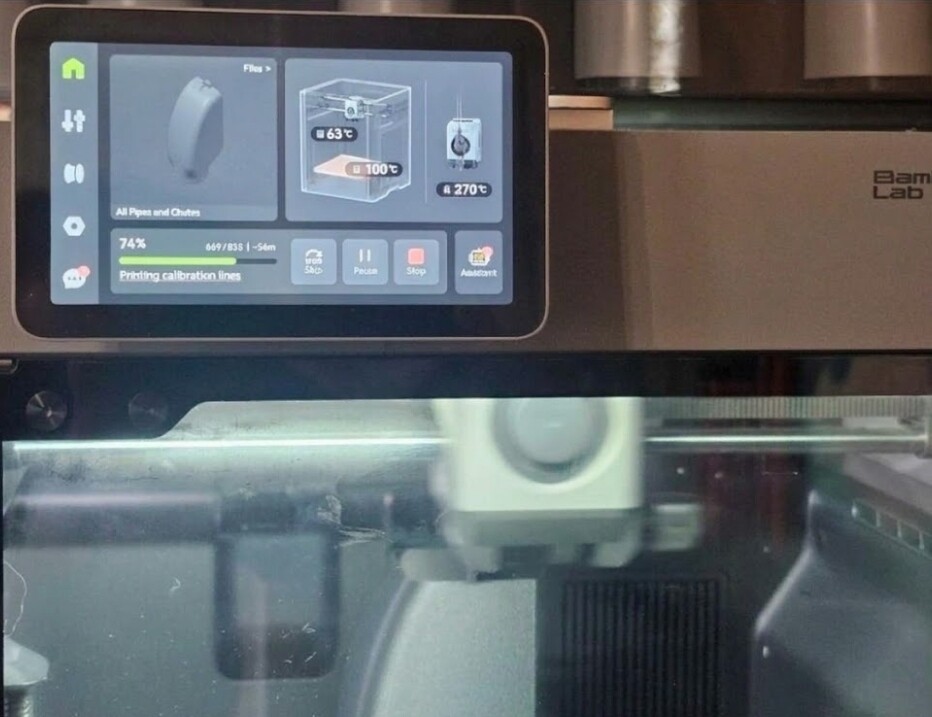
Well good points, firstly it’s not optimal for engineering materials, studies showed that there’s massive difference between 50 and 65 degrees in terms of layer adhesion and in my experience reduced warping. Besides, there’s stability, chamber heater will reach desired temperature and not dependant on outdoor temperature. If you going to go to engineering direction, paying 100$ more is not an issue since you are buying expensive plastics anyway.
Regarding camera, higher flow rate, yes i agree, it’s nicer, i didn’t think about it, but for me specifically it’s not an issue, since i view them as a farm workhorses for PLA/PETG/TPU and for me using A1 is more than sufficient (and i have X2D, H2D and etc and not complaining about those things), and for price of 1 P2S you can pay 50$ more and buy 2 A1 which will mitigate speed differences since 2 printers always would be faster than one. Plus you can still put high speed hotend on A series, it was tested and proven to be working solution (yes there are issue if you go to higher temps, temps are not very stable, but for lower temperature materials this is not a big issue).
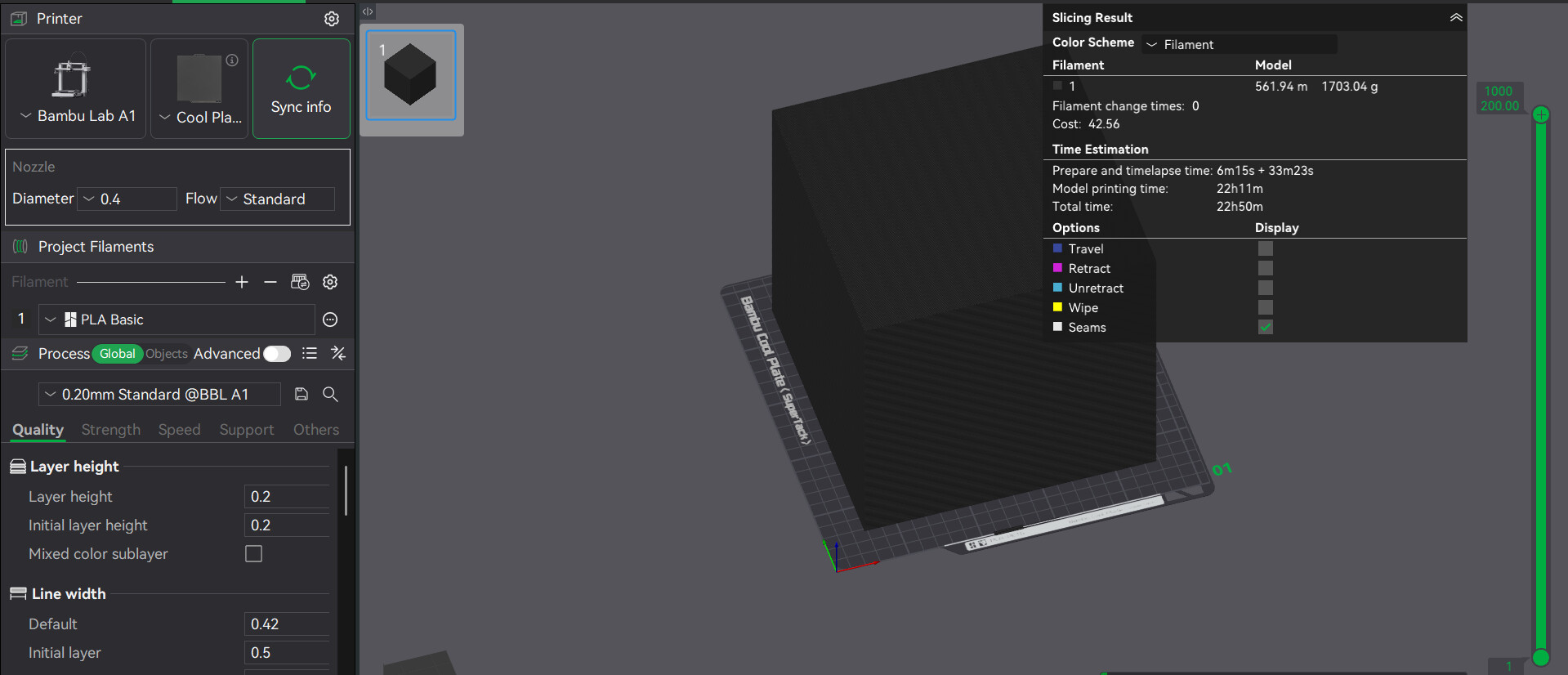
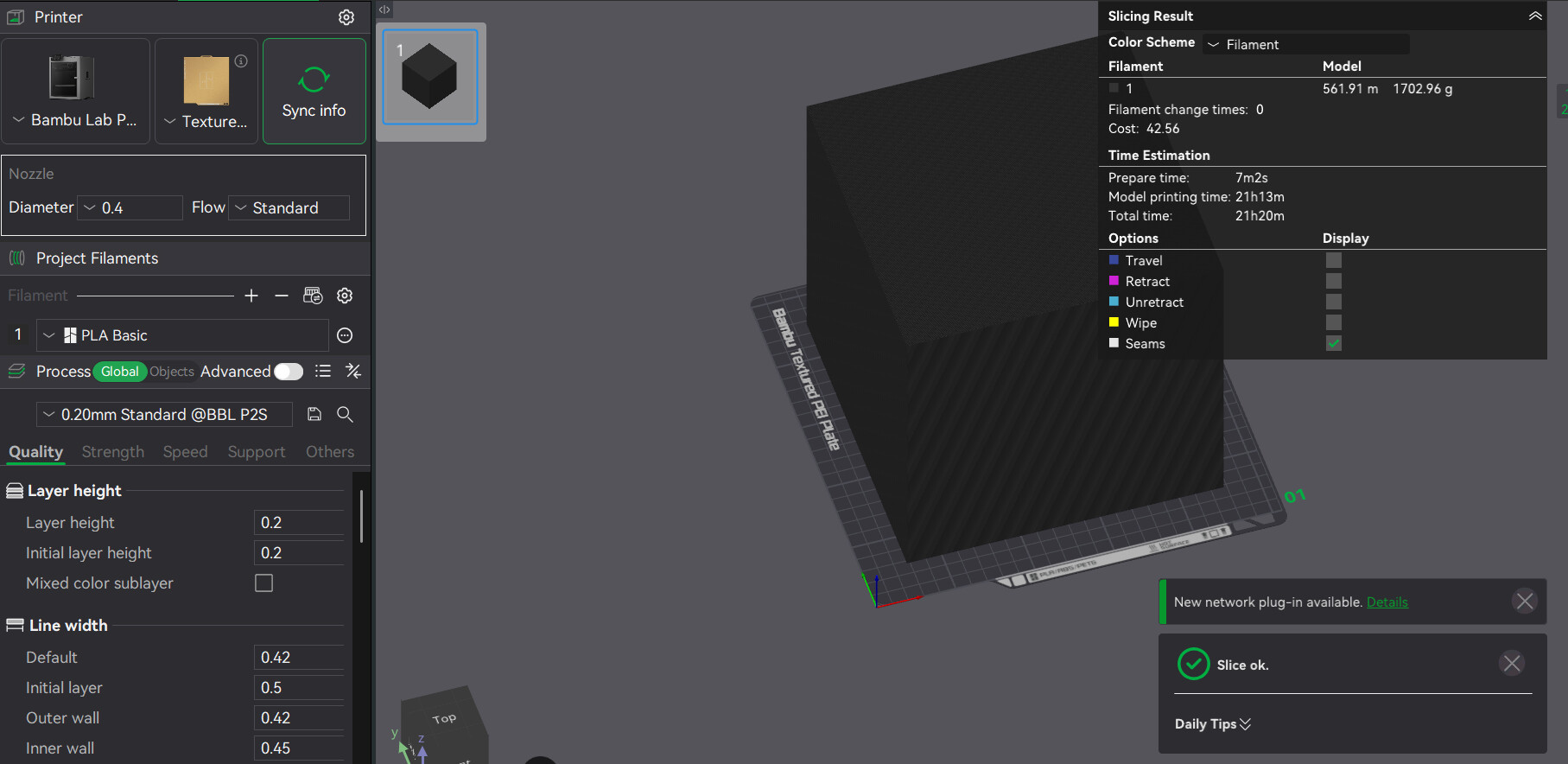
And speed differences are not that big, here’s for example default settings for printing 200mm cube to show maximum difference:
And i didn’t get your point about precision, i specifically calibrate for each filament and i didn’t notice significant difference in their precision, both can deliver precise parts within 0.5-0.7mm on 150mm petg, but calibration makes it to 0.1, so both are okay in this term.
Regarding buffering, i honestly had more issues on x2d (which shares similar construction with p2s) than on A1 in this term, sometimes filament just won’t load and i need to restart printer. Never had something like this on A1.
So as i said, if P2S would be cheaper, for at least 400$ as p1s, that would be different story, right now, i don’t see that there’s a value.