I agree. That’s why I originally said I think the issue isn’t the actual coding. Picking up a different nozzle and running Gcode for that nozzle is easy. But making sure that the lines the 2 different sized nozzles are laying down are consistent is probably the technical problem that is hard to solve. I hope Bambu is working on it.
is it true that there going to release an a2 and a x1b i want to see if its all true. it could be just rummers
A focus on the coloring parts of the software. I would love to be able to generate face groups of models when trying to color them. The features they added last time were great, but for more complicated models, you’re looking at hundreds of tiny triangles to try and color.
that would be very nice!!!
a subscription would be great to overcome the availability problem - where do I sign?
A subscription for what exactly? You haven’t paid Bambu already more than enough yet?
If the internet rumor that BL has bought a mid-size filament maker turns out to be true, a filament subsccription can be on the table once the factory is up to speed. It is hard for BL to offer a subscription if they depend on outside factory to make their filaments.
Guaranteed delivery, of course. 
I wouldn’t pay them anything more than I’ve already paid when acquiring my printers. Pay for a filament subscription ? H.e.l.l. no! There are out there other filament manufacturers that provide good quality and reliable filaments that print very well without me having to pay Bambu a monthly subscription for a filament that most of the time is “out of stock” when you need it, or lack support when you require it. Since I’ve been confronted, repeatedly, with this kind of situation for more than one year already, I’ve simply decided to purchase my filaments elsewhere, and to date I have no regrets for doing so. Paying a subscription translates to me into going down on a very slippery path of increased dependency on Bambu’s already increased control, on top of their Connect crapware, over our machines and on how we are “allowed” to use them.
No siree, not going down that rabbit hole.
Filament subscriptions, if offered, will fit the needs of those who have predictable filament consumptions, such as prototyping shops or print farms (the biggest one uses over 10,000 Bambu Lab printers, according to Bambu).
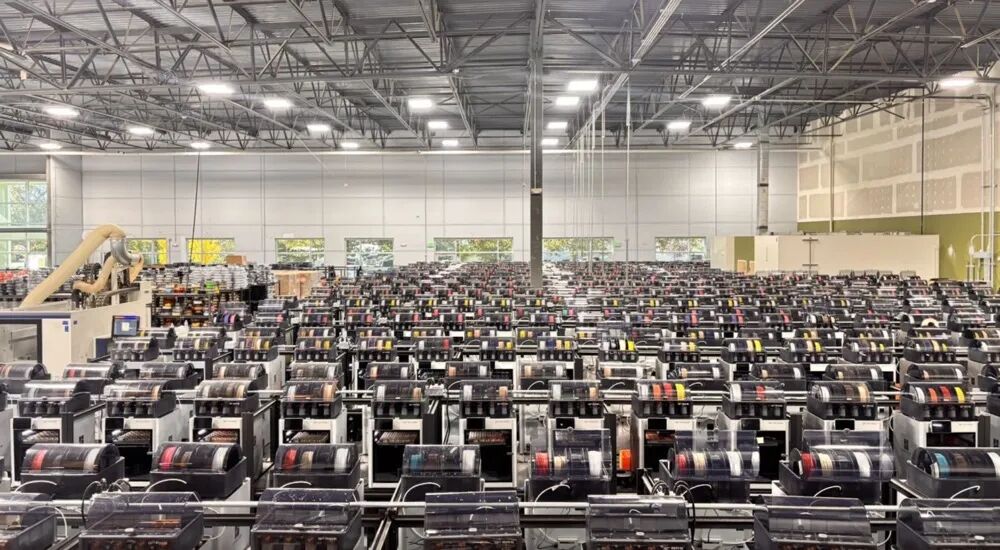
Making filaments themselves will allow BL to have better control over inventory level. That can help push filament sale over the current estimated 75 million dollars per year to the next level.
In addition to stable availability, another benefit to individual users will be that as the sale volume increases, the price can come down. BL will also be more free to come up with new and innovative filaments.
If Bambu releases a successor to the X-series, it can’t be incremental.
The P2S already covers most of the prosumer space extremely well.
The next logical step isn’t “slightly better cooling” or “more sensors.”
It’s category expansion.
That means one of three things:
– true heated chamber for engineering materials
– real multi-tool / toolchanger architecture
– farm-oriented automation (auto ejection, batch workflow, API integration)
Bambu has already optimized for speed and accessibility.
The next leap is production efficiency.
Personally, I think we’ll see more focus on automation and multi-tool systems rather than just another single-head flagship.
Unless they come out with something completely crazy to turn the industry on its head again. Something like 5 axis printing or combination/mixing filament while printing. You know, one of those crazy ideas that others are playing with in labs that no one expects to see in the consumer market?
That would make a great follow up to the X line.
Next best improvement is using only 1 transparent filament as input and adding a CYMK ink mixing head for staining the filament with any color during printing. No more need for colored filaments or multiple print heads.
At the moment, Bambu printers are leading the market — there is nothing that can truly match them today.
The next step is to bring these printers to everyone. How? By creating an AI-powered slicer with photo- and text-to-model integration.
If my uncle could simply say, “I want a bracket that looks like this,” while showing a photo and dimensions sketched on a piece of paper, he would buy it immediately — and many others would too.
We already have sufficient AI capability for Bambu to embed automatic model generation directly into the slicer. Monetizing this slicer could become a major opportunity and dramatically expand adoption.
This is not aimed at enthusiasts or thinkers — they already own multiple 3D printers, including Bambu machines. The goal is to turn the 3D printer into a household appliance capable of making anything at home. Bambu already showed regular people it is easy to print, now show them it is easy to create anything they think off.
At the same time, development could begin on a CMYK ink nozzle system that transforms white filament into any color on demand. There is no need to rush this effort, but initiating research would be valuable.
How about an affordable 3D scanner.
They don’t need to reduce the build plate just upgrade the enclosure to be wider.
Adding Vortek requires new gantry, toolhead and belts. Upgrading the enclosure at the same time is easy.
that would be great i got one 4 800$ and did not work i returned it
A tariff refund.
I also often thought about it if Bambu would maybe make a 3d scanner one day. But whenever I see reviews I get the feeling that the 3D Scanner market is a lot about the software quality and less about the hardware. I’m wondering if it would be worth for Bambu to invest heavily in such a “side quest”. I mean companies like Shining 3D can make their money with the very expensive industry models and then sell that Software with some limited features and stripped down hardware to the consumer.
But if Bambu would release one? I guess if they would do so it would be more something where they license the software from another company like they probably did with Bambu Suite for the Cutter / Laser Module. Not sure if there would be room for any features to stand out from the competition then that would be worth such an extra path / investment.
Unless they would come up with some very interesting and unexpected partnership I think DJI has it’s Terra Software, but not sure if that would be suitable for close-up 3d scans.