A genuine policy question for @MakerWorld and for other designers, not a complaint about any single decision.
On one side, the platform has invested seriously in protecting us: takedowns against unauthorised sellers, the Copyright Protection Service, legal action against re-uploads on other sites. That work is real and I’m glad it exists.
On the other side, models get pulled from Featured after an internal IP review, and designers usually find out after the fact.
Both of those are defensible on their own. What’s missing is the line between them, and that line is what we plan our work around. So:
Where does the platform draw the boundary in practice? The written rules say protected works must be original and free of third-party IP, but a large share of what sits in Featured today is clearly fan-based. Designers can’t tell which side of the line they’re on until after they’ve built the model.
Is the standard applied consistently? I’m not asking for anyone’s model to be removed. I’m asking for the same rule to apply to everyone, because when the rule isn’t visible it looks arbitrary — even when it isn’t.
Can we get notice before, instead of a message after? Losing Featured placement mid-launch destroys the release window a model was planned around. A short heads-up costs the team nothing.
Twenty, thirty, sometimes a hundred hours go into a model before it goes live. We’re not asking for looser rules — we’re asking to know them before we start, not after.
In tabletop game development, we learned how get around this without copying. (I can’t be bothered to list all the NotASpaceMarine figures that Games Workshop cannot get rid of because they’re not copies)
Comic book / superhero people have worked it out too. (Consider the difference between Omniman, Homelander, and Superman; they are recognisably the same character type, yet not ripoffs of each other)
That is the solution. Use the original as a base, and make your own thing.
If you’re going to be a dirty pirate, no-one can give you ironclad guidelines for this except that “models are assessed on a case by case basis” . And you better not complain when someone steals “your” model and reposts it.
Now this being said, sometimes false, fake, malicious, or mistaken takedowns are issued, and Bambu could improve their procedures there.
Twenty, thirty, sometimes a hundred hours go into a model before it goes live. We’re not asking for looser rules — we’re asking to know them before we start, not after.
You already know the rule. If it needs a license and you don’t have one, then don’t do it.
If someone else is doing it, report them. If you have 1 criminal and 3 people who copy the criminal, you have 4 criminals.
I’m highlighting this sentence because it’s the key point in the whole discussion. It’s not MakerWorld that decides this - it’s the companies that file the IP infringement claims.
This question is actually based on a misunderstanding, because it’s not MakerWorld that sets the criteria - it’s the companies that submit the reports.
Not possible; companies file IP infringement claims at intervals, often even years apart.
All of these questions are ultimately beside the point, because there’s really only one conclusion:
Stay away from IPs.
Sure, plenty of people ignore that, but the consequence is that their stuff gets taken offline. Maybe not immediately - often not even within a year - we’ve seen quite a few cases where it took more than two years, and in the end those users had several thousand real dollars in points deducted.
I am reasonably confident in assuming that if I use someone else’s artwork, trademarks, copyrights and such that sooner or later my models will be removed. That it doesn’t happen instantly isn’t the fault of Bambu or anyone else who hosts my “work”.
I really like how @Eponymous has put it! Be inspired and create your own work!
Personally I am curious how one makes a model that is compatible with trademarked IP and let users know about said compatibility without risking triggering a takedown. For example, since it has come up a lot, boxes that can hold UNO cards. I think it is obvious that one can’t call the box an UNO box. It is also obvious that one can’t use the logo or other trademarks in your work. However, I am assuming (based on what I could buy in a store) that there is some amount of referring to a product that you are building for without infringing on other’s rights. So with the box made to hold UNO cards, I am assuming you could in your description mention that the box can hold said cards. I assume if you don’t call your box an UNO box, you in theory are not violating trademarks. It seems though that many of the takedowns simply do a text search though, and if you use the wrong words in descriptions or tags you will also be in trouble.
I could be wrong about the risk when it comes to making compatible models. Many of the people complaining are clearly using the IP as part of their model, whether by using logos or other fairly obvious violations. So maybe the boxes that list UNO cards among the ones that could fit have never been at risk. Or maybe everything gets removed because it is safer and easier for MakerWorld to err on the side of caution.
Umm… I think I am rambling. Speaking of rambling, why do so many play UNO, anyway? More importantly, why does anyone need a special box for such a cheap set of cards? You can bet I want to protect my MTG or Pokemon deck, but UNO?
Wait, what? Sure they can. Don’t use other people IP and you are likely safe.
I’m detecting a theme, and it sounds like “some people are cheating, and it’s unfair that MakerWorld won’t tell me exactly how much I can cheat so that I’m not at a disadvantage.”
The same rule does apply to everyone. Enforcement is primarily driven by complaints, so it’s going to be sporadic.
An example of compatilbity with a part or system — Look at all the clone Lego sets out there. They just say something like “compatible with leading block brands” and the user figures it out. Example: https://mouldkingcorp.com/
An example of copying a specific piece of artwork.
For advertising, social media and search engines are good. Customers will recognise what you are making if you show it to them. Search engines are also really good at deciding you are a clone of something even if you never say it.
(EDIT For more tips on that, hire a marketing agency When I was in tabletop I wrote game rules and adventures, I wasn’t part of the marketing side. But we were “blessed” by being in a niche industry where fans would obsessively search out product and find us anyway, and a booth at a convention did a lot; also just to be clear I have NO connection to any of the items or companies in this post)
Lego hasn’t held a patent on the basic brick system for ages, so the only things still protected are the logo and the minifigures. Moldking is a great example of how far the market has evolved. They’ve set up their own development team, they create original designs, and they focus on designs models that Lego would never touch. It’s less imitation now and more genuine innovation within the same puplic domain building system.
Even though Moldking had its share of questionable moments in the early days and things weren’t always perfect, they’ve become a good example of what creators on MakerWorld can achieve without stepping on anyone’s intellectual property.
Moving away from the image of being a clone and toward a strong, independent brand with its own identity.
That’s why bricks are allowed at MakerWorld, but not the word ‘Lego’ nor the logo. Lego has absolutely no patent on bricks.
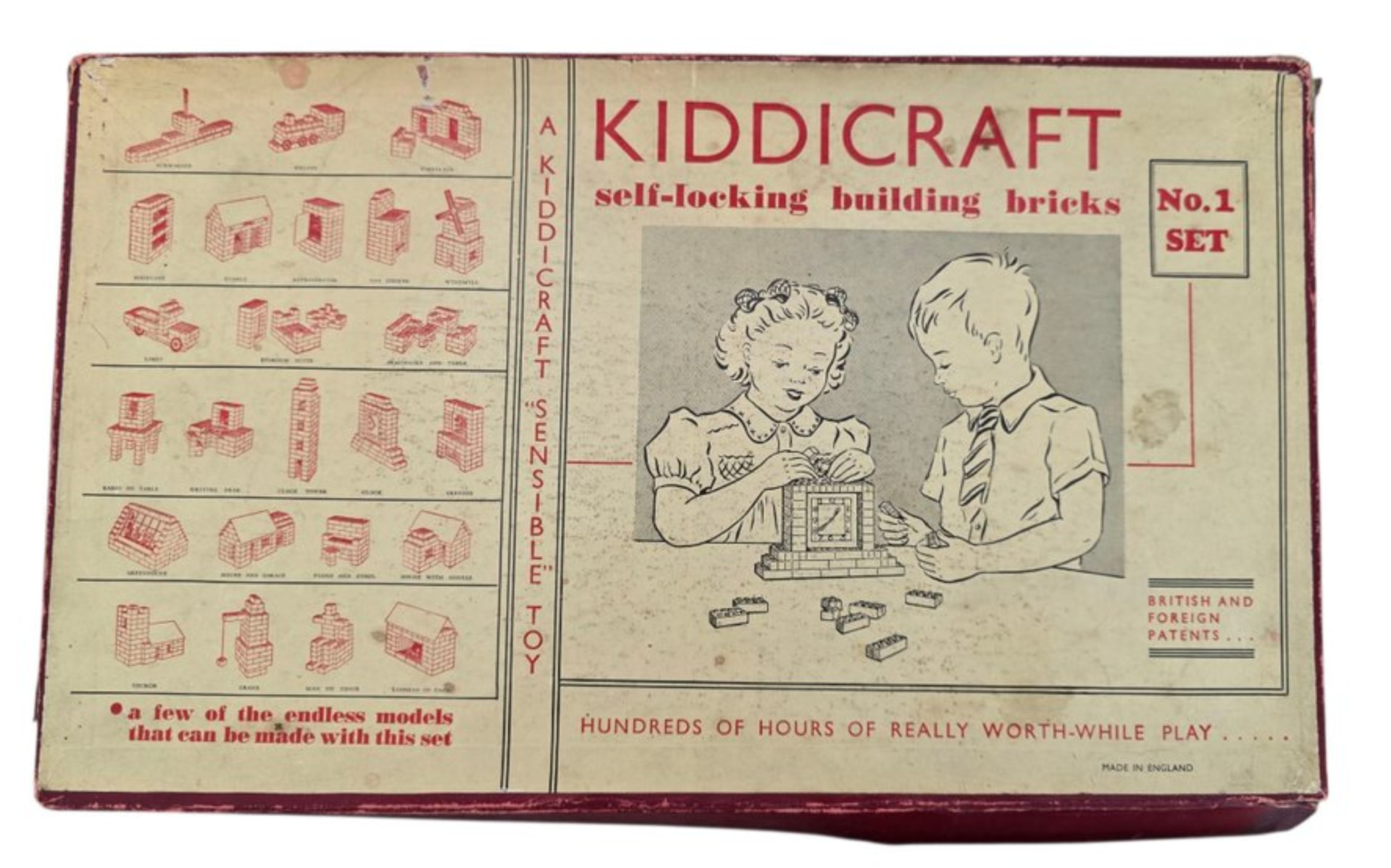
Fun fact: Lego wasn’t even the inventor of building blocks; they just bought the patent from Kiddicraft back then. Even the information is often not listed because Lego’s lawyers do everything they can to cover it up.
Yeah, this was how I was thinking would be safest. As I consider the fact that my models (not UNO boxes by the way) would not be as easily found if I don’t mention the compatibility I realize that I would be leaning on someone else’s trademarks to advertise mine. So it would be hard to argue that I am not infringing!
Sure, you can try to make that happen - if you hire a lawyer and decide to sue a company in China that’s actually trying to give you money in the first place.
Being in the right and getting justice are two very different things. You have to fight for what’s right, and that means involving a lawyer.
Show that section to any IP lawyer and they’ll just laugh. The only way to put that argument into practice is by taking both the IP owner and MakerWorld to court. Have fun taking on juggernauts, who spend millions on lawyers for intellectual property rights.
I consider it a clone because the plastic pieces are compatible. Out of all the sizes they could have picked for their blocks they somehow exactly match each Lego.
Just a quick note, not a disagreement: that’s U.S. law. But when things are unclear, it’s smart to think more broadly - global regulations can come into play, including China’s rules, the laws where you live, and the laws in the country where the company making the claim is based.
…and Lego is a clone of Kiddicraft, the original manufacturer and inventor. Just saying…
Then you’d have to ask the same question - why Lego has bricks that fit perfectly to Kiddicraft. Of all the block sizes out there, they adopted the exact ones from Kiddicraft.
Like I said, you can call them whatever you want, but as you can see, it’s not as simple as it seems at first glance. The original patents on the interlocking brick system expired decades ago.
I’m posting this now, in the context of that topic, to demonstrate how complicated intellectual property law is.
To use “fair use” as a defense you must first admit to copying.
If I make a generic, non-specific, yellow mouse that shoots electricity, and is not a clone of Pikachu, and Nintendo decides it’s Pikachu (or wants to try to claim it is), I can’t try for fair use unless I claim it’s Pikachu - even if it isn’t.
This choice of how to go about it will affect the case. e.g. (A) No it’s not your creature, or (B) I admit I copied your creature but it was fair use.
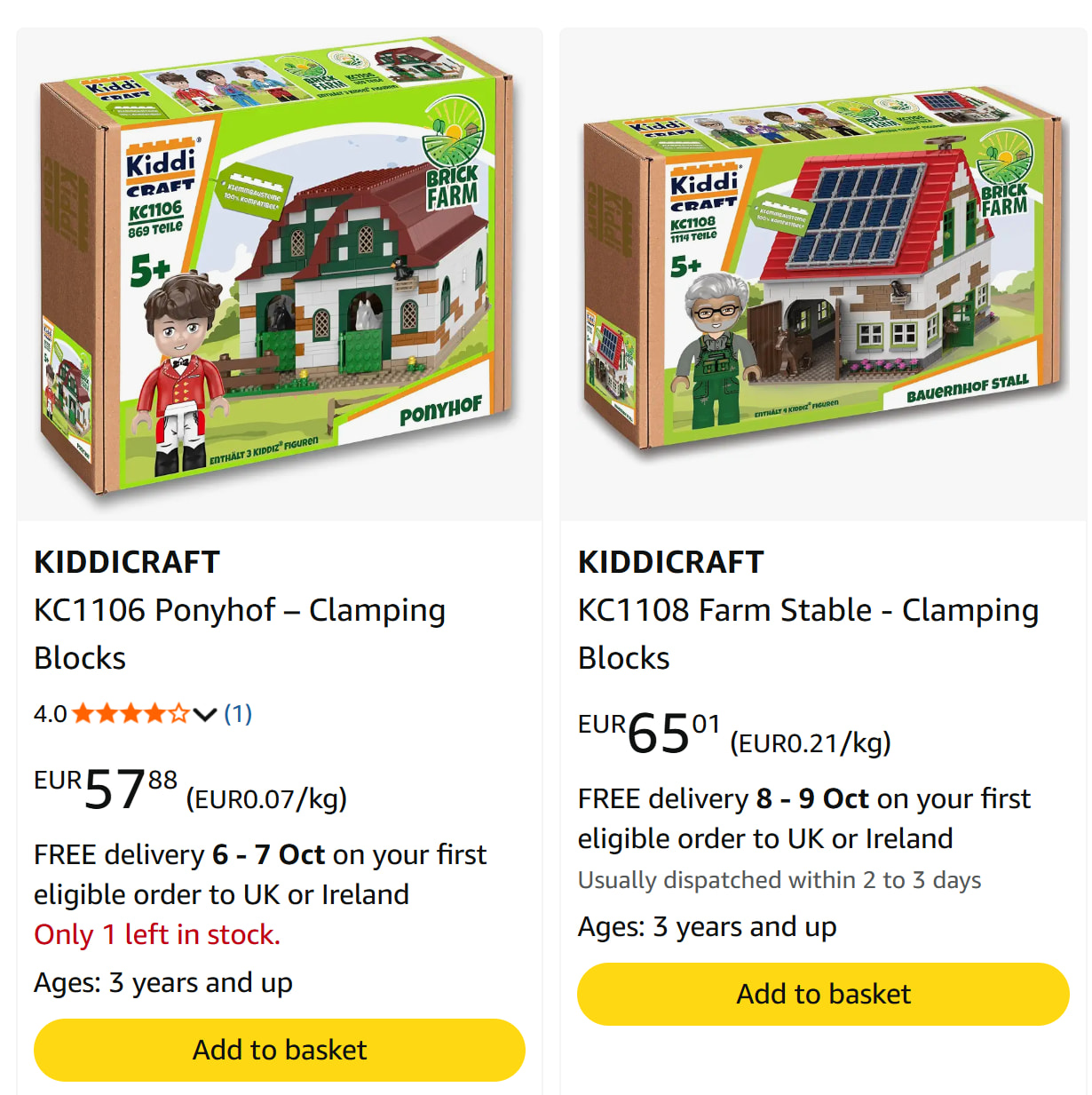
And we know that when mould king started, kiddicraft was long dead. (edit: or was it? I don’t know when mould king arrived; in either case, I bet no-one else knows who they are).
I don’t want to go off-topic, but to make a long story short, the company still exists today - it just has different management. However, explaining that would take this discussion off-topic.