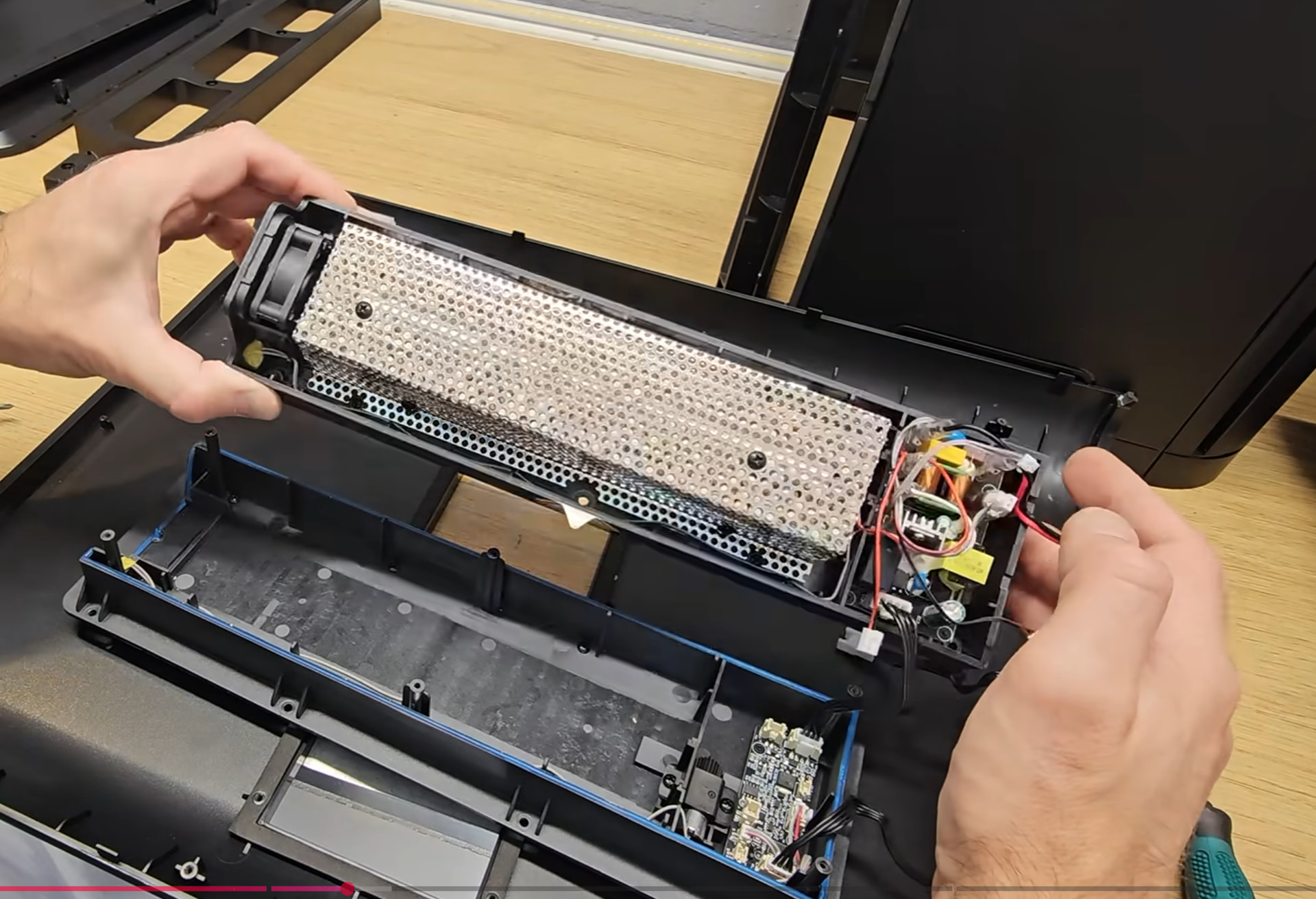
H2D AMS and fillament layout

Hi all.
New guy here. Started 3d printing with solid doodle 3 back in 2012, with raspberry pi server and all; then quit waiting for technology to catch up to what i wanted to do. Now i got H2D Lazer and am trying to better layout, optimize my filament choices. So i have a couple of questions:
My current set-up is 0.6mm carbide nozzle (non-high flow) in left space for abrasive filaments connected to AMS-HT and E3D Obsidian 500 high flow nozzle in right position connected to AMS 2.0 Pro. I also have Sunlu E2 dryer and Sunlu dry cabinet on pre-order
I am trying to decide which filaments i should put where and see if i am missing anything.
Question 1: If i have a ton of desiccant in spool inserts and in all other spaces in the AMS 2.0, such that humidity is kept at 10% which filaments can i keep there permanently? PLA is the obvious answer, but is 10% too high for ASA? PETG? PCTG? Nylon? PPS? PPC? PC?
Question 2: Can AMS HT do better job at storing moisture sensitive filaments than AMS 2.0 Pro?
Basically i am trying to figure out if i can store “loaded” filaments like PA6, PA12, PPC, PPS, Plycarb, ASA at 10% humidity provided by tons of desiccant or if i have to keep them vacuum sealed? Granted they were heat dried at some point first.
I have Sunlu cabinet on pre-order, which should keep inside at 10% humidity, i am wondering if i can just store moisture sensitive filaments loaded into AMS inside of that (yes, i’d have to drill a hole).
My take and plan on filaments so far:

  1. ABS - useless, ASA is a better choice.
  2. PLA, marginally useful for cheap fast prints, probably mostly useful as support for PCTG.
  3. PCTG – useful for ridgit parts and as support for ASA
  4. ASA – useful for 60% of functional parts and as support for polycarb and PPS.
  5. Specialty materials, Plycarb, PPC and other nylons, PPS.
  6. HIPS, PVA – dissolvable support.
    So, what I am planning as far as extruder map:
    Left extruder, 0.6mm bambu carbide (non high flow), gets AMS-HT and either additional AMS2.0 or more AMS-HT for: ASA-GF, specialty materials like PPC, PPS, Plycarb (filled or not). As well as PCTG(support for ASA in right extruder). nylon-GF/CF
    Right Extruder, E3D obsidian 500 high flow 0.6mm gets AMS 2.0 with PLA, ASA (non filled) as support for specialty materials and fast prints, petg or pctg as support for asa-gf in left extruder.

Do you guys see any obvious holes in my plan?
Thanks ahead

I think 10% should be fine for everything out there. The plan to put the AMS inside the Cabinet doesn’t seem useful to me. The AMS is very well sealed. If you want to get below 10%, I wouldn’t cramp lots of silica gel in there but instead use a more aggressive desiccant. I have completely switched to molecular sieve. My AMS stays at 0-2% for 2-3 months until it is saturated and humidity suddenly rises. It doesn’t even need very much. I have maybe 300g in two flat containers between the spools. Nothing inside the spool hubs or in the front gaps between the feeders.

The only real downer is regenerating it, because it needs 300°C on paper. Probably mid 200s is good enough for our purpose.

Activated alumina should be a good alternative that is somewhat easier to regenerate with household tools and has close to the performance. I have no first hand experience, maybe others here are using it and can share experiences?

My AMS HT is not sealed very good, the AMS 2 is far better. I have read the same here a few times.

Like any proper nerd i have a vacuum chamber, so i am thinking that may be molecular sieve can be recharged under vacuum better than in an oven?

When i said better than in the oven, i meant more convenient since it would be at low temperature, so can be kept in printed containers. Although metal containers are also an option. Some videos on youtude show construction thereof.

:joy:I thought that I’m a nerd but apparently I’m missing some essential equipment for that title. :zany_face:

probably yes, I would assume though that you still need heat. Molecular sieve really is a beast that doesn’t want to let go any water molecules If you don’t threaten it seriously :wink:.
But it would be highly interesting to hear results from some first hand experiences!

I have shown my current drying setup here:

Here

we also discussed regeneration at temperatures below the manufacturer’s suggestions. Maybe that has some useful content for you, if you decide to go down that rabbit hole :wink:.

After some research what i came up with is this: silica gel or sunlu cabinet are both good at getting down to 10%. below that you need molecular sieve. I can play with vacuum chamber and silica gel to see if i can make it change color, but it would be harder to do so with molecular seive since it has no indicator. Looks like some other, proper nerd, suggested the use of vacuum chamber in one of your other threads.

What i am equally interested in is how would you set-up filaments in multiple AMS units to give the most flexibility for structural prints with support and minimal spool removals. I find filaments like pps and polycarb very brittle, so that is another reason why i am thinking of adding a second AMS2.0 to the left extruder and just keep brittle filaments loaded???

You can’t feed PPS with an AMS.

funny thing is, when i tried manually feeding PPS it would not go past the filament buffer, but AMS-HT had no issues driving it into left extruder. May have been a fluke though; only did 3 prints with it so far.

i presume you mean pps-cf or gf?

cant see a reason why unfilled (as in no abrasiveness) pps shouldnt work?

With PC (non -CF or -GF) I also don’t have any issues from an AMS.

I think even for silica gel, the color indication is of little value. I think it tells you when water content exceeds like 90% of capacity. So when you dry it, you know that it has less than 90% but you want to know when it is below 10 or 5%. For that, weight is the most reliable measurement.
Before drying, let it take up ambient water so that you are sure that it is fully saturated. Then dry it for some time and weigh it afterwards. Let’s assume, it has lost 15% weight but according to the datasheet, it has a capacity of 21%. Then you know that you have to dry longer. Next time do the same but give it another 30 or 60 mins. You will quickly know, how your desiccant expects you to handle it :wink: For really achieving datasheet values, you probably have to combine heat and vacuum. I usually get within 1-3% which is plenty fine for me.
Molecular sieve also has far more capacity at very low humidity than silica, so expect it to hold up much longer. I now have enough spare that I do drying sessions maybe twice a year.

The easy thing to do is pour some fresh sieve into a container, mass it (tare the mass of the empty container first), then leave it exposed to open air for a few days. Mass it again. The difference is the amount of the water absorbed.

Now, vacuum your wet sieve and mass it a third time. You can easily calculate the amount of water removed and see just how close the sieve is to its original state.

The vacuum chamber is to dry the sieve. The SUNLU cabinet uses molecular sieve to dry the filament in the cabinet, but the sieve is difficult to recharge. This is why I am skeptical of the effectiveness of the cabinet. I have emailed both SUNLU and INSLOGIC with my concerns and the cannot be bothered to answer my questions, so I wait.

I think the cabinet closes off the port to the main chamber and heats up the membrane (which is basically a molecular sieve) then vents it outside, closes off the outside and opens port to inside chamber.

As a nerd with a limited budget and without a vacuum chamber you could call me a cheapskate nerd.

Until I saw some reviews about the FilaDC I had only heard about drying molecular sieve in an oven at 300°C, or in a vacuum oven at lower temperatures. Using nothing more then a vacuum chamber is new to me, but the data sheet for the sieve that I’m about to order seems to mention ‘pressure swing processes’ as a regeneration method and it also mentions ‘the initial concentrations in a pressure swing method depend on the gas present and the process conditions’. Chemistry is beyond my knowledge level to be honest, so maybe you should use some AI and dig a little deeper.

AI Says:

A vacuum chamber alone won’t regenerate molecular sieve in any useful way. The pressure-swing line in your data sheet describes an industrial process, and it actually confirms why: in pressure swing, the sieve is never fully dried.

Why vacuum alone falls short. 3A, 4A, and 13X zeolites hold water very tightly; their adsorption curve is almost flat-topped. At room temperature they stay near full load even when the surrounding air has almost no water in it. On typical manufacturer data, 4A still holds roughly 15% of its weight in water at about 1 mbar water vapor, against about 20 to 22% when saturated, so pumping down only removes a few percent. Desorbing water also absorbs heat, so the beads cool under vacuum and give up water even more slowly. Heat is what breaks that bond, which is why the standard advice is around 250 to 300°C in air, or roughly 150 to 200°C under vacuum.

What the data sheet is saying. Pressure swing adsorption works with a loaded bed, not a dry one. Industrial “heatless” compressed-air dryers cycle between around 7 to 10 bar and atmospheric pressure, sweep the bed with already-dry purge air, and switch every few minutes. Only a thin working slice of the bed loads and unloads each cycle; the rest stays mostly wet. “The initial concentrations in a pressure swing method depend on the gas present and the process conditions” is the manufacturer’s way of saying the sieve starts each cycle partly loaded. A hobby vacuum chamber has neither the pressure ratio, the dry purge gas, nor the short cycle.

The FilaDC doesn’t use vacuum either. According to CNC Kitchen’s review of the i10, it regenerates with a PTC heater. It closes shutters between the desiccant and the filament chamber, opens a vent to outside air, and heats for about 40 minutes. So any reviews crediting it with vacuum regeneration are mistaken.

Check it with a scale. Weigh the sieve when you receive it, after it has been in use, and after regenerating. Saturated 3A or 4A gains roughly 20% of its dry weight. If an hour in your vacuum chamber returns only 1 to 3% of that, you’ll have your answer in numbers rather than from reviews. If you already have a vacuum chamber, combining modest heat with vacuum is the best use of it. Stay within whatever temperature the chamber and its seals are rated for.

Sources: CNC Kitchen: SUNLU FilaDC i10 Tested, Dreaming3D: FilaDC i10 is a dry box, not a dryer, Inslogic: FilaDC i10

I received the 3A sieve today. Baking at 400F for 2 hours did not result in any weight loss. placing it in a vacuum chamber for 1 hour did not result in any weight loss. I need to leave it sitting outside to absorb moisture, then i can do the bake and vacuum comparison. Meanwhile i am printing holders from PPS-CF which will survive 400F baking…

It is not the membrane, the chamber actually has molecular sieve in it. The chamber does not get near hot enough to regenerate the sieve, unless they have some new type of sieve the rest of the industry know nothing about.

Sounds to me like cycling in a vacuum bag may be a better option that keeping it in a vacuum chamber. Naturally need to make sure vacuum bag does not crush the beads. Some consumer grade vacuum sealers offer marinate option, that may do the trick.