I was being a bit of a butt. I just thought it funny, so had to comment.
It is 1.5, correct.
Anyway, y’all can fight over how big of an issue that is or isn’t for you personally. For me, I recognize as Avocado has pointed you, they should have used a tooth pulley. I’m wondering why they didn’t, or what the whole story there is.
How much does it actually impact me, personally, though? Probably very little. I think the H2D shows a marked improvement. I’m not sure how it’ll play out entirely across my designs/material choices. I’ve noticed those issues before, but there’s some level of artifacts I can forgive, and this update seems like it’ll reduce those instances even more.
Since I target Makerworld, I tend to use a stock printer with slicer settings that are mostly stock. There’s a certain level of not perfect I’m inherently going to have to deal with. In a vacuum a lot of those issues might seem big, but in the context of 3d printing as a whole, and the whole industry, I’m finding I’m having a good time. When I look at my old Anycubic Vyper prints and think… and I use to think that was really good.
Well, you joined the convo I had with a different person who was saying that 1.5mm belt pitch on Qidi resolves the issue, because of the spacing difference.
And then you proceeded to call me a speculate who can’t support arguments. I think that puts a thicc point in this argument, right?
VFAs are there, they didn’t disappear anywhere. You weren’t able to see them in reviews, just because nobody wanted to look for those VFAs (not even going to try to guess as why - that would be speculation).
I know I sometimes can write as an arrogant ass, but the whole point was to establish the truth to some decisions. Is this a dealbreaker to have those VFAs? No. But it was a formulated problem for X and P series gantry design, which many users (including myself) hoped Bambu would fix.
But they did not, and brushing this under the carpet is not going to benefit anybody.
So now, I will be trying to figure out to the actual reason behind it. Why didn’t they change this? There are still many open actions to do (aka fun things to explore).
A lot of the reviews kind of brushed past the quality of the prints. I guess most of it was a generalized overview, let’s get it out there so we can capture those ad dollars, type of situation. That’s something I was a little meh on with these first reviews. There’s a lot I didn’t feel like I yet knew.
I’m happy though, as what I’ve been dealing with so far has been working for me.
I’m gonna do another test print with that file though, but with PETG-HF. I’m curious to see how different it might look, if at all.
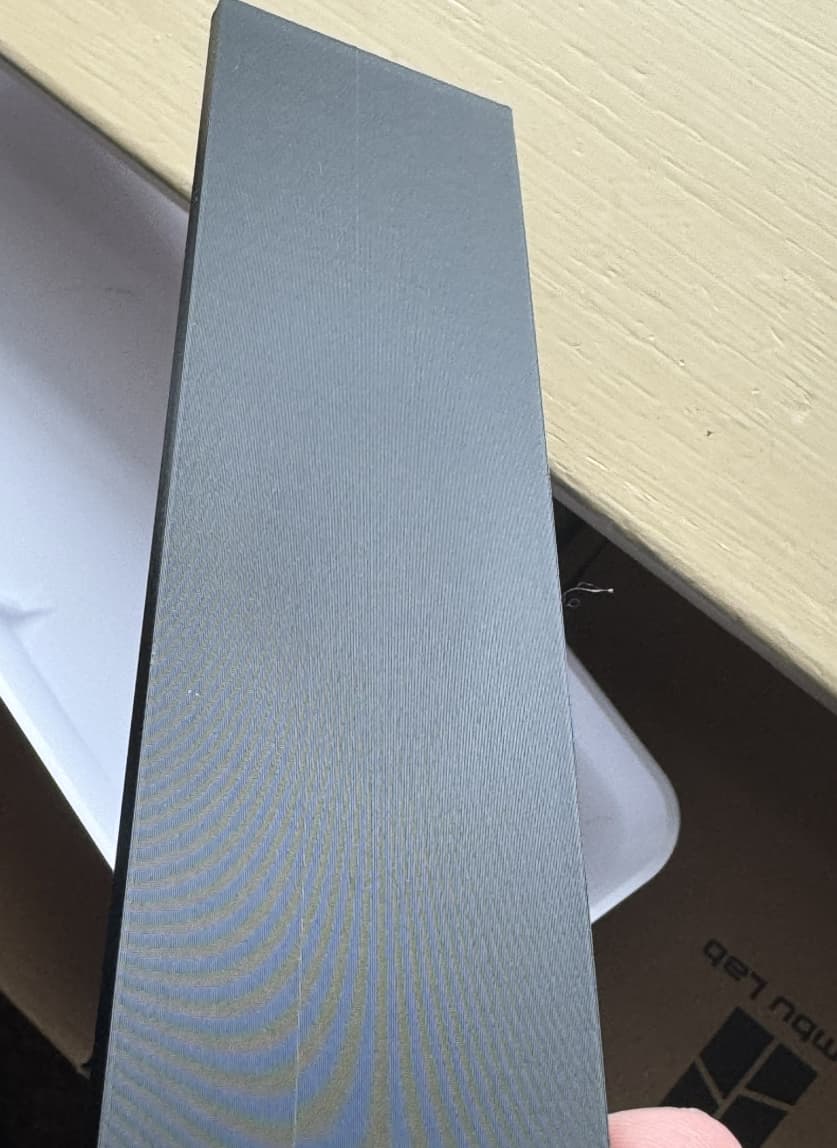
What directionality are the artifacts most prevalent? I’m not sure its as simple as a the pitch or thickness of belt. I’m finding them on some tall flat surface but not on others.
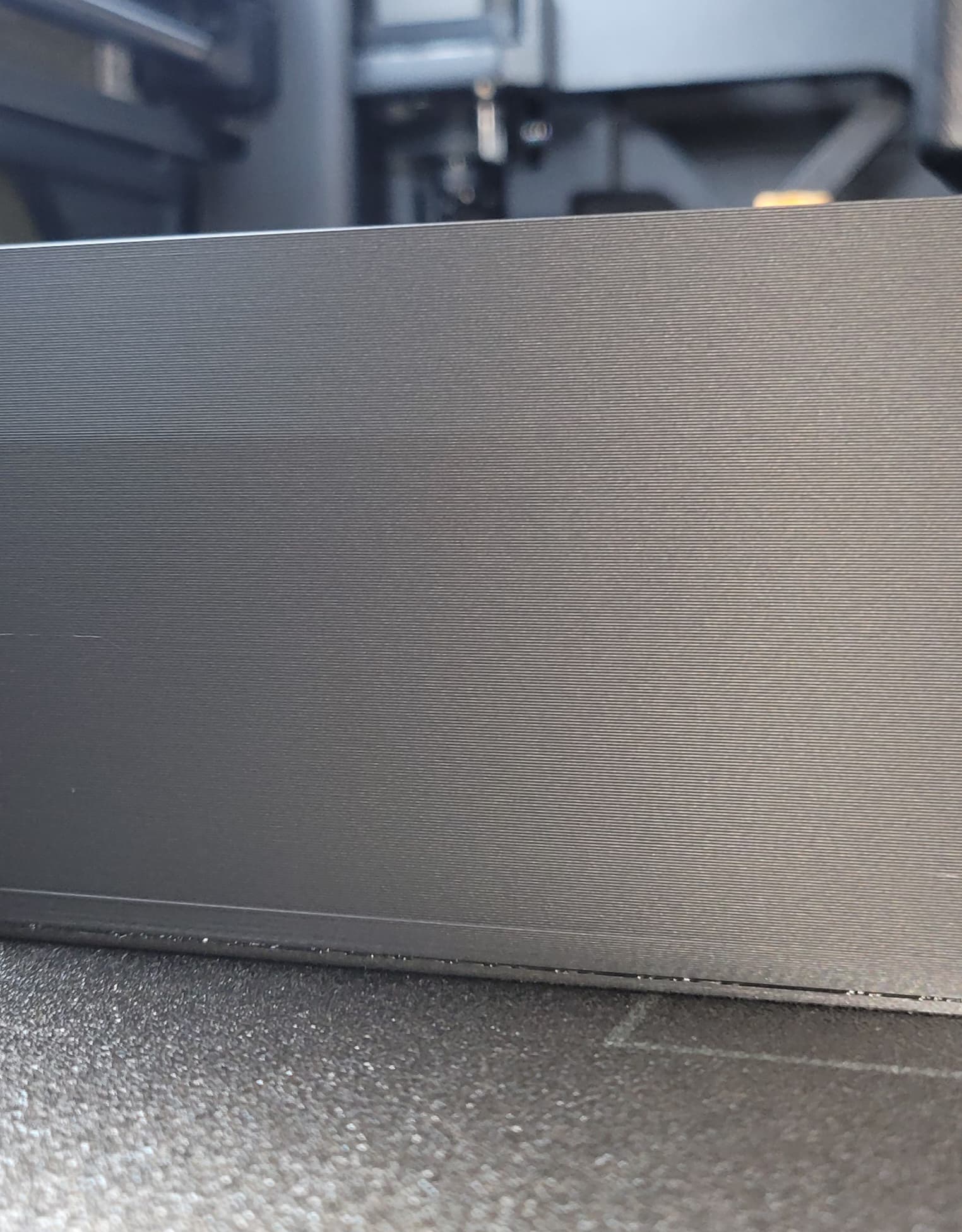
For example, this is flat to the Y Axis and the layers are effectively perfect (approximately 70m tall).
Correct, CNC Kitchen pointed them out in his review. I think they’re PC. Definitely not as nice as the glass ones, but I guess that’s just a tradeoff of having a laser.
It’s happening only on X-axis, where the belt for X-axis movement is. See the 3MF file I’ve uploaded above. You can also print it out and see the results. VFAs are more visible on a glossy dark filaments (i.e. Black PETG). But can be seen on pretty much anything.
Also I’m not sure, but maybe emissivity of the tinted PC sheet may be lower than glass. So maybe (AFAIK, but don’t quote me on that) slightly better heat retention.
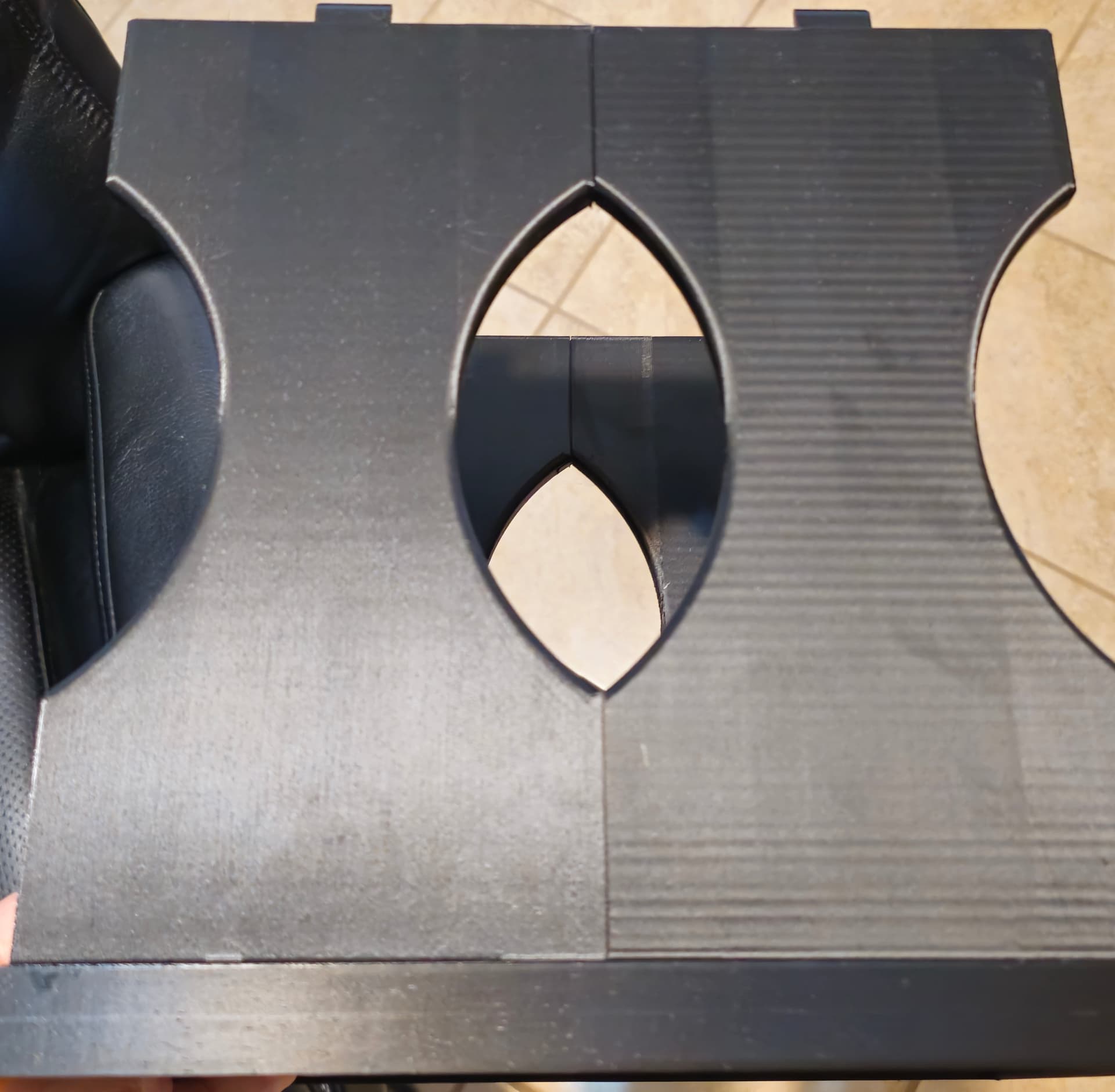
For clarification, this is a stand for my creality filament dryer so it will sit in the corner. Because its not going to be seen, I printed them on purpose to show VFA on the X1C vs the H2D. Both diagonally across the build plate.
 I just thought it funny, so had to comment.