Great, thanks for the info!
I use Elmer’s Washable Disappearing Purple Glue Sticks. They work great and when you wash your build plate with water it turns purple again, so you know when you have it all washed off.
I also have mostly PETG-HF and one or two PETG Basic (“new” - couldn’t they have changed the name, since there is also an “old” PETG Basic?)
The “new” PETG Basic (also in RED, BTW) is giving me poor results. The PETG-HF is doing great.
Has anyone seen a new profile for “new” PETG Basic?
I just read the Bambu Wiki on PETG and lots of really useful information. Got there looking up information on the new PETG Basic. It’s split up somewhat evenly between Basic, HF, CF, and translucent.
Interesting stuff on drying too with advice for printing PETG that’s not quite dry enough - use the generic PETG profile instead of the Bambu.
Anyway, I hadn’t read it before now and it’s really recommended for anyone else who hasn’t. Solves lots of problems before you ever see them. Also covers a lot of the issues people post about. Love the hint on step changes too.
They really upped their game on the wiki. Worth checking if you haven’t checked it more recently or ever.
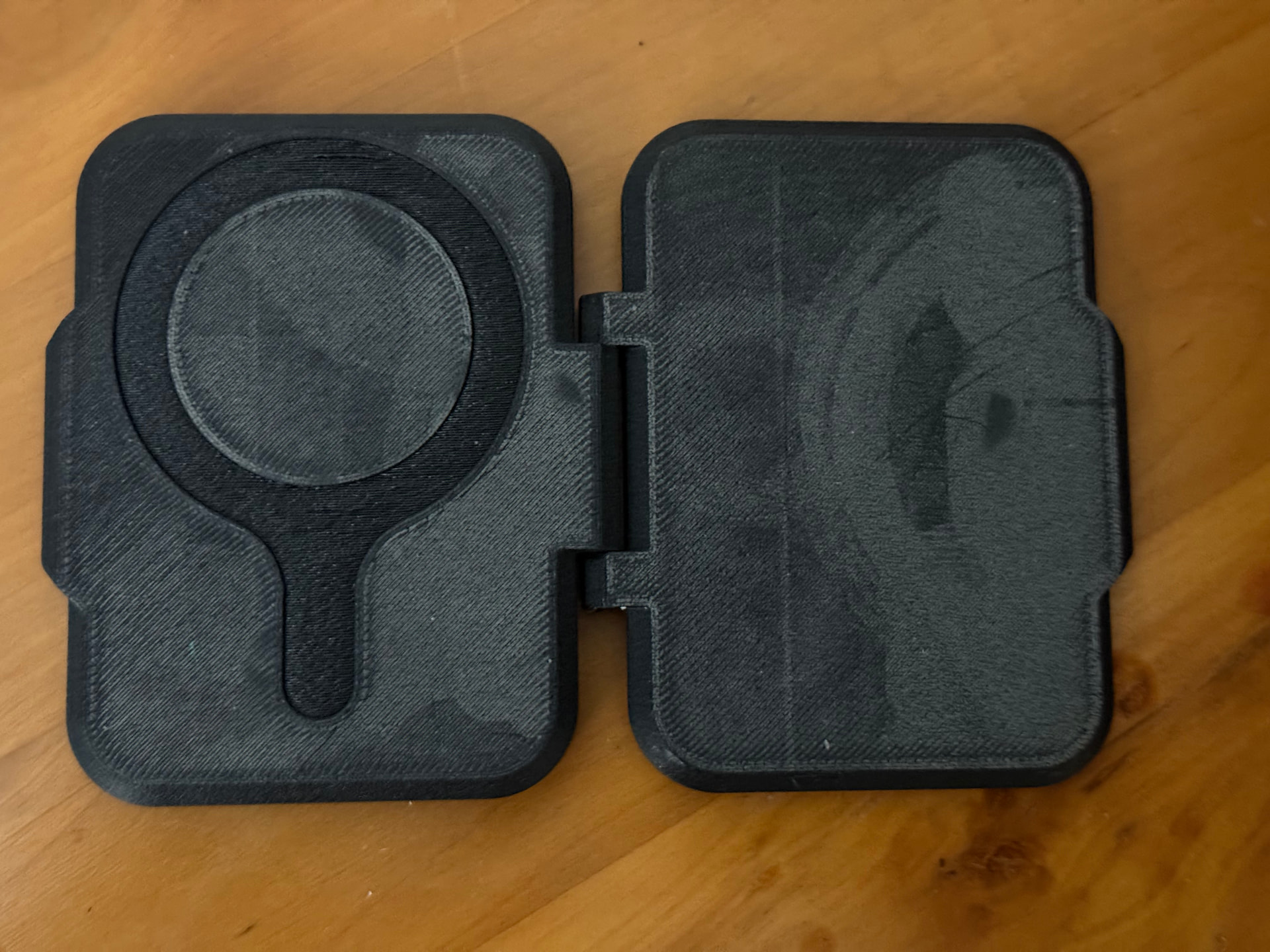
You can get rid of those grey stress marks by doing a quick pass with a small blow torch. I always keep one by the printer.
Well, I’m printing now with the new Bambu PETG Basic (white) and it’s printing beautifully using the Bambu PETG Basic preset. No tuning has been added and if it keeps printing like this, none may be necessary here. Not seeing any stringing or doughy appearance yet but early in the print still.
I dried it pretty thoroughly with a dry air purge into a Sunlu S2 and hit 16% RH in about 8 hours at 65C. At room temperature it pulls a hygrometer below 10% (as low as mine reads).
The moisture seemed to come off fairly easy and the filament didn’t soften any during the dry that I could tell.
No real odor, either. No idea about outgassing of chemicals I can’t smell though.
At least so far, it’s printing as good as PETG HF and my PETG HF prints were beautiful.
So at least here, the new PETG Basic is good!
More to add - surfaces are looking beautiful. No dough and no zits. I used glue stick on the smooth PEI plate and the prime strip at the front of the build plate pulled right up with both good adhesion and easy release.
I was a bit worried with some of the posts but this stuff looks like it’s a solid PETG filament if this first test is a good indication. Will be buying more when the time comes.
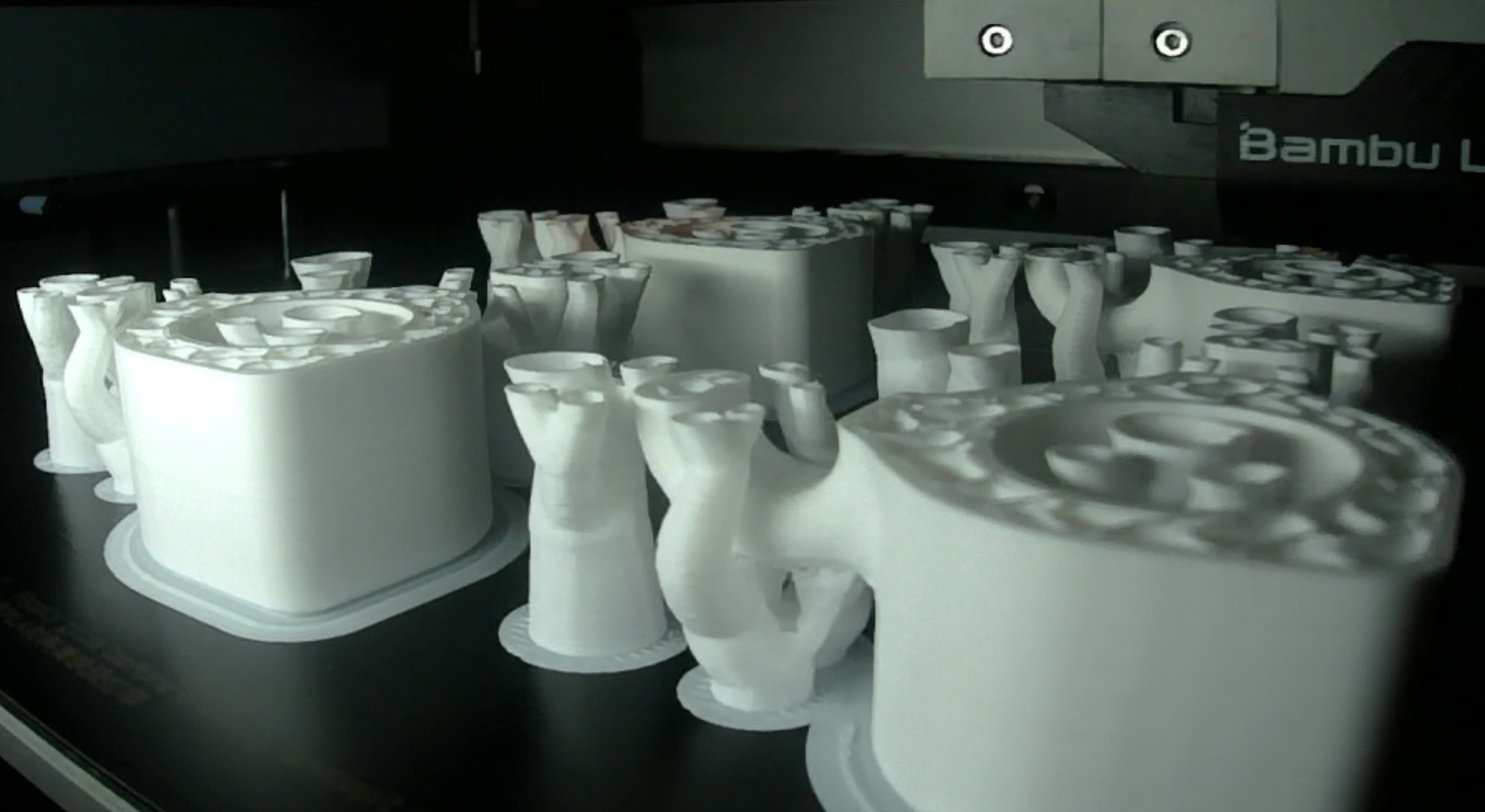
I have been hesitant to try it, but with this comment and the sale i’m going to have to give it a go. Thanks for sharing the pic!
I’ll get more tomorrow but the print came out great. Parts were held securely but separated easy from the build plate maybe thanks to the glue stick.
Surface looks somewhat matte. Uniform and smooth. Really pleased with it and the results are very similar to what I get with PETG HF.
I came in to say this, it’s surprisingly matte (the black is anyway!)
Maybe stupid question.
How do I know if I have the “new” or the “old” PETG Basic?
I bought some grey PETG Basic a week ago from a local store (Philippines).
I would like to know whether this is the “new” or the “old” .
The only prints I attempt without glue are PLA on smooth PEI. I’ve had over-adhesion issues with other bed/material/temperature combinations so often that it just is not worth taking a chance. I might change my mind if I were printing the same thing all the time, but most of my prints are one-offs.
Glue sticks are cheap but can leave marks on the print.
Liquid glues can leave a smooth surface, but are expensive.
I make my own liquid glue with cheap glue sticks and 91% IPA. The only problem I’ve had occurred when I failed to use enough glue in the mix.
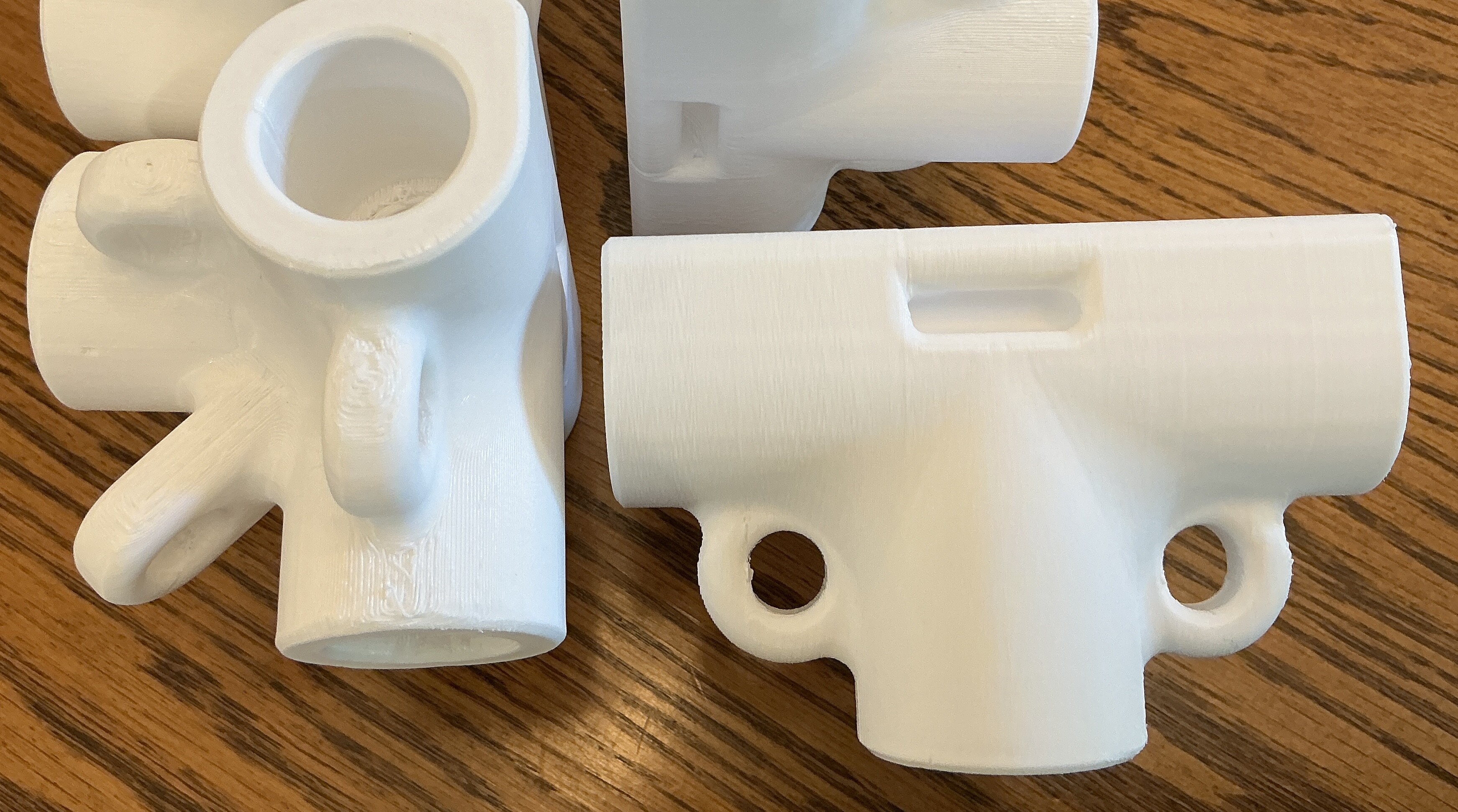
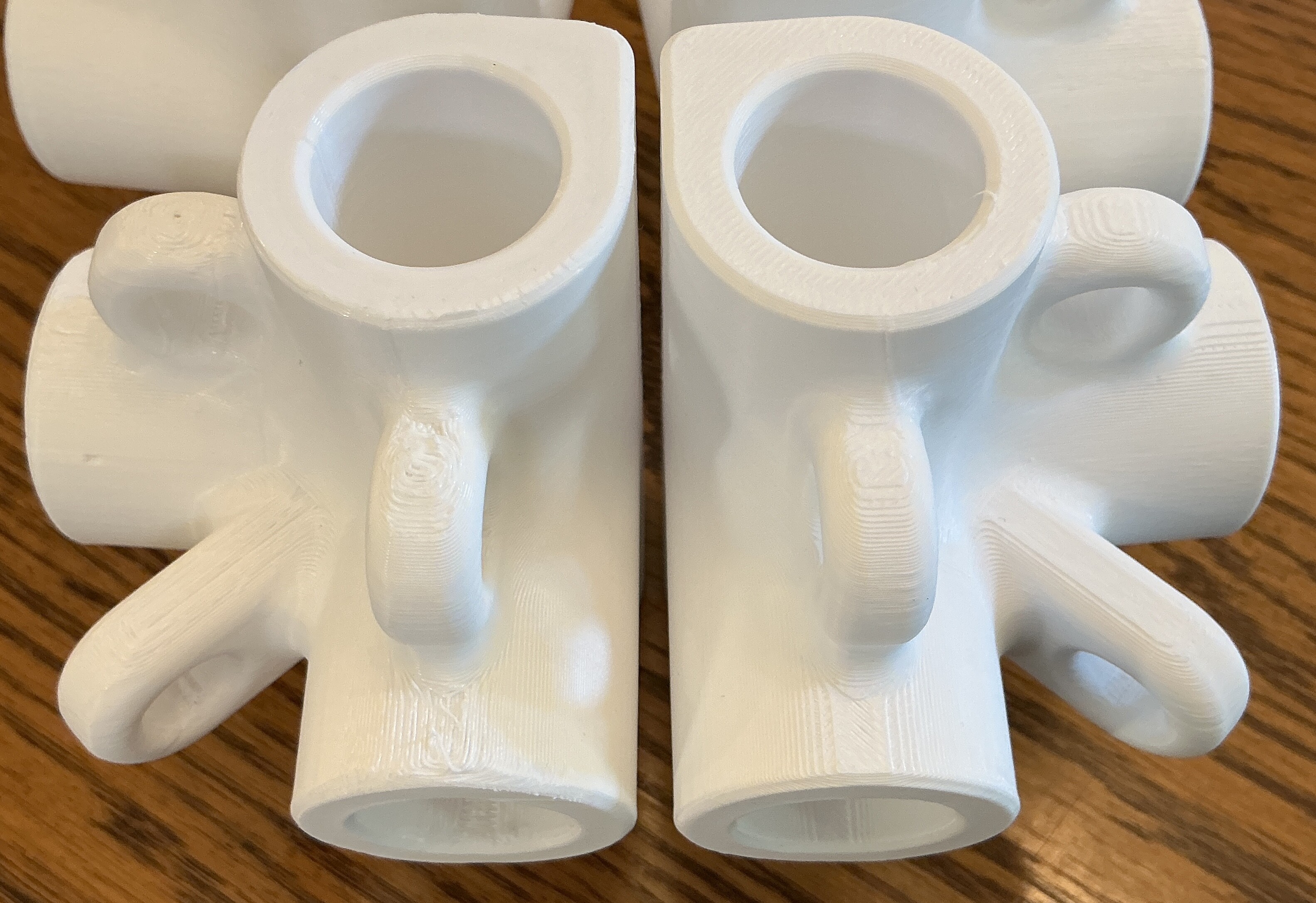
Ok, now I can look in more detail and the quality is pretty good but with a few deficiencies — that may or may not be due to my settings. I don’t know. But here are the issues I see. YMMV
Big ones are where support touches the model. The bottom photo shows where support touches on the bottom (left) vs the printed region that was on top (right). These parts all show a little bit of scarring from the tree supports. The support was a little hard to remove cleanly and that may have to do with settings. Much of any remaining support bits would pop free with just a fingernail. Some took an X-Acto blade to come loose.This was just running the stock PETG Basic profile with very few adjustments.
The other visible issue is apparent in the top photo. If you look at the part that’s on its side, there is some very faint banding visible from model features inside the model. It’s most apparent at the ends of the slot.
So not completely perfect. I printed the same parts in PLA while sorting the design and support just broke away but there was a similar light banding on either end of that slot. In my case the issues don’t matter and really are pretty minor.
All in all I’m fine with it and will be using it more.
Have you tried printing something around 20mm thick and then removing it?
Not using the new PETG Basic. I have with other models with PLA though. In those cases, warm water and working in from the edges frees it up. I use glue though and the warm water helps soften and make the glue let go.
I know you don’t use glue though. For me that’s a secret sauce because it keeps the part from actually touching the build plate so it can’t try to bond or whatever process is making your prints not want to let go. The glue helps with holding the part on the build plate to prevent lifting/warping but also helps with releasing parts since the glue has a fairly low yield stress.
On those parts in the photos the footprints are all fairly small but they all come off seemingly the same as the same parts printed in PLA where I also used glue. Glue is an extra step, a little messy, and adds a cleanup step to the model to rinse off the glue, but it helps in lots of ways to the point I almost always use it. When I haven’t, or if I miss a spot, if there’s print issues that’s where they almost always are.
so if what i read is true the first series of PETG Basic stopped selling mid 2024, so unless that role was there for almost 2 years you have the new one
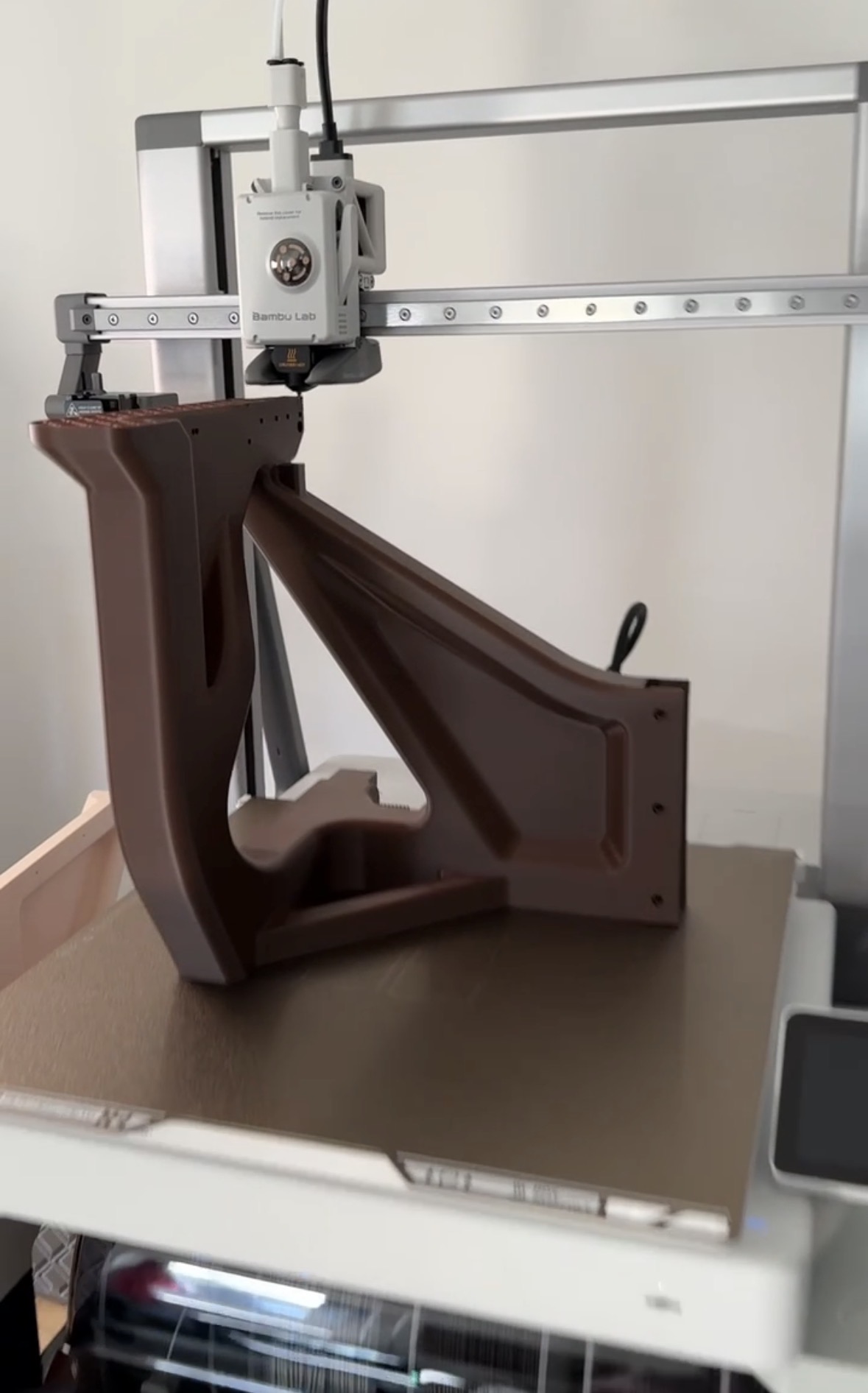
The filament box style changed - the new ones are in a thinner box with refill instructions printed on the box instead of a separate leaflet.
Thanks for the responses. That means I have the “new” PETG BASIC and I am very happy with it on my P1S. After doing only first layer calibration and the built in flow dynamics calibration I am getting good print results with it. I used grey for a drawer project and the result is not that shiny but rather matt. Small problems on a 45 degree wall, I guess I need more drying.
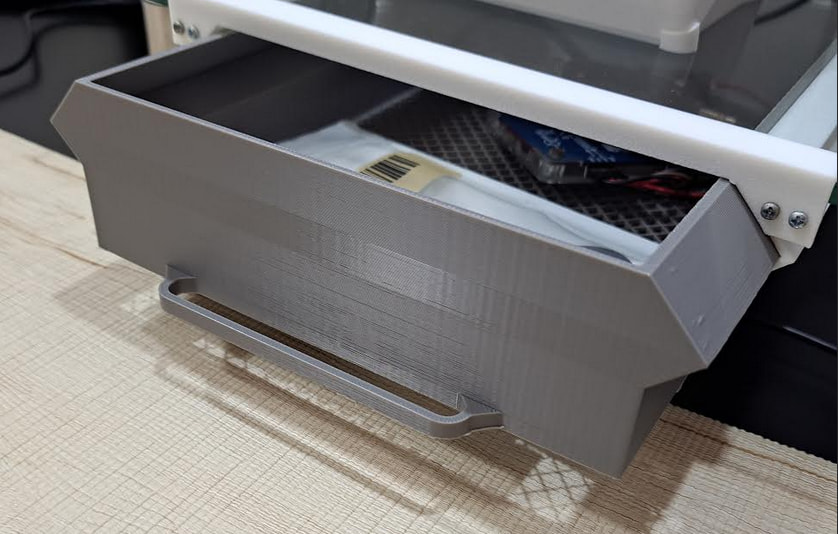
The PETG basic is very sticky on the textured PEI print plate, quite difficult to remove the prints.
Bambu Lab should make some specialty plates, such as plate for sticky filaments like PETG, and plate for hard-to-stick filaments like PA.