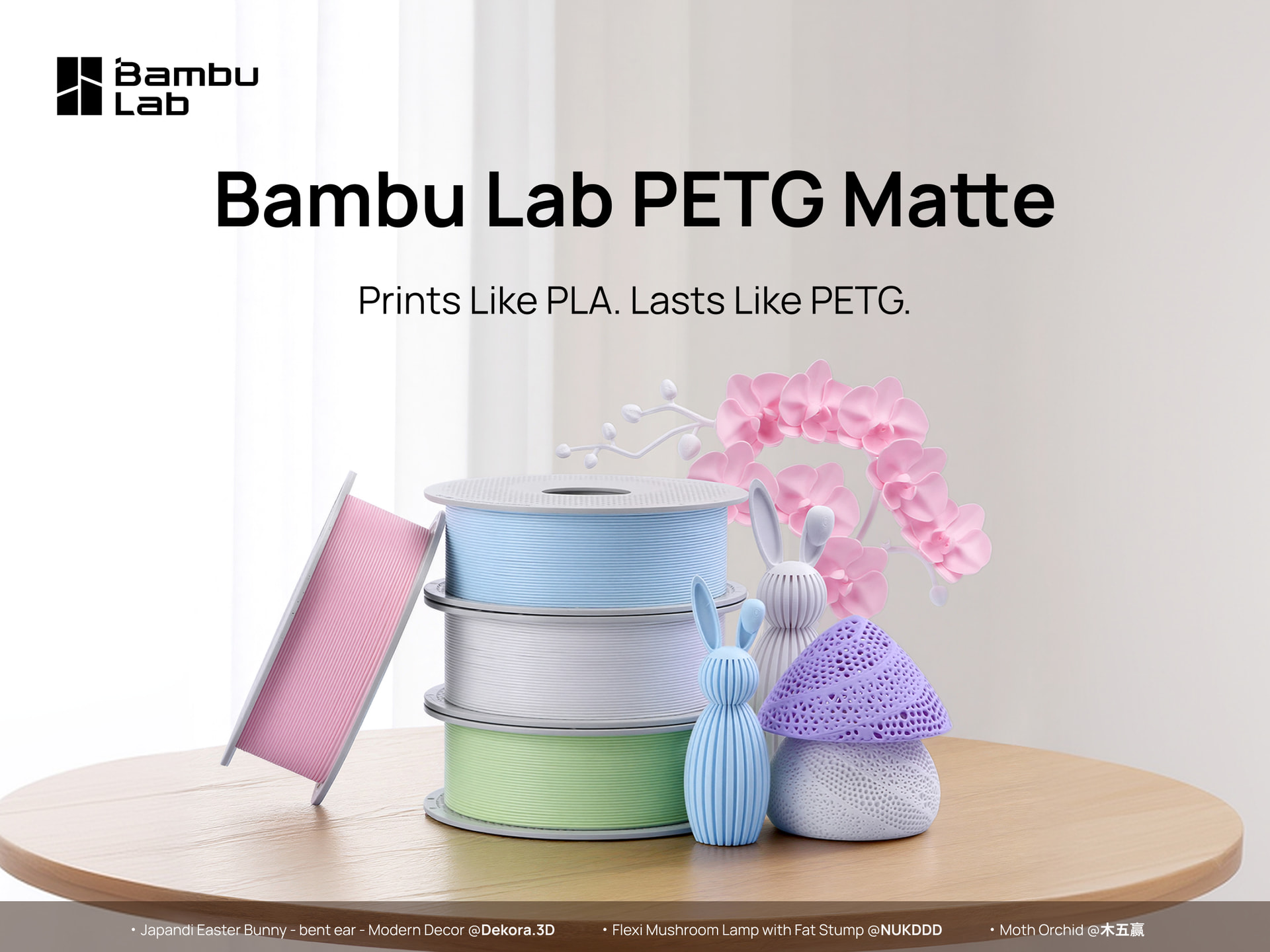
Bambu Lab PETG Matte is the all-rounder of our PETG lineup. It delivers a premium finish with vibrant colors that helps hide layer lines. It maintains the toughness and durability PETG is known for. A refined formula improves its moisture resistance and provides a smooth, PLA-like printing experience.
PETG that prints like PLA.
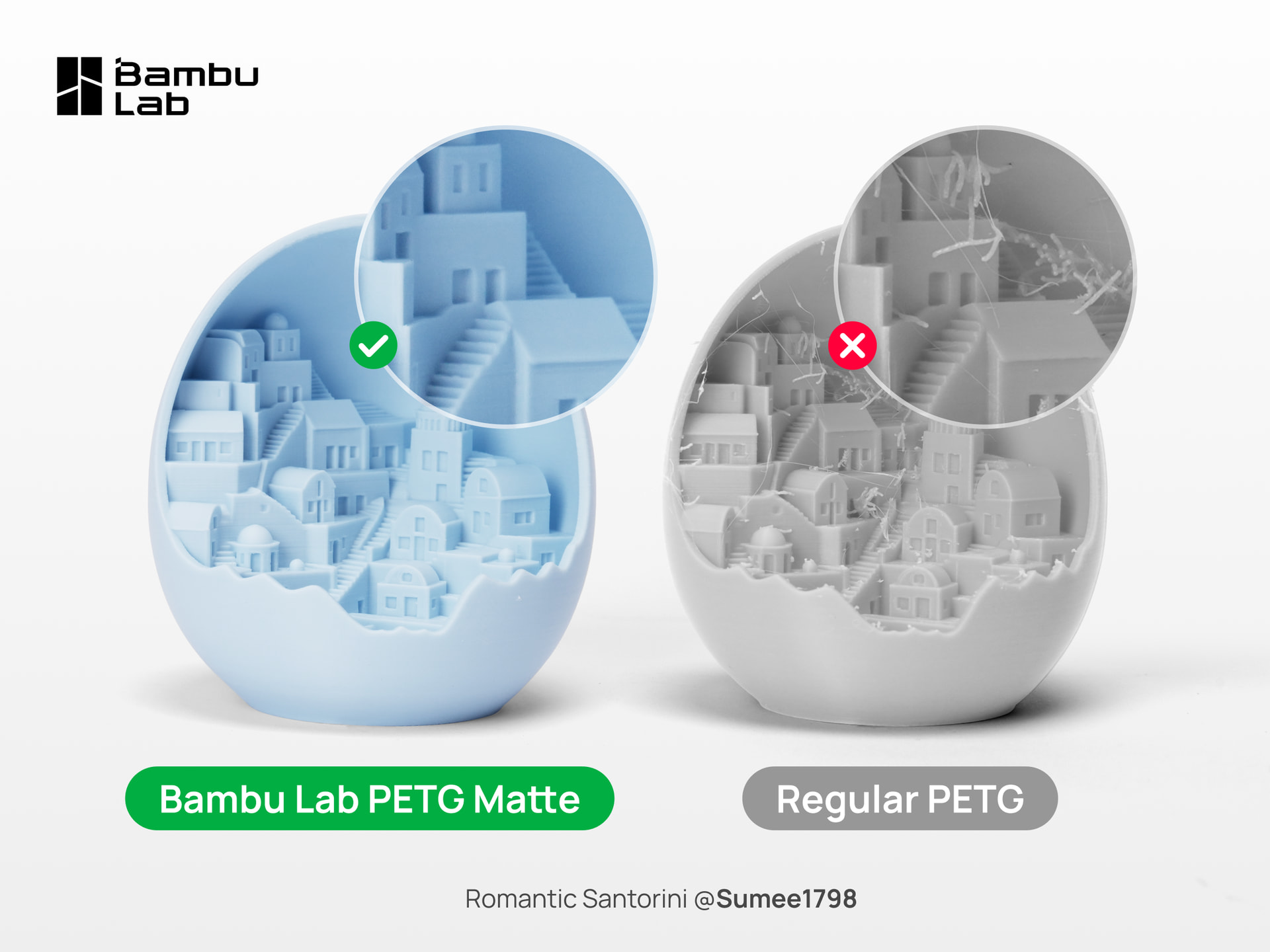
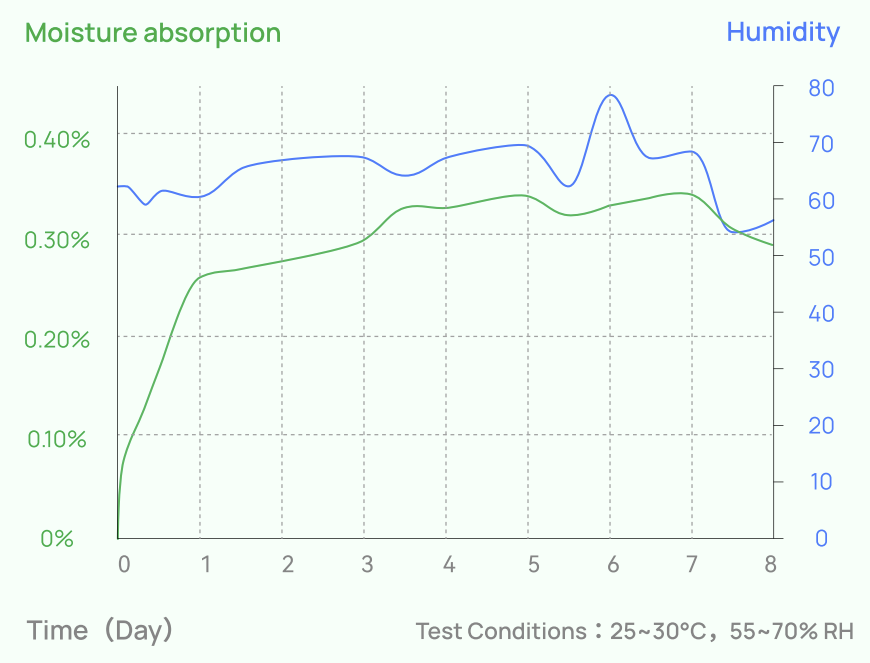
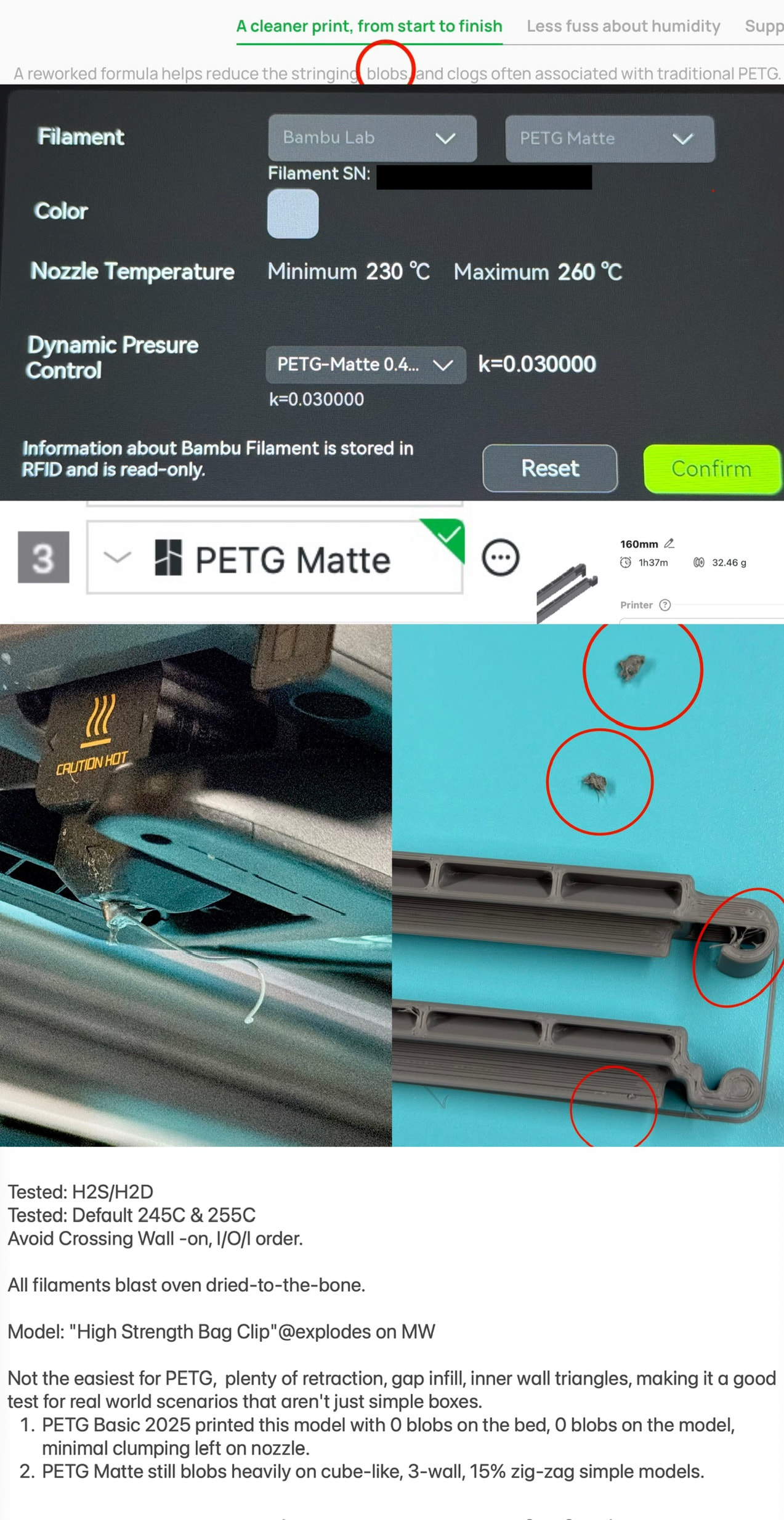
PETG Matte’s improved resistance to ambient humidity helps reduce the stringing, blobs, and clogs often associated with traditional PETG. Even on long prints with hours of between features, the results stay reliable and consistent for a smooth printing experience.
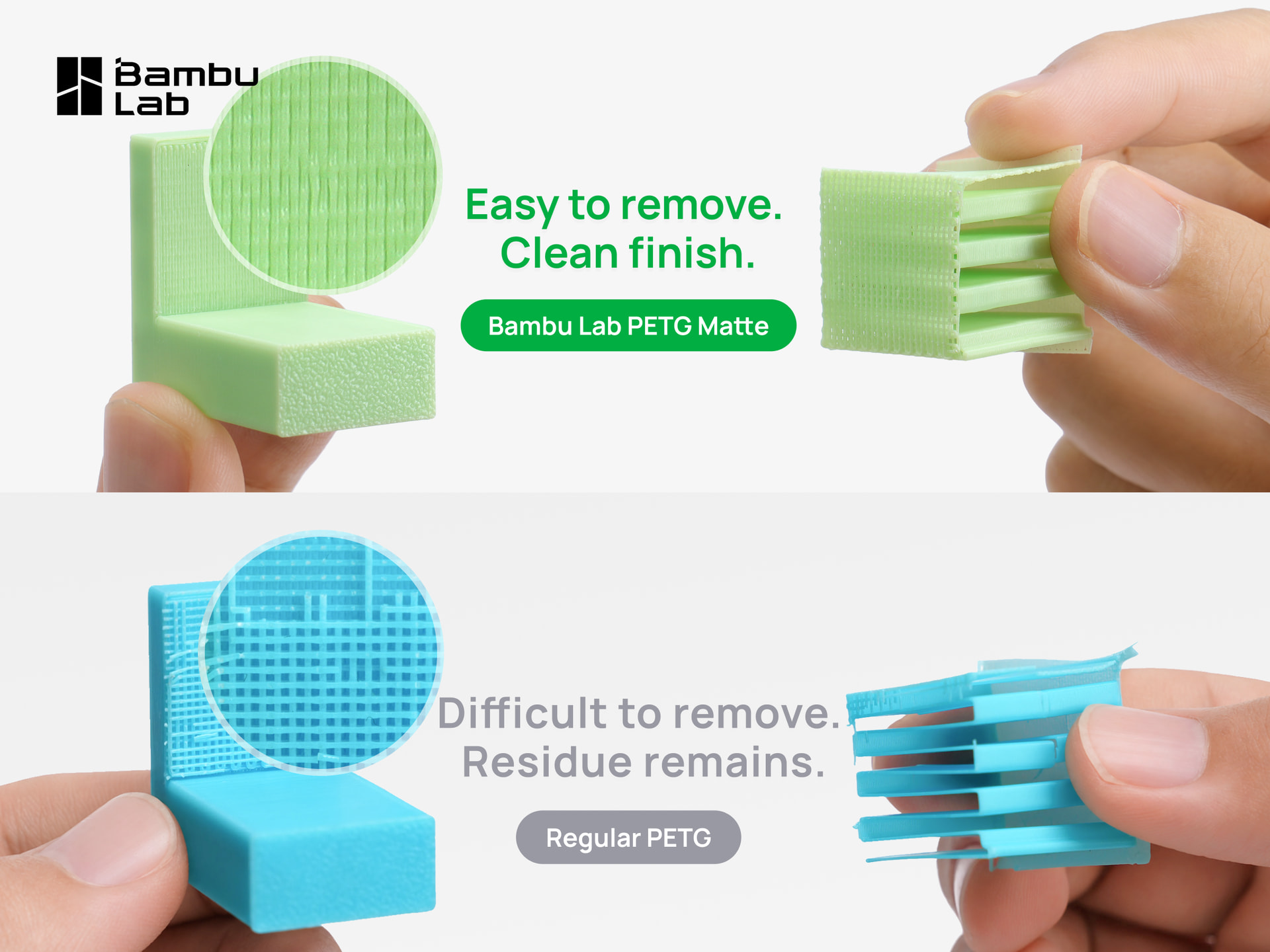
It also makes support removal easier while keeping strong layer adhesion. Even on steep overhangs and deep holes, supports peel away by hand, leaving the surface underneath smooth and clean. No extra support material needed.
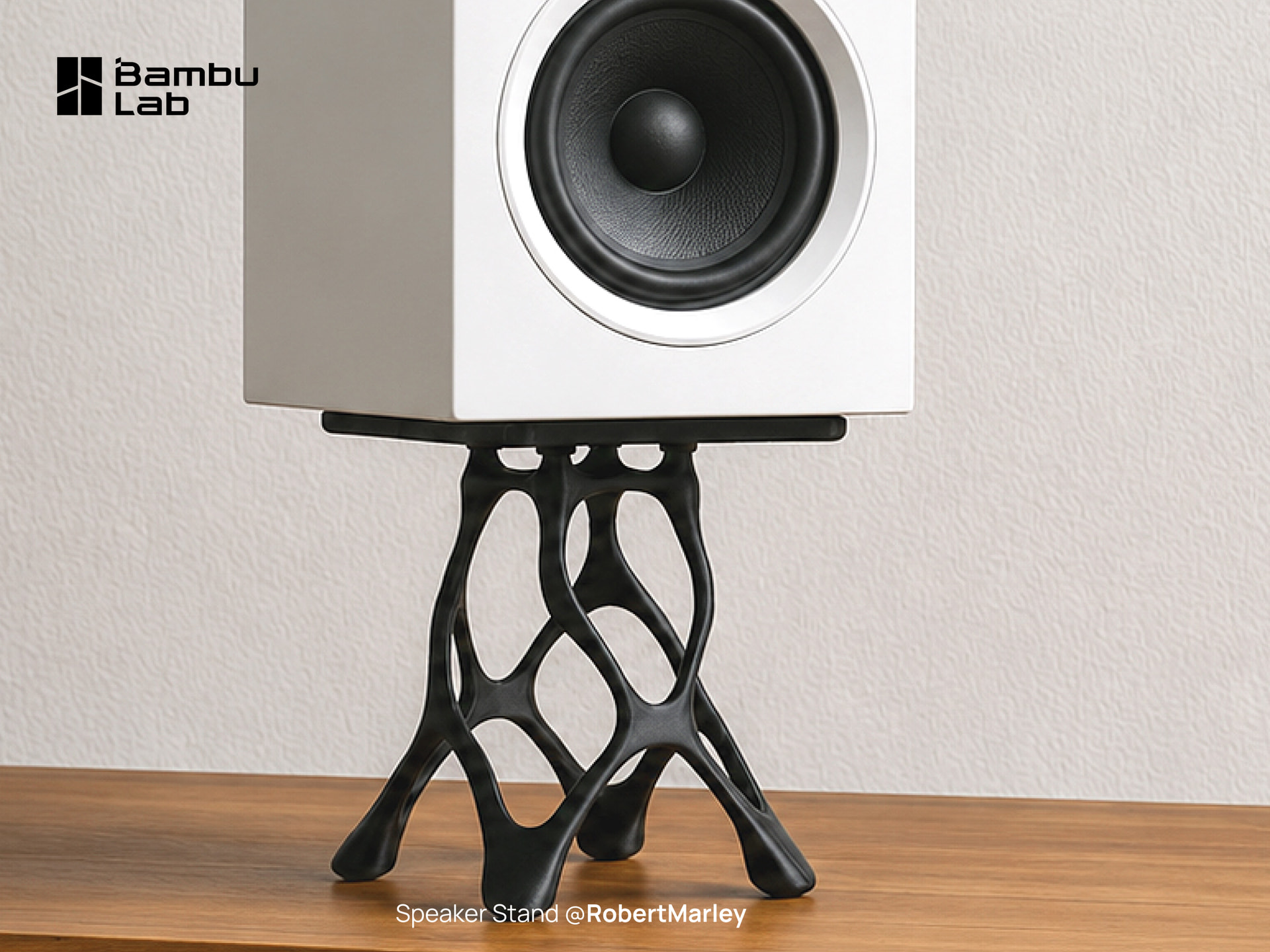
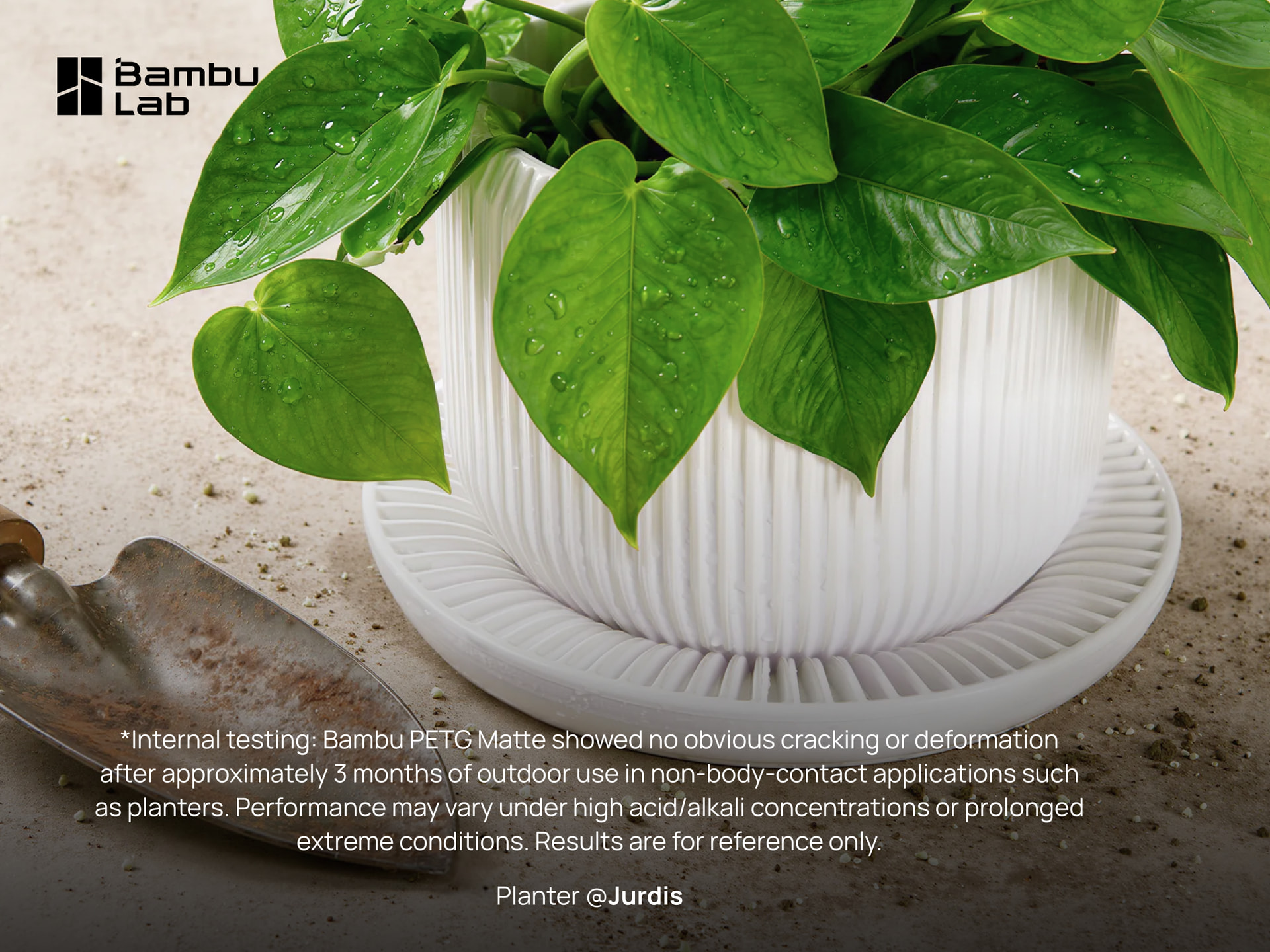
Behind the refined finish is the durability PETG is known for, good enough for load bearing hooks and speaker shelves, moisture-resistant enough for soap dishes and bathroom organizers, and weather-resistant enough for planters under the sunshine.
Heat. Humidity. Weight. Weather. Bambu Lab PETG Matte takes it all.
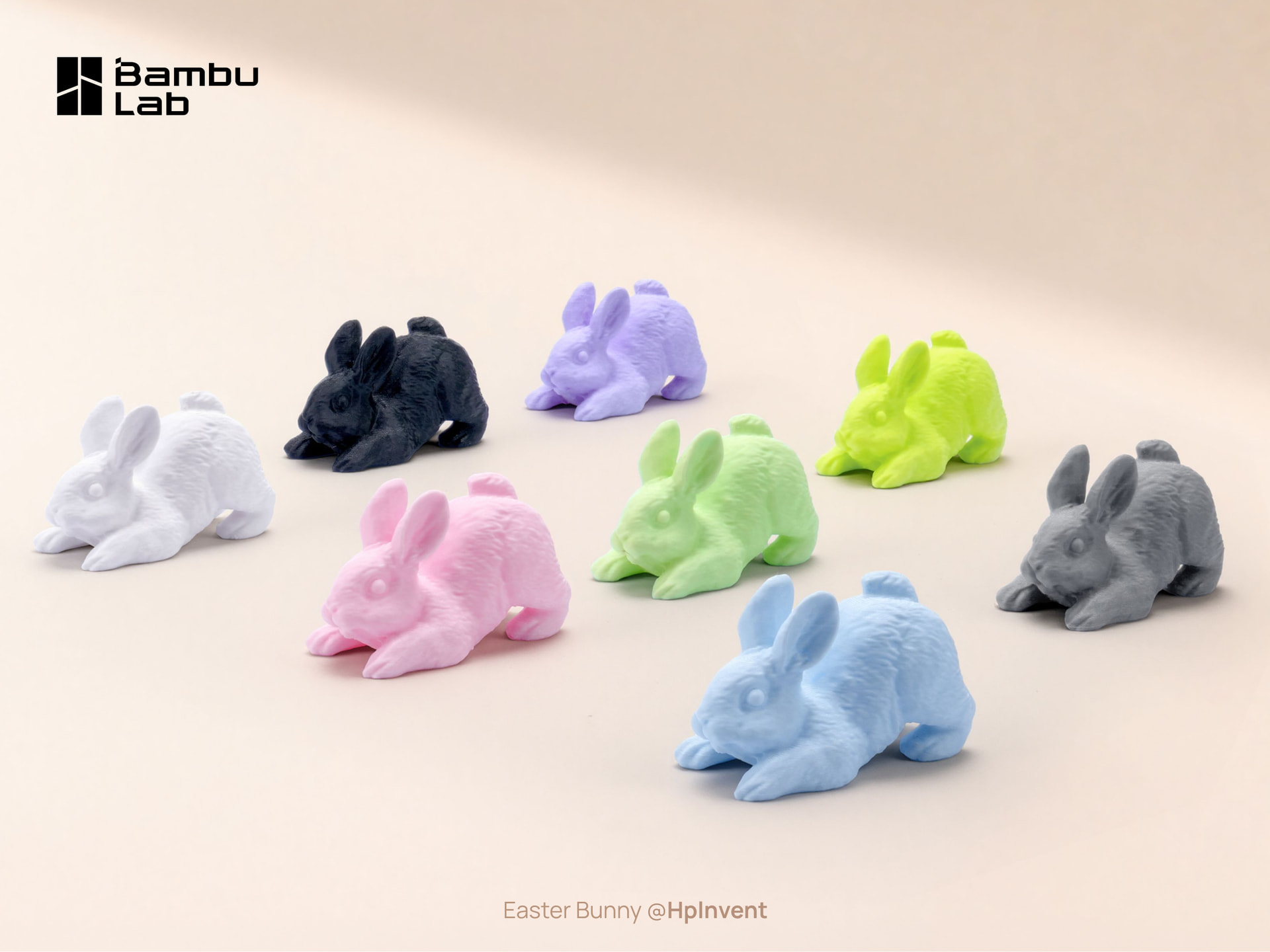
PETG Matte is available now in Bambu Lab Store in 8 vibrant colors, including baby blue, avocado green, pink, and violet. There’s a shade for every room and every mood.
Me, who JUST received his order of BL PETG Basic as a substitute for the discontinued HF because there was no matte alternative, only for them to release actual PETG Matte:
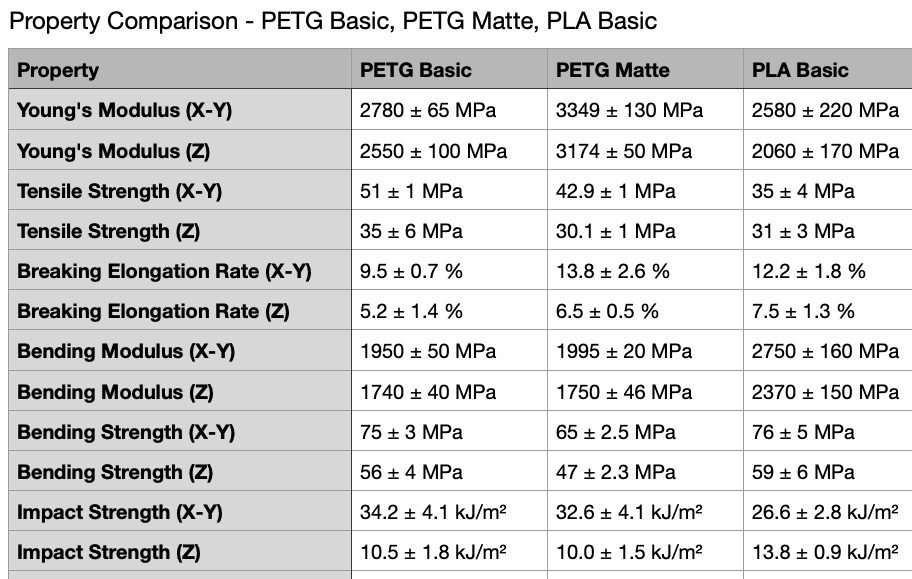
Here are the mechanical properties of the PETG Matte as compared with PETG Basic, edited to make them side by side for easy viewing. Also added PLA Basic for more perspective.
Note that when compared with PETG Basic, PETG Matte is more rigid (stiff) (higher Young’s Modulus values) while weaker (lower Tensile Strength) and more brittle (lower Bending Strength). This is consistent with what happens to PLA Matte - the additive that makes filament appear matte also makes it weaker and more brittle.
When making fuctional parts, these should be taken into consideration and design and slice accordingly.
I’m sure some will experience it as easy as PLA but that couldn’t have been further from truth. I wanted to love this, the surface is genuinely beautiful, but can’t.
It blobs like there’s no tomorrow and blobs ruin surfaces.
On a scale of 1-10 for blob-ness,
And don’t tell me to “dial down FR”, the default 0.95 is already very under-tuned, you can see the gaps in the photo. PETG Basic 2025 printed just fine without needing FR under-tuning.
PETG HF printed beautifully if it was properly dried but was problematic if not properly dried. That’s true with many filaments and I bet it’s true with PETG Matte too.
Blobs are a symptom of too high of moisture content. It may not be moisture in your case but I suspect it may be.
I bought a couple rolls to test with. I really liked the HF white so hoping this comes out similar. Seems like a missed opportunity though, Easter colors during fall and other holidays…
I had to dial down PETG-CF to 0.85 to get proper prints without gathering excessive material on the tip of my nozzle. That was a Tungsten Carbide nozzle btw. But also with Hardened Steel, the FR needs to be 0.85.
All are blast oven dried myself 65C/8h right before printing, literally from oven right into AMS (allowed to first cool inside) filled with fresh desiccants. The disparity was consistent across multiple rolls.
I’m pretty sure it’s not moisture, when blobs aren’t getting in the way the surface is immaculate, absolutely fantastic, and with some standard retraction tuning there’s no observable stringing.
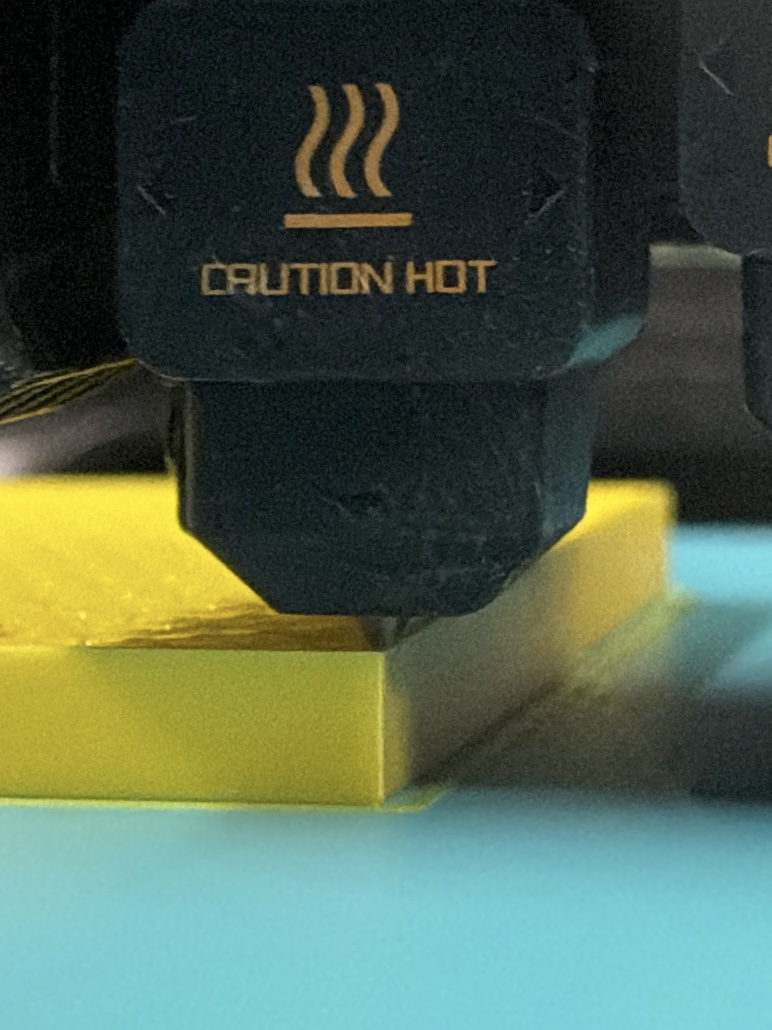
While on this topic, I should also add that for PETG Basic 2025, even when I accidentally printed a moist roll that stringed everywhere, the blobbing was still minimal (~400g model):
I’m using a standard hardened on all of them (that exclusively prints PETG).
PETG-CF I did have less experience with, partially due to a bad reel I’m currently stuck with from Bambu that I still need to contact them about… but it’s bought so long ago I just print ABS-GF instead and kick the can down the road lol.
I did saw threads requesting nozzle wipe per layer specifically for it…
Default is definitely not good enough. I add faster retraction, wipe while retract, spiral z-hops on all PETGs, but that couldn’t save Matte from blobbing.
Default sucks, but if I used my custom profile to show it not performing as advertised, some might say “hey print it again without tampering”.
Thanks for taking the time to share your experience on the new PETG Matte.
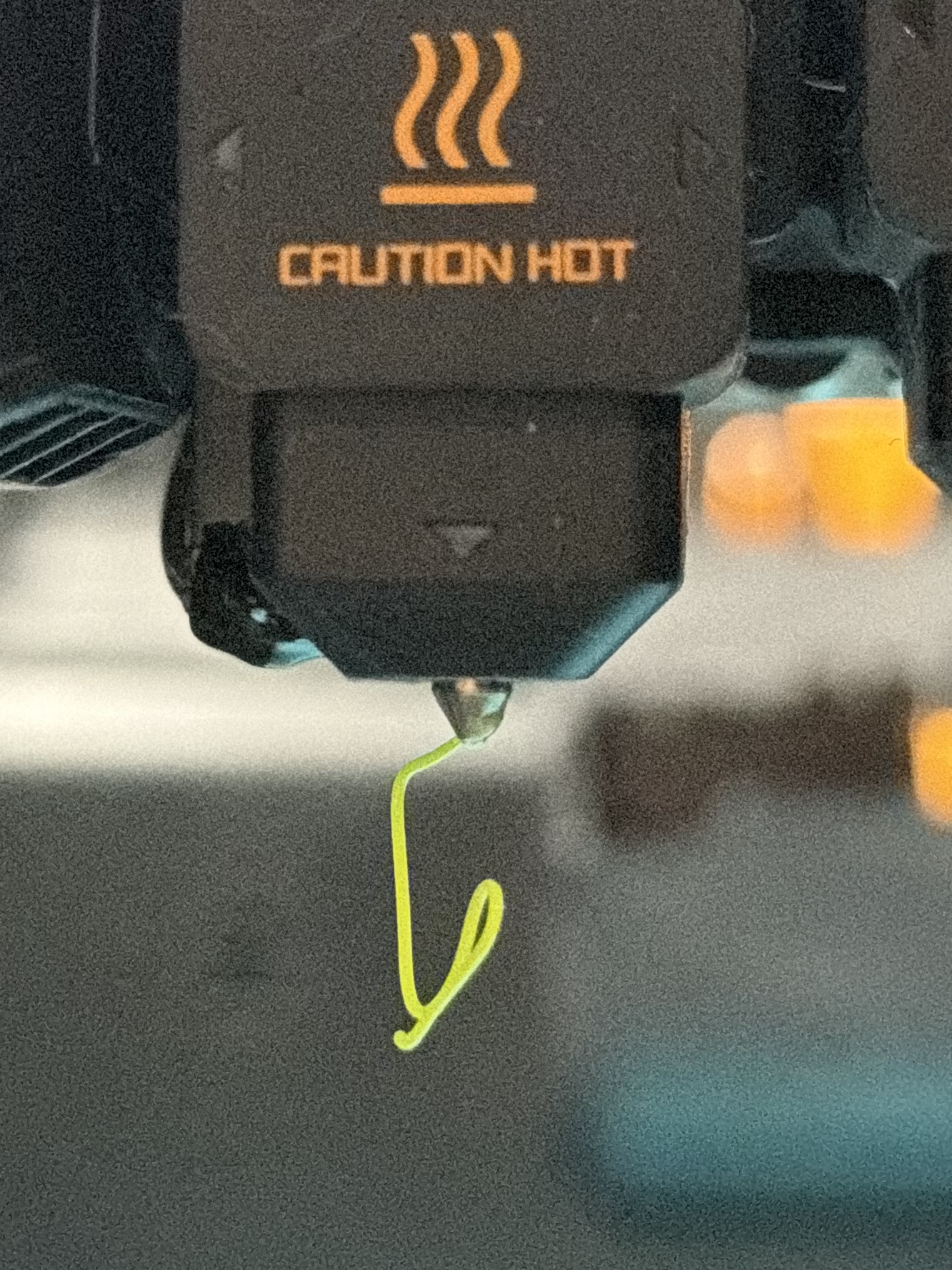
Is the last picture a manual extrusion, or oozing after printing?
The oozing might still be a reason for the blobs.
The question now is, if this is caused by moisture or the expansion of certain additives under heating?
Still I will probably prefer the PETG Matte over the PETG Basic, as I just don’t like the shiny appearance of it.
Additionally, I hope Bambu still needs to refine the profile for this nnew material.
Given the fact that I recently bulk ordered a lot of PETG HF (when it was back in stock), I don’t need it right now, but on my next order I will add some Matte to do some testing.
The yellow filament is PETG Basic 2025. Grey is PETG Matte.
Picture 2 of yellow was after printing and it had solidified, so yes a bit of oozing, but that’s okay. It was there just to show Basic 2025 not really blobbing even when wet, not related to Matte blobbing during printing.
Additives, could be, hard to tell, or it might be that the base pallets are formulated differently, from what limited info I’ve seen pallet makers tout things like less warping / faster crystallization etc. for their different ‘grades’.
Both Basic 2025/Matte are curious in that the finishes across colors have more differences than expected. I’ve used majority of HF colors and the finishes were a lot more consistent (across colors).
Matte Avocado Green, nicest I’ve tried;
Matte Baby Blue, also good, but kind of looks just like HF;
Matte White, paler than Basic 2025 White, but both are pretty HF-like, with Matte only marginally less glossy.
Matte Grey, also looks like HF, glossiest (comparatively) of the bunch;
Matte finish is very soft to the touch, in a good way, almost as if soft-touch coated, but without the crumbling coarse feel of PLA matte.
Hi everyone. The main issue when printing with standard PETG is its tackiness on the top layer, causing colors to stick to one another. I’d like to ask the manufacturers: will your new matte PETG have the same problem, or will it behave like PLA when printing with multiple colors on a smooth, flat surface?
So… 1 part curiosity, 1 part science, 1 part I wouldn’t mind an easier path printing these, went and tried to see if 0.85 FR can mitigate the blobs.
(Matte Grey) Standard Hardened nozzle; 0.85FR; 0.4spiral/wipe on retract/50retraction speed added; same I/O/I wall, 15% zig zag.
The model takes about 50g, 437 x 0.2mm layers, straightforward wall paths with some light overhangs.
Logs below
0 layer: nozzle tip manually thoroughly cleaned
~30th layer: (no photo) some very slight blobs can be seen.
161st layer:
Note how the blobs actually shrunk a bit.
~432nd layer: (no photo) the blob was further a bit smaller.
Assessment
Blobs don’t grow backward, except after accumulating to a certain size they’ll get pulled away, which is what happened in-between my checks. I’m pretty sure this is indeed less/slower blobbing than before, by a good amount, but even on a small model, it’s still getting dragged on to the print. This test piece did came out clean, but it’s essentially a Russian Roulette of… blobs landing on sparse infills (lucky), walls (unlucky) or solid infills (unlucky). Overall a valid bandaid fix (validity of marketing materials aside), tho one downside is it made corners quite a bit uglier (I/O/I order), further tweaks might help.


 &


