Flat keychain

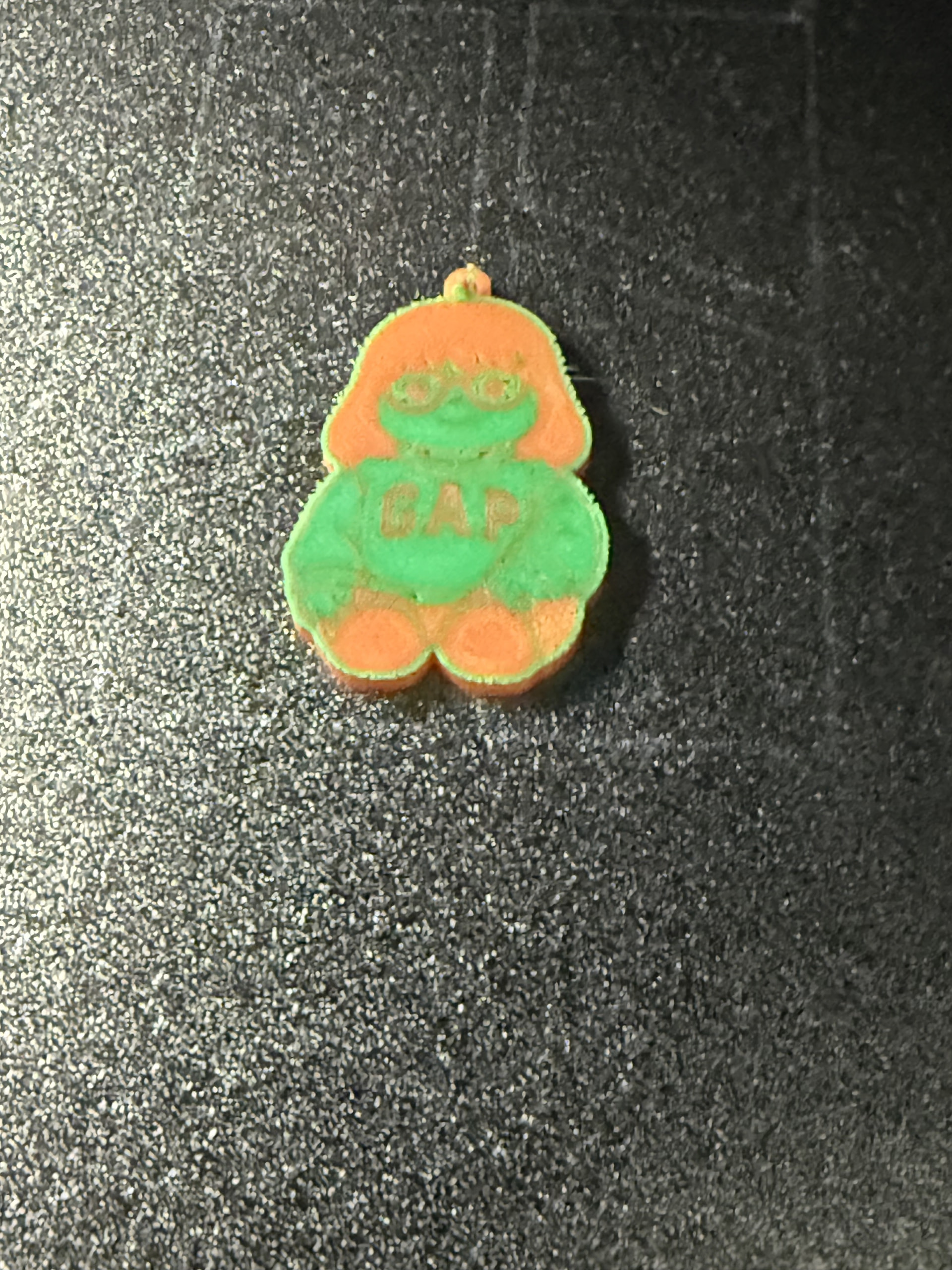
I’m a beginner in 3D printing. I wanted to print a flat keychain, about 3mm thick and about 50mm high. I used a P1S printer, PLA Basic filament from bambu, and a 0.4 nozzle.

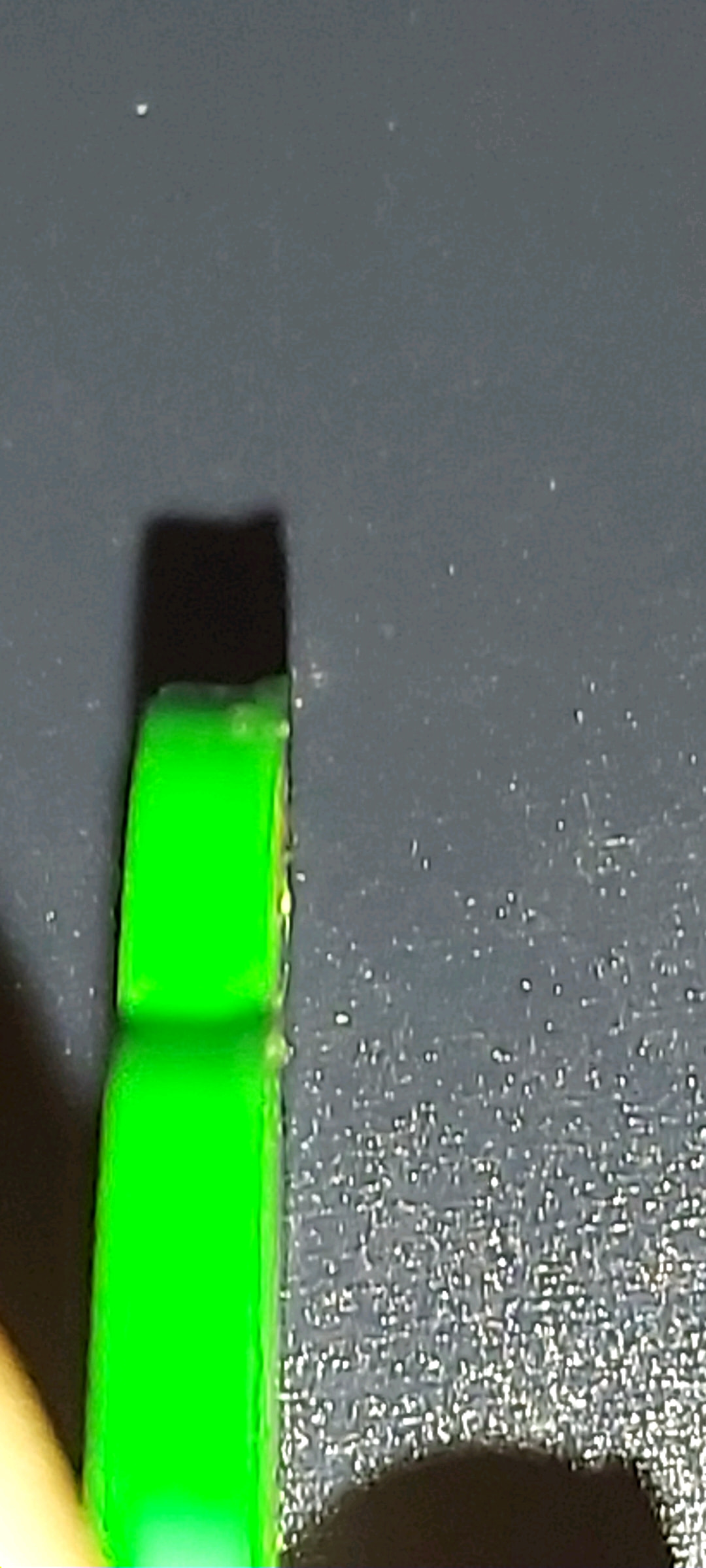
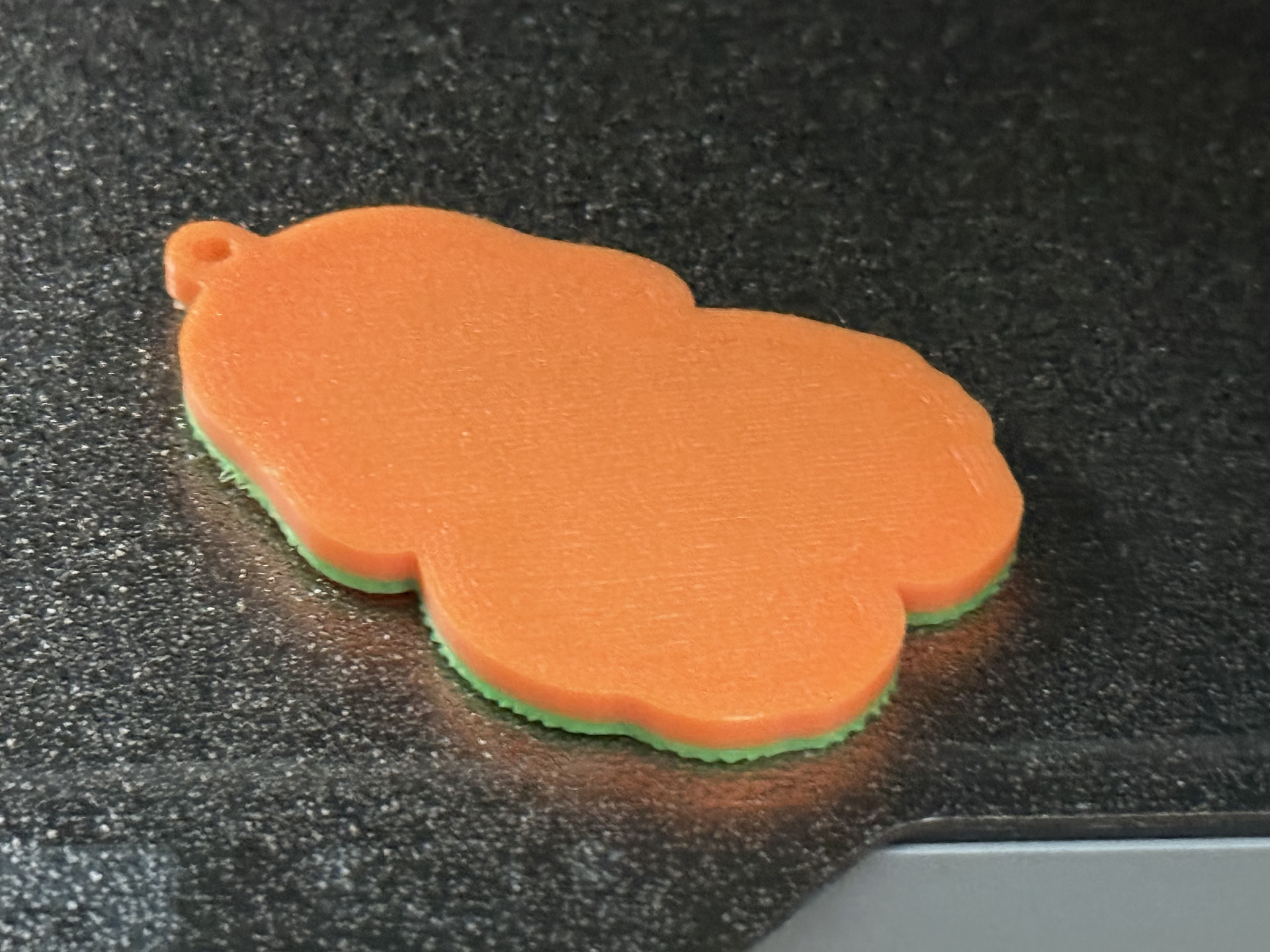
First, I printed with a 0.12mm fine setting and ironing enabled. The last three layers bulged outward around the entire circumference of the printed keychain. For the second print, I changed the settings to 0.08mm extra fine and turned ironing off, but the effect remained. Overall, the keychain printed quite nicely, except for the upper, protruding edges, which are a bit jarring.

no ironing:

with ironing

This is best seen in the shadow cast by the printed object.
What should be set to make the wall come out straight?
Could a moderator or high-level user please add the tag “failed-print” to this topic?
I don’t have permissions to edit tags yet.

Welcome to the forum.

I wouldn’t say this is a failed print as it does complete. It just need some settings adjusted.

How many top layers do you have enabled? Are you able to upload the .3mf file?

Keychain_Lenka_test.3mf (2,1 MB)
I printed this keychain as a test using the filament that came with the printer, hence the colors.
Unfortunately, I don’t have a file with the settings for the 0.12mm fine setting.

A quick question…

  1. Are you based in the U.K.?

The question helps to determine if humidity (or any temperature) issues are affecting things,

One more…

  1. Do you print with the door and lid closed?
    A. Both closed
    B. Door closed, lid open
    C. Lid closed, door open

I will give your model a test print using a P1S using BL PLA Basic filaments in the U.K. with the door and lid closed.

Yes, I live in the UK.
Humidity inside the AMS is 43%.
The top lid is closed because the AMS is sitting on it.
The front door is open.

In my experience that is way way too high. YMMV.

As I mentioned earlier, I’m a beginner and I just got the printer yesterday :stuck_out_tongue:
I ordered a filament dryer, but I don’t know when it will arrive.
What should the humidity level be for filament?
Is it the same for all types?

Print some desiccant containers and add desiccant to the AMS and run a few dry cycles. Thats way too high to get decent prints with, even with PLA. While at it, get an air quality meter so you can keep a eye on humidity levels near the printers. Normally, with desiccant and fairly dry filament, the AMS will be in the teens or lower regardless of the rooms RH%. I found PLA prints best when it is 20% or less in the AMS, PETG needs to be 13% or lower for decent prints.
The little packs BL supplies with their AMS won’t dry your filament by themselves, even if you stuff them in every opening, but with the containers filled, and a couple dry cycles, you can get the humidity down to get better print quality.

First, that’s an excellent question. The how to test should maybe come first. Just put a spool in a ziplock bag with a hygrometer, seal it, and read the number after it settles down (about 30-45 minutes).

You can also tune out and compensate for some water issues too but I’ll re-dry PLA at 25% and PETG at 20%. And it isn’t the same for all types. PLA is maybe the most forgiving.

I personally don’t tune because I’ve never needed to. All my printer filament settings are stock and I get great prints. Others tune. You’ll see both approaches discussed here. Much more tuning than not tuning.

And it depends on what I’m printing. If it’s important I dry back to my normal dry filament humidity level which is 10% or below.

But I’m a bit of an outlier here.

The containers are printing now, but it will take some time. I’ve already bought silica gel and the dryer is on its way, so I hope to get some drying done this weekend.

So the drier the filament, the better.
I wonder how I’ll manage to achieve this in the UK winter.

This is a misconception that it helps. It absolutely does help as long as the desiccant is at a lower humidity value than the chamber can hit.

The problem comes when people let the moisture content creep up. At some point the desiccant can become a water source during the low humidity times and since desiccant can hold far more water than filament, it adds load to the dehunidifier.

But keep it dry and yes it helps. Stop keeping it more dry than the dehumidifier can and it raises the humidity instead and compromises drying.

I think you are misunderstanding what I am suggesting. Putting fresh desiccant in the AMS and running the dry cycle will heat up the moisture in the filament so it releases so the desiccant can absorb it. Visually checking the desiccant using color change desiccant will show when the desiccant needs changing, but the reason I said to put in fresh desiccant and run the dry cycle is to help dry the filament out. Of course if you never change out desiccant, well, then you are 100% correct as it won’t help at all.

Point of order though - you never specified new/fresh/dry desiccant.

I explicitly specified both scenarios to hopefully keep them from shooting themselves in the foot by using beads laying around.

That’s actually an issue. Some look at a bead packet and if it’s not wet, it’s dry. Indicating beads can at least provide a moisture indication but the indicators also fire generally at too high of humidity.

I didn’t know that AMS had a filament drying function, I thought that only AMS2 had this option.

Didn’t want to go into the rabbit hole, was hoping it would be assumed to use new fresh desiccant that is color changing and not those silly packs from BL.

AMS2, not the original one. You can ADD a dryer to the AMS 1 though.

The only thing I found were containers for silica gel to attach to the inside of AMS.

Check this thread regarding dryers for the original AMS.

I used to leave the door open as everyone said it should be that way.

Something I learnt after use, is people claim their experience should be used for everyone’s benefit.

It is really important to learn by playing.

I am in the middle of the U.K., I keep the lid closed (AMS on top), and the door closed. For ME, the lid and door are closed during the winter through to the recent heatwaves.

I do not have heating in my house as I am unable to feel temperature, high or low. Before anyone asks; yes, the skin on my hand in boiling water will melt, it is the way I would know it was hot.

If people don’t understand how this can affect your life, I once bought a new fridge freezer to replace the one that kept defrosting every few days. I hadn’t linked the (at the time) -14°c in my utility room and that fridge freezers convert warm air into cold air (not technically exact, but works for the explanation). I learnt this when the new one also had the issues and an electrician couldn’t find an issue with my mains. Oh, and yes, I have had burning things, burning me before other people shared that fact with me and frostbite as gloves are for losers.

Without this heating my house temperature swings from -10°c to +42°c. For MY experience, this is a list of things that many others say I must do, that I don’t, all year round.

  • Door closed
  • Lid closed
  • I never dry filaments before use
  • I never dry filaments after a period of being out of use
  • I never use glue on the print bed
  • There are more, but you get the idea.

You do you, after learning what works best.

Back to the main subject.

Your model printed without issues, using your settings. Your colour choices make the model difficult (for me at least) to look at it without it doing my eyesight serious damage.

I have just started printing a second version with the prime tower enabled. For my own purposes, as I would like to see if it hurts my eyes less.

I think that is me.


I used your identical filament choices and colours with every setting the same as you had them.

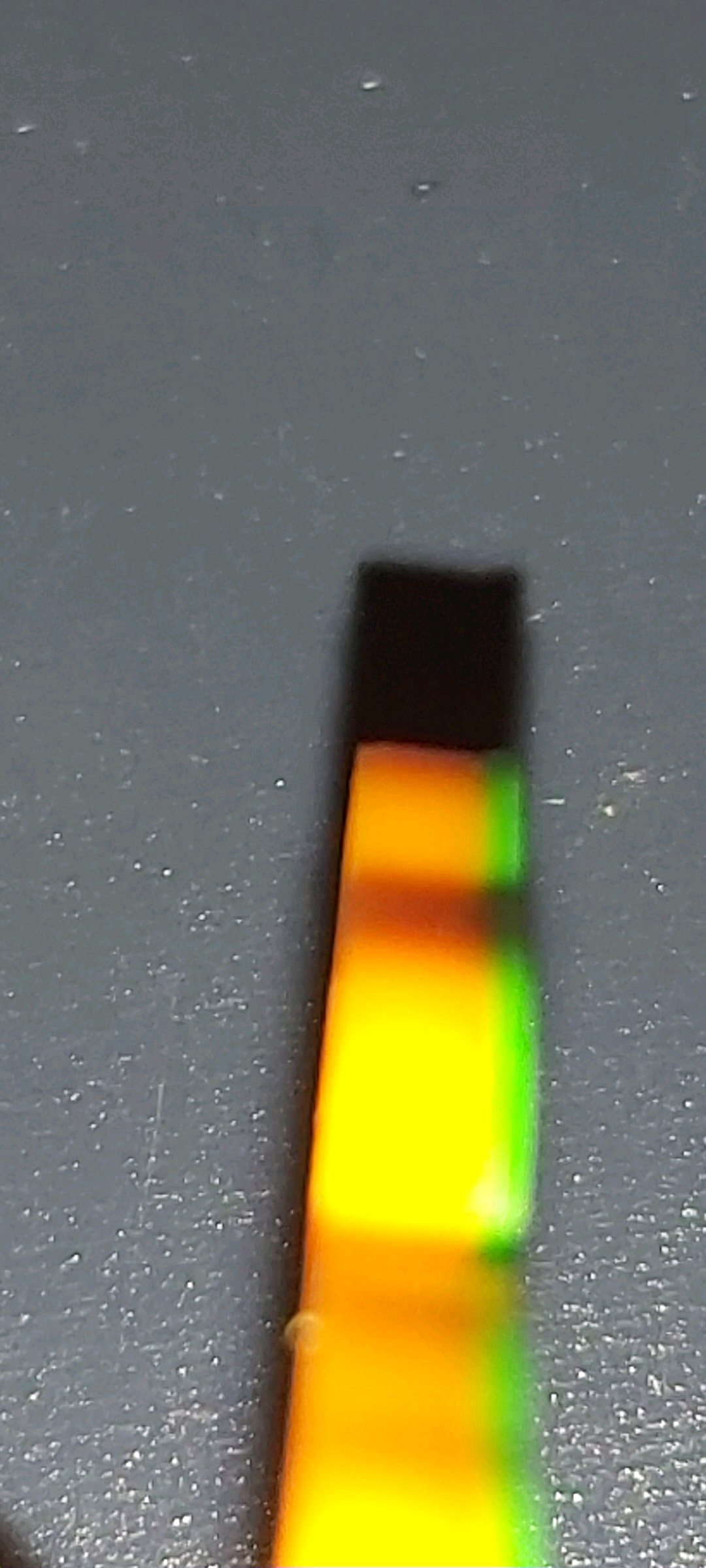
The model had a perfectly flat bottom and a flat top.
I didn’t want to leave it ambiguous since what is used makes a difference between helping and hurting.

I also did not specify silly Bambu packs. Personally I used Dry&Dry packs for filament storage and loose beads to dry air. I also don’t think Bambu uses indicating desiccants in their filament packs.

I would not have said anything had conditions been specified.