Still, I dont see the requests. Im guessing youve never had a klipper printer? Just asking because you said reducing wattage would significantly slow heat up time. In my experience, lowering it 50% doubles heat up time. So based on that, the h2d would take 4 minutes and drop to 700ish watts. Still very high for such a small printer, but managable and safe.
700w would be ideal for me. That leaves another 700w of headroom to run the heating on 2 ams pros and one ams ht, charge my EcoFlow delta3+ at 100w, and run the xtool ap2.
Granted the chances of running all of those things at max output all at the same time is very slim, but planning for and knowing I could would give me peace of mind that my setup is safe for my measly 120v 15a outlet lol
Holy cow 10k?? lol at my family’s house we do the electric ourselves so I didn’t know redoing a house’s electrical can be so expensive but I have heard of people paying something like $3k at least to run an electric car charger.
Yea it’s definitely much more than I was expecting lol.
this is based on the assumption of the bed is a flat piece, and it was casted into a flat piece.
however the bed is usually actually a taco shaped thing because of how they were transported:
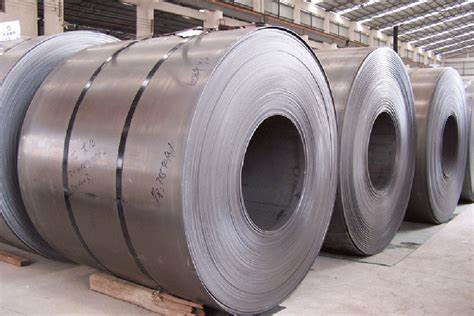
This is how the steel looks before it was cut and then shaped into your bed.
Unless you get a cast bed, which reforms the steel and make it internally evenly stressed, otherwise the internal stress is not gonna get rid of itself by CNCing it.
And usually the heat helps your taco to flat out a bit. Don’t worry too much about the speed thing, it’s good enough.
I ran two dedicated 20 amp circuits to my 3D printing area before my H2D arrived. I definitely wouldn’t do a 30 amp circuit going to a standard receptacle, and I would hope your electrician wouldn’t either. Now, if you need a 30 amp receptacle for a welder or something like that. That’s a different story.
FYI, Im an electrician and UL508A panel shop. If you have any questions I can help with, I would be more than happy to answer. All my answers will be based off of electrical theory or US national electrical code.
Have you considered that the chamber heater relies on passive heat from the build plate in order to reach 65°C? If the bed takes longer to heat up due to reduced power, this will also impact the chamber heating time. Perhaps those requesting lower power usage mainly print with low- and mid-temperature filaments, but I rarely use anything below ASA and prefer not to wait excessively for the printer to reach working temperatures. As it stands, heating is already quite slow—even starting from a room temperature of 20°C.
I definitely like the fast heating, actually I love the fast heating. Since 01.01.02.04 Beta(now on .01.01.2.08 official) I’ve have had no issues with warping or not sticking. I think it would be a good idea to have a slow heating option for people on shared circuits.
PSA for today, lol
As a side note as an electrician. The number one cause of most house fires is using a space heater on an extension cord or power strip. I have my printer on a power strip but is a tripp lite 20A power strip with an actual 20A plug, 12 gauge wire, going to a 20A receptacle (around $80 for the power strip). You can get high quality 15A surge protector/power strips from them that are much cheaper. Be VERY careful what power strips you buy from amazon as a lot of their listed electrical items are pure junk with no UL,ETL, or other recognized testing/listing agency. Even if you are outside of the USA do not buy an item that only has a CE certification. That cerification is junk. The item is never tested and the CE certification is a self certification by the manufacturer stating it complies without ever being tested or verified by a third party. Ive opened up a hand full of CE certified devices in the past that would never meet the requirements. Some breakers,RCDs overcurrent devices etc have no internal overload protection and are only a switch on the inside. Some with reduced size wires and terrible connections. I gave up flagging them on Amazon as my reviews were removed and the items are still up on Amazon. Amazon doest care at all even if its a false listing with false information.
The heatbed is die cast aluminum…as seen here at 15:17 https://youtu.be/oA5eGO3VCNA?si=E55SbuaXFYVEvpGv&t=917
Also, almost no one uses steel for the heatbed because of aluminum’s much better thermal transfer and evenness. There is also the weight aspect.
The curve isnt because of those rolls. When the metal is unrolled during production, it is heated and passed through rollers to remove those stesses, then stamped. The “taco” is because they aren’t cooled evenly after stamping.
I’ve had this in my cart for a bit now,
Amazon.com just haven’t pulled the trigger on it yet. My H2D is plugged into my EcoFlow delta 3+ which doesn’t have surge protection for some reason, so it would be nice to find an outlet extender that will help protect the delta and the H2D.
Now I have to go and figure out a new problem. While going through my outlets at home yesterday to figure out which ones are on what breakers, I found an entire circuit that has an open ground. Thankfully it’s not the one my
Printer setup is on.
I’m not a huge fan of that one for 2 reasons.
- Its in a plastic enclosure. If for some reason, you actually have a very large power surge thats larger than its rating, the components(MOVs) in most surge protectors can explode. So anything that’s serious for surge protection would most likely be in a metal enclosure or be designed to be installed outdoors (whole home surge protecton installed on outside of panel).
- I’m not a fan of any surge protectors or power strips that hang off of the outlet. They generally will start to pull partially out once you plug stuff in which could cause compromised connections or start wearing out the receptacle retention springs that hold the prongs in on the plug. The ones that do secure themselves to the outlet with a screw on an old style duplex receptacle are fine, but they generally are at a reduced amperage rating.
This one from trip light is rated for 12A due to the internal breaker (All components and wire are rated for a 15A curcuit), 12A is the most you’re ever supposed to load up on a fifteen amp circuit(80% code requirement to protect in wall wiring). It has a 12A resetable circuit breaker in it. It’s in a metal enclosure and protects upto a 1410 jule event. If your circuit breaker is working properly, it would be tripping on a constant load that is less than 15A. They trip based off of the trip curve (time and load). If you have a really high amperage draw it will trip fast. If you are overloaded a little, it will take a while to trip.
15A (12A breaker, 1410 jule rating, 2 outlets)
15A (12A breaker, 3330 jule rating, 4 outlets)
https://amzn.to/4mJ4AkE
They also have units with more outlets but cost more.
Surge protection works best if you have a whole home surge protector installed at the main panel coming into the house. Then you have downstream surge protection for sensitive devices where they recieve power. This way, the large surge protector will help clamp and reduce the surge going to the whole house. Most large surges will not be completely stopped at the first device. Small ones can be. The smaller device that you then plug your items into will then eliminate(or reduce to a non harmful level) the remainder of the surge in a perfect world. In short, surge protection works best when you have a series of devices inline.
FYI.
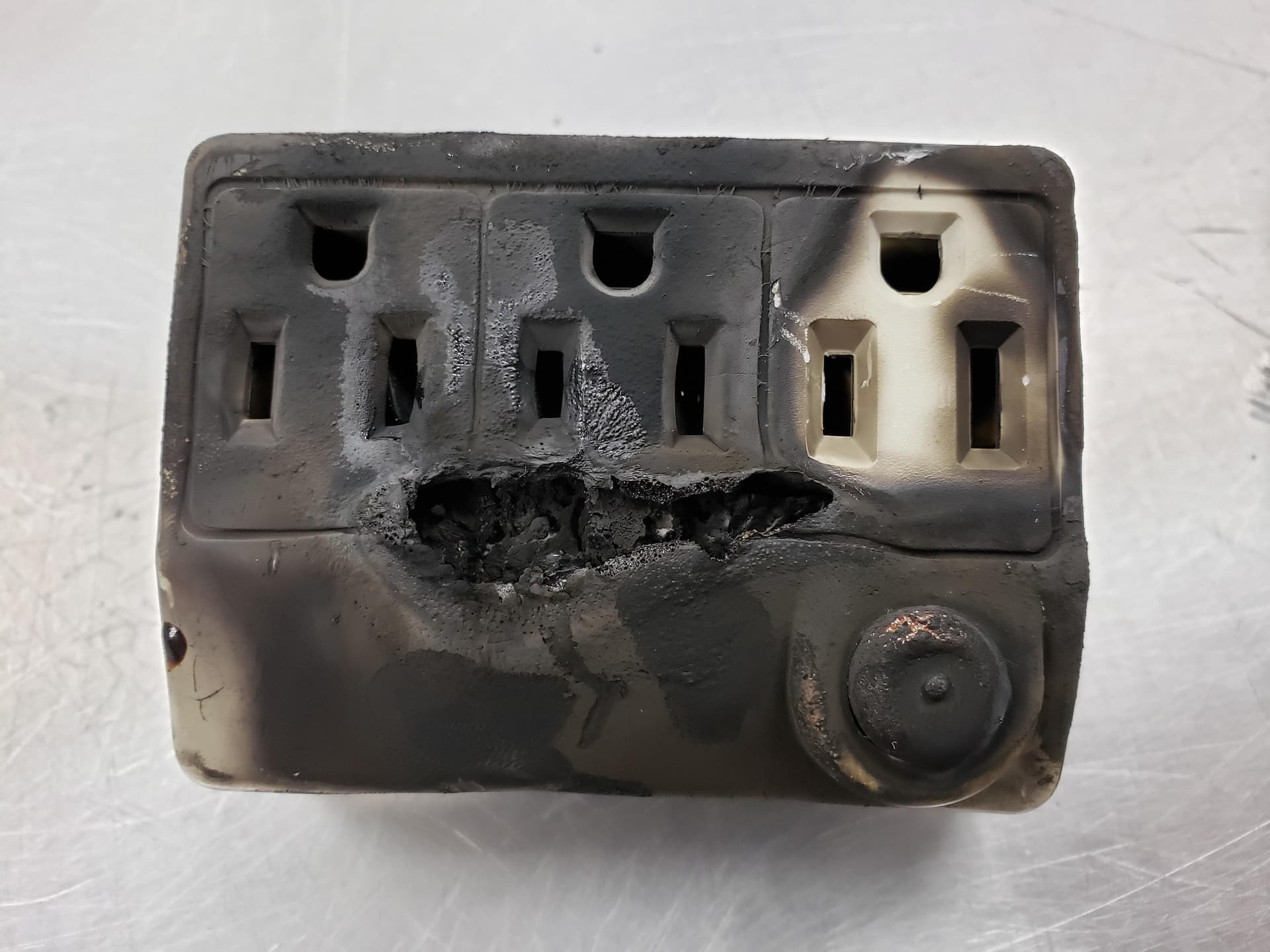
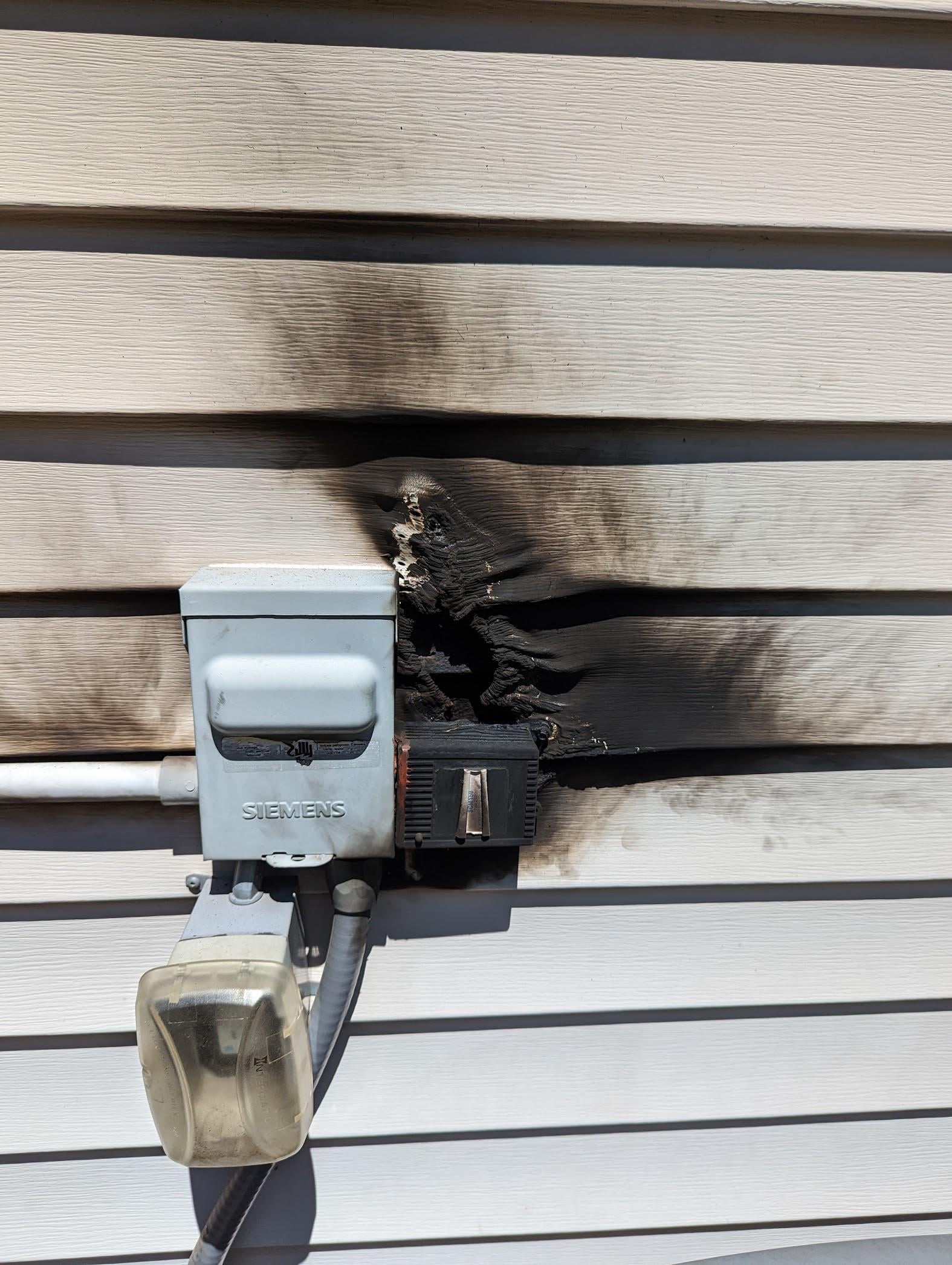
This is what surge protectors look like when they blow up from a big surge event.
Surge/splitter combo
Whole home surge protector
Well, I guess that one’s out of the question lol. Unless I only use my EcoFlow for the initial heat up and then switch it back to grid when it drops down. 12A @120V would be 1440w correct? The 80% safe limit. The last 2 warm ups my H2D did were at 1550-1580w. That breaker would pop right away.
That’s one of the reasons I wanted the one I linked, it screws in where the outlet cover usually does for a solid attachment.
The breaker wouldn’t necessarily(but may) trip right away. It depends on the trip curve for the breaker. I actually have that 2 outlet one for my C02 engraver. I can do a high temp print and see what heppens.
I didn’t realize the one you linked had the 2 screws, so that’s a plus. I personally am not a fan of the plastic housing for a surge protector. The pictures I posted above were from the internet, but I have seen a few in the field that looked the same. I do not remember what brand but they were plastic. Note this is specifically concerning a surge protector that’s in plastic, not just a general use power strip for normal items.
I’ll run a test print now with PAHT running on the AMS HT, and I will have the two AMS2 drying. It’ll be a short test print but I’ll have this all happening while it’s heating up the bed and chamber
I just finished a print that was 105 minutes long.
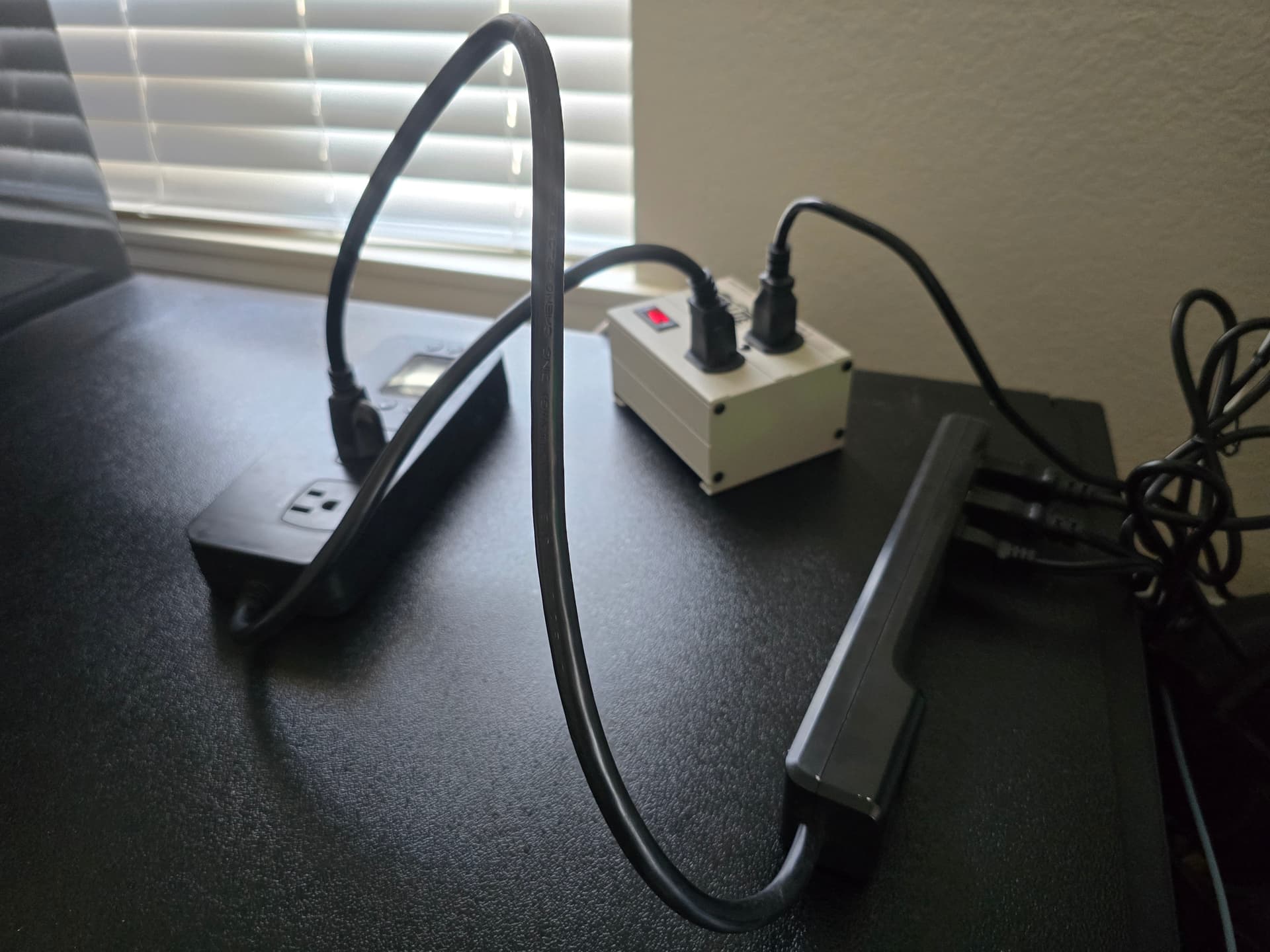
- Tripp Lite IBAR2-6D (15A, 12A internal breaker, 2 outlet, metal enclosure)
- H2D printing PAHT-CF, 290c nozzle, 60c Chamber, 100*c Bed
- Printing from AMS HT
- 2x AMS Pro 2, Drying PETG at same time.
- H2D plugged into one outlet
- 2x AMS2 (Heating), and 1x AMS HT(not heating) plugged into the other with a power strip.
I started the AMS2 Pros heating as soon as I saw the bed and chamber start heating. This way everything would heat at the same time.
From Previous test I know my H2D doing high temp heats up right around 1650 watts for 2-3 minutes. Right now I just tested and the two AMS2 heating up and the AMS HT (not heating but feeding) with external power supplies maxed out with only 165w(combined) of power draw while heating up. Now they are steady at 60-80w(combined). They are plugged into the same power strip/watt meter.
I will keep it plugged in like this for the next day to see if I get a random trip.
This is a setup I would definitely not use with all the powerstips other than testing. Lol
Hmmm interesting. I might have to grab one and try it out. Worst case scenario it trips and the EcoFlow keeps the print going.
As far as chamber heaters go, its extremely fast.
Is one of these ok for just plugging in lamp lights and a paper printer?
https://www.amazon.com/Tripp-Lite-Protector-INSURANCE-TLP606/dp/B0000AI0N1/ref=ast_sto_dp_puis?th=1
Not really a yo-yo if they just give people the option 
You keep throwing shade with your “users with outdated power grids” comments, but the fact of the matter is that a simple toggle to limit power draw would allow for much more flexibility for many users in terms of how they work the H2D into their existing setup.
Most of my prints are PETG, which doesn’t require the chamber to preheat to a wild degree. It just requires the bed to heat up to a reasonable temperature. The bed preheats so quickly that it becomes a SMALL fraction of all of the checks and shenanigans the printer performs before the actual printing starts. Doubling the preheat time would only add like ONE minute to that process. I haven’t timed it, but it’s at least a 5-7 minute process before the actual printing starts. In the grand scheme of things it’s a TINY fraction of the entire print process. I don’t care if my print takes 3h12m instead of 3h11m, but I do care if that extra minute means my existing UPS isn’t overloaded, and I don’t have to run a new, dedicated circuit to my room.
Not sure why this is so controversial. Yes, in a perfect world everyone has 15 dedicated 20A circuits in their workshop for all of their prosumer equipment… but some of us are just nerds shoehorning this piece of equipment into our home office, and we would appreciate the option to adjust the power limits to allow it to “fit in” with our existing setup
Jesus Christ idiots with space heaters give me anxiety. A friend’s daughter had a power strip plugged into a power strip that was then plugged into the wall, with a heater she ran at FULL HEAT almost every night. I was unaware this was occurring until one night she was complaining her heater wasn’t working. It wasn’t a pretty sight. I still need to replace that receptacle. I’m not an electrician, I barely know how to install receptacles, but I respect electricity because I do a lot of stupid stuff with hybrids. like installing 20kw of batteries into my first gen Honda insight. I have been wacked with 150VDC+ a few times… Having your arm go numb for an hour is not fun.
pretty lucky for not getting the arm go numb for a lifetime