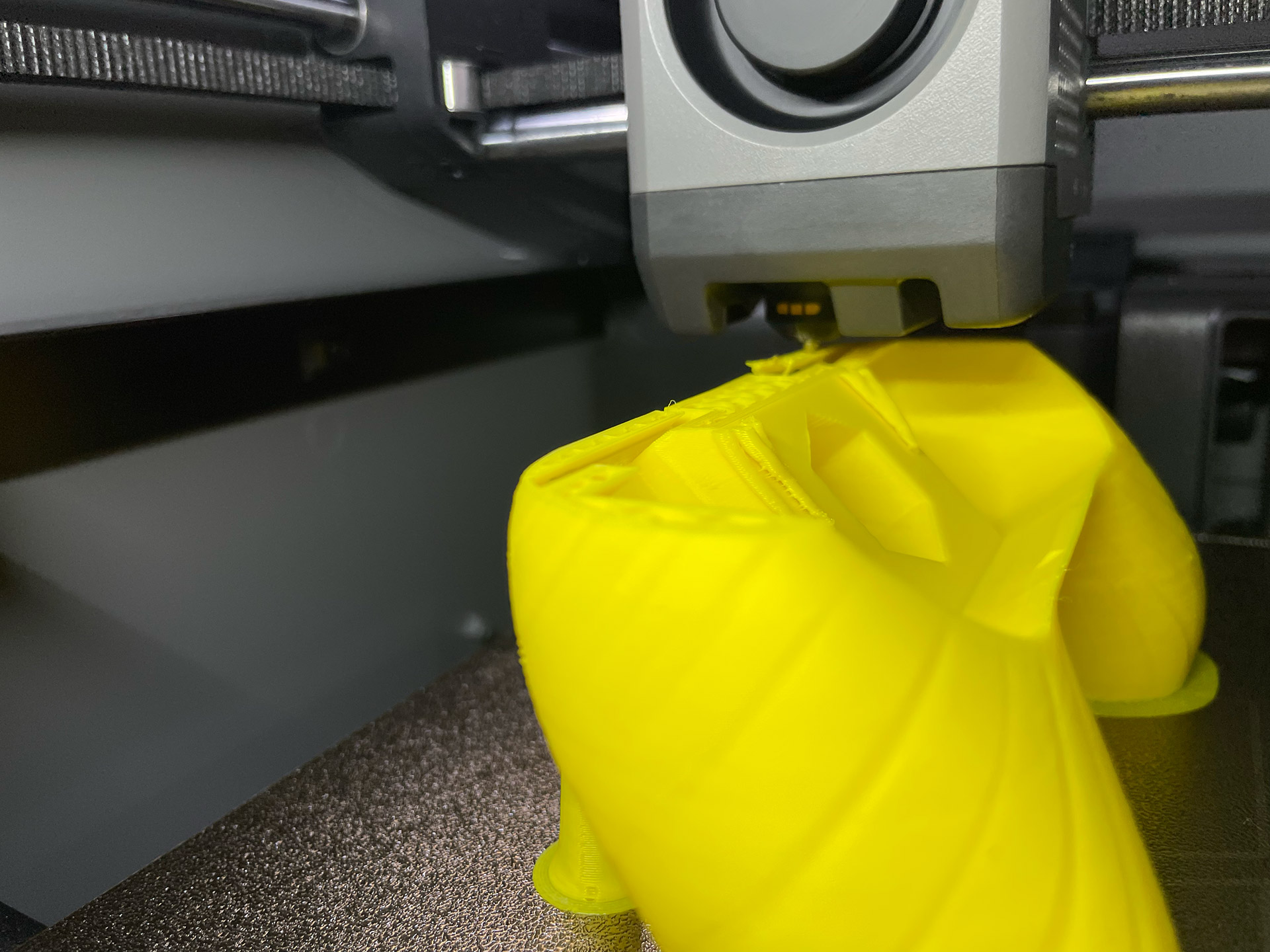
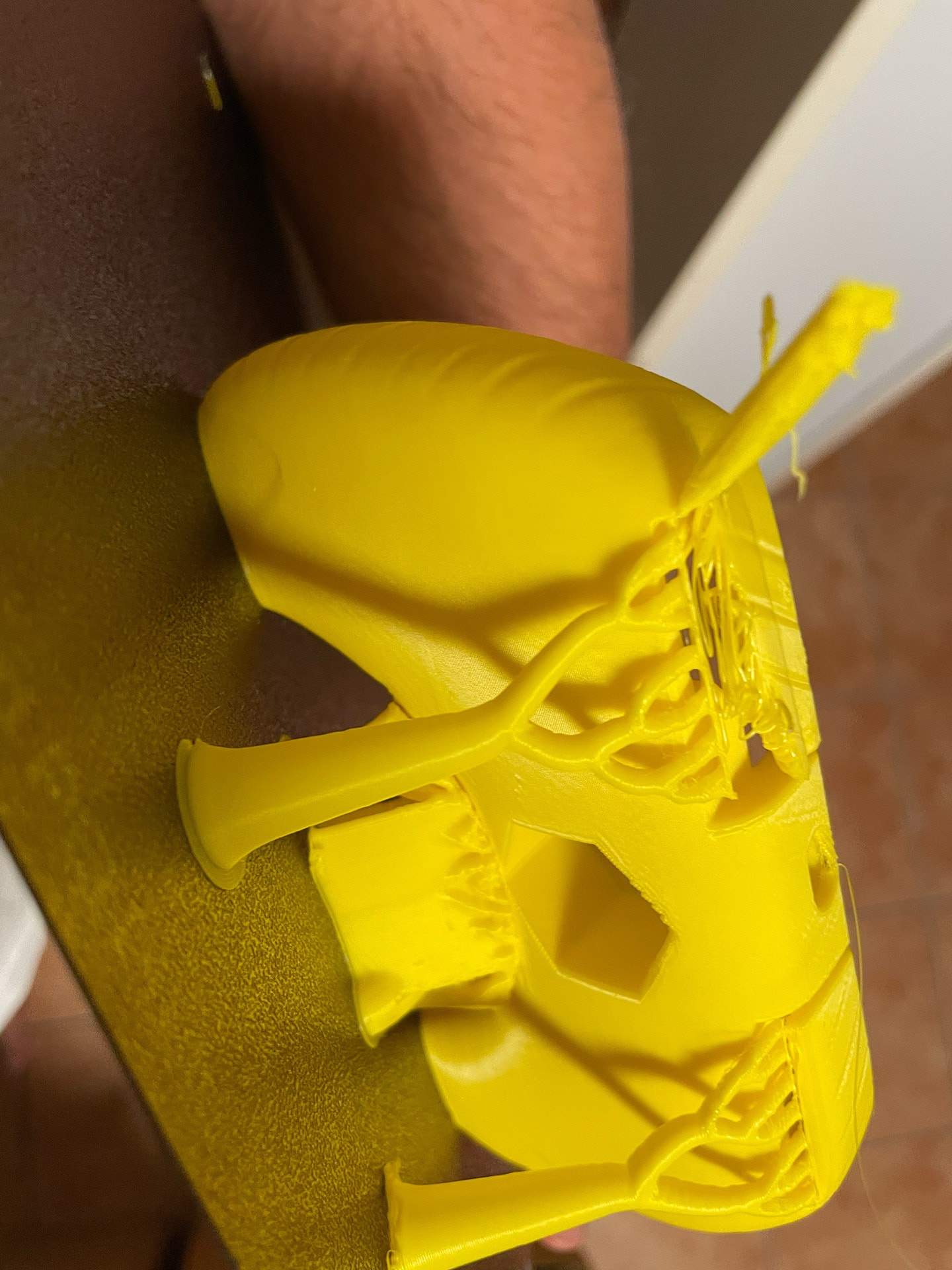
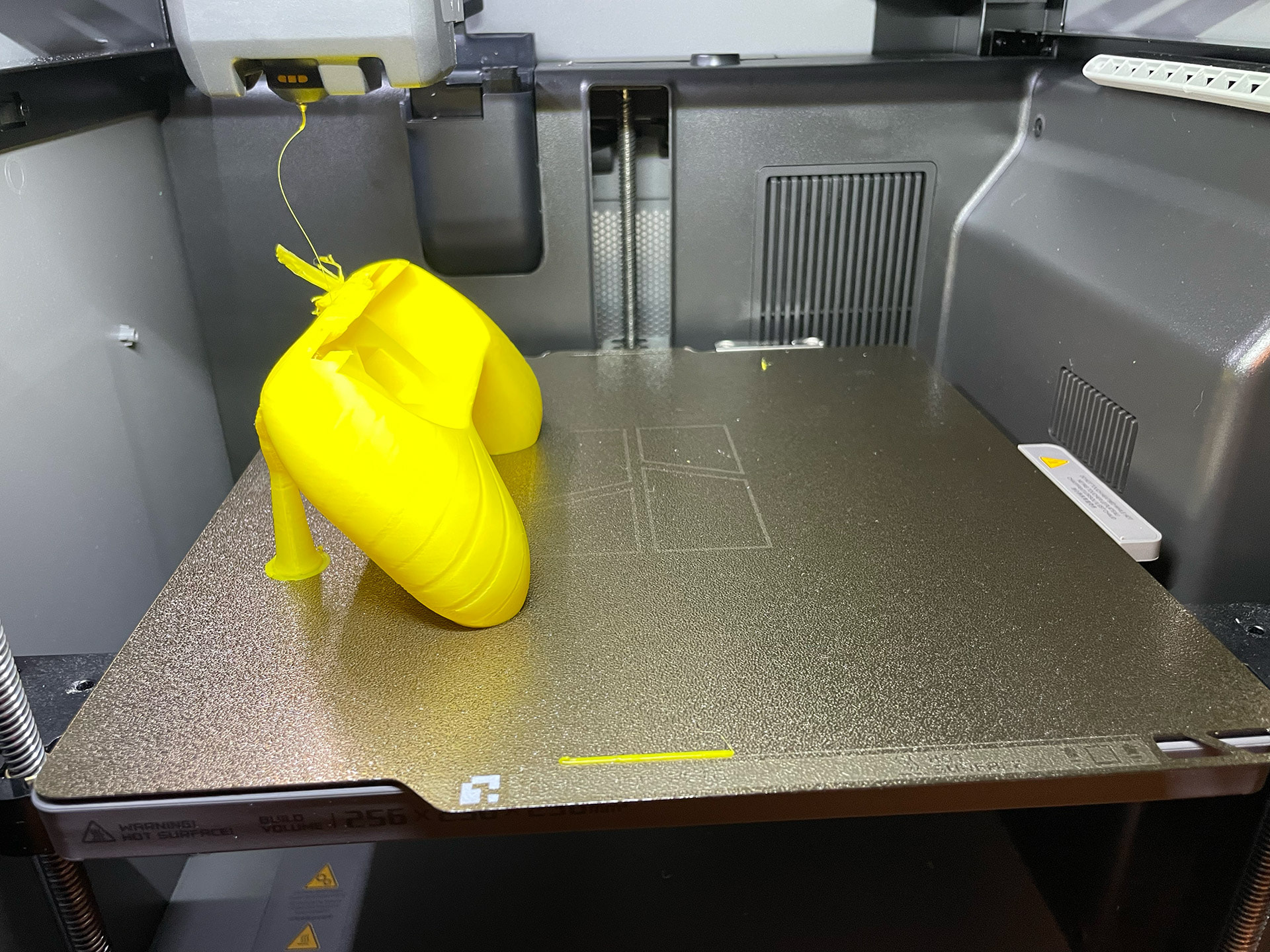
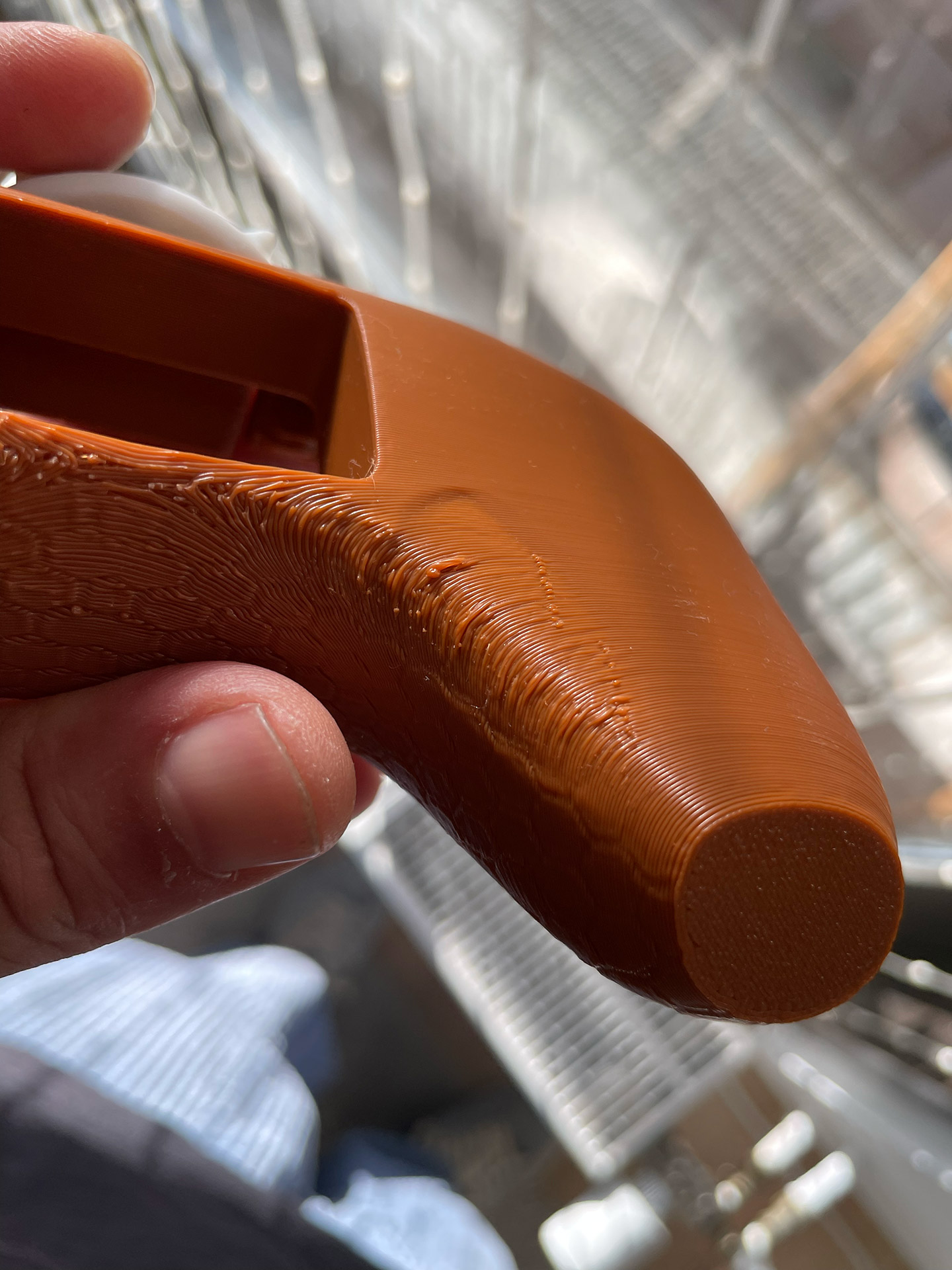
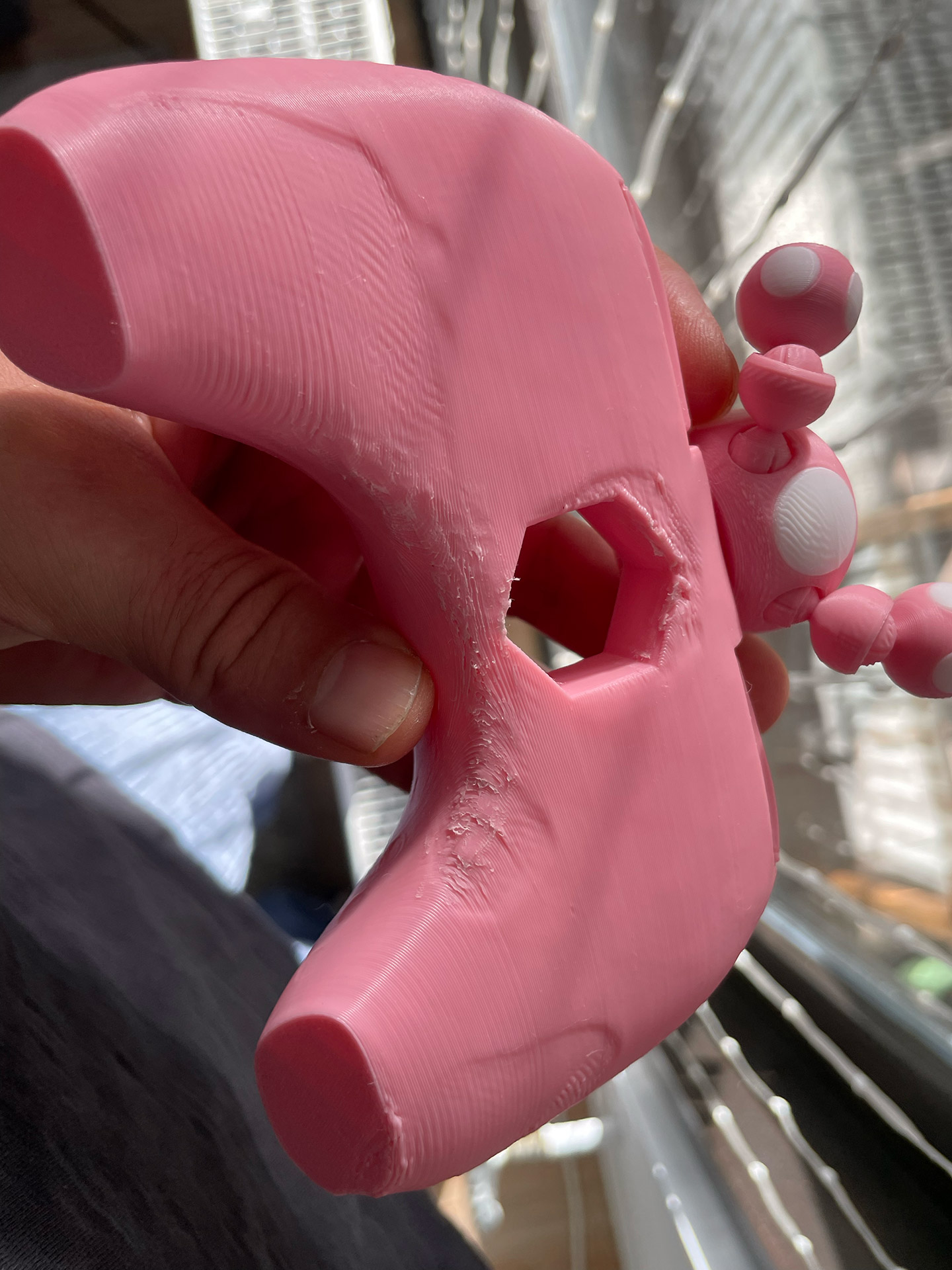
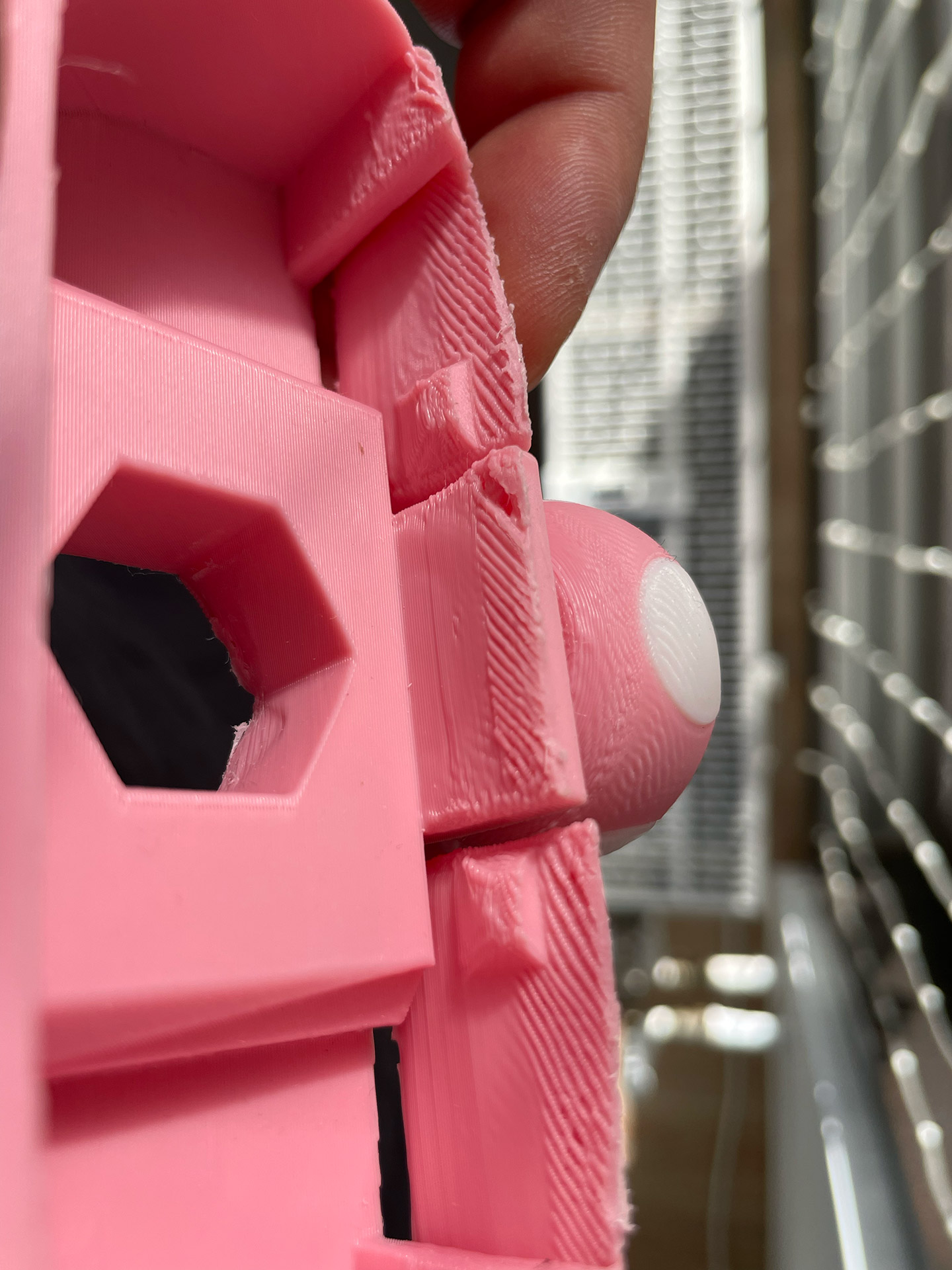
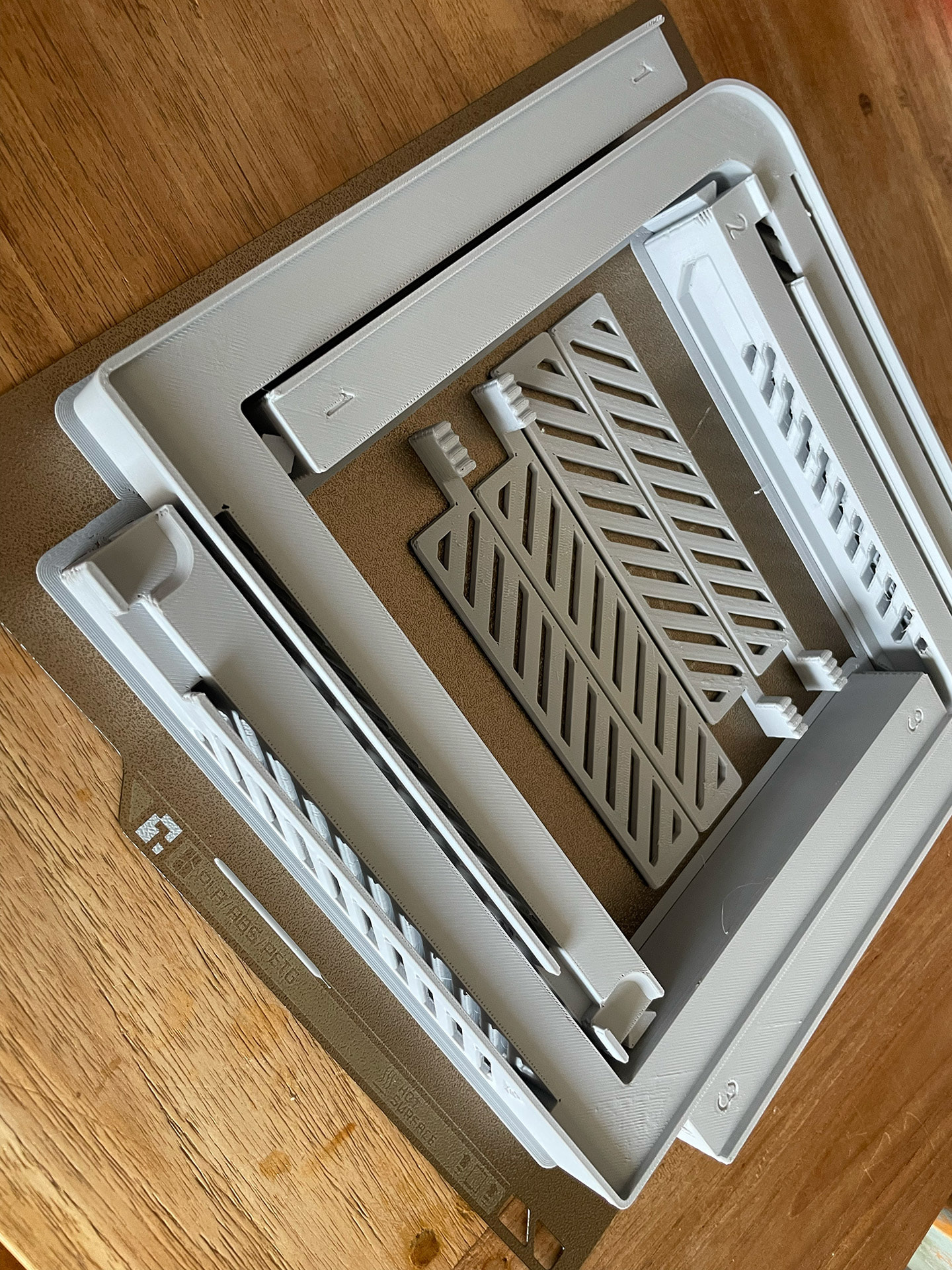
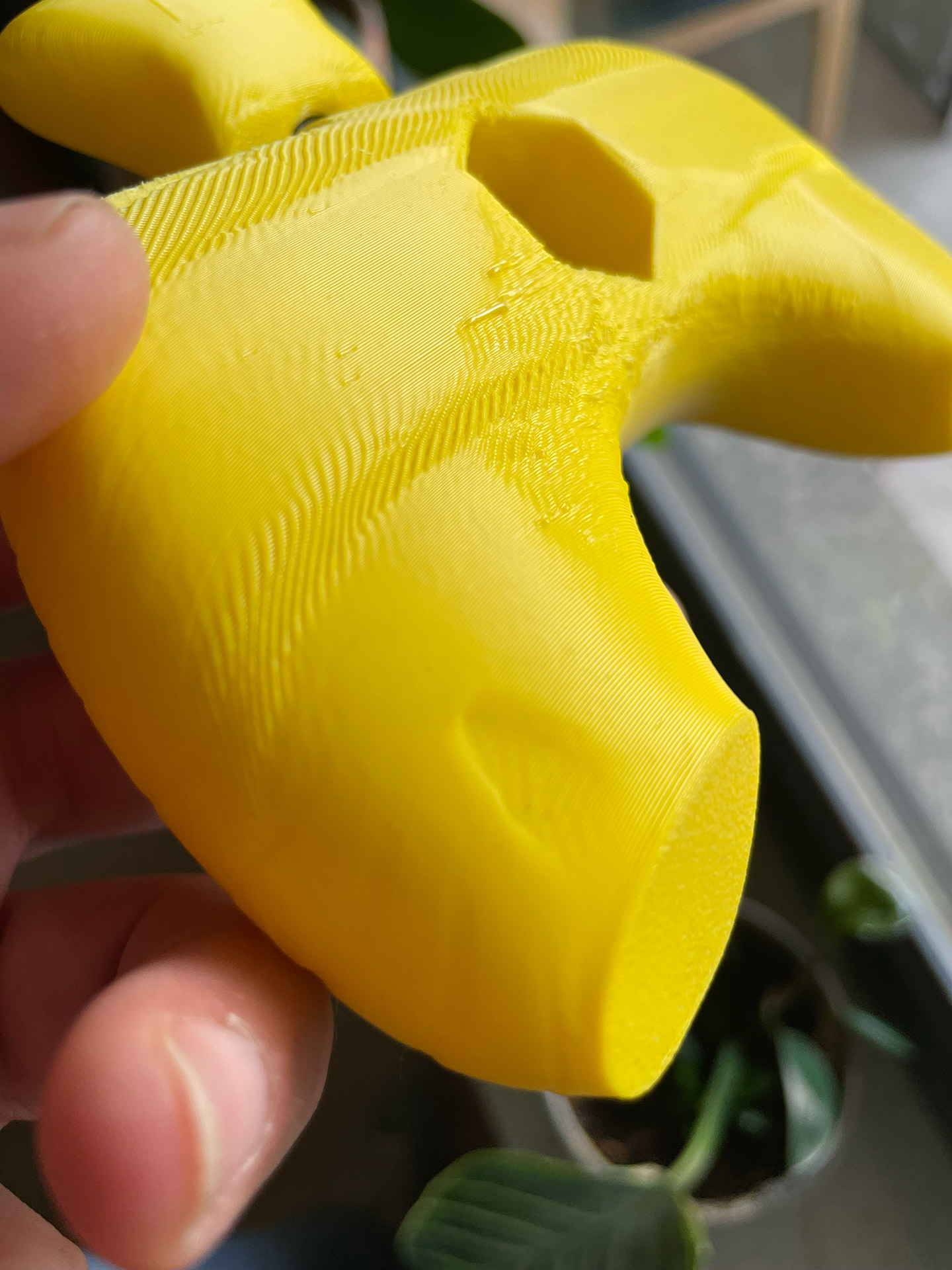
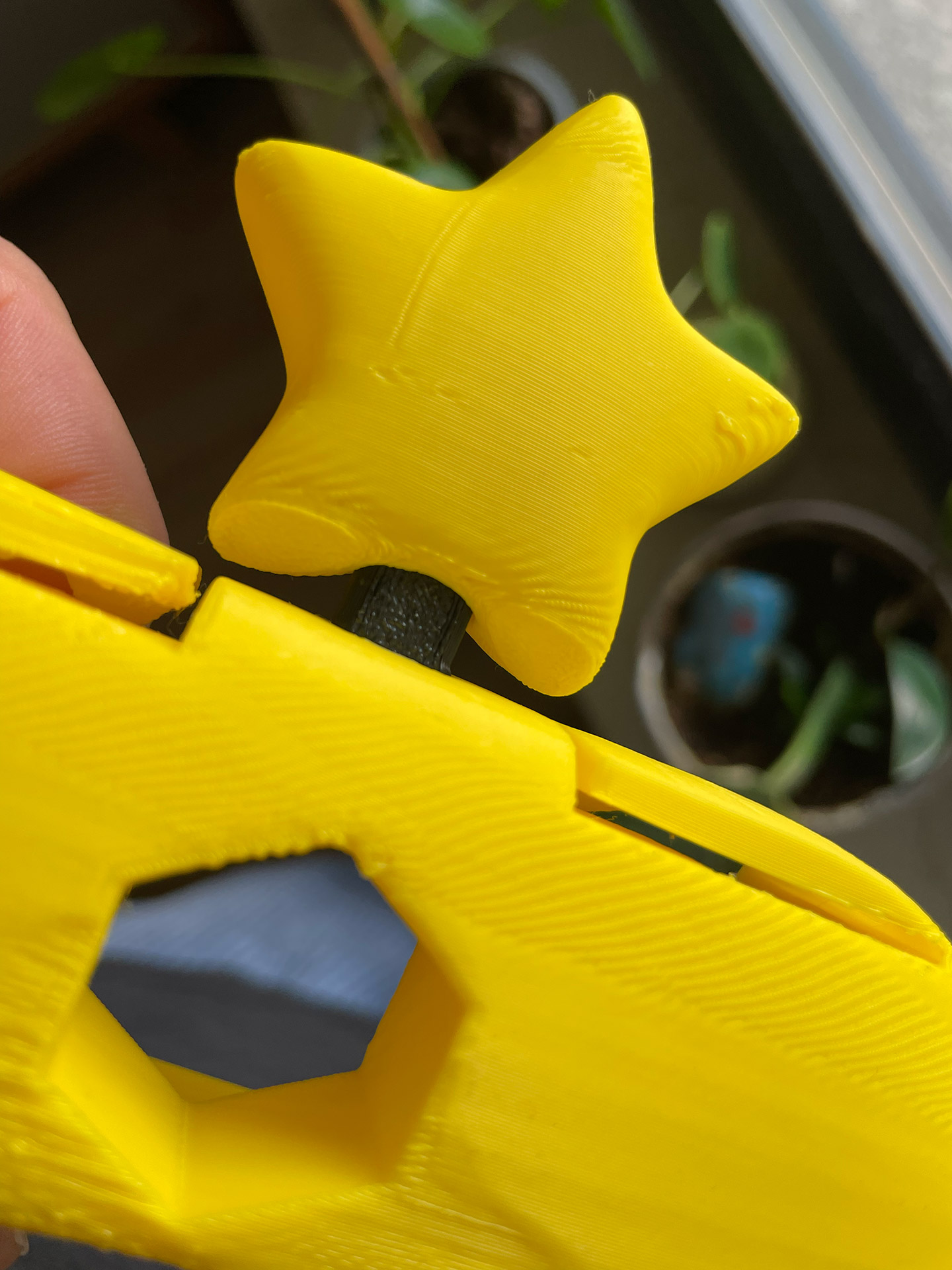
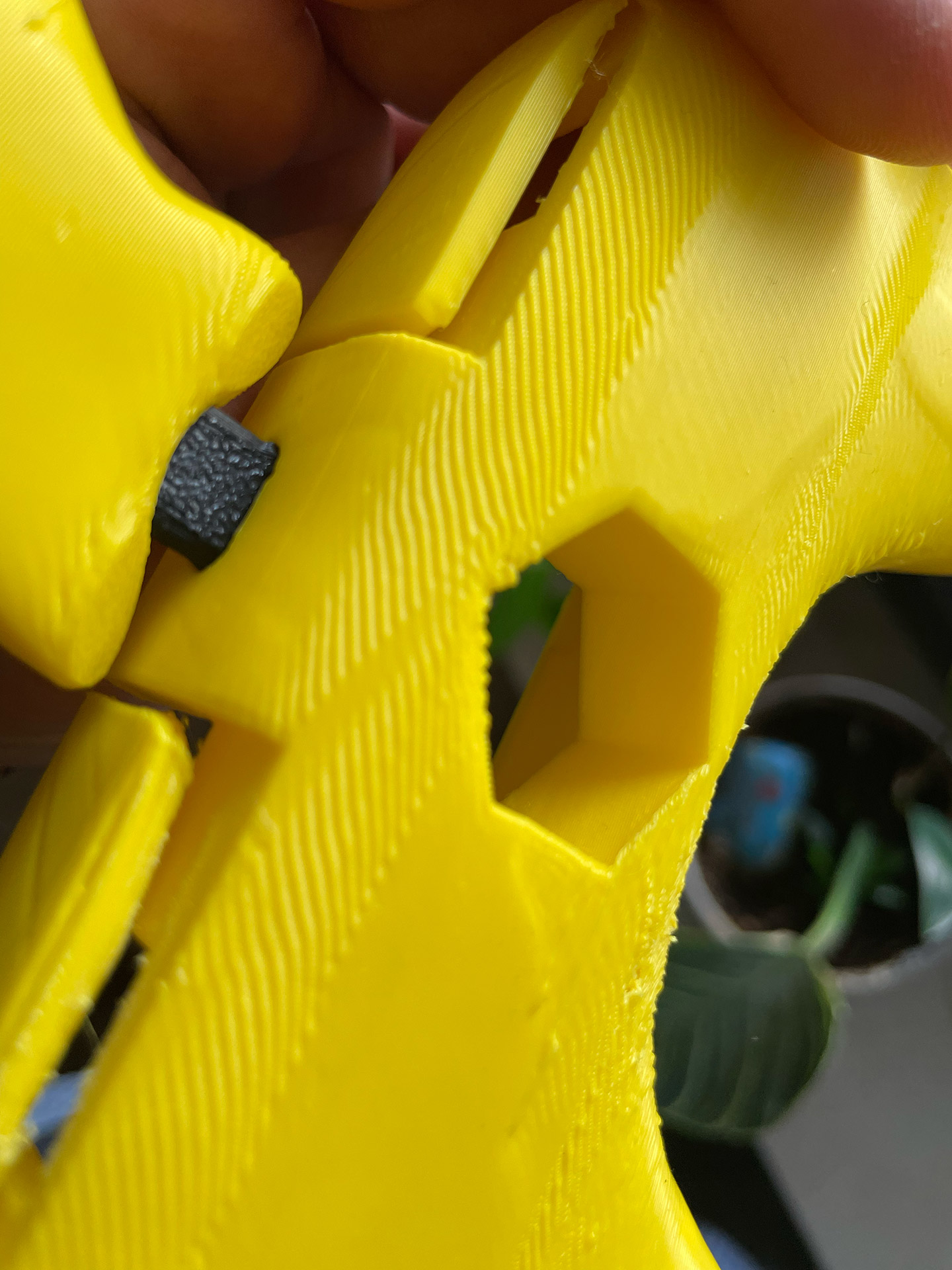
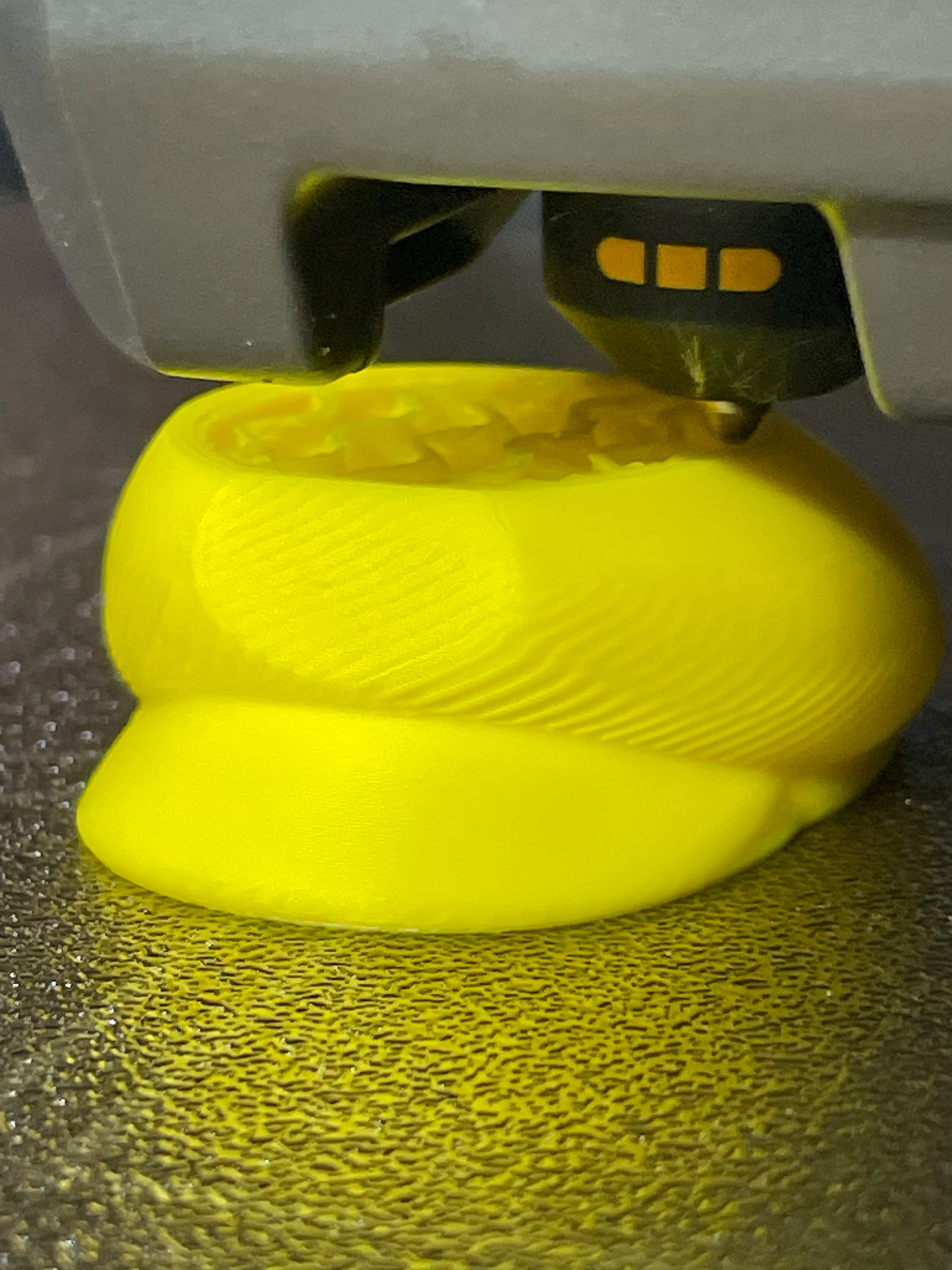
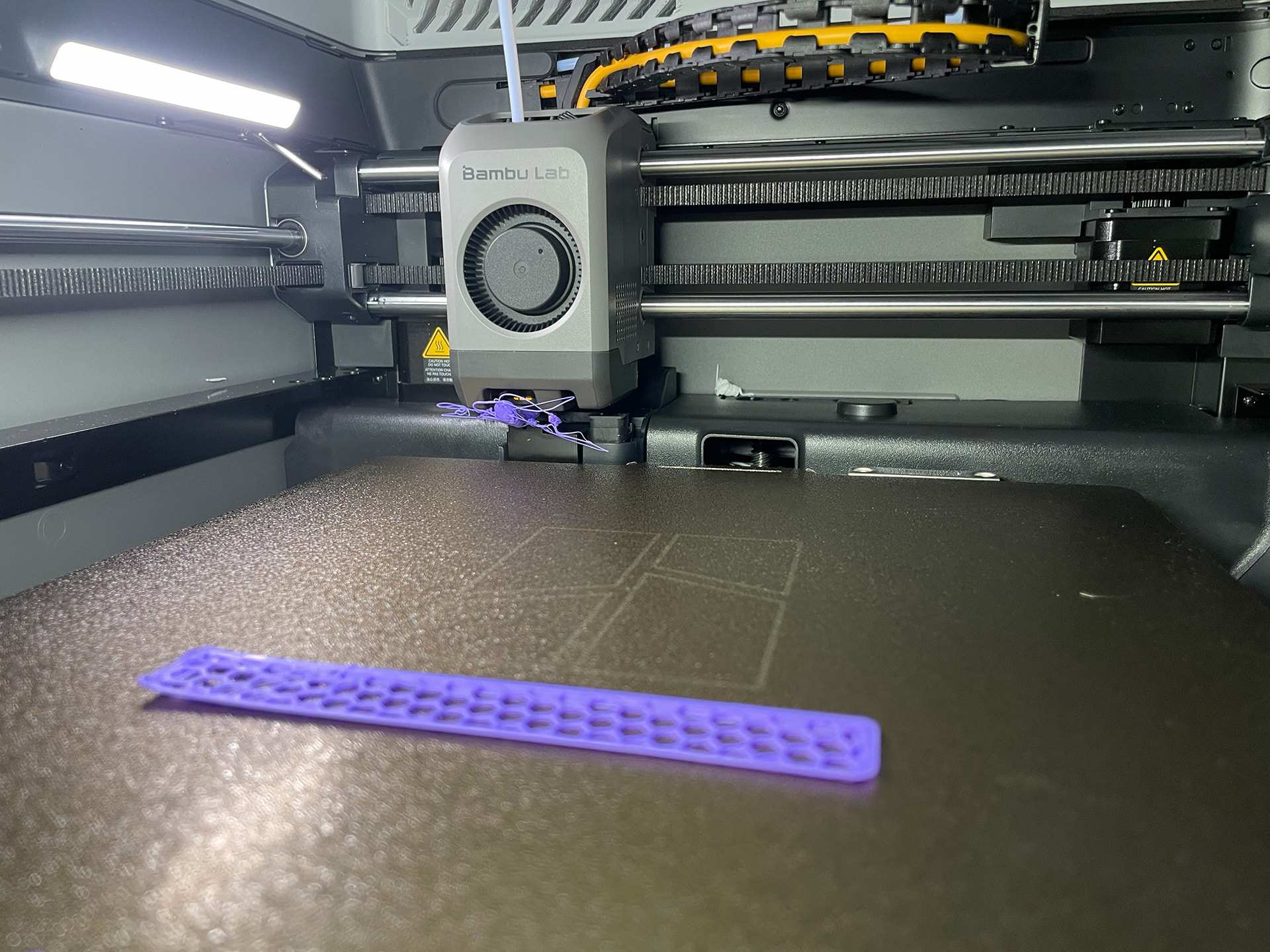
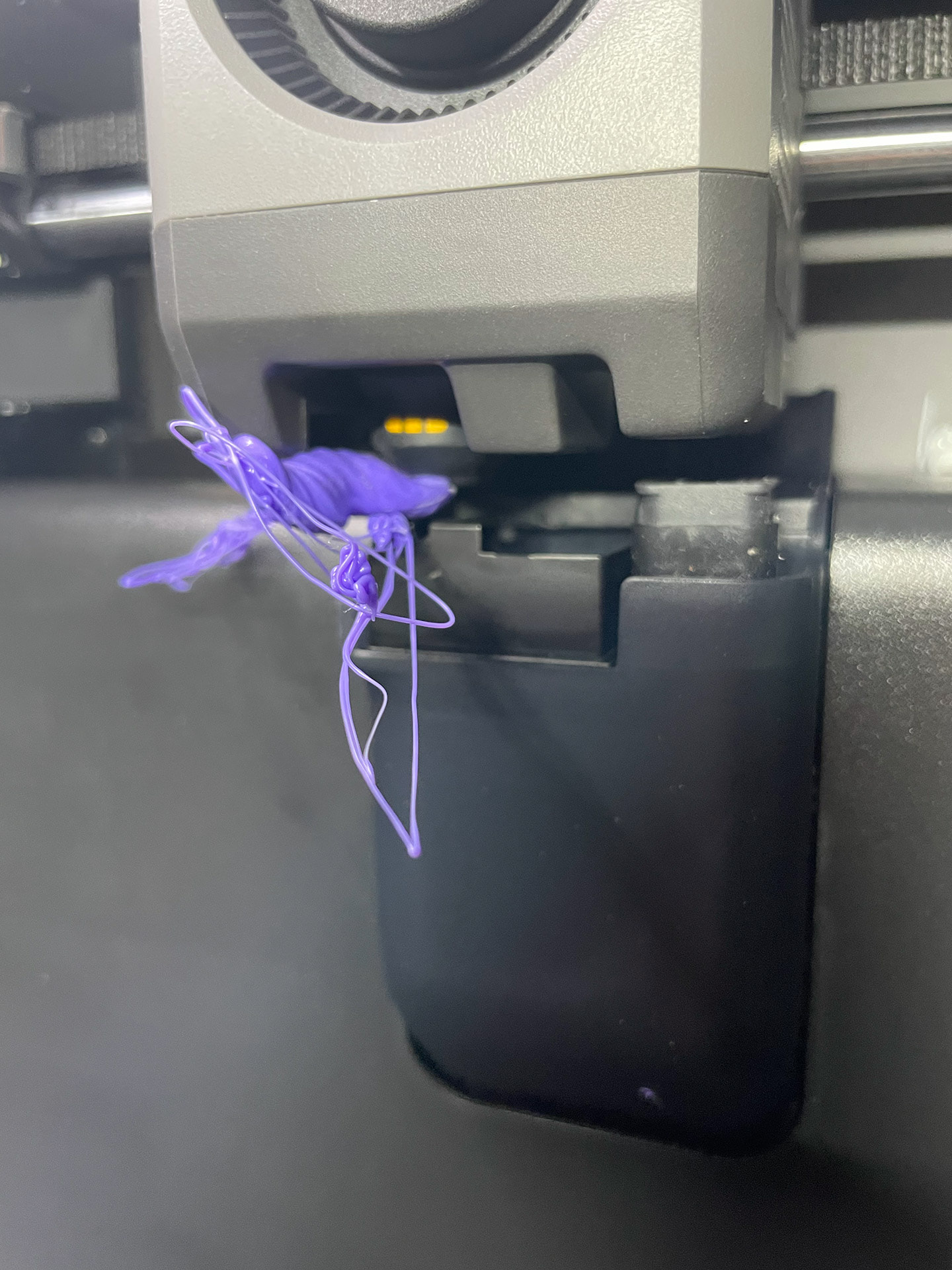
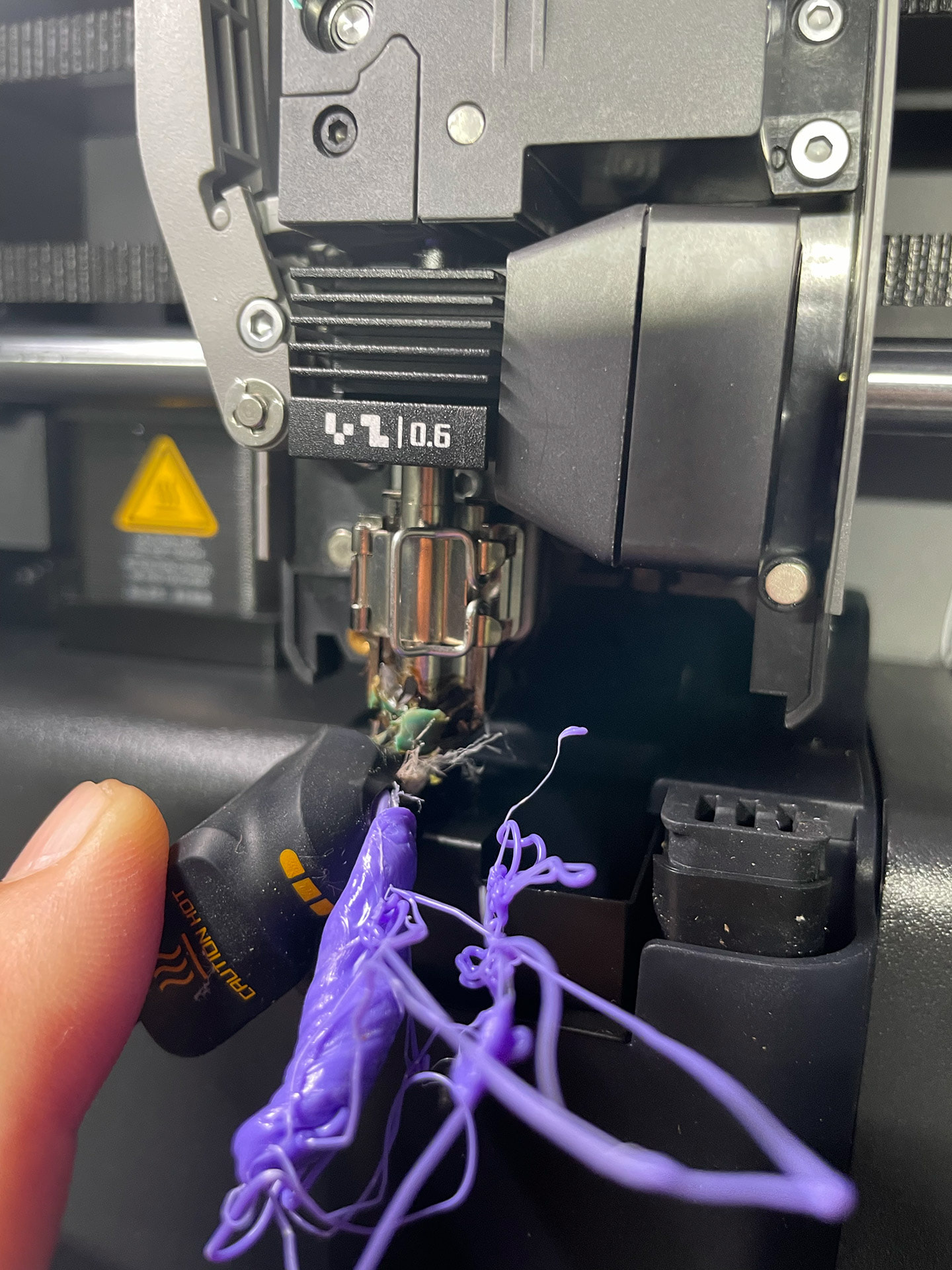
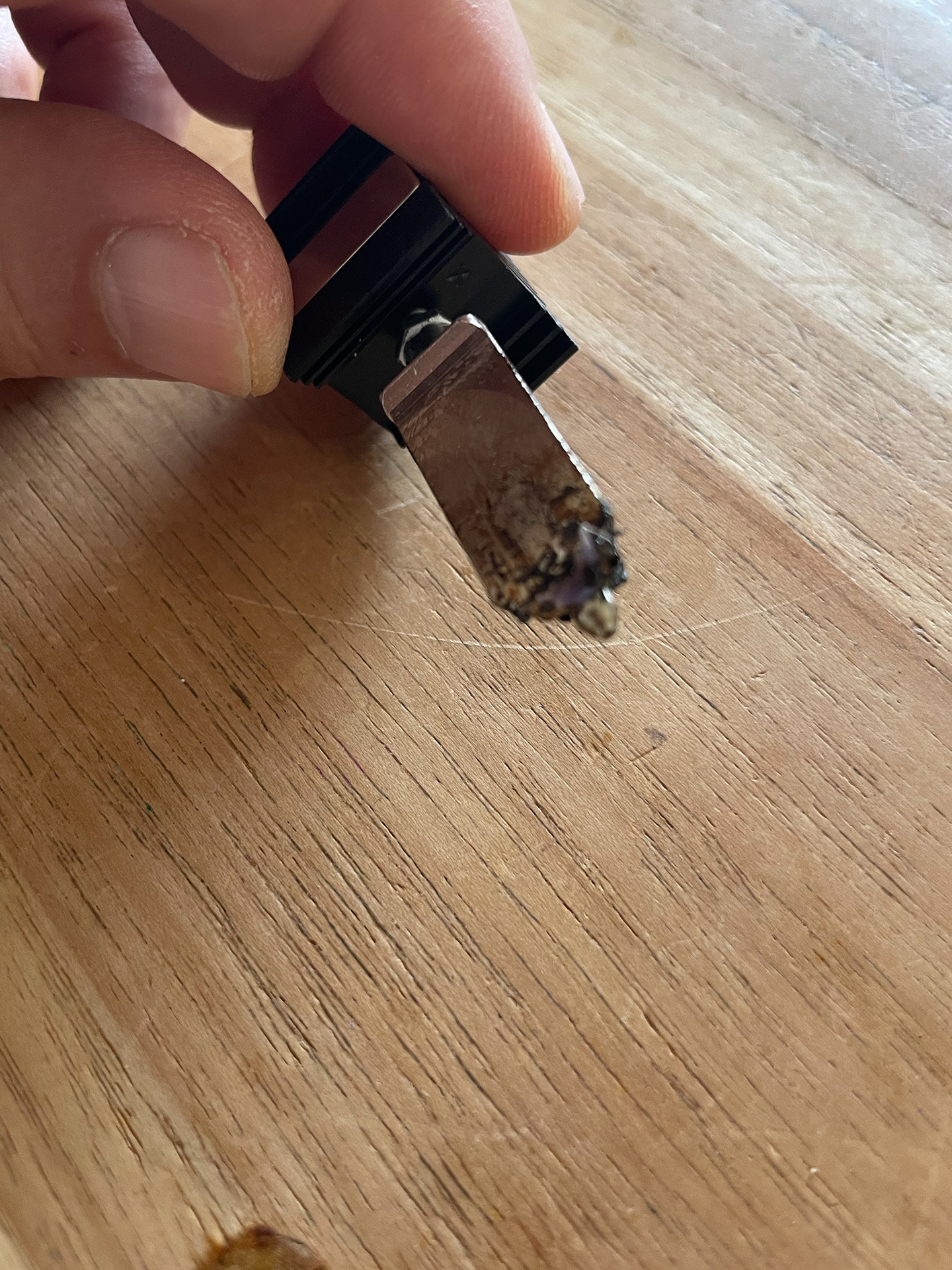
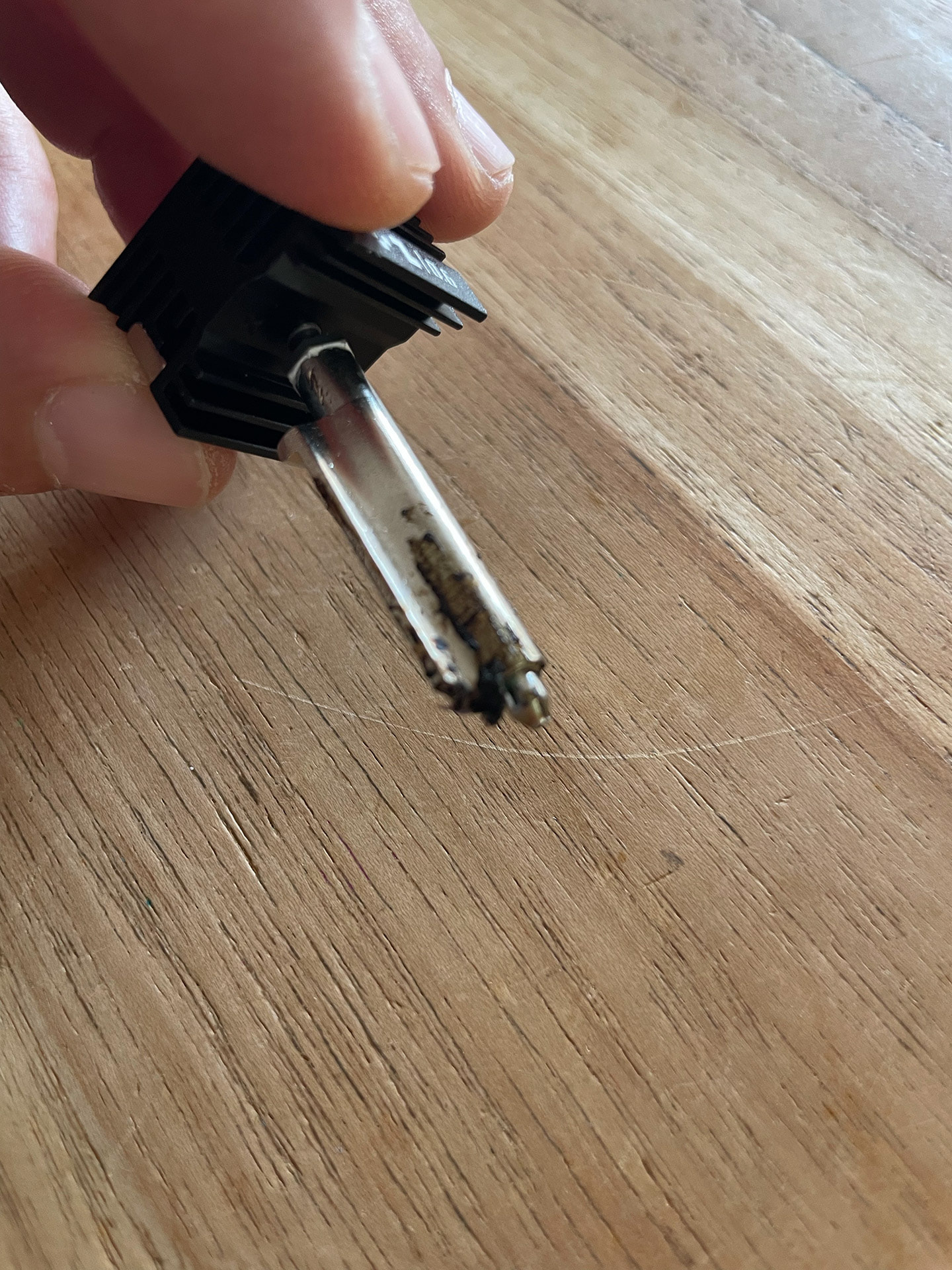
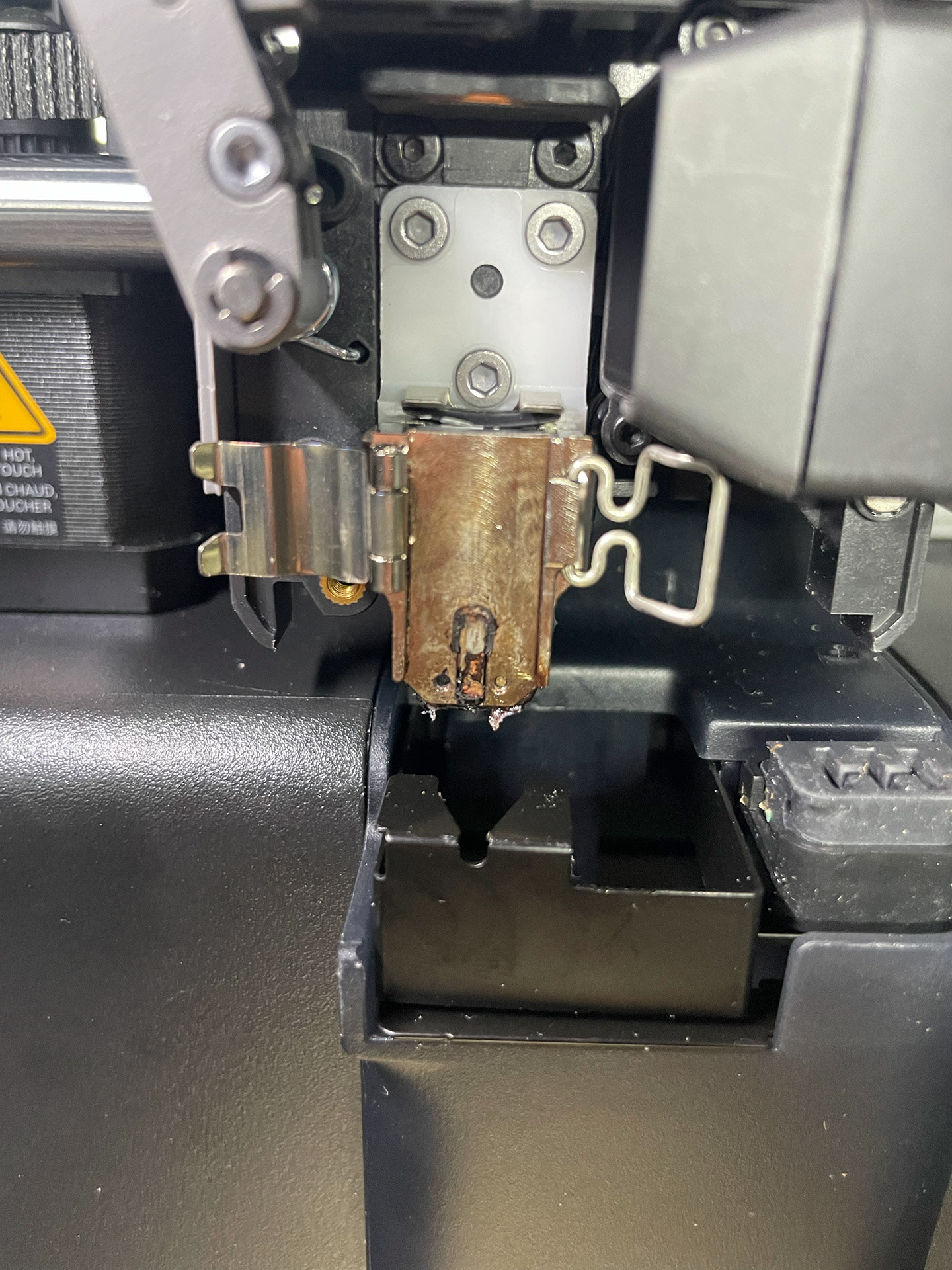
First attempts with PLA+ when the aux fan was forced to heat mode because “softening temeprature” in filament settings was set to a value above 50. No deflector on the fan at that time. Chamber was about 45 degrees. Printer completely closed (Door and Lid).
I was printing a riser with ventilation because I thought that would solve thermal problems.
PETG-HF from bambulab. With standard filament settings aux fan was forced into head mode
(wether this is a bug or a feature is open to your personal preference).
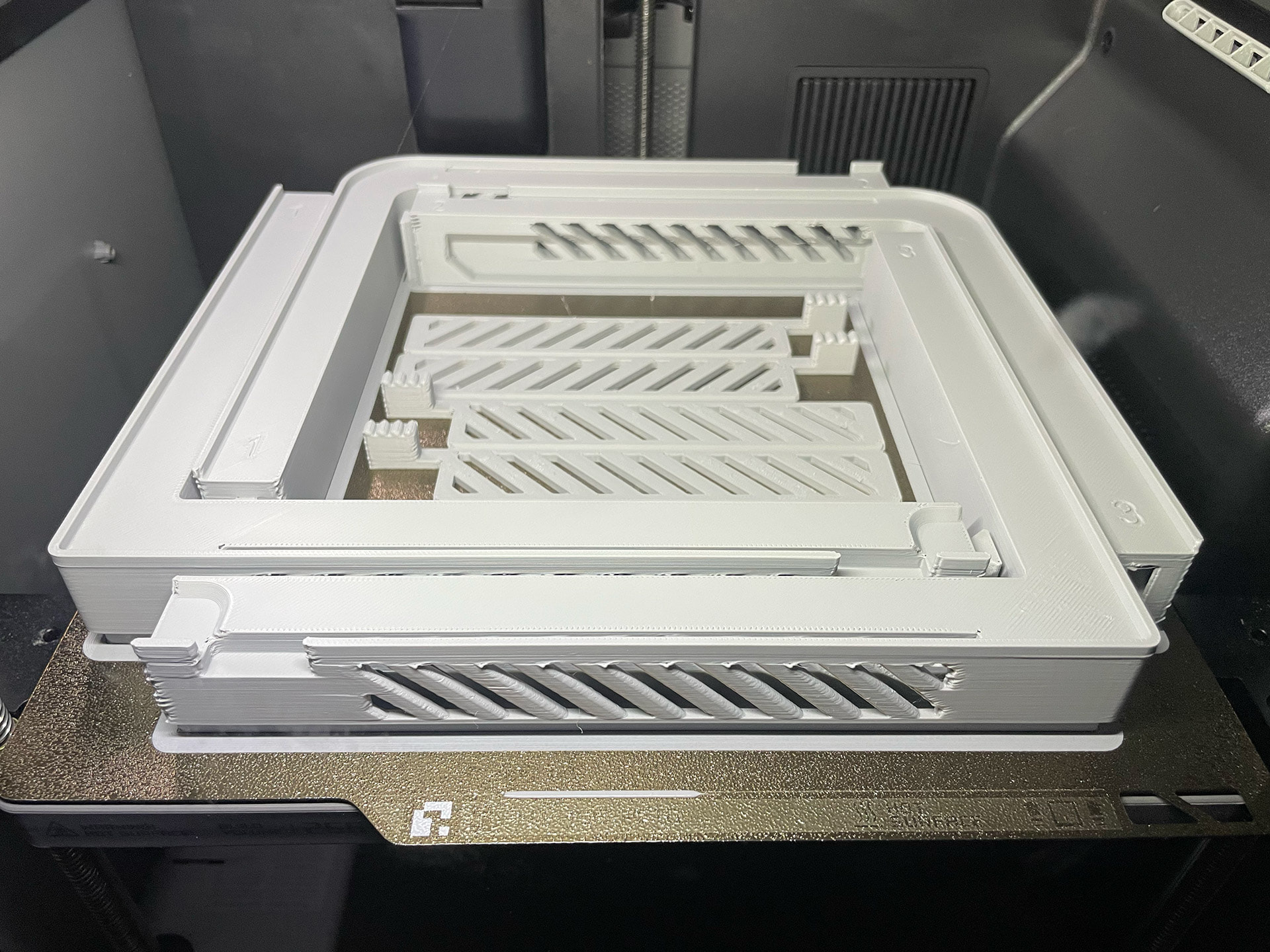
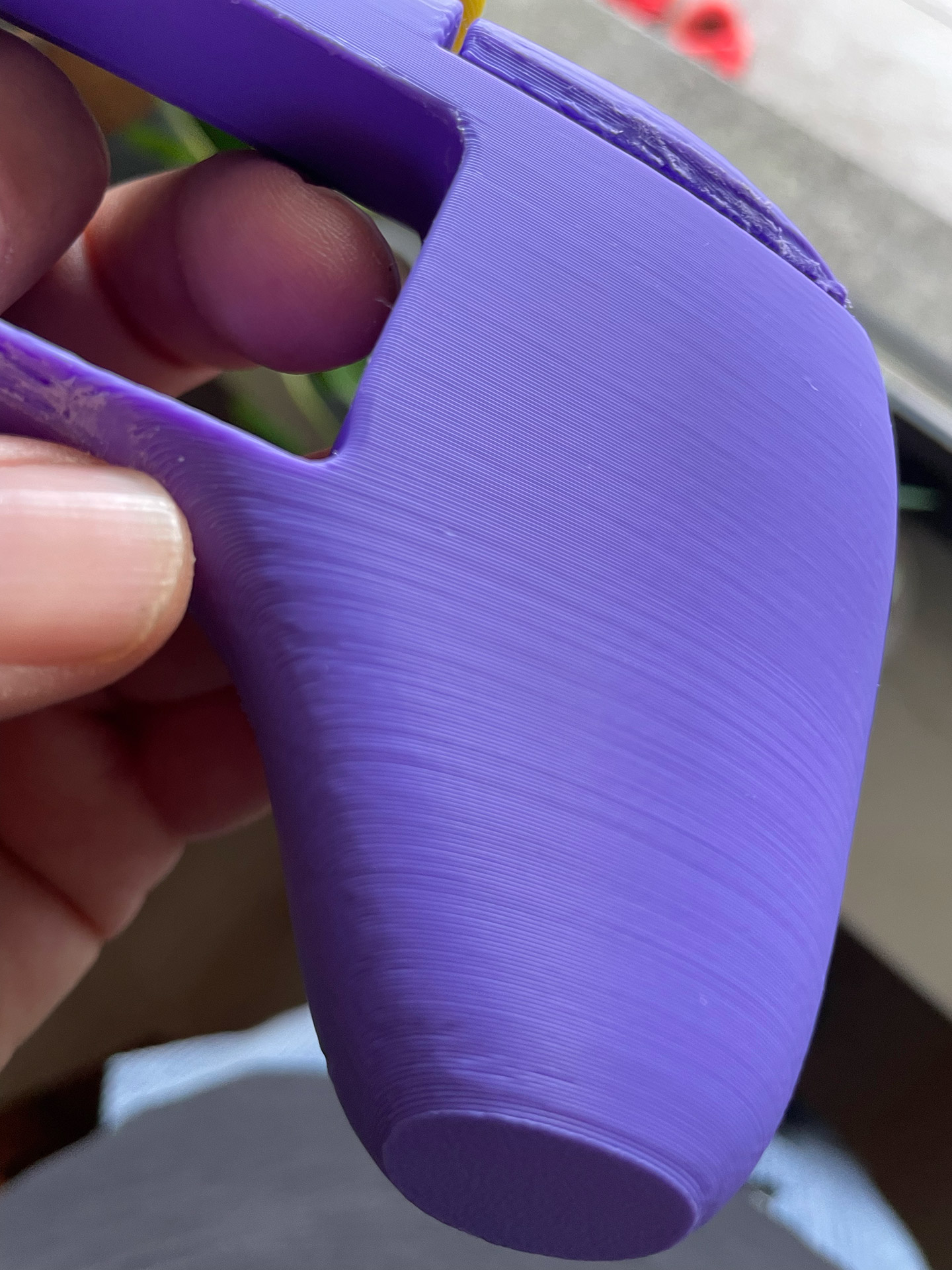
My latest print. It seems that ringing artifacts have gone (I retensioned the belts). Heat chamber issues are no longer my main concern (aux fan running on 90% with a chamber temp of constant 36° to 37° while door is closed and riser ventilation is open)
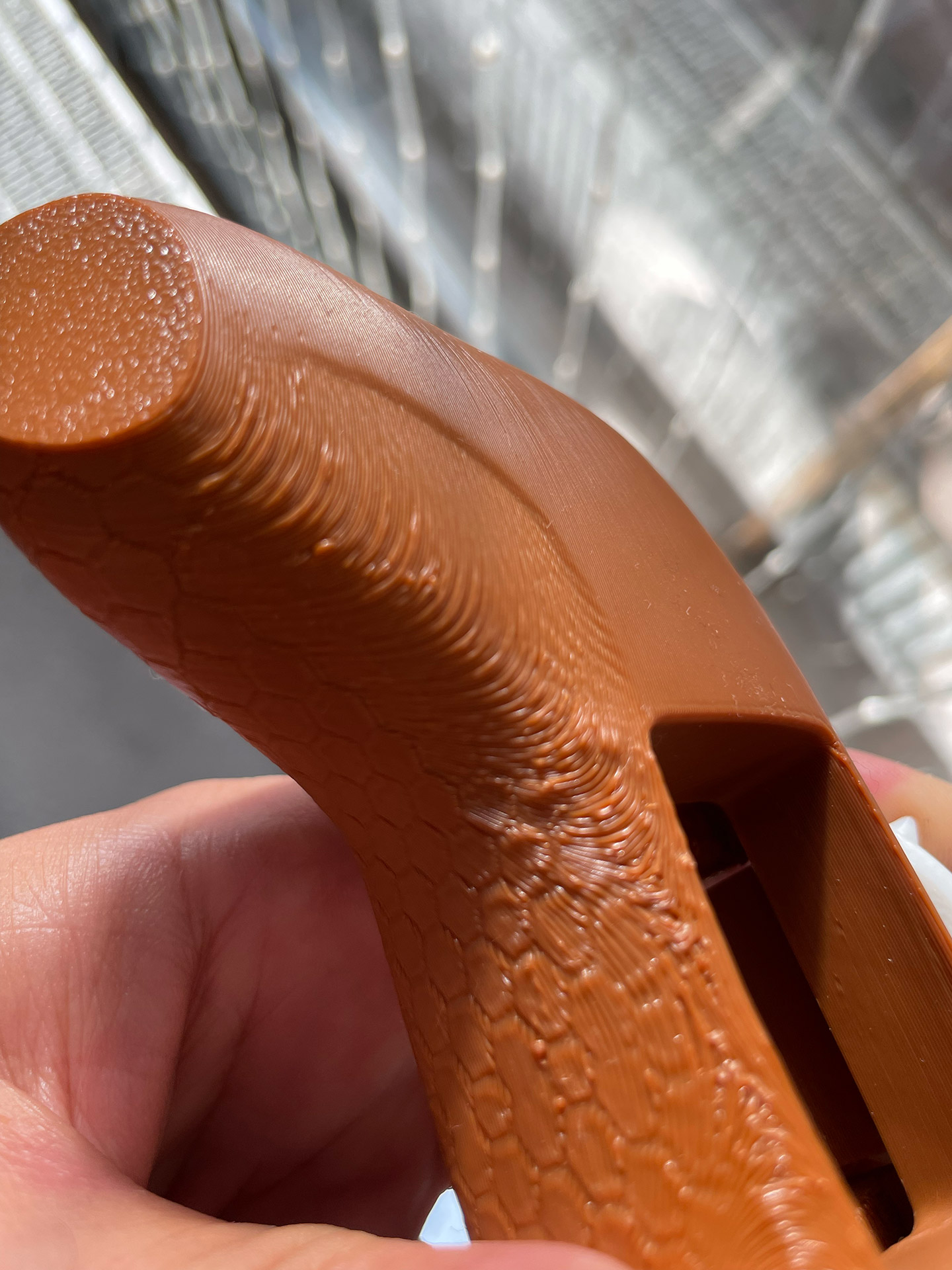
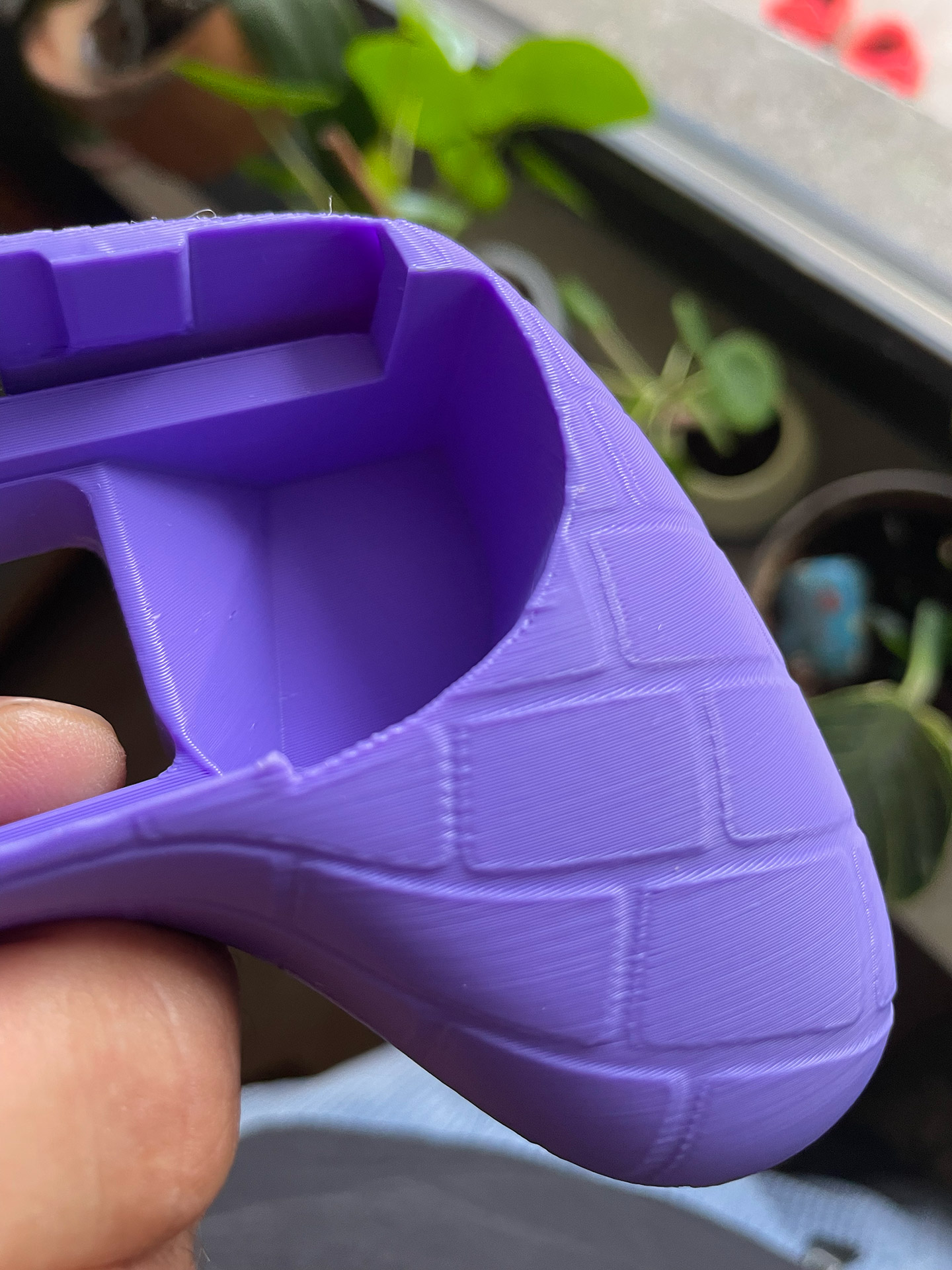
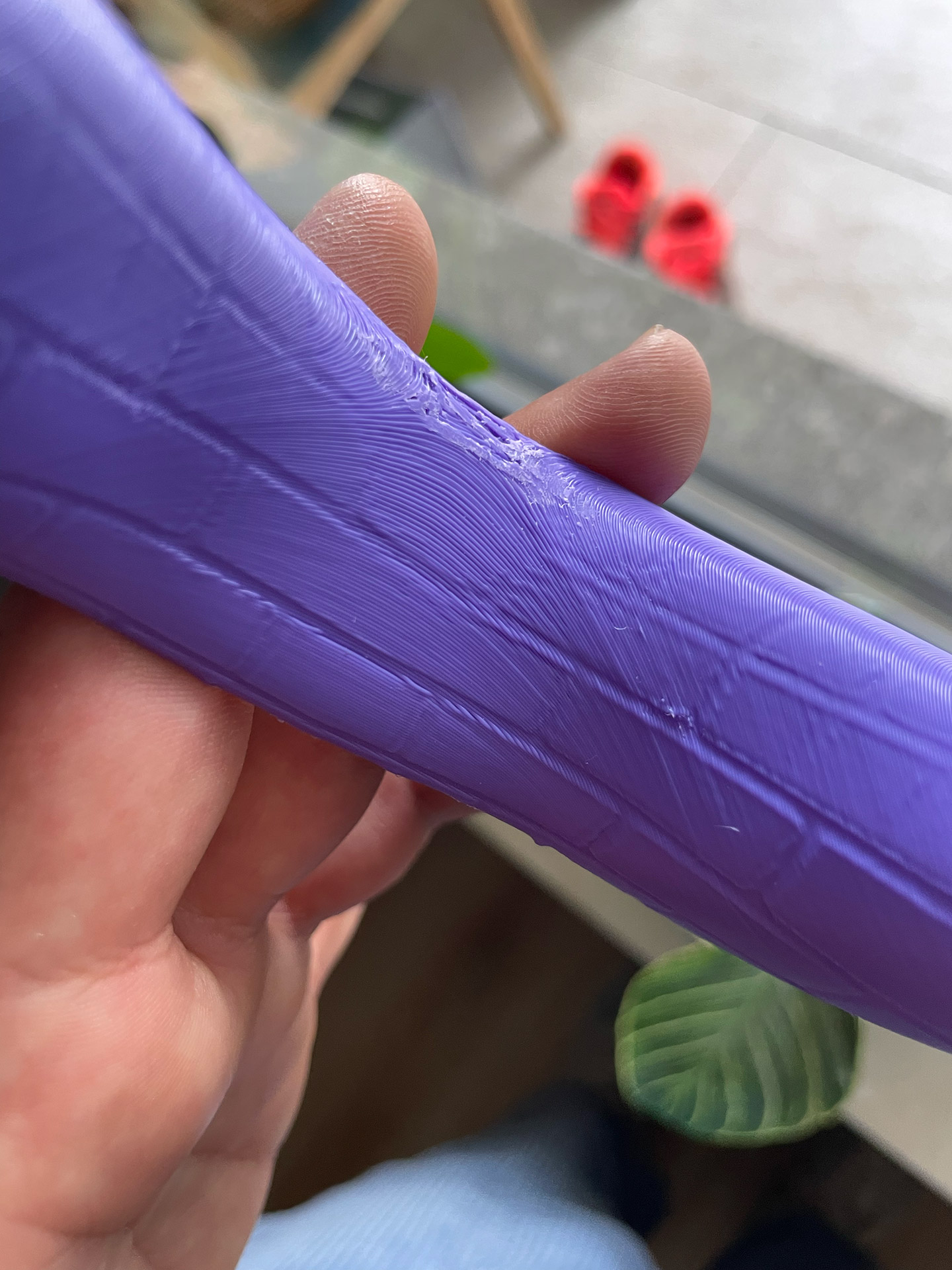
This was the first print, I had neither rinigng, warping, melting artifacts,
Surface quality is another story. Propably a settings thing.
(last quarter of the model was printed with 50% speed)
Let me state that it is absolutely NOT in my interest to replace the machine. I can imagine way better things than to repack, ship, wait for replacement, …
Nope, but you seem to have a lot of experience with it if you recommend it?
I tend to stay with Bambu Lab as my experiences have been really good - at least with the A1 Mini that I had before.
Feedback from Bambu Support, who also reviewed the images. Their suggestions:
Open the front door and remove the top cover for PLA. Their reasoning: the enclosure is intended for technical filaments and isn’t required for PLA. I read, that this effectively means an enclosed P2S needs to be run open for PLA.
Set the softening temperature to 50 °C or below (already done — I run 45). For reference, they attached Bambu’s own Generic PLA profile, which ships at 60 °C. That value sits above the threshold and puts the airduct into heating mode by default, so it runs counter to the recommendation itself. The correct value also doesn’t appear to be documented anywhere. Open question is how to deal with PETG, even on their own filament profiles.
Left auxiliary fan: my question whether it would improve PLA results specifically is still open.
Surface quality: they consider it primarily a settings matter and kindly offered to test-print my model and advise on parameters, which I appreciate and have accepted.
I’ve had some issues with my P2S since buying it March 2026. Mainly with the calibration. I get for some reason serious issues with prints that lie on the right hand side of the print plate. Very rough print in these areas, with the height level of print going askew especially for prints of a high height. Not sure if anyone else is have this issue. Have Recalibrated a couple of times and this doesnt seem to help much.
I have 1200 hours on my P2S and have only had two mishaps. I keep my room warm and humidity low, and yes, I only use Bamboo filament. They have a great selection, so I haven’t had a need to use anything else.
I had the same issue until I ve been adding a deflectior in front of the fan. Even Bambu Lab recommends it in their wiki. You can have a look here: Scroll down to solutions where you can find a 3d model of the deflector they reccommend or choose on of plenty available on makerworld.
Hope, that helps
Update — clearer answers from Bambu Support (credit where due)
After a few rounds, Support came back with a genuinely clear and constructive reply. Sharing the parts that are useful for other P2S owners — and I want to acknowledge they engaged openly on this.
What they confirmed:
For PLA/PETG that need cooling, the enclosed chamber is a disadvantage. In their words: a stronger enclosure can be disadvantageous for PLA, and improving chamber air exchange is “essentially no longer a fully enclosed printing condition… not fundamentally different from opening the door or top cover.” So running the P2S open for PLA isn’t really a hack — it’s effectively the intended approach for cool-running materials.
The left Auxiliary Part Cooling Fan is not a chamber-heat fix. It can improve part cooling and even out temperature distribution, but “cannot fundamentally solve chamber heat retention,” and its one-sided airflow “may cause uneven cooling or one-sided warping.” Worth knowing before buying one as a cure.
The X2D isn’t fundamentally different here. Higher fan speed, but “the operating logic is not fundamentally different.” So an X2D swap wouldn’t change the core airduct/cooling approach.
Ringing: improved after re-tensioning the belts; they suspect transport vibration loosened them, and recommend re-tensioning after any long-distance move.
Regarding a lemon or just a dumb user: they want further testing before drawing conclusions — which I appreciate.
I am having all of the same problems and getting no where with Support. Printed fine for about 3 prints and has been getting steadily worse. I have been unable to use for 2 weeks and this is part of my business, not a hobby. I have re-calibrated, dried the filaments, replaced the nozzle, replaced the extruder sensor, disassembled cleaned and reassembled the tool head at least a dozen times, tried different filaments, and factory reset the machine. Yet, I continue getting “extruder not working properly” and crappy prints. Support is running me in circles and waiting 24 hours or more per reply has gotten tiresome and not useful. This is my first Bambu, and my be my last if things don’t improve quickly.
Yes, dealing with Bambu Lab support is indeed quite exhausting. The main problem is that questions rarely seem to be answered in full. Instead, only parts of them are addressed, which makes the whole conversation feel like it is going in circles. Whether that is due to internal processes, language barriers, insufficient training, or something else entirely, I obviously cannot say.
It feels as if each reply is handled by a different support agent with little knowledge of the overall case, simply responding to the most recent message rather than looking at the bigger picture.
I was told that they could provide me with tests to help determine whether my P2S might be a faulty unit. What I received instead was a suggested setting that might help with one specific issue on one particular model, but it does not address the overall problem I am experiencing: generally disappointing print quality.
That is also one of the reasons why I am very close to simply ending this whole process and returning the P2S.
I simply do not have the time to spend weeks troubleshooting and fine-tuning a printer just to achieve the level of print quality that an entry-level A1 mini delivered pretty much out of the box. At this point, I honestly do not even care that much whether my particular P2S is faulty or whether the P2S in general simply cannot match the A1 mini in this regard.
I am leaving that assessment to Bambu Lab. Unfortunately, that also means waiting at least another day for their next reply. And judging from the communication so far, I am not particularly confident that my actual questions will be answered this time either. If they are not, the P2S will most likely be going back.
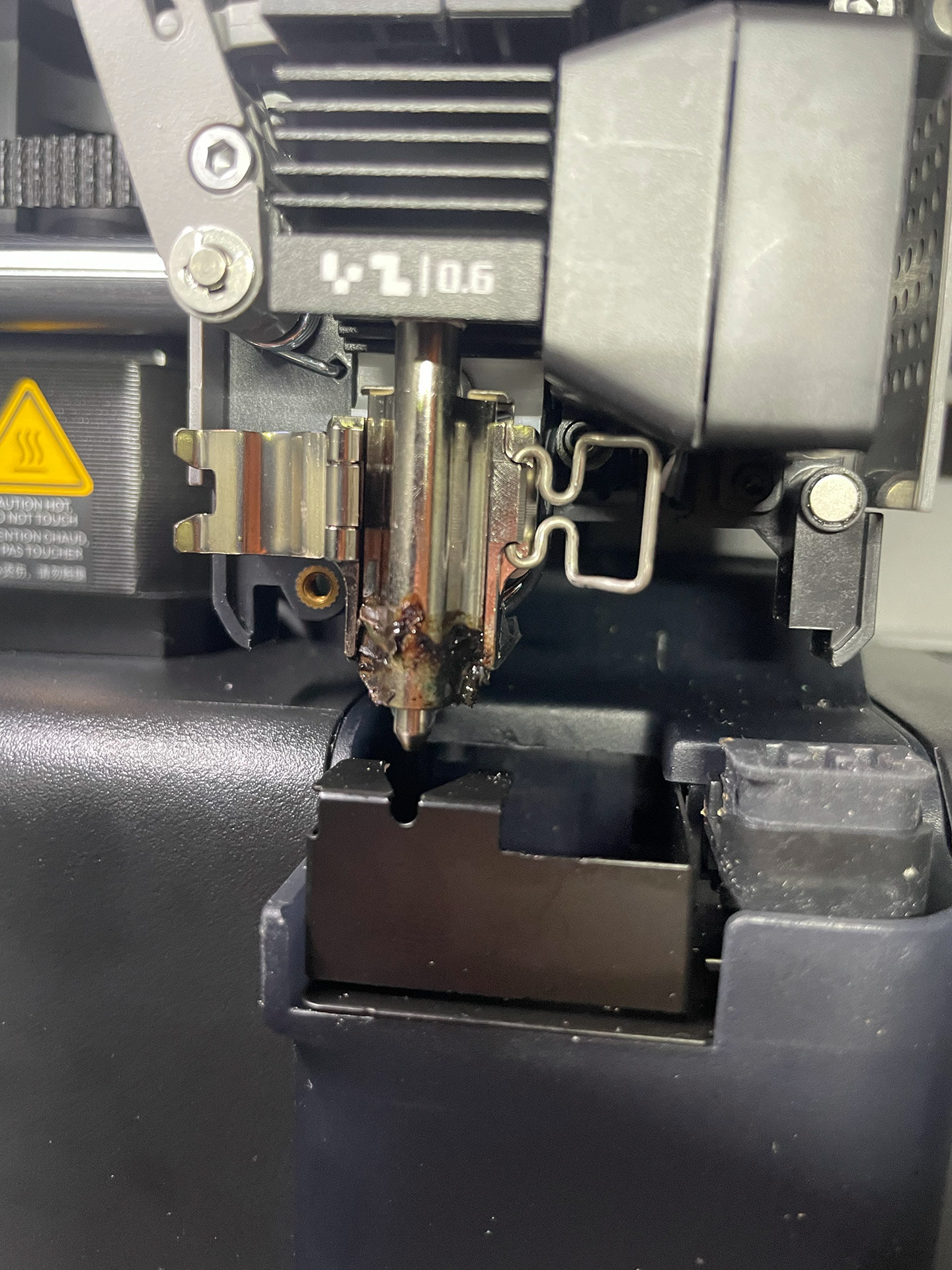
Right after I decided to give this unit another chance, I had a pretty severe nozzle clog just three minutes into the print.
This was the second time and happened with a brandnew nozzle.
Given all the issues I’ve experienced so far — in less than 80 hours of use — this was ultimately the point where I decided I’m done troubleshooting this particular unit.
Yes, nozzle clogs happen. Call it bad luck, coincidence, or whatever you like. But at some point, enough is enough.
I’ve now asked Bambu Lab for a clear procedure on how to replace the unit.
Even if this ultimately comes down to warping, there are still several questions I can’t really answer:
Why is it warping in the first place? This is a model downloaded from MakerWorld that has printed flawlessly for me on another machine before.
If this model really required brim ears, I would have expected that to be reflected in the provided print settings. I never needed them on the other printer.
Even if the model was warping, I would not expect that alone to result in such a severe nozzle clog. What I’m also wondering is what the print head was actually doing in that position at the time, when it should have been working on the model itself.
The bed was properly cleaned before the print.
The nozzle was brand new.
Room temperature was nothing unusual.
Bed temperature and all other settings were based on Bambu’s Generic PLA profile, with the exception of the softening temperature mentioned earlier.
So yes, I understand the point about warping. What I’m still trying to understand is why this particular printer seems to need additional measures for prints that were previously completely unproblematic.
And yes, I absolutely agree: I really don’t want to end up writing another thread like this about a second P2S after another 70 or 80 hours.
PS: What I also find a little frustrating is that some comments seem to jump very quickly to user error as the most likely explanation.
Of course, user error can absolutely be part of the problem. But when a printer starts showing different kinds of issues on a large number of prints that previously caused no trouble at all, and when additional preparation steps and workarounds suddenly become necessary, I think it is fair to question whether the problem can really be reduced to user error alone.
At some point, when preparation and troubleshooting take longer than actually printing the model, something feels off to me.
I’m genuinely happy for everyone whose P2S works flawlessly. That is exactly the experience I would like to have as well. And of course I’m aware that forums naturally tend to highlight problems more than successes — people with perfectly working printers simply have less reason to post.
Still, the number of similar reports here suggests to me that I’m not the only one experiencing some of the issues I’ve described. I therefore think it would be a bit too easy to dismiss that aspect entirely.
That is the real question to answer. Most of the time it is bed adhesion, in your case it is probably heating and cooling related.
A print profile is more of a guideline. You may need to adjust for your own printer and environment.
Is the nozzle really clogged, or are you just referring to the nozzle blob. Warping will cause this because if the filament has no place to go, it will just stick to the nozzle.
It seems like you are comparing an open air printer to an enclosed printer.
Heat seems to be your main concern, that is the huge difference.
You would be surprised how often that is the case.
Go ahead with your replacement. Overall, I think it might be better just for your sanity. The worry is still that if there is a procedural error somewhere or environmental effect, these issues might spring up again.